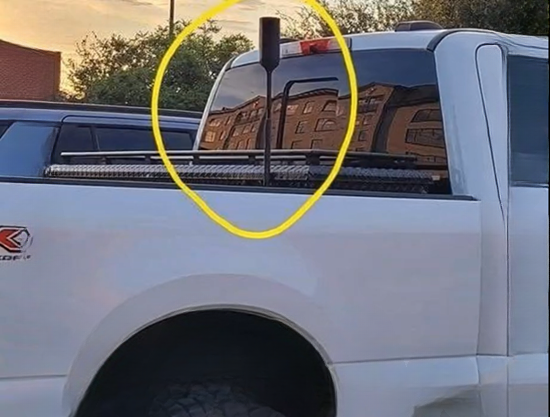
Why Do Some Trucks Have Tall Antennas? Understanding CB Radios and Modern Truck Communication
If you have ever spent time around highways, truck stops, or large recreational vehicles, you may have noticed something interesting mounted on the roof, hood, or side of a vehicle: a long, thin antenna extending upward into the air.
At first glance, it may look like a simple piece of equipment with no obvious purpose. For many people, the immediate assumption is that it must be connected to an old-fashioned radio.
In many cases, that assumption is correct.
For decades, Citizens Band, commonly called CB radio, was an important communication tool for truck drivers, road travelers, hobbyists, and other people who needed a simple way to communicate without relying on a cellular network. The tall antenna became one of the most recognizable visual features associated with CB radios.
But there is more to the story than simply saying, “That’s a CB antenna.”
The antenna itself is an important part of the radio system. Its length, position, mounting location, construction, and adjustment can all affect how effectively a radio can transmit and receive signals.
And while modern technology has changed the way many drivers communicate, CB radios have not completely disappeared.
Some drivers continue to use them because they offer something that smartphones and internet-based communication cannot always provide: a direct, shared communication channel between people who are nearby.
Understanding why these antennas exist requires taking a closer look at how CB radios work, why antennas are often tall, and why truck drivers have historically relied on them.
What Is a CB Radio?
CB stands for Citizens Band.
A CB radio is a short-distance radio communication system designed for public use. Unlike many professional radio systems, CB communication does not require an individual license in the United States under normal operating conditions.
The system became particularly well known among truck drivers because it provided a practical way for people traveling along the same roads to communicate.
A driver could use a CB radio to talk to other nearby drivers, exchange information about road conditions, discuss traffic, ask questions, or simply have a conversation.
The system became especially popular during the middle and later parts of the twentieth century.
Before mobile phones became common, communicating from a moving vehicle was considerably more complicated than it is today. A CB radio offered drivers a relatively simple solution.
Install the radio inside the cab.
Connect it to an antenna.
Tune to a channel.
Then communicate with other nearby CB users.
The technology was straightforward enough to become part of trucking culture.
Why Is the Antenna So Tall?
One of the most noticeable features of a CB setup is the antenna.
People sometimes assume that the radio itself is the most important part of the system. In reality, the antenna plays a major role in determining how well the system performs.
A radio can generate a signal, but the antenna is responsible for efficiently transmitting that signal into the surrounding environment and receiving signals from other radios.
For CB frequencies, antenna dimensions are related to the wavelength of the radio signal.
A typical CB frequency is around 27 MHz. Radio waves at these frequencies have wavelengths measured in meters, which means an antenna designed to work efficiently with those signals can be physically long.
A full wavelength would be several meters long, but antennas do not necessarily need to be a full wavelength.
Common antenna designs use fractions of the wavelength, such as a quarter-wave configuration.
That is one reason CB antennas can be relatively tall while still being practical for vehicle use.
The visible length also makes the antenna easy to recognize.
However, the antenna does not necessarily need to be exactly the same physical length as the ideal electrical length. Coils and other design techniques can make an antenna electrically longer than its physical dimensions.
This allows manufacturers to produce antennas that are practical to mount on vehicles.
Why Trucks Are Especially Associated With CB Antennas
Truck drivers were among the groups that made CB radios famous.
A large commercial truck spends long periods traveling on highways, often surrounded by other trucks.
That creates an environment where short-range communication can be particularly useful.
If several drivers are traveling through the same area, a CB channel can provide a shared communication space.
For example, drivers may discuss:
- Traffic congestion
- Road construction
- Weather conditions
- Lane closures
- Detours
- Truck stops
- Fuel locations
- General road conditions
- Nearby vehicles
- Travel information
The usefulness of a CB radio is not necessarily based on communicating over hundreds of miles.
Its value comes from communicating with people who are relatively close.
A driver doesn’t need to call a specific person if the information is useful to everyone listening to the same channel.
That group-based communication model helped make CB radios particularly recognizable in trucking culture.
Why Smartphones Did Not Completely Replace CB Radios
It would be easy to assume that smartphones made CB radios unnecessary.
After all, modern phones can provide navigation, messaging, voice calls, video calls, weather information, traffic information, and countless other services.
However, CB radio has a few characteristics that remain useful.
The most obvious is that it does not depend on a cellular subscription.
A CB radio communicates directly through radio signals rather than through a cellular network.
That means nearby users can communicate without exchanging phone numbers.
There is also a simplicity to the system.
If a group of drivers is already using the same channel, someone can speak and potentially reach everyone listening.
With a phone, communication is generally one person or group at a time.
A CB radio can function more like an open conversation.
This can be particularly useful when several people are traveling along the same route.
What Does the Antenna Actually Do?
An antenna converts electrical energy into electromagnetic radiation when transmitting.
When receiving, it performs the reverse process, converting incoming electromagnetic energy into an electrical signal that the radio can process.
In simple terms, the antenna is the part that allows the radio to interact with signals traveling through the air.
That is why the antenna’s design matters so much.
A poorly installed or improperly adjusted antenna can reduce the effectiveness of a CB system even if the radio itself is working correctly.
Factors such as antenna height, location, grounding, mounting, cable quality, and tuning can all influence performance.
This is why experienced radio users often pay considerable attention to the antenna rather than simply buying the most expensive radio available.
Why Antenna Placement Matters
You may notice that vehicle antennas are mounted in different locations.
Some appear on the hood.
Others are attached to mirrors, brackets, bumpers, or other parts of the vehicle.
Some recreational vehicles have antennas mounted toward the roof.
The reason for these different arrangements is partly practical and partly related to how radio signals interact with the vehicle.
The metal body of a vehicle can influence antenna performance.
Ideally, an antenna needs an appropriate electrical environment around it to work efficiently.
This is one reason vehicle-mounted antennas are often installed with careful consideration of their location.
A poorly chosen mounting point can affect the antenna’s performance.
The physical environment also matters.
Nearby metal structures, buildings, trees, other vehicles, and even the shape of the vehicle can influence how signals behave.
Radio waves do not simply travel through the environment in a perfectly predictable straight line.
They can reflect, diffract, and interact with objects.
What Is Antenna Tuning?
Another term that often appears in discussions about CB radios is “tuning.”
Antenna tuning refers to adjusting the antenna system so that it works efficiently with the radio and frequency range being used.
One common measurement is the standing wave ratio, or SWR.
SWR provides information about how effectively power is being transferred between the radio and antenna system.
A high SWR can indicate that the antenna system is not properly matched.
That can reduce performance and, depending on the equipment and circumstances, place unnecessary stress on the radio’s output circuitry.
This is why CB users often check SWR after installing an antenna.
The process does not necessarily mean that the antenna is physically the wrong length.
Many vehicle antennas are designed to be adjustable.
Small changes can sometimes improve the match.
The exact adjustment process depends on the antenna design.
The Myth That Bigger Always Means Better
A common misconception is that a longer antenna automatically provides better performance.
The reality is more complicated.
Antenna design involves frequency, electrical length, efficiency, mounting location, construction, ground plane considerations, and other factors.
A very long antenna installed poorly may perform worse than a shorter antenna that is properly installed and adjusted.
Likewise, an antenna that looks impressive does not necessarily provide exceptional range.
Radio communication is affected by many variables.
The surrounding environment can make a significant difference.
Open rural terrain may produce different results from a dense urban environment.
Buildings and hills can interfere with or alter signal propagation.
Weather can also affect certain types of radio communication, although everyday CB performance is usually more strongly influenced by equipment, terrain, interference, and atmospheric conditions.
Why Some Trucks Have Two Antennas
Another interesting detail is that some trucks have two antennas.
To someone unfamiliar with radio equipment, this can seem unnecessary.
There are several reasons a vehicle might have more than one antenna, depending on the equipment and installation.
Some setups use dual antennas as part of a particular antenna configuration.
Other vehicles may have multiple radio systems, each requiring its own antenna.
Modern commercial trucks can carry a variety of communication and positioning technologies.
An antenna that looks similar to a CB antenna might actually be associated with another system.
This is an important point because not every tall antenna seen on a truck is necessarily a CB antenna.
Not Every Vehicle Antenna Is for CB Radio
Vehicle communication technology has changed considerably.
A modern truck may have antennas associated with:
- Cellular communication
- GPS and navigation
- Satellite communication
- Fleet management
- Two-way commercial radio
- Wi-Fi systems
- Emergency communication systems
- Specialized logistics equipment
Some antennas are extremely small.
Others can be long and highly visible.
Therefore, identifying an antenna solely by its appearance can be misleading.
A tall whip-style antenna on an older truck may very well be associated with CB communication, but the same basic visual shape can be used in other applications.
The equipment connected to it is what ultimately determines its purpose.
CB Radio Channels
CB radio operates on a collection of designated channels.
One channel became particularly famous in American trucking culture: Channel 19.
Channel 19 has traditionally been associated with highway communication among truckers.
Its popularity comes from the practical benefit of having a commonly recognized channel.
If drivers are traveling through the same area, they can monitor a known channel rather than searching through every available frequency.
However, usage practices can vary by region and community.
Some groups use different channels for specific purposes.
This is similar to the way people use different online communication groups today.
The important idea is that CB communication works best when users share an understanding of where conversations are happening.
CB Radio Has Its Own Vocabulary
CB culture also developed its own vocabulary and expressions.
Some phrases became widely known outside the trucking community because they appeared in movies, television programs, songs, and popular culture.
Words such as “breaker,” “10-4,” and “good buddy” became strongly associated with CB communication.
Some of these expressions were used differently over time or varied among groups.
The language itself became part of the identity surrounding CB radios.
This helped transform the technology from a simple communication device into a recognizable part of American road culture.
The Role of CB Radio During Earlier Periods of Trucking
CB radios became especially prominent during periods when transportation, fuel prices, trucking regulations, and road travel were major topics of public discussion.
Truck drivers needed practical ways to communicate with one another.
At the same time, CB radios became increasingly accessible to ordinary drivers.
This helped create a broader community of people communicating through the same radio system.
Movies and television programs also contributed to the popularity of the technology.
The image of a truck driver speaking into a microphone while a long antenna moved above the cab became an instantly recognizable part of road culture.
For many people, the antenna itself became a visual symbol of trucking.
CB Radios Were Also Popular With Recreational Drivers
Truckers were not the only people who used CB radios.
RV owners, off-road enthusiasts, travelers, hobbyists, and families traveling in groups also adopted the technology.
For a convoy of vehicles, a CB radio could provide a simple way to communicate.
Imagine several vehicles traveling together on a long road trip.
Instead of calling each driver individually, members of the group could communicate over a shared channel.
This could make coordinating stops, route changes, or other travel details easier.
For people traveling into areas with limited cellular coverage, a radio could also provide another communication option, although its range and usefulness would depend heavily on terrain and equipment.
Why Range Can Be Difficult to Predict
People sometimes ask how far a CB radio can communicate.
There is no single answer.
Range depends on many variables.
A vehicle operating in an open area may communicate differently from one surrounded by buildings or hills.
Antenna quality and installation matter.
The radio’s operating condition matters.
Interference matters.
Atmospheric conditions can sometimes produce unusual propagation effects.
Even the location of the vehicles can have a major impact.
This is why two users with similar radios can experience different results.
A statement such as “this antenna gives you exactly X miles of range” should therefore be treated cautiously.
Radio communication is influenced by the environment.
Why CB Radio Still Has a Place
Modern communication technology is much more advanced than it was decades ago.
Yet older technologies sometimes remain useful because they solve a specific problem particularly well.
CB radio is an example.
It provides local, direct communication without requiring a cellular network or internet connection.
It can be monitored by multiple people simultaneously.
It can be relatively inexpensive compared with more sophisticated communication systems.
And it remains familiar to generations of truck drivers and radio enthusiasts.
For these reasons, CB radios continue to have a place in certain vehicles.
They are not necessarily the primary communication method for everyone.
But they have not completely disappeared.
The Difference Between CB and Modern Digital Communication
One major difference between CB radio and smartphone communication is infrastructure.
When you send a message through a smartphone application, the communication usually depends on some combination of cellular networks, internet connections, servers, and other infrastructure.
CB radio does not operate in the same way.
Two nearby radios can communicate directly through radio signals.
That simplicity can be valuable.
At the same time, CB has limitations.
Communication can be noisy.
Channels can become crowded.
Range is limited compared with internet-based communication.
There is no guarantee that another user will be listening.
Modern smartphones provide far more features.
So the two technologies are not really direct replacements for one another.
They serve different purposes.
Why You Might See Antennas on RVs
Recreational vehicles are another common place to see antennas.
RV owners may use different communication systems depending on their travel habits.
Some use CB radios for communication while traveling in groups.
Others may have antennas for television, satellite services, cellular signal equipment, or amateur radio.
The RV lifestyle makes communication equipment particularly useful because people often travel through rural areas where infrastructure can vary.
An antenna mounted high on an RV can also have a different purpose than one mounted on a truck.
Therefore, the best way to identify it is to look at the equipment connected to it rather than assuming based only on appearance.
The Importance of Safe Installation
If someone decides to install a vehicle antenna, safety should be part of the process.
The antenna needs to be securely mounted.
The cable should be routed carefully so it does not interfere with vehicle controls, doors, moving components, or electrical systems.
The installation should also avoid creating unnecessary hazards.
A long flexible antenna can move significantly while a vehicle is traveling.
It should not be positioned in a way that creates an obvious risk to pedestrians, other vehicles, or the driver.
Professional installation can be a sensible choice for people who are unfamiliar with vehicle electrical systems or radio equipment.
Why Antennas Sometimes Bend
If you have watched a truck traveling down the highway, you may have noticed its antenna bending backward in the wind.
This is normal for many flexible antenna designs.
A vehicle traveling at highway speed creates significant airflow.
A flexible whip antenna can move with that airflow rather than remaining perfectly vertical.
The flexibility helps the antenna tolerate the physical environment around a moving vehicle.
The important thing is that the antenna returns to its intended position and remains securely attached.
Antennas Can Be Surprisingly Durable
Vehicle antennas have to deal with conditions that stationary antennas do not.
They may encounter:
- Wind
- Rain
- Snow
- Dust
- Road debris
- Car washes
- Low branches
- Temperature changes
- Continuous vibration
Because of this, antenna construction often emphasizes flexibility and durability.
A high-quality antenna needs to withstand the physical demands of vehicle use while continuing to provide acceptable electrical performance.
This is another reason that appearance alone does not tell you everything about an antenna.
A thin flexible rod can be engineered specifically for the environment in which it operates.
The Antenna Is Only One Part of the System
It is tempting to focus entirely on the antenna because it is the most visible component.
But a functional radio system includes several parts.
There is the radio itself.
There is the microphone.
There is the coaxial cable connecting the radio to the antenna.
There is the antenna mount.
There are electrical connections.
And there may be additional accessories depending on the system.
If one part is damaged or poorly installed, overall performance can suffer.
For example, a damaged coaxial cable may create problems even when the antenna itself looks perfectly fine.
That is why troubleshooting should consider the entire system.
Why Some Antennas Look Different
Walk around a truck stop and you may see antennas of different lengths, shapes, and materials.
Some are thin and flexible.
Others are thicker.
Some have loading coils.
Some are mounted vertically.
Others may be installed at different angles.
These differences reflect different design approaches.
An antenna designed for a particular frequency range, mounting location, and vehicle may look quite different from another antenna designed for a different application.
There is no single univ