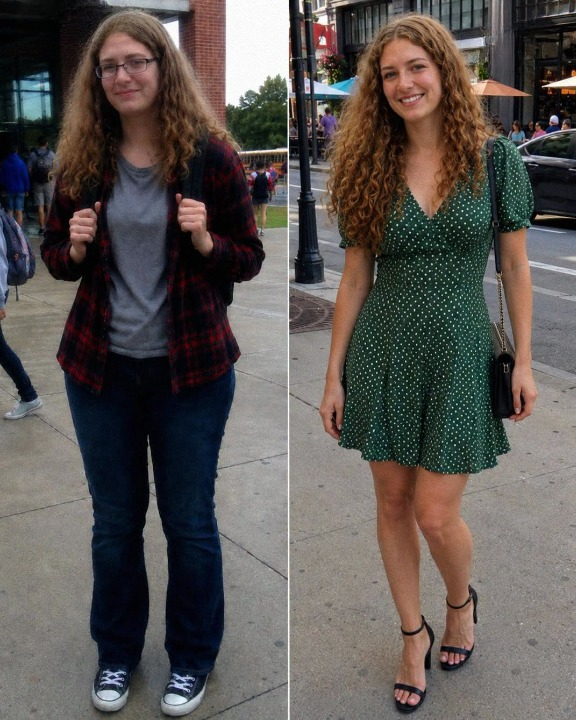
People often say that time changes everything.
I’m not sure that’s completely true.
Time doesn’t erase memories.
It doesn’t magically undo difficult experiences or rewrite uncomfortable chapters of our lives.
What time does offer is perspective.
Sometimes, many years later, we look back at people—and ourselves—with completely different eyes.
I learned that lesson in the most unexpected way.
It started with an ordinary evening.
I was relaxing on my couch after work, absentmindedly scrolling through a dating app while half-watching a documentary.
I wasn’t searching for anything dramatic.
After focusing on my career for several years, I simply thought it might be nice to meet someone new.
Most profiles blended together.
A few photographs.
Short biographies.
Favorite hobbies.
Weekend interests.
Then I stopped scrolling.
One profile immediately caught my attention.
Jeremy.
The name alone brought back memories I hadn’t thought about in well over a decade.
His face had changed.
Older.
More mature.
But unmistakably familiar.
Jeremy had been one of the most popular students in our high school.
Captain of the football team.
Confident.
Outgoing.
Always surrounded by friends.
I had been almost the opposite.
Very tall for my age.
Curly hair that never seemed to cooperate.
Large glasses.
Always carrying textbooks.
Teachers appreciated my curiosity.
Classmates often didn’t.
Being academically focused wasn’t considered impressive in my school.
Instead, it often attracted unwanted attention.
People joked about my grades.
Rolled their eyes whenever I answered questions in class.
Sometimes they laughed simply because I preferred reading during lunch instead of joining louder conversations.
Jeremy wasn’t cruel in obvious ways.
He never started fights.
He never shouted insults across hallways.
Instead, he specialized in small comments.
Little jokes that sounded harmless individually but slowly chipped away at confidence.
A sarcastic remark.
An exaggerated imitation.
A carefully timed laugh that encouraged everyone else to join.
Looking back, I doubt he fully understood the effect those moments had.
At fifteen, very few people recognize how powerful words can become.
For me, high school often felt exhausting.
I counted the years until graduation.
Fortunately, difficult experiences also motivated me.
I focused intensely on school.
Earned admission to the university I’d always dreamed about attending.
Moved to another city.
Built new friendships.
Discovered hobbies I genuinely enjoyed.
Eventually I established a career that challenged and fulfilled me.
Little by little, confidence replaced insecurity.
The awkward teenager gradually became someone comfortable with herself.
Years passed.
High school became little more than an old chapter.
Until Jeremy’s profile unexpectedly appeared on my phone.
For several moments I debated what to do.
The easiest choice would have been continuing to scroll.
Instead, curiosity won.
I smiled slightly and selected “like.”
To my surprise, only minutes later a notification appeared.
“It’s a match.”
I laughed quietly.
Life certainly enjoys unexpected coincidences.
Jeremy sent the first message.
“Hi! Looks like we matched.”
Nothing unusual.
No dramatic opening.
Just friendly conversation.
I answered.
Over the following week we exchanged messages about work, travel, favorite books, music, and weekend activities.
The conversations felt surprisingly comfortable.
Something else became obvious.
Jeremy had absolutely no idea who I was.
Not once did he mention school.
Not once did he recognize my name.
Apparently, the quiet girl sitting near the front of biology class hadn’t remained particularly memorable in his life.
Eventually he asked whether I’d like to have dinner.
I hesitated.
Several friends encouraged me to decline.
Others thought curiosity alone justified meeting once.
After thinking carefully, I accepted.
Not because I expected romance.
Not because I wanted revenge.
Simply because I wondered whether people truly change over time.
We met at a small Italian restaurant halfway between our neighborhoods.
Jeremy arrived first.
When I walked inside, he stood politely.
“It’s nice finally meeting you.”
“You too.”
For nearly an hour we talked naturally.
Careers.
Travel.
Family.
Books.
Volunteer work.
He seemed thoughtful.
Calmer than I remembered.
Eventually conversation drifted toward childhood memories.
“What was high school like for you?” he asked.
I smiled thoughtfully.
“Complicated.”
He laughed.
“I think everyone says that.”
“Probably.”
After another pause I asked,
“Do you remember Lincoln High?”
His expression brightened.
“Of course.”
“Were you there too?”
“I was.”
He searched my face carefully.
“I’m sorry…”
“I feel like I should remember.”
“My name used to be Emily Parker.”
Silence.
Several seconds passed.
Then recognition slowly appeared.
“Oh.”
“My goodness.”
His expression changed completely.
“I know exactly who you are.”
For a brief moment neither of us spoke.
Finally he sighed.
“I’ve thought about high school a lot over the years.”
“I wasn’t always proud of the person I was.”
His honesty surprised me.
“I’ve wondered whether you’d remember.”
“I do.”
He looked genuinely uncomfortable.
“I owe you an apology.”
I didn’t answer immediately.
Instead, I asked something I’d wondered for years.
“Did you ever realize how those comments affected people?”
Jeremy looked down.
“No.”
“At least… not then.”
“I thought I was being funny.”
“I confused making people laugh with making people feel small.”
He explained that after college he had begun coaching youth sports.
Working with teenagers completely changed his perspective.
Watching shy students struggle with confidence reminded him uncomfortably of people he’d once teased without understanding the consequences.
“I started recognizing myself.”
“And I didn’t like what I saw.”
He told me he had later volunteered for anti-bullying programs at local schools.
Not because someone forced him.
Because he genuinely regretted the example he’d set years earlier.
Listening to him, I realized something important.
The conversation wasn’t about deciding whether everything should simply be forgotten.
Some experiences leave lasting marks.
Instead, it became about whether people are capable of growth.
I believed they are.
Provided they’re willing to accept responsibility.
Before leaving the restaurant Jeremy quietly said,
“I don’t expect forgiveness.”
“But I am grateful you gave me the opportunity to apologize.”
I smiled.
“Thank you for saying it.”
Over the following months we remained friends.
Nothing more.
Occasionally we’d meet for coffee.
Exchange book recommendations.
Discuss work.
Life.
Family.
Our friendship gradually became something neither of us expected.
Not because we ignored the past.
Because we acknowledged it honestly.
One afternoon Jeremy invited me to watch a youth leadership workshop where he volunteered.
Near the end of the session he addressed several middle-school students.
He said something I’ll never forget.
“The people you become as adults often remember how you treated them when nobody else noticed.”
“Choose kindness now.”
“You’ll never regret it.”
Hearing those words felt strangely healing.
Not because they erased high school.
Nothing can change history.
But because they demonstrated genuine growth.
Looking back now, matching with Jeremy wasn’t about romance.
It wasn’t about revenge.
It wasn’t even about closure in the way I once imagined.
It reminded me that people are rarely frozen in time.
The teenager someone once was isn’t always the adult they become.
Some continue repeating old mistakes.
Others learn from them.
Apologize.
Grow.
And quietly spend years becoming someone different.
That experience also taught me something about myself.
For years I believed confidence meant proving something to people from my past.
Eventually I realized true confidence requires nothing from them.
It comes from recognizing your own growth regardless of whether anyone else notices.
High school ended long ago.
The labels disappeared.
The insecurities faded.
What remained was perspective.
Today, when I think about that unexpected online match, I don’t remember it as an awkward dinner.
I remember it as evidence that meaningful conversations can happen when people choose honesty over pride.
Sometimes life unexpectedly reconnects us with old chapters.
Not so we can relive them.
But so we can finally understand how far we’ve all traveled since then.
And perhaps that’s one of the most encouraging things about growing older.
None of us are required to remain the people we were at sixteen.
Every day offers another opportunity to become someone better than yesterday.
That, more than anything else, is the lesson I carried home from a dinner I almost never agreed to attend.