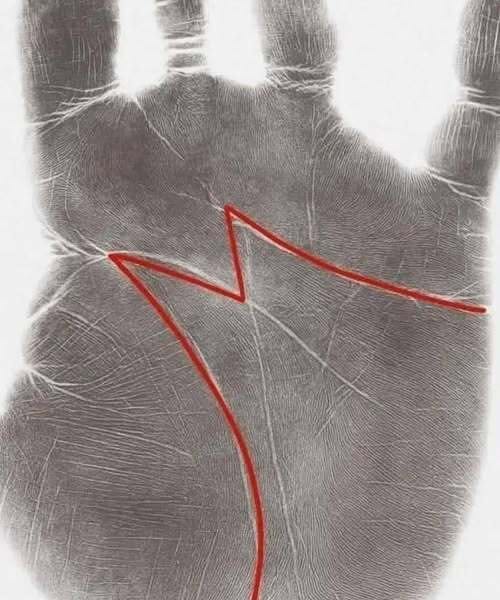
You may have heard people say that having a particular letter or symbol in the palm of your hand has a special meaning. For generations, palmistry has inspired stories, traditions, and interpretations about the lines found on people’s hands.
But there is an important detail to keep in mind: palmistry is a traditional form of fortune-telling, not a scientifically established method for determining someone’s personality, future, or destiny.
Still, the patterns can be fascinating to observe.
The lines on our palms are naturally different from person to person. Some are deep and easy to see, while others are faint or interrupted. When several lines cross or curve in a particular way, they can sometimes appear to create recognizable shapes, including letters.
One of the most commonly discussed examples is an apparent “M” shape.
According to traditional palmistry, some practitioners associate this pattern with qualities such as determination, confidence, intuition, or strong observational skills. Different palmistry traditions may interpret the same pattern in different ways, so there isn’t one universal meaning.
Some people also believe that an “M” shape represents a person who is particularly good at recognizing when something doesn’t feel right. Others connect it with ambition, independence, or an ability to make decisions.
These interpretations, however, belong to folklore and traditional palm-reading practices rather than established science.
In reality, the lines on your palm develop as part of the natural structure and movement of your hands. Everyone’s palm has a unique combination of creases, folds, and smaller lines. Their appearance can change slightly with age, repeated hand movements, skin condition, and other ordinary factors.
That is one reason two people can look at their palms and see completely different patterns.
The fascination with palm lines is not new.
Palmistry has been practiced in various forms for centuries, with traditions appearing in different parts of the world. Readers have historically examined the major lines of the palm and attempted to interpret them as symbolic indicators of someone’s character or life experiences.
Commonly named lines include the heart line, head line, and life line.
The heart line is traditionally associated with emotions and relationships.
The head line is traditionally interpreted in connection with thinking, reasoning, and mental tendencies.
The life line is often misunderstood. Despite its name, traditional palmistry does not necessarily claim that its length determines how long someone will live. Instead, palmists may interpret it as a symbolic representation of vitality, major life changes, or experiences.
Again, these are traditional interpretations rather than medical or scientific conclusions.
So, if you notice what appears to be a letter in your palm, there’s no reason to be worried or to assume that it predicts something specific about your future.
You can simply view it as an interesting feature of your hands.
What makes the subject especially interesting is how naturally our brains look for recognizable patterns. Humans are very good at finding familiar shapes in random or complex arrangements. We might see faces in clouds, animals in rock formations, or letters in naturally occurring lines.
The same thing can happen when looking at palm creases.
Once someone tells you that several lines resemble a particular letter, you may suddenly notice the shape yourself.
And once you see it, you may wonder whether it has some deeper meaning.
That curiosity is perfectly understandable.
Palmistry can be an entertaining cultural tradition, a conversation starter, or simply a reason to take a closer look at something you normally overlook.
However, it is best not to use palm markings as a substitute for professional advice about important decisions involving health, finances, relationships, or other serious matters.
If you’re interested in palmistry, you can explore it as folklore and learn about the different interpretations that have developed across cultures.
You might even compare the lines on both hands and see how different they are.
Take a moment today to look at your palm under good lighting.
Do you have a pattern that resembles a letter?
Is there an “M,” “X,” or another recognizable shape?
Maybe your lines don’t resemble any letter at all.
That’s completely normal.
Every person’s palms are different, and there is no scientifically established evidence that a particular palm shape determines personality or predicts future events.
The fun is in noticing the patterns and learning about the traditions surrounding them.
So the next time someone tells you that a letter in your palm reveals something about your personality or destiny, remember that you’re hearing a traditional interpretation—not a proven fact.