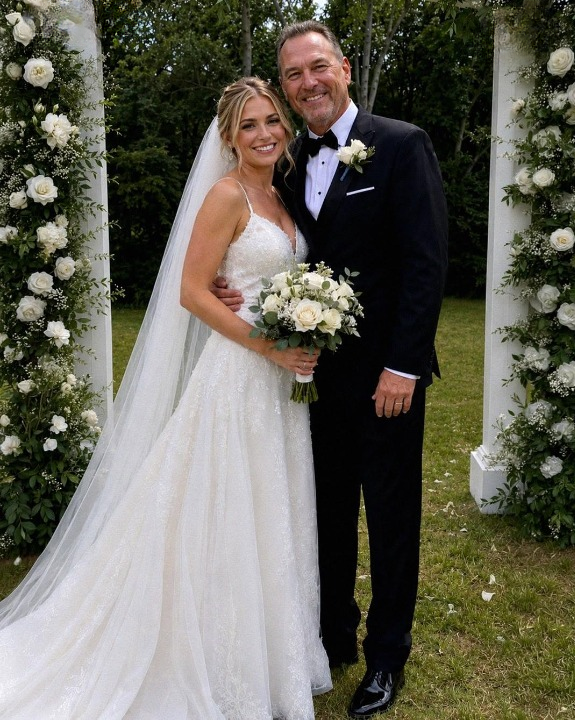
Families don’t always come together easily.
Sometimes love arrives later in life, bringing together people with different histories, expectations, and emotions. While two people may choose one another wholeheartedly, blending families often takes patience that cannot be rushed.
When I married my husband, Walter, I understood that reality from the very beginning.
I was thirty years old.
Walter was fifty-four.
He had built a successful career over many decades and had already experienced tremendous joy and heartbreaking loss.
His first wife had passed away years earlier after a long illness, leaving behind two grown children: Adam and Madison.
By the time Walter and I met, both of them were adults with careers and lives of their own.
I never expected them to see me as a replacement for their mother.
That wasn’t why I married Walter.
I simply hoped that, over time, we might become friends.
Perhaps not immediately.
But eventually.
Instead, before they truly knew me, they had already decided who I was.
In their minds, there was only one explanation for our marriage.
Walter had financial security.
I was younger.
Therefore, they assumed I had married him for material reasons.
Nothing I said seemed capable of changing that opinion.
It didn’t matter that I had my own career.
It didn’t matter that I owned my own home before we married.
It didn’t matter that I continued working throughout our marriage.
Their conclusion had already been reached.
Every holiday gathering carried a quiet tension.
Family dinners often began politely enough.
Someone would ask about work.
Someone else would mention travel plans.
Then eventually conversations shifted.
Small comments appeared.
“So, Walter, buying another vacation?”
“I guess retirement must be nice.”
Then someone would glance toward me.
Subtle smiles.
Meaningful silence.
Occasionally one of them would make remarks that didn’t even attempt subtlety.
“I hope Dad is protecting his investments.”
Or…
“Some people get very lucky later in life.”
The words stung.
Not because they questioned my character.
Because they ignored the life Walter and I had actually built together.
We weren’t living some glamorous fantasy.
We were simply happy.
Walter loved gardening.
I loved reading.
Together we traveled whenever possible.
Weekend road trips became our favorite tradition.
Sometimes we’d drive several hours simply to explore a small town neither of us had ever visited.
We celebrated anniversaries quietly.
Cooked dinner together nearly every evening.
Supported one another through career changes, family milestones, and everyday challenges.
Sixteen years passed remarkably quickly.
During that time I never once asked Walter about his financial plans.
We discussed retirement.
Healthcare.
Travel goals.
Volunteer work.
But never inheritance.
Those conversations simply weren’t important to me.
The life we shared mattered far more than anything written inside legal documents.
Then everything changed.
Walter wasn’t feeling well.
Initially we assumed stress or exhaustion explained his symptoms.
After several medical appointments and additional testing, doctors delivered difficult news.
He had pancreatic cancer.
Our lives changed overnight.
Treatment schedules replaced vacation plans.
Hospital visits replaced weekend adventures.
Calendars filled with medical appointments, consultations, therapy sessions, and follow-up care.
Every morning began by asking one question.
“What do you need today?”
Some days Walter felt strong enough for short walks.
Other days simply sitting comfortably required tremendous effort.
Throughout every stage, we faced the journey together.
I drove him to appointments.
Organized medications.
Prepared meals his doctors recommended.
Read books aloud when he became too tired to concentrate.
Sometimes we simply sat quietly watching birds gather outside the kitchen window.
Those peaceful moments became incredibly meaningful.
Adam and Madison visited when their schedules allowed.
They clearly loved their father.
Yet balancing careers, children, and responsibilities often limited how frequently they could be present.
I never judged them.
Everyone experiences caregiving differently.
Months passed.
Despite everyone’s hopes, Walter’s health gradually declined.
Even during difficult days, he remained remarkably thoughtful.
One afternoon he quietly said something I’ll never forget.
“People spend too much time worrying about what they’ll leave behind.”
I squeezed his hand.
“What do you mean?”
“They think legacy is measured by money.”
He smiled gently.
“It isn’t.”
“It’s measured by how people feel when they remember you.”
Those words stayed with me.
Several weeks later Walter passed away peacefully with family nearby.
The days following his passing felt strangely quiet.
Our home suddenly seemed much larger than before.
Every room carried memories.
His favorite chair.
Gardening gloves beside the back door.
Coffee mug still resting inside the cabinet exactly where he’d always kept it.
Grief has a way of making ordinary objects feel extraordinary.
The memorial service brought together relatives, neighbors, coworkers, and longtime friends.
Stories filled the room.
People remembered Walter’s generosity.
His sense of humor.
His patience.
His willingness to mentor younger colleagues.
Listening to those memories reminded me that a meaningful life leaves lasting impressions far beyond financial success.
After the service concluded, guests gradually began leaving.
Small conversations formed throughout the reception area.
Eventually Walter’s attorney approached quietly.
“May I speak with everyone together?”
Adam.
Madison.
Myself.
Several close relatives joined us.
The attorney explained that Walter’s estate planning had been completed years earlier and reviewed periodically.
His financial assets would be distributed according to clearly documented instructions.
Walter had chosen to leave the majority of his financial estate equally to Adam and Madison.
Both nodded respectfully.
There was no argument.
No surprise.
That decision reflected conversations Walter had openly shared years before.
Then the attorney reached into his briefcase.
“There is one additional item.”
He handed me a sealed envelope.
“Walter specifically asked that this be given only to you after today’s service.”
I stared at the envelope quietly.
It wasn’t thick.
No legal documents appeared inside.
Just several folded pages.
When I opened them, I immediately recognized Walter’s handwriting.
“My dearest Anna,”
“If you’re reading this, then you’ve already done the hardest thing either of us ever imagined.”
“Thank you for giving me sixteen extraordinary years.”
Tears immediately blurred the page.
The room disappeared around me.
Walter’s words felt almost as though he were speaking directly beside me once again.
The letter continued.
“I know some people may believe my greatest gift is money.”
“They couldn’t be more mistaken.”
“The greatest gift anyone ever gave me was time.”
“You gave me your time every single day.”
“You celebrated victories with me.”
“You carried burdens without complaint.”
“You reminded me that beginning a new chapter later in life is always possible.”
By now even Adam and Madison stood silently listening.
The letter continued for several pages.
Walter shared memories from our first road trip.
The day we planted fruit trees together.
The evening we danced in the kitchen because our favorite song unexpectedly played on the radio.
Simple moments.
Ordinary memories.
The kinds of experiences no inheritance could ever replace.
Near the end Walter explained why he hadn’t focused his legacy solely on finances.
“I’ve already helped provide opportunities for my children.”
“What I hope to leave you isn’t ownership.”
“It’s freedom.”
Enclosed with the letter wasn’t a large financial document.
Instead, Walter had arranged something deeply personal.
He had established a charitable scholarship in both our names supporting adult students returning to education later in life.
He knew how passionate I had always been about lifelong learning.
The scholarship would continue annually, helping others pursue careers they once believed impossible.
The attorney smiled.
“Walter asked whether you would oversee the scholarship committee if you felt comfortable.”
For several moments I couldn’t answer.
Finally I whispered,
“I’d be honored.”
Something unexpected happened afterward.
Adam quietly approached me.
“I owe you an apology.”
I looked at him.
“For what?”
“For assuming I understood your marriage.”
Madison nodded.
“We spent years believing things that weren’t true.”
“We saw the age difference.”
“We saw Dad happy.”
“But we never stopped to learn why.”
There were no dramatic speeches.
No instant transformation.
Healing rarely works that way.
Instead, we simply began talking honestly for the first time in years.
Over the following months we worked together establishing Walter’s scholarship exactly as he envisioned.
Each year it now supports adults returning to college after raising families, changing careers, or overcoming personal challenges.
Reading scholarship applications reminds me constantly of Walter’s greatest lesson.
A meaningful legacy isn’t measured by what we accumulate.
It’s measured by the opportunities we create for others.
Looking back now, I realize Walter understood something many people spend their entire lives discovering.
Money can provide comfort.
Homes.
Travel.
Security.
But love creates something much more lasting.
Trust.
Compassion.
Shared memories.
Acts of generosity.
Those become the stories people continue telling long after we’re gone.
The envelope the attorney handed me didn’t contain a fortune.
It contained perspective.
It reminded me that the richest inheritance isn’t found inside bank accounts.
It’s found inside relationships built with kindness, patience, loyalty, and love.
Today, whenever someone asks what Walter left behind, I smile.
Because the answer has never been about numbers.
His greatest legacy lives in the people he encouraged, the family he loved, the lives he quietly improved, and the opportunities that continue helping others in his name.
That is the kind of wealth that never fades.