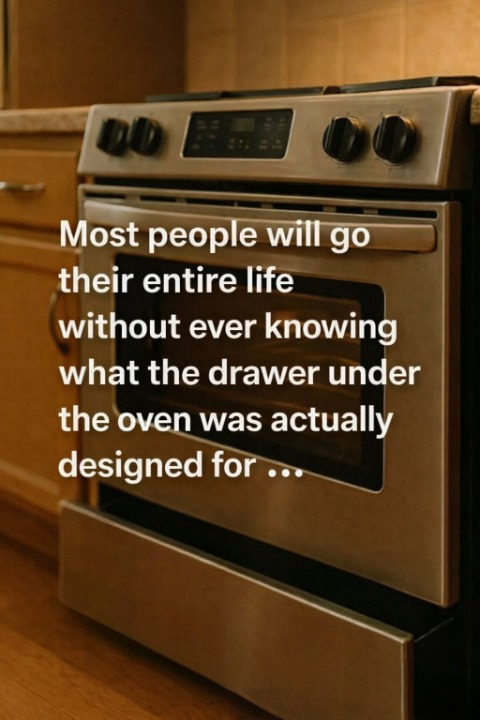
Many people use the drawer beneath their oven without ever wondering why it was included in the appliance’s design. For some households, it becomes a convenient place to store baking sheets, roasting pans, cooling racks, or other cookware that isn’t needed every day. Since it provides extra storage space in the kitchen, this habit feels completely natural.
However, depending on the model of your oven, that lower drawer may have been designed for a very different purpose. Understanding its intended function can help you make better use of your kitchen while ensuring your appliance operates as efficiently as possible.
A Commonly Overlooked Kitchen Feature
Kitchen appliances often include features that go unnoticed for years. While most people are familiar with the oven controls, burners, and timer, the drawer beneath the oven rarely receives much attention. As a result, many homeowners simply assume it was added to provide additional storage.
Although that assumption is true for some oven models, it isn’t universal. Manufacturers design these drawers with different purposes depending on the appliance, meaning the correct use can vary from one brand to another.
Taking a few moments to learn how your specific oven is designed can reveal features you may not have been using to their full potential.
Not Every Oven Drawer Serves the Same Purpose
One of the biggest misconceptions is that every oven includes the same type of bottom drawer. In reality, manufacturers use several different designs.
Some ovens include a dedicated storage drawer intended for baking pans, oven-safe cookware, and similar kitchen items. These drawers are convenient because they keep commonly used accessories close to where they’re needed.
Other ovens feature a warming drawer. Unlike a standard storage compartment, this drawer is designed to maintain the temperature of cooked food without continuing to cook it. This can be especially useful when preparing several dishes that finish cooking at different times.
Certain premium or commercial-style ovens may also include specialized lower compartments with features that differ from traditional storage drawers.
Because there is no universal design, it’s always a good idea to check the owner’s manual for your particular appliance.
What Is a Warming Drawer?
A warming drawer is designed to keep prepared food warm until it is ready to be served. Instead of raising the cooking temperature, it provides gentle heat that helps maintain serving temperature for a limited period.
This feature can be helpful during family dinners, holiday gatherings, or other occasions when multiple dishes need to stay warm while the meal comes together.
Common foods that may be suitable for a warming drawer include:
- Dinner rolls
- Baked potatoes
- Roasted vegetables
- Cooked meats
- Oven-safe serving dishes
Since warming drawers are designed differently across manufacturers, it’s important to follow the instructions provided with your specific appliance.
When the Drawer Is Intended for Storage
If your oven includes a storage drawer, it can be a practical place to organize kitchen equipment. Many people use it to keep frequently used cookware within easy reach.
Items commonly stored include:
- Baking sheets
- Muffin tins
- Pizza pans
- Cooling racks
- Roasting pans
- Oven-safe casserole dishes
Keeping these items organized can free up valuable cabinet space while making meal preparation more convenient.
However, it’s still important to avoid overcrowding the drawer, as excessive weight or improper storage may affect how easily it opens and closes.
Items You May Want to Avoid Storing
Regardless of whether your oven has a storage drawer or a warming drawer, certain items may not be appropriate to keep inside.
For example, plastic containers, paper products, dish towels, or anything that could be damaged by heat should generally be stored elsewhere, especially if the drawer becomes warm during oven use.
Similarly, cleaning chemicals or aerosol products should never be stored near heat-producing appliances.
Following the manufacturer’s recommendations helps reduce unnecessary wear while promoting safe kitchen habits.
Why So Many People Get Confused
The confusion surrounding oven drawers is understandable. From the outside, many drawers appear nearly identical, even though they perform different functions internally.
Because families often pass along household habits from one generation to the next, many people continue using the drawer exactly as previous homeowners or family members did without ever checking its intended purpose.
In addition, appliance designs have changed over the years. Older ovens were more likely to include simple storage compartments, while many modern models offer warming drawers or additional cooking features.
As a result, two kitchens can look almost identical while having appliances designed quite differently.
Finding the Correct Information
The easiest way to determine the purpose of your oven drawer is to consult your appliance’s user manual. Most manufacturers clearly explain whether the drawer is designed for storage, warming, or another specialized function.
If the original manual is no longer available, many manufacturers provide digital copies on their official websites using the appliance’s model number.
Taking a few minutes to review these instructions can help you make the best use of your oven while avoiding accidental misuse.
Making Better Use of Your Kitchen
Learning about the features already built into your appliances can improve both organization and cooking efficiency.
If your oven includes a warming drawer, it can simplify meal preparation by keeping finished dishes ready to serve while the remaining food finishes cooking.
If it’s designed as a storage drawer, organizing cookware there can help reduce cabinet clutter and make frequently used baking tools easier to access.
Either way, understanding your appliance allows you to use it more effectively.
Final Thoughts
The drawer beneath your oven may seem like a small detail, but its intended purpose depends entirely on the appliance you own. While many people automatically use it for storing cookware, some ovens are designed with warming drawers that help keep prepared food at serving temperature.
Rather than assuming every oven functions the same way, it’s worth taking a moment to learn about your specific model. A quick look at the owner’s manual can provide helpful information and ensure you’re using every feature as intended.
Sometimes, the most useful kitchen discoveries aren’t new appliances at all—they’re simply learning more about the ones you already have.