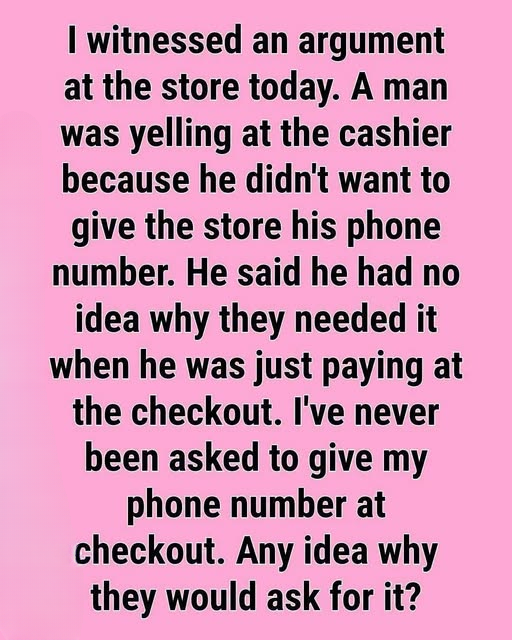
You have finished shopping.
The cashier scans the final item, the total appears on the screen, and you’re ready to pay.
Then comes a question you’ve probably heard countless times:
“Do you have a phone number with us?”
Sometimes the cashier asks for your phone number even if you’ve never visited the store before.
You might hesitate.
Why do they need it?
Is it required to complete the purchase?
Does it give you a discount?
Is the store creating a customer profile?
And perhaps most importantly, what happens to that information after you provide it?
The answer isn’t the same for every retailer. A phone number can serve several different purposes depending on the company’s loyalty program, payment system, marketing practices, and privacy policies.
Understanding those possibilities can help shoppers make more informed decisions at the checkout counter.
The Question Has Become Part of Everyday Shopping
For many shoppers, entering a phone number has become almost automatic.
You walk into a store, select your items, reach the register and hear:
“What’s your phone number?”
Some customers immediately provide it.
Others ask why it’s needed.
Some simply decline.
The practice is especially common at retailers that operate loyalty or rewards programs.
Instead of carrying a physical membership card, customers can often identify themselves using a phone number.
That makes the process easier for both the shopper and the retailer.
But convenience is only one part of the equation.
The information can also help a business recognize returning customers and connect purchases to an existing account.
Your Phone Number Can Act Like a Loyalty Card
One of the simplest explanations is that your phone number functions as a digital membership card.
Years ago, customers might have carried a plastic rewards card attached to their keychain.
Today, many retailers allow customers to enter a phone number instead.
The system can then identify the account and apply eligible discounts or rewards.
For example, a store may offer special prices to members of its loyalty program.
Instead of asking you to search through your wallet for a membership card, the cashier enters your phone number.
The system finds your account.
The discount is applied.
The transaction continues.
From the customer’s perspective, it can be convenient.
From the retailer’s perspective, it also provides a consistent way to associate transactions with an account.
Why Stores Value Loyalty Programs
Retailers generally want customers to return.
A loyalty program can encourage that behavior by offering benefits such as discounts, points, personalized offers, birthday rewards or other incentives.
But loyalty programs can also help businesses understand purchasing patterns.
If customers voluntarily identify themselves during purchases, a retailer may be able to analyze information associated with those transactions.
Depending on the company’s policies and applicable laws, the business may use that information to understand things such as:
- Which products customers purchase
- How frequently they shop
- Which promotions receive attention
- What categories are popular
- Whether customers respond to specific offers
- Which products are commonly purchased together
This type of information can help businesses make decisions about inventory, promotions and customer communication.
Does Giving Your Number Automatically Mean You’ll Receive Marketing Messages?
Not necessarily.
This is an important distinction.
Providing a phone number at checkout does not automatically mean that every retailer can use it for every possible marketing purpose.
The exact rules depend on the company’s policies, the reason the number was collected, how you consented, and the laws that apply where you live.
Some retailers may ask whether you’d like to receive promotional texts.
Others may include marketing communications as part of their loyalty-program terms.
Some may use the number primarily for account identification.
That’s why it’s worth paying attention to what you’re agreeing to rather than assuming every retailer handles the information in exactly the same way.
Your Phone Number May Be Connected to More Information
A phone number by itself may not reveal much.
But when it’s associated with a customer account, it can become part of a larger collection of information.
Depending on the retailer and its systems, an account might contain information such as:
- Purchase history
- Rewards activity
- Email address
- Preferences
- Coupons used
- Store visits
- Account settings
- Online shopping activity
Not every company collects all of these categories.
The important point is that a phone number can serve as an identifier connecting different pieces of information within a company’s systems.
That’s one reason privacy-conscious shoppers may think twice before automatically providing it.
Why a Cashier May Ask Even When You Don’t Want a Rewards Account
Sometimes customers are surprised when they’re asked for a phone number during an ordinary purchase.
They may think:
“I don’t want a rewards account. I’m just buying something.”
That’s reasonable.
However, the cashier may be following the store’s standard checkout procedure.
Some businesses train employees to ask every customer whether they have an account.
The employee may not know whether you’re already a member.
The question can therefore become routine.
That doesn’t necessarily mean the store requires you to provide your number.
In many situations, you can simply ask:
“Is it required for this purchase?”
If the answer is no, you can decide whether the benefits are worth providing the information.
Discounts Can Make the Decision More Complicated
Here’s where things become interesting.
Suppose the cashier says:
“You’ll save $8 if you enter your phone number.”
Suddenly, the decision isn’t simply about privacy.
It’s about value.
You’re being offered an immediate financial benefit in exchange for participating in a system.
Some customers consider that a fair trade.
Others prefer not to share additional information, even for a discount.
Neither approach is automatically right for everyone.
The important thing is understanding the exchange.
A discount may be the incentive that encourages customers to join or use a loyalty program.
What Information Does the Store Actually Need?
This is one of the most useful questions you can ask.
If a store says it needs your phone number, you can politely ask why.
For example:
“Is the number necessary for payment, or is it only for the rewards program?”
That question can clarify the situation immediately.
You may discover that the number is needed to locate a loyalty account.
Or you may learn that the purchase can proceed without it.
If you’re uncomfortable sharing the information, you can decide accordingly.
Payment Information Is a Different Matter
It’s also important not to confuse a phone number request with payment information.
When you pay by card, the payment system processes information necessary to authorize the transaction.
A loyalty-program phone number serves a different purpose.
The phone number may identify your customer account.
The payment system handles the financial transaction.
These systems can interact within a retailer’s broader technology environment, but they are not necessarily the same thing.
Why Retailers Track Purchasing Patterns
Imagine a store discovers that customers who buy a particular coffee brand frequently purchase a certain type of snack during the same shopping trip.
That information could influence how products are displayed.
The retailer might place the products closer together.
It might create a promotional bundle.
It could adjust inventory.
It could experiment with different discounts.
This is one reason customer purchasing data can be valuable to retailers.
The value isn’t necessarily about one specific customer.
It can also come from identifying broader patterns across thousands or millions of transactions.
Personalized Offers
Some loyalty programs use customer activity to provide more relevant offers.
For example, someone who regularly purchases pet supplies might receive promotions related to those products.
Someone who frequently buys household goods could receive discounts in that category.
The purpose is to make marketing more relevant.
For customers, that can be convenient.
Instead of receiving completely random promotions, they may see offers connected to products they actually use.
But personalization also raises privacy questions.
Some shoppers are comfortable with it.
Others prefer not to have their purchasing habits used for targeted promotions.
Why Privacy Policies Matter
If you want to understand what a retailer does with your phone number, its privacy policy is one of the best places to look.
Privacy policies can explain:
- What information the company collects
- Why it collects it
- How information is used
- Whether information is shared with service providers
- How long certain information may be retained
- What choices customers have
- How customers can request access or deletion where applicable
Privacy policies can be long and complicated, but you don’t necessarily need to read every sentence.
Look for sections discussing personal information, loyalty programs, marketing, sharing, retention and consumer choices.
Your Number Could Also Help Recover an Account
There are legitimate reasons retailers collect phone numbers that have nothing to do with advertising.
A phone number can help customers recover access to an account.
It may be used for verification.
It might help identify a loyalty profile.
It could allow a store to connect purchases to a digital receipt system.
These functions can provide genuine convenience.
That’s why the question shouldn’t simply be:
“Is giving my phone number bad?”
A better question is:
“What am I receiving in exchange, and how will the company use the information?”
Text Messages Are a Separate Consideration
Marketing texts deserve particular attention.
If a retailer asks whether you’d like promotional messages, make sure you understand what you’re agreeing to.
You may be offered:
- Discount alerts
- New-product announcements
- Promotional campaigns
- Special-event messages
- Loyalty-program updates
If you don’t want marketing texts, you generally don’t need to accept them simply because you joined a rewards program, although the exact terms depend on the retailer and applicable law.
If you later decide you don’t want the messages, look for the company’s unsubscribe or communication-preference options.
Don’t Give Sensitive Information Just Because You’re Asked
A routine checkout question shouldn’t turn into a request for unnecessary sensitive information.
If someone asks for information that seems unrelated to the purchase, you can ask why it’s needed.
For example:
“Why do you need that?”
“What is it used for?”
“Is there another way to complete the purchase?”
These are reasonable questions.
A trustworthy business should be able to explain its process.
What About Your Email Address?
The same principle applies to email addresses.
Stores may ask for your email for digital receipts, loyalty programs, account creation or marketing.
A digital receipt can be convenient because you don’t have to keep a paper receipt.
But customers should understand whether the email address is also being added to a marketing database.
If you’re unsure, ask.
For example:
“Is this only for the receipt, or will I receive promotional emails too?”
That simple question can clarify the arrangement.
What Happens to Old Customer Accounts?
Another issue people don’t always consider is account maintenance.
Maybe you joined a loyalty program five years ago.
You rarely shop there anymore.
Your phone number may still be associated with the account.
Depending on the retailer’s policies, the company may retain certain information for a period of time.
If you no longer want an account, check whether the retailer offers account deletion or privacy-request options.
Different businesses have different processes.
Should You Use a Fake Phone Number?
This is where caution is important.
Some people respond to checkout requests by giving a random number.
That can create problems.
You could accidentally provide someone else’s number.
You might interfere with another customer’s account.
You could also create inaccurate information in the retailer’s system.
If you don’t want to provide your number, the simplest approach is usually to politely decline or ask whether the purchase can be completed without it.
What About Publicly Displaying Your Number?
Another privacy consideration is what happens when you say your phone number aloud.
In a crowded store, other people may hear it.
If you’re uncomfortable speaking it publicly, you can ask whether there’s another way to enter it.
For example, some checkout systems allow customers to type the number directly on a customer-facing screen.
This reduces the chance of someone nearby overhearing it.
Why Some Customers Don’t Mind
For many shoppers, the benefits outweigh the privacy concerns.
They may receive regular discounts.
They may accumulate rewards.
They may enjoy personalized offers.
They may appreciate digital receipts.
For someone who shops at the same retailer frequently, a loyalty account can be useful.
The decision is personal.
There isn’t one universal answer for everyone.
Why Other Customers Decline
Other shoppers don’t want another account.
They don’t want promotional messages.
They don’t want their purchases connected to a profile.
Or they simply don’t see enough benefit to justify sharing additional information.
That’s also reasonable.
A person who visits a particular store once a year may have little incentive to participate in its loyalty program.
A Simple Rule for Checkout
The next time someone asks for your phone number, don’t panic.
You don’t need to assume the worst.
Instead, ask yourself three questions:
1. Why are they asking?
Is it for rewards?
A digital receipt?
Account identification?
Another legitimate purpose?
2. What do I receive?
Are you getting a discount, points or another benefit?
3. Am I comfortable with the information being connected to my account?
If the answer is no, ask whether you can complete the purchase without providing it.
The Bigger Picture
The checkout counter is one of the places where everyday convenience and digital privacy meet.
A simple phone number can make a loyalty program easier to use.
It can help retrieve an account.
It can enable digital receipts.
It can also allow a retailer to connect purchases with a customer profile and potentially personalize offers.
None of those possibilities automatically means something improper is happening.
But customers deserve to understand what information they’re sharing and why.
The best approach isn’t fear.
It’s awareness.
Final Thoughts
The next time a cashier asks:
“What’s your phone number?”
you don’t necessarily need to answer automatically.
Pause for a moment.
Ask why it’s needed.
If you’re being offered a loyalty discount, decide whether the benefit is worthwhile.
If it’s for a receipt, ask whether there’s another option.
If you’re being asked to sign up for promotional messages, make sure you understand what you’re agreeing to.
And if you simply don’t want to provide the information, politely ask whether you can continue without it.
A phone number may seem like a small piece of information.
But in today’s digital economy, identifiers can connect different parts of a customer’s relationship with a business.
Understanding that doesn’t mean avoiding every loyalty program or refusing every request.
It simply means making the decision yourself instead of giving out information automatically.
The most useful question at checkout may not be “What do I get?” but “Why do you need this information?”