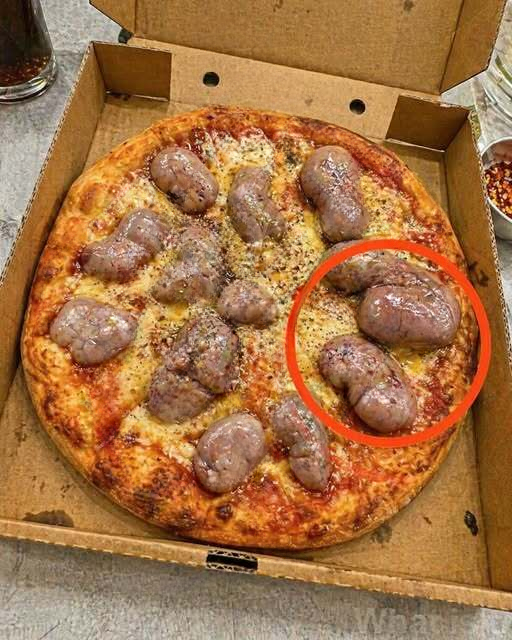
Why Pizza Sometimes Develops Strange Bubbles: Understanding the Science Behind a Perfectly Baked Crust
Introduction: When an Ordinary Pizza Looks Unexpected
After a long day, few things are as satisfying as settling down with a hot pizza. The familiar combination of melted cheese, flavorful sauce, and freshly baked crust makes it a popular choice for a relaxed evening at home. Most people expect their pizza to look more or less the same every time they order it. However, occasionally, something unusual catches their attention.
Small bubbles may appear across the crust. Parts of the dough might puff up, creating rounded pockets, while the cheese forms little blisters or golden spots. Some areas may look smooth and others uneven, with raised sections that seem different from the rest of the pizza.
At first glance, these changes can be surprising. Someone who has never paid much attention to how pizza is made might wonder whether the bubbles indicate a problem with the ingredients, the cooking process, or the quality of the food.
In many cases, however, these bubbles are a normal result of baking. Pizza dough contains water, yeast, and a network of proteins that trap gas. When the dough enters a hot oven, the heat causes gases and moisture to expand, producing the familiar air pockets that help give bread and pizza their texture.
Cheese can also develop bubbles as it heats, while small raised spots on the crust may become golden or slightly crisp.
Understanding these processes can make an unusual-looking pizza much less mysterious. At the same time, appearance alone cannot establish whether every delivered pizza is safe to eat. Knowing the difference between ordinary baking changes and genuine signs of a food-quality problem is useful for anyone who enjoys ordering pizza at home.
Why Pizza Dough Forms Bubbles
The explanation begins with the dough itself.
Traditional pizza dough is generally made from flour, water, yeast, and salt. Depending on the recipe, it may also contain oil, sugar, or other ingredients. Once the flour and water are combined, the proteins in the flour form a structure that helps hold the dough together.
When yeast is included, it begins using available sugars and producing carbon dioxide. This gas becomes trapped within the developing dough structure, creating small pockets that expand during fermentation.
These pockets are important because they help determine the finished crust’s texture.
A dough that has developed enough gas and has been handled appropriately can produce a crust with a light interior and an appealing combination of crispness and softness. A dough with fewer gas pockets may produce a denser result, although the final texture also depends on the flour, hydration, fermentation time, shaping technique, and baking temperature.
The bubbles are not necessarily signs of a mistake. They are often part of the process that gives pizza its characteristic texture.
Some pizza styles deliberately encourage larger air pockets, while others aim for a more uniform crust. The difference comes down to the recipe and the methods used by the person preparing the dough.
The Role of Yeast in Pizza Making
Yeast is one of the most important ingredients in many pizza recipes.
This microscopic organism helps transform sugars into carbon dioxide and other fermentation products. As the dough rests, carbon dioxide accumulates within the dough’s structure, causing it to expand.
The process is known as fermentation.
Fermentation does more than increase the dough’s volume. It also influences flavor, aroma, and texture. Depending on the recipe and timing, the dough may develop subtle flavors that contribute to the finished pizza.
Temperature has a significant effect on how quickly yeast works. Warmer conditions generally speed up fermentation, while cooler conditions slow it down.
This is one reason some pizza makers allow dough to rest in a refrigerator for an extended period. A slower fermentation process can make production easier to manage and can contribute to the dough’s flavor and handling characteristics.
If the dough is allowed to develop sufficiently, gas pockets form throughout it. During baking, those pockets expand further and can create visible bubbles.
The exact result depends on how the dough was mixed, fermented, shaped, and baked. Two pizzas made from similar ingredients may develop different patterns because small differences in handling can influence how gas moves through the dough.
What Happens When Pizza Enters a Hot Oven?
Baking transforms soft, flexible dough into a structured crust.
When a pizza enters a hot oven, several processes occur almost simultaneously. The temperature of the dough rises, gases expand, moisture begins turning into vapor, and the dough’s structure gradually changes as its proteins and starches respond to heat.
Existing air pockets may grow larger, producing a visible rise in the crust. Areas that contain more trapped gas may puff up more noticeably than surrounding sections.
This expansion is sometimes described as oven spring. The term is also used in bread baking to describe the rapid increase in volume that occurs during the early stages of baking.
Pizza ovens can reach high temperatures, especially in professional kitchens. Under those conditions, the outer surface may begin setting and browning while the interior continues expanding.
The result can be a crust with unevenly distributed air pockets, including small bubbles or larger raised sections.
These variations are not unusual. In fact, some styles of pizza are prized for their airy edges and irregular texture.
The appearance of the finished crust reflects a combination of fermentation, dough structure, heat, and moisture rather than one single factor.
Why Some Pizza Bubbles Become Large
Not all bubbles remain small.
A larger pocket can develop when gas collects in one section of the dough and expands during baking. If the surrounding dough is flexible enough to stretch, the pocket may become a noticeable dome.
The distribution of gas is influenced by the way the dough is handled.
When pizza dough is shaped, the person preparing it may preserve some of the gas near the edges while pressing more of it out of the center. This can help produce a raised outer crust.
If the dough is stretched unevenly, certain sections may become thinner than others. Thin areas can heat and crisp differently, while thicker areas may retain more moisture.
The dough’s hydration level also affects its behavior. Dough containing a relatively high proportion of water may be more extensible, although its handling characteristics depend on the flour and preparation method.
Fermentation time matters as well. Dough that has developed many gas pockets may puff up noticeably in the oven, while dough that has fermented less may produce a different texture.
None of these factors automatically indicates a problem. They are ordinary variables in baking.
The Difference Between Crust Bubbles and Cheese Bubbles
When someone notices bubbles on a pizza, it is useful to identify where they appear.
Bubbles in the crust and bubbles in the cheese have different explanations.
Crust bubbles usually result from trapped gas and expanding moisture within the dough. They may form near the edge, across the surface, or in isolated areas.
Cheese bubbles develop as the cheese heats and its moisture, fat, and protein structure respond to the oven’s temperature.
As the cheese becomes hot, it softens and melts. Depending on its composition, some moisture may turn to vapor, and small pockets can appear within the melted surface.
Fat may also separate from the cheese, contributing to a glossy appearance or small areas of bubbling.
The result varies according to the type of cheese, its moisture content, how finely it is shredded, and the temperature and duration of baking.
Mozzarella, for example, can behave differently depending on whether it is fresh or a lower-moisture variety intended for baking.
A pizza topped with several cheeses may develop a different pattern from one made with a single variety.
These changes are part of the way cheese behaves when heated. They do not, by themselves, establish that the pizza is contaminated.
Why Cheese Sometimes Develops Golden or Brown Spots
Many people associate a good pizza with golden cheese and lightly browned areas across the surface.
These colors develop through reactions that occur during cooking.
One important process is the Maillard reaction, a series of chemical reactions between certain amino compounds and reducing sugars that can produce brown colors and complex aromas.
The reaction contributes to the flavor and appearance of many cooked foods, including bread crusts, roasted vegetables, and browned cheese toppings.
Caramelization can also contribute to browning in foods containing suitable sugars, although it is distinct from the Maillard reaction.
On a pizza, the distribution of heat is rarely perfectly uniform. Some areas may receive more direct heat than others, while toppings can create small differences in moisture and surface temperature.
As a result, one section of cheese may become golden while another remains pale.
Small blisters can develop where the cheese becomes especially hot. These may collapse as the pizza cools, leaving behind a brown spot.
Such variation is common in baked foods. The color and texture should still be considered alongside the pizza’s handling and storage history when assessing whether it is suitable to eat.
How Different Pizza Styles Affect Bubble Formation
Pizza is made in many styles, and each style produces a different balance of crust thickness, texture, and air pockets.
Neapolitan-style pizza
Neapolitan-style pizza is often associated with a soft center and an airy outer crust. High baking temperatures and carefully prepared dough help create a characteristic texture.
The edges may develop irregular dark spots and raised sections. These are commonly associated with the style’s traditional baking process.
New York-style pizza
New York-style pizza generally has a thinner center and a crust that can be folded without breaking apart. Its dough may still develop air pockets, particularly around the edge, but the overall structure differs from that of a soft, puffy Neapolitan crust.
Pan pizza
Pan pizzas are often thicker and may have a substantial, crisp underside. Depending on the recipe and proofing method, the dough can develop bubbles throughout its interior.
Oil in the pan and the way the dough expands can influence the final texture.
Thin-crust pizza
Thin-crust pizza typically has less dough available to form large air pockets. Even so, small bubbles can appear when trapped gas expands during baking.
The result depends on the dough recipe, how it is rolled or stretched, and the temperature of the oven.
Homemade pizza
Homemade pizzas vary widely because people use different flours, fermentation times, ovens, and shaping methods.
A household oven generally operates differently from a commercial pizza oven, which can influence how quickly the crust sets and where bubbles develop.
These variations show why there is no single appearance that every properly baked pizza must have.
Does a Bubble Mean the Pizza Was Contaminated?
A bubble alone is not a reliable sign of contamination.
Food contamination can involve microorganisms, chemicals, or foreign materials, many of which cannot be identified simply by looking at a food’s surface.
Ordinary baking bubbles are generally explained by the behavior of dough, moisture, gas, and melted cheese. They can occur even when a pizza has been prepared correctly.
However, it would also be inaccurate to claim that every unusual-looking pizza is safe.
A pizza’s suitability depends on several factors, including ingredient quality, preparation practices, cooking, and how the food was handled after baking.
For example, a pizza may be unsafe if it has been held at inappropriate temperatures for too long or contaminated through contact with unclean surfaces.
Some forms of contamination do not cause obvious changes in color, smell, or appearance. Therefore, a normal-looking pizza cannot always be assumed safe solely because it looks appealing.
The most useful approach is to distinguish ordinary cooking effects from broader warning signs and to consider the food’s handling history.
How to Recognize When a Pizza Deserves a Closer Look
Although bubbles are common, certain conditions may justify contacting the restaurant or