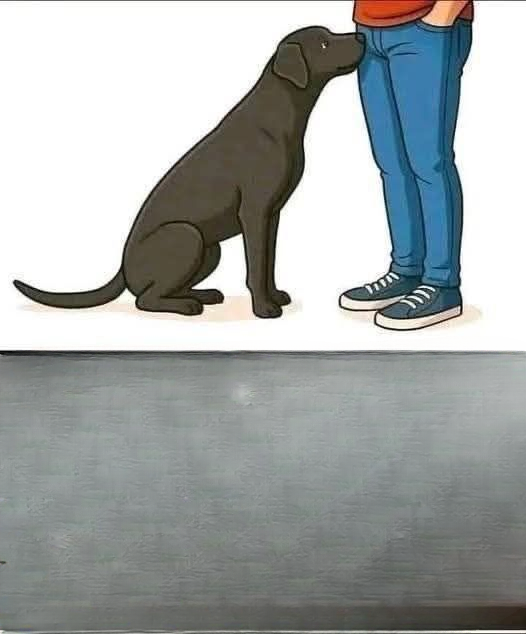
Why Does Your Dog Sniff Your Feet? Understanding Your Dog’s Remarkable Sense of Smell
Dogs have long been cherished as loyal companions, but one of the most fascinating aspects of their behavior is their extraordinary sense of smell.
While humans rely heavily on their eyesight to understand the world, dogs experience much of their surroundings through scent. Smells help them recognize familiar people, explore new environments, gather information, and respond to changes around them.
This is why you may notice your dog sniffing your feet, shoes, hands, clothing, or even objects that seem completely uninteresting to you.
Although this behavior might sometimes feel unusual, it is generally a normal part of how dogs investigate their surroundings.
To a dog, sniffing is much more than simply detecting an odor. It is a way of collecting information.
Understanding why dogs sniff people and everyday objects can help owners better appreciate their pets’ behavior, communication, and remarkable sensory abilities.
1. A Dog’s Sense of Smell Is Extraordinary
A dog’s nose is one of its most important tools for understanding the environment.
Humans primarily depend on vision when navigating the world. Dogs, however, gather a tremendous amount of information through their sense of smell.
Their olfactory system is highly developed, allowing them to detect and distinguish many odors that humans may not notice at all.
A familiar room, a person’s clothing, or a patch of grass can contain a wide range of scent information.
When a dog sniffs, it may be detecting traces of other people, animals, environmental substances, and changes that have occurred since its last visit.
This sensory ability is one reason dogs are used in activities such as search-and-rescue operations, scent detection, and certain forms of medical research.
For an everyday family dog, the same ability helps make ordinary experiences interesting.
A walk around the neighborhood is not just a walk. It is an opportunity to investigate countless scents.
And when your dog sniffs your feet, it may be doing something similar.
2. Why Does Your Dog Sniff Your Feet?
Feet can carry a variety of scents throughout the day.
Your shoes and socks come into contact with floors, outdoor surfaces, and different environments. Your skin also produces natural oils and sweat, which contribute to your individual scent.
Dogs may find these odors particularly interesting because their noses are designed to detect subtle differences in smell.
When your dog sniffs your feet, it may simply be gathering information about where you have been or what you have encountered.
For example, after returning from a walk, your shoes may carry scents from sidewalks, grass, soil, or other places.
Your dog may investigate these odors because they provide information about the environment.
Feet also tend to be close to the ground, where dogs naturally spend much of their time sniffing.
In many cases, there is no complicated explanation behind the behavior.
Your dog is curious, and your feet happen to be an interesting source of scent.
3. Your Scent Helps Your Dog Recognize You
Dogs can recognize familiar individuals through scent.
Your personal odor is influenced by several factors, including natural skin secretions, the microorganisms living on your skin, and the products you use.
Although your scent may seem ordinary to you, it can be highly recognizable to your dog.
This is one reason dogs may sniff their owners when they return home.
They may investigate clothing, hands, shoes, or other areas that carry familiar scents.
Sniffing can help dogs recognize that the person in front of them is someone they know.
It may also be part of a greeting routine.
Just as humans might say hello or ask how someone’s day went, dogs often use their noses to gather information when reconnecting with familiar people.
Of course, dogs do not interpret these interactions in exactly the same way humans do.
But scent plays an important role in their recognition and social behavior.
4. Sniffing Is a Natural Way for Dogs to Explore
For dogs, sniffing is a form of exploration.
When a dog encounters something unfamiliar, its first instinct may be to investigate it with its nose.
This behavior is particularly noticeable during walks.
A dog may stop at a tree, sniff a patch of grass, investigate a shoe, or spend several moments examining a particular spot.
From a human perspective, these activities may seem repetitive.
But scent exploration provides dogs with information about their surroundings.
The same principle applies inside the home.
A dog may sniff a visitor’s shoes, investigate a shopping bag, or examine a blanket that has recently been brought into the house.
These behaviors are generally normal and can be part of a dog’s everyday sensory experience.
Allowing dogs appropriate opportunities to sniff during walks and supervised exploration can provide mental stimulation.
For many dogs, a walk that includes time to investigate scents can be enriching, even if the distance covered is relatively short.
5. Why Dogs Sniff Shoes and Socks
Shoes and socks can carry a collection of odors from daily activities.
A pair of shoes may have been worn outdoors, inside a workplace, or during a trip to the store.
Each environment can leave behind different scent traces.
Dogs may investigate shoes because these objects contain a mixture of familiar and unfamiliar odors.
Socks can also retain personal scent, making them interesting to some dogs.
This may explain why certain dogs repeatedly seek out their owner’s footwear.
However, sniffing and chewing are different behaviors.
While sniffing shoes is generally harmless, chewing or swallowing pieces of footwear can create safety concerns.
Small pieces of fabric, rubber, or other materials may pose a choking risk or cause digestive problems if swallowed.
If your dog tends to chew shoes, keep them out of reach and provide appropriate toys designed for chewing.
6. Sniffing Can Be Part of Social Communication
Dogs use scent as part of their social behavior.
When dogs meet one another, they often investigate each other through sniffing.
This is a normal part of canine communication and can provide information about another dog’s identity and familiarity.
Dogs also use scent to explore their environment and respond to odors left by other animals.
When a dog sniffs a person, it may be applying some of the same natural investigative behavior.
However, it is important not to assume that every sniff has a specific emotional meaning.
A dog sniffing your feet is not necessarily showing affection, dominance, anxiety, or any other single emotion.
The behavior may simply reflect curiosity.
To understand what your dog is communicating, consider its overall body language, the situation, and whether the behavior is relaxed or accompanied by signs of discomfort.
7. Can Dogs Detect Changes in Human Scent?
Dogs can detect subtle differences in odor, and scientific research has explored their ability to identify certain scent changes associated with human physiological conditions.
Changes in a person’s body chemistry can sometimes influence the volatile compounds released through breath or skin.
Trained dogs have been studied for their ability to detect specific odors associated with certain medical conditions.
However, this does not mean that every family dog can reliably diagnose a health problem by sniffing its owner’s feet.
An ordinary sniffing behavior should not be interpreted as a medical assessment.
If your dog suddenly becomes unusually interested in one area of your body, there may be many possible explanations, including changes in scent, routine, clothing, or simple curiosity.
Dogs are remarkable animals, but their behavior should not be used as a substitute for professional medical evaluation.
8. Why Does Your Dog Sniff Your Feet More After You Exercise?
After exercise, your body may produce more sweat.
Sweat itself is not always strongly scented, but substances on the skin and the activity of naturally occurring skin microorganisms can contribute to body odor.
Your shoes and socks may also retain additional odors after a workout.
For a dog, these changes may make your feet particularly interesting.
If your dog approaches you after a walk, workout, or long day outside and begins sniffing your shoes, it may simply be responding to the new combination of scents.
This behavior is usually not a reason for concern.
However, if your dog begins obsessively licking or chewing your feet, or if the behavior becomes difficult to interrupt, it may be worth considering whether the dog is responding to a learned habit, stress, or another environmental factor.
Persistent behavior that causes discomfort or interferes with daily activities can be discussed with a veterinarian or qualified animal behavior professional.
9. Is It Normal for Dogs to Sniff Other Parts of the Body?
Yes. Dogs may sniff different parts of a person’s body, including hands, clothing, legs, and areas where natural body odors are more noticeable.
This is part of their scent-based exploration.
Although some forms of sniffing can feel awkward to people, the behavior is not automatically inappropriate or a sign of a problem.
Dogs do not follow human social rules in exactly the same way people do.
They investigate the world using their senses, and scent is one of their primary sources of information.
Still, owners can establish boundaries.
If a dog repeatedly sniffs visitors in ways that make them uncomfortable, calmly redirecting the dog toward an appropriate behavior can help.
Training a reliable “leave it,” “come,” or “go to your place” cue can make social situations easier to manage.
The goal is not to punish normal canine curiosity but to guide it in a way that works for everyone.
10. Should You Let Your Dog Sniff During Walks?
In most ordinary situations, allowing your dog time to sniff during walks is beneficial.
Sniffing gives dogs opportunities to investigate their surroundings and engage their natural sensory abilities.
A walk does not need to be focused entirely on distance or speed.
For many dogs, a combination of physical movement and scent exploration can make the experience more engaging.
You can allow your dog to investigate safe areas while maintaining control of the leash and avoiding potentially hazardous substances.
Be cautious around unknown food, animal waste, sharp objects, chemicals, or other materials that your dog might try to lick or swallow.
If your dog becomes overly focused on one location, gentle redirection can help maintain a comfortable walking routine.
11. When Should You Redirect Sniffing Behavior?
Most sniffing is harmless, but there are situations where redirection is appropriate.
For example, you may want to redirect your dog if it:
- Repeatedly sniffs visitors who are uncomfortable with the behavior.
- Becomes difficult to guide away from certain objects.
- Sniffs or licks potentially hazardous substances.
- Interrupts activities in a way that creates a safety concern.
- Begins showing compulsive or unusually persistent behavior.
A calm approach is usually more effective than punishment.
Reward your dog for responding to a cue, moving away when asked, or choosing an appropriate alternative behavior.
Consistency helps dogs learn what is acceptable in different situations.
If the behavior appears suddenly, becomes excessive, or is accompanied by other unusual changes, consider seeking advice from a veterinarian.
12. How to Support Your Dog’s Natural Senses
Dogs benefit from opportunities to use their senses in safe and appropriate ways.
You can support natural scent exploration through simple activities at home.
Scent-based games
Hide a few pieces of your dog’s regular food in safe, accessible locations and encourage your dog to find them.
Start with easy hiding places and gradually make the activity more challenging.
Always supervise the game and avoid using foods that may be unsafe for dogs.
Sniffing walks
Allow your dog time to investigate suitable areas during walks.
You can combine short periods of relaxed sniffing with walking practice.
Food puzzles
Food-dispensing toys and appropriate puzzle feeders can encourage dogs to investigate and work for their meals.
Choose products suitable for your dog’s size and chewing habits.
Exploring new environments
When it is safe and appropriate, introducing your dog to new environments can provide opportunities for sensory enrichment.
Allow your dog to investigate at a comfortable pace without forcing interactions.
These activities can help make daily life more engaging while supporting natural canine behavior.
13. What Your Dog’s Sniffing Does—and Doesn’t—Tell You
It is easy to assign human meanings to a dog’s behavior.
When a dog sniffs our feet, we may wonder whether it is showing affection, searching for something, or trying to communicate a specific message.
Sometimes the explanation is much simpler.
Dogs sniff because scent is one of their primary ways of gathering information.
The behavior may reflect curiosity, recognition, exploration, or interest in a particular odor.
But a single sniff cannot reliably reveal a dog’s exact thoughts or emotional state.
To understand your pet more fully, look at the wider situation.
Is the dog relaxed?
Is its body loose and comfortable?
Does it move away naturally after investigating?
Or does the behavior appear persistent, stressful, or difficult to interrupt?
Observing the complete behavior provides more useful information than focusing on one action alone.
The Bottom Line: Your Dog Is Exploring the World Through Scent
If your dog regularly sniffs your feet, shoes, or other everyday objects, the behavior is usually a normal expression of canine curiosity.
Dogs experience the world differently from humans.
Their noses help them recognize familiar people, investigate new environments, and gather information from odors that we may barely notice.
Feet and footwear can carry a particularly interesting combination of scents, making them natural targets for investigation.
In most cases, there is no need to worry.
Allowing appropriate sniffing opportunities can be part of a healthy, enriching routine for your dog.
At the same time, owners can establish boundaries when the behavior becomes inconvenient or uncomfortable.
The next time your dog approaches your feet for a closer sniff, remember that it may simply be doing what dogs do best: using its remarkable nose to explore the world around it.