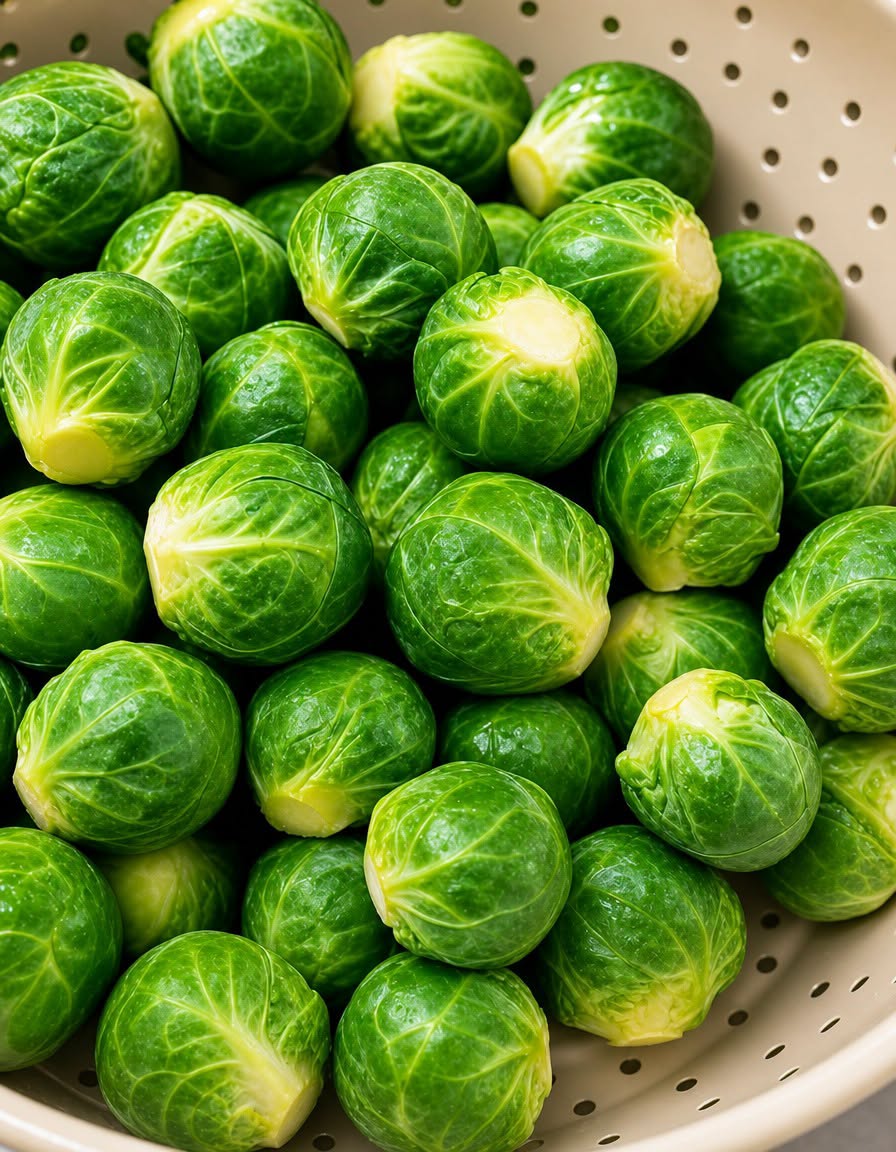
Why Brussels Sprouts Got Such a Bad Reputation — And Why Many People Enjoy Them Today
For many people, the words “Brussels sprouts” bring back memories of childhood dinners, vegetables sitting untouched on a plate, and the familiar instruction: “Just try one.”
For decades, Brussels sprouts had an image that was difficult to escape.
They were often associated with an unpleasant smell, a soft texture, and a bitter or sulfur-like flavor that made them one of the vegetables many children were reluctant to eat.
But there is an important detail that often gets overlooked.
The Brussels sprout itself wasn’t necessarily the problem.
In many cases, the way it was prepared made a huge difference.
Today, Brussels sprouts are prepared in countless ways. They can be roasted until the outer leaves become crisp, sautéed with garlic, steamed lightly, grilled, shredded into salads, or combined with other ingredients to create completely different flavors and textures.
So why did this small vegetable develop such a strong reputation in the first place?
And why do so many people who disliked Brussels sprouts as children enjoy them as adults?
The answer has a lot to do with cooking methods, food preferences, texture, and changing culinary habits.
A Small Vegetable With a Long History
Brussels sprouts belong to the same vegetable family as broccoli, cabbage, cauliflower, kale, and several other familiar foods.
They are essentially miniature cabbage-like heads that grow along a thick central stalk.
Despite their name, Brussels sprouts have a history that goes beyond Belgium’s capital city.
They are believed to have been cultivated in the region around what is now Belgium for centuries, with more organized cultivation becoming especially associated with Brussels.
Eventually, the vegetable spread throughout Europe and became a common winter crop.
Their popularity was partly practical.
Brussels sprouts grow well in cooler weather, and exposure to colder temperatures can influence their flavor.
They also have a compact shape that makes them relatively easy to store, transport, and prepare.
Over time, they became a familiar part of European and North American cooking.
But familiarity didn’t necessarily make them popular with everyone.
Why Did So Many People Dislike Them?
One of the biggest reasons for the vegetable’s poor reputation was the cooking method traditionally used in many homes.
Boiling vegetables for long periods was once extremely common.
Brussels sprouts were frequently placed in a pot of water and cooked until they became very soft.
The problem is that Brussels sprouts don’t necessarily benefit from being boiled for an extended amount of time.
As the vegetable continues cooking, its texture becomes softer.
The outer leaves can lose their firmness, and the entire sprout can become mushy.
For someone who already dislikes the vegetable’s natural flavor, that soft texture can make the experience even less appealing.
There is also the smell.
Brussels sprouts contain sulfur-containing compounds that can become more noticeable during cooking.
When the sprouts are cooked for a long time, these aromas can become particularly strong.
That smell became one of the defining characteristics people associated with Brussels sprouts.
Children sitting at the dinner table may not have known anything about cooking chemistry.
They simply knew that the kitchen smelled unusual and that the vegetable on their plate was soft and bitter.
That was enough to create a lasting dislike.
The Problem With Overcooking
Almost any vegetable can become less appealing when it is overcooked.
Think about a fresh green bean.
Cook it briefly and it may remain bright, firm, and slightly crisp.
Cook it for a very long time and it can become soft, dull, and watery.
Brussels sprouts can experience a similar transformation.
The difference is that their natural flavor compounds can become more noticeable as well.
This means that overcooking can affect both texture and aroma at the same time.
For someone trying Brussels sprouts for the first time, that combination isn’t necessarily ideal.
Fortunately, cooking techniques have changed significantly.
Roasting Changed the Conversation
One of the biggest reasons Brussels sprouts have become more popular in modern cooking is the rise of roasting.
Roasting creates a completely different result from boiling.
Instead of becoming soft throughout, Brussels sprouts can develop browned, crisp outer leaves while remaining tender inside.
The high heat also creates more complex flavors through browning.
A simple preparation might involve cutting the sprouts in half, lightly coating them with oil, seasoning them, and roasting them until the edges become golden brown.
Suddenly, the vegetable has multiple textures.
The outer leaves can be crisp.
The center remains tender.
The flavor becomes deeper and more savory.
This is a completely different experience from a bowl of overcooked sprouts.
Cutting Them in Half Makes a Difference
Another simple technique is to cut Brussels sprouts in half before cooking them.
A whole sprout is relatively compact.
When it is cut in half, more of the interior becomes exposed to heat.
This creates more opportunities for browning.
The flat side can develop a golden surface when placed against a hot baking tray or skillet.
The result is often more flavorful than simply boiling the sprouts whole.
This technique also makes it easier to season them evenly.
A little oil, salt, pepper, garlic, herbs, or another seasoning can reach more of the vegetable.
Sautéing Offers Another Option
Brussels sprouts don’t have to be roasted.
They can also be sautéed in a skillet.
Halved or thinly sliced sprouts can be cooked over medium to medium-high heat until they become tender and develop some color.
Garlic and onions are common additions.
Other ingredients can be added depending on personal preference.
For example, Brussels sprouts can work well with:
- Garlic
- Lemon
- Parmesan
- Black pepper
- Fresh herbs
- Balsamic vinegar
- Apples
- Nuts
- Mustard-based sauces
- Olive oil
- A small amount of cheese
The goal isn’t to hide the vegetable.
Instead, these ingredients can complement its natural flavor.
Shredded Brussels Sprouts Are Different Again
Another preparation that has changed the way people think about Brussels sprouts is shredding.
Instead of cooking the sprouts whole, they can be thinly sliced.
The result resembles a crunchy vegetable slaw.
Shredded Brussels sprouts can be used raw or lightly cooked.
They can be combined with ingredients such as apples, carrots, nuts, citrus, herbs, or a simple vinaigrette.
This creates a completely different texture from traditional cooked sprouts.
Someone who dislikes soft vegetables may actually prefer them prepared this way.
Brussels Sprouts Can Be Eaten Raw
Although cooked Brussels sprouts are much more common, they can also be eaten raw when properly cleaned and prepared.
Their texture is firm and crunchy.
The flavor can be slightly bitter or earthy, but dressings and other ingredients can balance that flavor.
Thinly slicing the sprouts makes them easier to eat.
A salad made with shredded Brussels sprouts can include citrus juice, olive oil, nuts, fruit, cheese, and herbs.
The result can be refreshing rather than heavy.
This is another example of how preparation can completely change a person’s perception of the same ingredient.
Why Do Brussels Sprouts Taste Bitter to Some People?
Taste perception varies from person to person.
Some people are naturally more sensitive to bitter flavors than others.
Genetics can influence how people perceive certain compounds in food.
This is one reason two people can eat the same vegetable and have completely different reactions.
One person might describe Brussels sprouts as mildly sweet and nutty after roasting.
Another might notice bitterness immediately.
Neither person is necessarily imagining the difference.
Their taste receptors and individual food preferences can influence the experience.
Age can also matter.
Children often have stronger preferences against bitter flavors.
As people grow older, their taste preferences can change.
Foods that once seemed unpleasant can become enjoyable later in life.
That may explain why someone who refused Brussels sprouts as a child eventually orders them at a restaurant.
Our Food Preferences Change
Taste isn’t fixed.
People frequently develop new preferences as they get older.
Consider foods such as coffee, dark chocolate, olives, spicy dishes, or certain cheeses.
Many people dislike these foods when they first try them.
Over time, repeated exposure can change their preferences.
Brussels sprouts can work the same way.
A child may remember them as something soft and unpleasant from a school cafeteria or family dinner.
Years later, that same person may try roasted Brussels sprouts with crispy edges and completely change their opinion.
The vegetable didn’t necessarily become different.
The preparation did.
Modern Restaurants Helped
Restaurants have also played a major role in changing the image of Brussels sprouts.
Chefs began treating the vegetable as more than a side dish that needed to be boiled.
Roasting, grilling, frying, shredding, and combining Brussels sprouts with flavorful sauces opened up new possibilities.
Menus began featuring them alongside meats, grains, salads, and other vegetables.
Some restaurants serve them with toasted nuts.
Others use citrus, herbs, cheese, or tangy sauces.
Once people began seeing Brussels sprouts prepared in appealing ways, the vegetable’s reputation started changing.
Instead of being associated with childhood dinners, they became a popular restaurant side dish.
Are Brussels Sprouts Nutritious?
Brussels sprouts can be part of a balanced diet and provide several useful nutrients.
They are naturally low in calories while providing fiber and various vitamins and minerals.
They are particularly known for providing vitamin C and vitamin K.
They also contain folate and other nutrients.
Like many vegetables, Brussels sprouts contain plant compounds that contribute to their nutritional value.
However, it’s important not to treat any single vegetable as a miracle food.
Eating a wide variety of vegetables is generally a more useful approach than focusing on one particular ingredient.
Brussels sprouts can simply be one option among many.
Fiber Is One of Their Benefits
Brussels sprouts provide dietary fiber.
Fiber plays an important role in normal digestion and can contribute to feelings of fullness.
Getting enough fiber is generally easier when a diet includes a variety of plant foods, including vegetables, fruits, beans, whole grains, nuts, and seeds.
Adding Brussels sprouts to meals can therefore be one small way of increasing vegetable and fiber intake.
Cooking Method Can Affect the Final Dish
The nutritional profile of a food isn’t the only thing affected by preparation.
Cooking method changes texture, flavor, and sometimes nutrient content.
Boiling can cause some water-soluble nutrients to move into the cooking water.
Steaming, roasting, sautéing, and other techniques have different effects.
This doesn’t mean one cooking method is always superior.
The most important factor is often whether the preparation encourages someone to actually enjoy eating the vegetable.
A perfectly nutritious food isn’t very useful if someone refuses to eat it.
Finding a preparation that makes vegetables appealing can help people include more of them in their meals.
How to Make Brussels Sprouts More Appealing
If you’re someone who has always disliked Brussels sprouts, it may be worth trying them differently.
Start with fresh sprouts.
Remove any damaged outer leaves and rinse them thoroughly.
Trim the ends if necessary.
Cut larger sprouts in half so they cook more evenly.
Then try roasting them at a relatively high temperature.
A light coating of oil and simple seasoning may be enough.
Avoid overcrowding the baking tray.
If too many vegetables are packed together, they can release moisture and steam rather than develop the browned edges that make roasted Brussels sprouts appealing.
Give them enough space to cook properly.
Don’t Cook Them Until They’re Completely Soft
One of the easiest ways to improve Brussels sprouts is simply to avoid overcooking them.
They should generally be tender enough to eat comfortably while retaining some structure.
The ideal texture depends on personal preference.
Some people like them quite tender.
Others prefer a noticeable bite.
The important thing is that they don’t have to become mushy.
If you remember Brussels sprouts as extremely soft vegetables from childhood, trying a firmer preparation may completely change your opinion.
Seasoning Can Make a Big Difference
Brussels sprouts have a fairly distinctive flavor, but they pair well with many seasonings.
A simple combination of olive oil, salt, and pepper is enough for many people.
For something more flavorful, garlic and lemon can add brightness.
Balsamic vinegar can provide acidity and sweetness.
Parmesan can add savory depth.
Toasted nuts can introduce crunch.
Fresh herbs can make the dish feel lighter.
The possibilities are extensive.
Sweet and Savory Combinations
Brussels sprouts also work surprisingly well with sweet ingredients.
Apples, pears, dried fruit, or a small amount of maple syrup can balance some of the vegetable’s natural bitterness.
The contrast between roasted vegetables and slightly sweet ingredients can create a more complex dish.
Again, the idea isn’t to disguise Brussels sprouts completely.
It’s about creating a combination of flavors that makes the vegetable more enjoyable.
Why Some People Still Don’t Like Them
Even with modern cooking techniques, Brussels sprouts won’t become everyone’s favorite.
That’s perfectly normal.
People have different taste preferences.
Some dislike bitterness.
Others dislike the texture.
Some simply don’t enjoy the flavor.
There is no reason everyone has to like the same vegetable.
The interesting part is that many people who once disliked Brussels sprouts discovered that their opinion was based more on how they were prepared than on the vegetable itself.
That doesn’t mean everyone will have the same experience.
It simply means that one preparation isn’t enough to judge an ingredient.
The Childhood Dinner Effect
Food memories can be surprisingly powerful.
If you associate a particular food with being forced to sit at the dinner table until you finished it, you may continue to dislike that food years later.
The memory becomes connected to the taste.
For some people, Brussels sprouts are part of that experience.
They remember seeing them on the plate and immediately deciding they didn’t like them.
But when adults encounter the same ingredient in a completely different environment—a restaurant, a dinner party, or a new recipe—they may approach it differently.
There is no pressure.
They can choose how much to eat.
And the food may be prepared in a way they’ve never experienced before.
That can change the entire perception.
So, Does Anyone Actually Eat Brussels Sprouts?
Absolutely.
Brussels sprouts have moved far beyond their old reputation.
They appear on restaurant menus, holiday tables, home dinner plates, salads, grain bowls, and countless recipes.
Some people genuinely love them.
Others tolerate them.
And some still prefer to leave them off their plates.
That’s perfectly fine.
The bigger lesson isn’t that everyone should suddenly become a Brussels sprout fan.
It’s that food deserves to be judged on more than one preparation.
A vegetable that tastes unpleasant when boiled for too long may become delicious when roasted.
A food that seems soft and bland may become crisp and flavorful when prepared differently.
And something you disliked as a child may be worth trying again years later.
A Simple Way to Give Them Another Chance
If your previous experience with Brussels sprouts wasn’t good, try a simple roasted version.
Choose fresh sprouts and remove any damaged leaves.
Trim the stems and cut the sprouts in half.
Toss them lightly with oil, salt, and pepper.
Arrange them in a single layer on a baking sheet.
Roast them until the edges become browned and crisp while the centers become tender.
Once they’re finished, you can add lemon juice, grated Parmesan, toasted nuts, or another topping you enjoy.
The result may surprise you.
And if you still don’t like them?
That’s okay too.
There are plenty of other vegetables to enjoy.
The Vegetable With a Second Chance
Brussels sprouts may never completely escape their childhood reputation.
For generations, people grew up believing that they were supposed to be unpleasant.
But modern cooking has shown that preparation matters.
The difference between a mushy, strongly scented vegetable and a crisp, golden, well-seasoned side dish can be enormous.
That is perhaps the most interesting thing about Brussels sprouts.
They haven’t necessarily changed.
Our approach to cooking them has.
So if you haven’t eaten Brussels sprouts since childhood, you may not actually know whether you dislike Brussels sprouts.
You may simply dislike the way you remember them being cooked.
And sometimes, giving an old food a second chance is all it takes to discover something you never expected to enjoy.