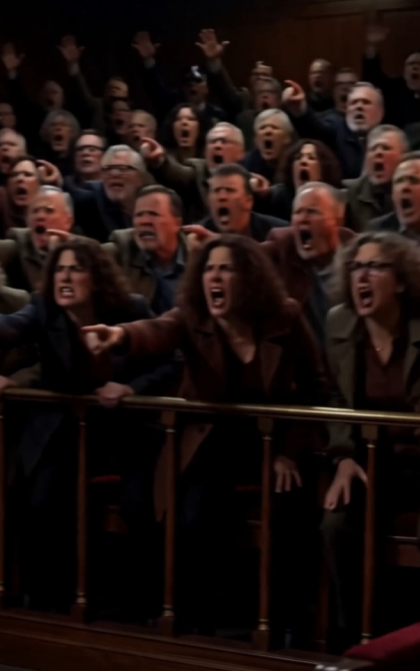
When Evidence Changes the Picture: Understanding Perception, Facts, and the Courtroom
Courtrooms are places where decisions are expected to be based on evidence, legal arguments, and established procedures rather than assumptions or first impressions. A case may appear straightforward when it is first presented, yet additional testimony, documents, photographs, records, or other evidence can sometimes provide a more complete understanding of what happened.
This is one of the reasons legal proceedings can be difficult to follow from the outside. People watching a case from a distance may form an opinion based on a headline, a short statement, or an initial description of an event. Inside the courtroom, however, attorneys and judges may spend considerable time examining details that are not immediately obvious.
A particular courtroom moment can therefore change how a case is understood—not necessarily because something dramatic happens, but because new information can place earlier assumptions in a different context.
The underlying principle is relatively simple: conclusions should be based on reliable evidence rather than perception alone.
Why First Impressions Can Be Misleading
People naturally form impressions quickly.
When we hear a story, we often create an explanation based on the information available at that moment. If additional information appears later, we may adjust our understanding.
The same process can happen when people follow legal cases.
A headline might describe an accusation, while the courtroom record may contain a much more complicated set of facts. A witness might remember an event differently from another witness. A document might clarify a timeline. A video recording could establish that an event occurred differently from how someone initially described it.
These differences do not automatically mean that someone intentionally provided false information.
Human memory is imperfect. People can remember the same event differently, particularly when time has passed or when the event was stressful or confusing.
For that reason, courts generally rely on multiple forms of evidence whenever possible.
The Importance of Evidence
Evidence is central to the legal process.
Depending on the type of case, evidence can include testimony, documents, photographs, recordings, electronic communications, financial records, physical objects, expert opinions, and other information that meets the applicable legal requirements.
The purpose of evidence is to help establish facts relevant to the legal questions before the court.
Not every piece of information presented in a courtroom has the same importance or reliability. Attorneys may challenge evidence, question witnesses, dispute interpretations, or argue that particular information should not be considered.
The judge’s role includes applying the relevant rules and determining how the proceedings should move forward.
In a trial involving a jury, jurors may ultimately evaluate the evidence and determine which facts have been established according to the applicable legal standard.
This process is designed to reduce the influence of assumptions and encourage decisions based on information presented through proper legal procedures.
A Single Detail Can Change the Context
Sometimes, an apparently small detail can have a significant effect on how a situation is understood.
For example, imagine a dispute involving the timing of an event. One account may suggest that two events occurred close together. A timestamp on a digital record could establish that they actually occurred hours apart.
That information could change the interpretation of the entire sequence.
Similarly, a photograph may initially appear to show one thing, while additional photographs taken from another angle provide important context.
A written document may also clarify what someone agreed to, when an agreement was made, or what information was known at a particular time.
These examples demonstrate why legal proceedings often involve careful examination of seemingly ordinary details.
The Role of Witnesses
Witness testimony can be an important part of a court case.
A witness may provide information about something they personally observed, heard, experienced, or otherwise know.
However, witnesses are human, and human memory is not perfect.
A person can honestly believe that they remember an event accurately while still getting certain details wrong.
This is one reason attorneys may ask witnesses detailed questions.
They may ask about dates, locations, conversations, lighting conditions, distances, relationships between people, or other circumstances surrounding an event.
The purpose is often to determine how reliable and relevant the testimony is.
Cross-examination can also highlight differences between a witness’s current testimony and earlier statements.
Again, a difference does not automatically prove that someone deliberately misled the court. It may simply demonstrate the limitations of memory or differences in how an event was understood.
Why Attorneys Examine Details Closely
Attorneys have different responsibilities during a legal proceeding.
A lawyer representing one side may present evidence supporting that side’s position. Another lawyer may challenge the evidence or present information supporting a different interpretation.
This adversarial structure allows competing explanations to be examined.
For example, if one piece of evidence appears to support a particular conclusion, an attorney may ask whether another explanation is possible.
They may also investigate whether the evidence was collected correctly, whether a witness had an opportunity to observe what they described, or whether a document provides additional context.
This process can sometimes make courtroom proceedings appear repetitive.
However, the detailed questioning serves an important purpose.
Legal decisions can have significant consequences, so courts generally require careful consideration before reaching conclusions.
The Difference Between an Allegation and a Finding
One of the most important principles in responsible legal reporting is the distinction between an allegation and an established fact.
An allegation is a claim made by one party.
A finding is a conclusion reached through the appropriate legal process.
These concepts should not be treated as interchangeable.
News reports and social media posts sometimes use dramatic language when describing accusations. Readers may then assume that an allegation has already been proven.
That can create an inaccurate impression.
Responsible reporting should explain where a case stands and use appropriate language depending on whether allegations have been investigated, charges have been filed, a trial is underway, or a court has reached a decision.
This distinction becomes particularly important when discussing individuals who have not been convicted of an offense.
The Presumption of Innocence
In criminal proceedings, the presumption of innocence is a fundamental legal principle in many jurisdictions.
It means that a person accused of a crime is not treated as guilty simply because an accusation has been made.
The prosecution generally has the responsibility of proving the case according to the applicable legal standard.
In the United States, criminal convictions generally require proof beyond a reasonable doubt.
This standard is intentionally demanding because a criminal conviction can have serious consequences.
The principle does not mean that every defendant is innocent in a factual sense. Rather, it establishes how the legal system must treat the person unless and until the prosecution meets its burden of proof.
How Perception Can Influence Public Opinion
Modern audiences can encounter information about legal cases long before a trial is completed.
Social media platforms, online videos, discussion forums, and short-form posts can spread information quickly.
While this can help people follow important cases, it can also create problems.
A short clip may remove important context.
A headline may emphasize one part of a story while leaving out another.
A photograph may be interpreted differently depending on the accompanying description.
A statement from one side may circulate widely before the other side has an opportunity to respond.
As a result, members of the public can form strong opinions before all of the evidence has been presented.
The Courtroom Provides a Different Environment
Inside a courtroom, evidence is generally presented according to established procedures.
Attorneys can object to questions or evidence when they believe legal rules are being violated.
Judges can make rulings on those objections.
Witnesses may be questioned by both sides.
Documents can be introduced and examined.
Expert witnesses may provide specialized opinions when their knowledge is relevant.
The structure of the courtroom is intended to create a process in which competing claims can be examined rather than accepted automatically.
This does not mean that the process is perfect.
Like any human institution, courts can face challenges and disagreements.
However, procedures exist to help reduce mistakes and provide m