When Courtroom Proceedings Reach Social Media: Understanding Justice, Online Attention, and Public Perception
Courtrooms are designed to provide a structured environment where legal disputes and criminal cases can be examined according to established rules and procedures. Judges, attorneys, witnesses, defendants, plaintiffs, and other participants all have defined roles within that process.
Social media has introduced a new dimension to the way people experience major legal proceedings.
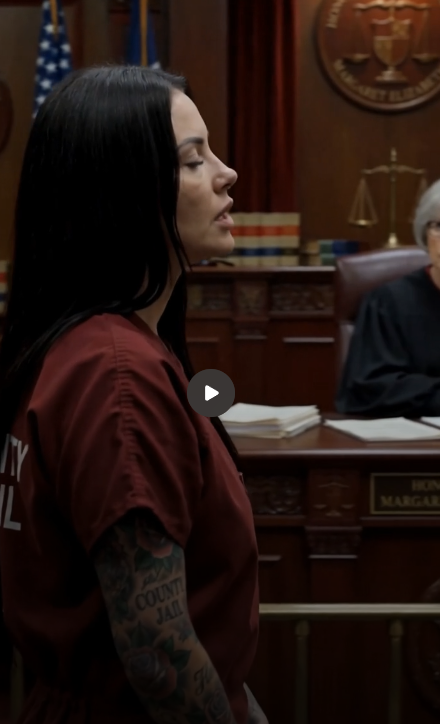
A courtroom moment that once would have been seen primarily by the people present in the building can now potentially reach thousands or millions of viewers through a short video shared online. A brief clip may appear on social media without the surrounding testimony, legal arguments, or procedural information that originally gave the moment its meaning.
This can make legal cases easier for the public to discover, but it can also create challenges.
A short video may capture an important moment, but it rarely contains the complete record of a case. Viewers may form opinions based on a few seconds of footage without knowing what happened before or afterward.
The growing presence of courtroom content online therefore raises broader questions about the relationship between justice, technology, privacy, and public perception.
Why Courtroom Videos Attract Attention
Legal proceedings naturally involve situations that people find significant.
A judge may announce a decision.
An attorney may present an argument.
A witness may provide important testimony.
A defendant may respond to a sentence.
A family member may make a statement.
When such moments are recorded and shared online, they can attract substantial attention because viewers are seeing a real event rather than a fictional representation of court proceedings.
The format of social media also contributes to the attention.
Short videos are easy to watch and share. Platforms can recommend content to users who have previously interacted with similar subjects.
As a result, a legal clip can travel far beyond the community where the original case occurred.
However, popularity should not be confused with completeness.
A video receiving millions of views does not necessarily explain the case accurately.
The Difference Between a Court Case and a Short Video
A court case can involve hundreds or thousands of pages of documents, multiple hearings, testimony from numerous witnesses, legal motions, evidence, and detailed arguments.
A social media video may last less than a minute.
That difference is important.
A clip can show what happened at a particular moment, but it may not explain why it happened.
For example, a video might show a judge addressing a defendant during sentencing.
Without the surrounding information, a viewer may not know what convictions led to the sentencing hearing, what arguments the attorneys presented, what evidence was considered, or what sentencing rules applied.
The video may therefore be authentic while still providing an incomplete picture.
Understanding this distinction is one of the most important skills for people who follow legal content online.
Context Can Change the Meaning of a Video
Context matters in almost every type of communication.
Consider a sentence taken from a long conversation.
The sentence may sound one way when viewed alone and very different when the preceding and following statements are included.
The same principle applies to courtroom footage.
A judge’s statement may be part of a much longer explanation.
An attorney’s question may refer to evidence that viewers have never seen.
A defendant’s response may relate to an earlier discussion.
A reaction from someone in the courtroom may have a meaning that is not obvious to people watching from home.
This does not mean that courtroom videos are unreliable.
It means that they should be viewed as one piece of information rather than automatically treated as the complete story.
How Social Media Changes Public Discussion
Traditional news reporting typically involves editors, journalists, fact-checking processes, and established publishing practices.
Social media allows information to spread through a much broader range of sources.
Anyone with an account may be able to upload commentary about a court case.
This can be useful because witnesses, legal observers, journalists, and members of the public can share information quickly.
At the same time, the lack of editorial oversight on many platforms means that inaccurate claims can also spread quickly.
A person may watch a short video, interpret it incorrectly, and publish an explanation that is then shared by thousands of other people.
The original misunderstanding can become difficult to correct once it has spread.
Why People Form Opinions Quickly
Humans naturally try to make sense of incomplete information.
When people see a powerful or emotional courtroom clip, they may immediately decide what they think happened.
This is especially likely when the video is accompanied by a strong headline or caption.
A caption can influence how viewers interpret the footage before they even watch it.
Two identical videos could receive very different reactions depending on the description placed above them.
This is one reason readers should distinguish between what a video actually shows and what someone claims the video proves.
The Importance of the Caption
Captions can provide useful context, but they can also oversimplify complicated events.
A caption might say that a judge “changed everything,” that a defendant “finally admitted the truth,” or that a particular statement “proved” something.
Such claims may not be supported by the footage itself.
Viewers should therefore ask:
What does the video actually show?
What information is missing?
Is the caption describing a verified fact or someone’s interpretation?
Is there an official court record or reputable report that provides additional context?
These questions can prevent misunderstandings.
Courtroom Footage and the Presumption of Innocence
When a criminal case is still ongoing, responsible reporting becomes especially important.
A person charged with an offense is not necessarily guilty.
The legal system generally distinguishes between an accusation, a charge, a conviction, and a final legal decision.
Social media discussions can blur these distinctions.
A person may be described as guilty in a post even though the case has not yet reached trial.
Alternatively, an old video may be shared as though it relates to a current proceeding.
Readers should therefore check the date and legal status of a case before drawing conclusions.
What Happens During Sentencing?
Many courtroom videos that attract public attention involve sentencing.
Sentencing occurs after a person has been convicted or has otherwise reached the stage where a court must determine the appropriate legal consequence.
The process can involve several factors.
Depending on the jurisdiction, a judge may consider sentencing guidelines, the seriousness of the offense, the defendant’s history, statements from affected individuals, arguments from attorneys, and other relevant information.
The exact process varies significantly between jurisdictions.
This is why viewers should be cautious when assuming that a sentencing procedure shown in one case represents the way every court operates.
Why Judges Sometimes Speak at Length
A judge may provide an explanation when announcing a sentence or making another important ruling.
The explanation can address legal factors, evidence, sentencing considerations, or the court’s reasoning.
A short video may capture only a portion of that explanation.
If the clip begins halfway through a statement, viewers may not know what question the judge was answering or which evidence was being discussed.
A longer recording or official transcript can therefore provide much more useful context.
The Role of Attorneys
Attorneys are responsible for representing their clients’ legal interests within the rules of the court.
During a criminal sentencing hearing, for example, the defense attorney may ask the court to consider particular circumstances.
The prosecution may present arguments supporting a different outcome.
The judge then considers the applicable law and the information presented.
A social media clip showing only one attorney’s statement may give the impression that the argument represents the entire proceeding.
In reality, opposing arguments may have been presented before or afterward.
Why Evidence Matters More Than Reactions
A courtroom decision is generally based on evidence and applicable law rather than the popularity of a particular viewpoint.
This is an important difference between legal proceedings and online discussions.
On social media, people may vote with likes, comments, reposts, or reactions.
A position that receives thousands of likes can appear persuasive.
But popularity does not establish a legal fact.
Courts use legal standards to evaluate evidence.
This distinction is particularly important when viewers encounter large online discussions about a case.
A popular interpretation is not automatically an accurate interpretation.
The Role of Official Court Records
Court records can provide information that short social media videos cannot.
Depending on the jurisdiction and case, records may include filings, motions, orders, transcripts, judgments, and other documents.
Not every document is publicly available in every case.
Privacy rules and legal restrictions may limit access to certain information.
Nevertheless, when records are available, they can help clarify the procedural history of a case.
People researching a legal story should consider official records alongside reputable reporting.
Social Media Can Help Public Understanding
It is important to recognize that social media is not entirely negative when it comes to legal information.
Short videos can make court proceedings more accessible to people who might never otherwise see them.
Legal experts can explain complicated concepts in simpler language.
Journalists can provide updates quickly.
Members of the public can learn about court procedures and legal issues.
Educational content can help people understand concepts such as evidence, appeals, sentencing, and constitutional rights.
The challenge is not social media itself.
The challenge is learning how to evaluate the information presented there.
The Risk of Incomplete Information
A major problem with short-form content is compression.
A complicated case may be reduced to a few sentences.
A long hearing may be reduced to a 20-second clip.
A complicated legal decision may be summarized in a single headline.
This format is convenient, but important details can disappear.
The result may be a story that is easy to understand but less accurate than the underlying legal record.
This is why people should be cautious when a complicated legal matter is presented as having an extremely simple explanation.
The Emotional Nature of Courtroom Content
Court cases can involve difficult experiences for defendants, victims, families, attorneys, and communities.
Viewers may have strong emotional reactions when watching certain moments.
Those reactions are understandable.
However, emotional responses can sometimes make it difficult to distinguish feelings from verified facts.
Someone may feel that a particular statement proves something, even though the available evidence does not establish that conclusion.
Responsible discussion allows room for emotion while still maintaining a distinction between reaction and fact.
Privacy and Personal Information
Another important issue is privacy.
Court proceedings can involve personal information about defendants, victims, witnesses, and families.
When a courtroom video is shared widely, information that was originally seen by a limited audience can suddenly reach people around the world.
This can have long-term consequences.
Even when information is legally public, people should consider whether repeating unnecessary personal details serves a legitimate purpose.
Responsible publishers can focus on the legal issues that matter without unnecessarily exposing private information.
Children and Sensitive Cases
Additional caution may be appropriate when legal proceedings involve children or vulnerable individuals.
Some information may be restricted from publication.
Names, photographs, medical details, school information, or other identifying information may be protected depending on the circumstances and jurisdiction.
Social media users should avoid assuming that because information appears online, it is appropriate to redistribute it.
Legal restrictions can apply even when content has already been copied or shared elsewhere.
How Algorithms Influence What People See
Social media platforms generally use recommendation systems to determine which content appears in users’ feeds.
These systems may take into account previous viewing behavior, interactions, interests, and other signals.
As a result, someone who watches one courtroom video may be shown additional legal content.
This can create a feedback loop.
A user sees several videos supporting one interpretation and may begin to believe that the interpretation is universally accepted.
However, the feed may simply reflect the user’s previous interactions.
The apparent popularity of an opinion does not necessarily represent the views of the broader public.
The Importance of Looking for Different Perspectives
When following a complicated case, it can be useful to read information from multiple reputable sources.
Different reports may focus on different aspects.
One may explain the prosecution’s position.
Another may focus on the defense.
A legal publication may discuss the relevant law.
An official court document may provide the procedural details.
Comparing these sources can provide a more complete understanding than relying on one viral clip.
This does not mean that every source is equally reliable.
Readers should still consider the quality, sourcing, date, and evidence behind each report.
How to Check a Legal Claim Online
When encountering a dramatic courtroom claim, several simple questions can help.
Check the Date
Older videos are frequently reshared without clear dates.
A clip from several years ago may be presented as though it happened recently.
Checking the original date can prevent confusion.
Identify the Case
Find the names of the parties or the case number if available.
This can make it easier to locate reliable information.
Check the Legal Status
Determine whether the person was accused, charged, convicted, sentenced, or involved in an appeal.
These stages are legally different.
Look for Primary Sources
Where available, consult official court records or statements from relevant authorities.
Compare Reputable Reports
Look at more than one credible source when the case is complicated.
Separate Facts From Commentary
A commentator’s opinion should not automatically be treated as a fact.
Why Old Courtroom Videos Can Resurface
A video can become popular long after the original event.
This can happen because a new event makes an older case relevant again, or because a platform’s recommendation system introduces the footage to a new audience.
The problem is that viewers may assume that a recently popular video is recent footage.
This can lead to inaccurate discussions.
Before sharing a courtroom clip, checking when it was recorded is a simple but valuable step.
The Role of Professional Journalists
Journalists can provide important context that short social media posts often lack.
A professional report may explain the history of a case, identify the charges or claims involved, describe what happened during the hearing, and provide comments from relevant parties.
Good reporting also distinguishes between verified information and allegations.
This does not mean that every news report is perfect.
Readers should still compare sources and pay attention to corrections or updates.
However, reporting that provides sourcing and context can be more useful than an unexplained video clip.
Legal Experts on Social Media
Lawyers and legal scholars increasingly use social media to explain court cases.
This can be helpful when the expert clearly identifies what is known and what remains uncertain.
Legal commentary can help viewers understand complicated concepts such as jurisdiction, evidence standards, sentencing guidelines, appeals, and procedural rules.
However, viewers should also remember that a legal commentator may not have access to every document in a case.
An explanation can be educational without being a complete analysis of the legal record.
The Difference Between Commentary and Legal Advice
General legal information should not automatically be interpreted as personalized legal advice.
Every legal case depends on its facts and jurisdiction.
Someone facing a legal problem should generally consult a qualified attorney who can review the relevant circumstances.
Social media commentary can provide useful background, but it cannot replace professional legal representation.
How Viral Attention Can Affect the People Involved
When a courtroom video becomes widely viewed, the people involved may suddenly receive attention from strangers.
Defendants, victims, witnesses, lawyers, and family members can all become subjects of online discussion.
Comments may continue long after the court proceedings have ended.
This can create additional stress for people who are already dealing with a difficult legal situation.
It also demonstrates why online audiences should think carefully before turning real people into subjects of entertainment or speculation.
The Difference Between Public Interest and Online Curiosity
Some court cases involve issues that genuinely matter to the public.
Cases can establish important legal principles, affect government policy, or clarify rights and responsibilities.
Other cases attract attention primarily because a particular moment is unusual or emotionally compelling.
These are not necessarily the same thing.
A case can be interesting without having broader legal significance.
Readers should therefore distinguish between the entertainment value of a video and the actual importance of the legal issues involved.
Why Headlines Matter
Headlines strongly influence how people interpret articles and videos.
A headline that uses words such as “shocking,” “unbelievable,” or “everyone is talking about it” can create expectations before the reader encounters the underlying information.
Neutral headlines can provide a clearer starting point.
For example, instead of describing a courtroom clip as proof of a dramatic revelation, a publisher can explain what type of proceeding occurred and what legal issue was discussed.
This approach gives readers information without telling them what emotional reaction they should have.
A Better Way to Discuss Courtroom Videos
A responsible discussion of courtroom footage can follow a simple structure:
First, explain what happened in the video.
Second, provide the relevant background.
Third, identify what is established by court records or reliable reporting.
Fourth, explain what remains uncertain.
Finally, describe why the event is receiving attention.
This structure allows readers to understand both the video and its limitations.
The Importance of Waiting for Complete Information
Legal proceedings can change over time.
New evidence may emerge.
A judge may issue additional rulings.
An appeal may be filed.
A sentence may be modified.
A case may be dismissed or resolved through another legal process.
Therefore, information that was accurate at one stage may not describe the final outcome.
People following legal stories should pay attention to updates rather than relying on the first version of a story they encounter.
What Social Media Users Can Do
Individuals who share legal content can contribute to more responsible online discussions.
Before reposting a video, consider whether the date is clear.
Check whether the caption accurately describes what is shown.
Avoid stating that someone committed an offense unless that has been established through the appropriate legal process.
Avoid publishing unnecessary personal information.
If you are uncertain about a claim, use cautious language rather than presenting speculation as fact.
These small steps can make online conversations more accurate.
What Publishers Can Do
Websites publishing courtroom content can also improve the quality of information they provide.
They can identify the date and location of a proceeding.
They can explain the legal status of the case.
They can distinguish allegations from findings.
They can link readers toward appropriate official sources where available.
They can avoid misleading headlines.
They can update articles when significant developments occur.
Most importantly, they can provide enough context that readers are not expected to understand a complicated case from a few seconds of video.
The Future of Courtroom Content
As recording technology and social media continue to develop, courtroom content will likely remain part of public discussion.
More people may gain access to legal proceedings through digital platforms.
This can increase transparency and public education.
At the same time, the need for context and responsible presentation will become increasingly important.
Technology can make information easier to access, but accessibility does not automatically guarantee understanding.
The public still needs reliable explanations, accurate reporting, and clear distinctions between facts and interpretations.
A Lesson in Critical Thinking
Courtroom videos provide a useful reminder of why critical thinking matters.
Seeing something with your own eyes can feel more convincing than reading about it.
But even video can be incomplete.
The camera may not show everything that happened.
The recording may begin after an important event.
The clip may end before a relevant explanation.
The accompanying caption may contain claims that are not visible in the footage.
Therefore, visual evidence should still be evaluated within its broader context.
Conclusion
Courtroom videos can provide the public with a unique window into legal proceedings, but a short clip is rarely the entire story.
A few seconds of footage may capture an important exchange, a sentencing statement, an attorney’s argument, or another memorable moment. Yet understanding the meaning of that moment often requires information that cannot be seen in the video itself.
Legal cases involve evidence, procedures, arguments, legal standards, and decisions that develop over time.
Social media can make these proceedings more accessible and encourage valuable public discussion. It can also encourage rapid reactions, incomplete conclusions, and the spread of information without sufficient context.
The best approach is therefore not to avoid courtroom content altogether, but to consume it thoughtfully.
Check the date.
Identify the case.
Determine the current legal status.
Look for reliable sources.
Distinguish allegations from established findings.
Consider whether the video has been edited or presented without context.
And remember that popularity on social media does not determine what is legally or factually correct.
A courtroom is fundamentally different from a social media feed. Courts operate through established legal procedures, while social platforms are designed primarily to distribute and encourage engagement with content.
When these two worlds meet, viewers have an important role to play.
Taking a few extra moments to verify information can help prevent misunderstandings and create more informed discussions about justice.
Ultimately, the most valuable lesson from a widely shared courtroom video is not necessarily the emotional reaction it produces. It is the reminder that evidence, context, and careful consideration matter.
In a world where a short video can reach an enormous audience within a very short time, understanding the difference between what is shown, what is claimed, and what has actually been established may be more important than ever.