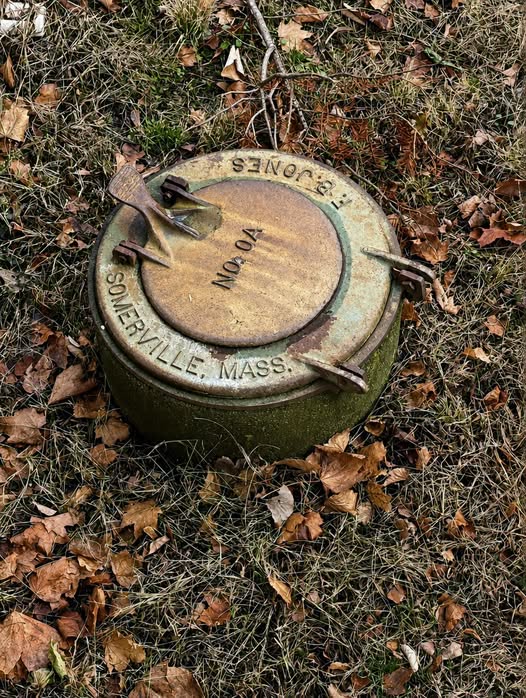
What’s Hiding in Backyards? The Forgotten History of Underground Garbage Cans
“You have to come over and see what I found in the backyard. I don’t think you’ll expect it.”
That was the message I received from my friend Mike one afternoon.
He had been doing some work around his property when he noticed something unusual beneath the ground. At first, he wasn’t sure what he was looking at. After clearing away some soil and debris, he realized that the object appeared to be connected to an old underground waste-storage system.
The discovery immediately raised an interesting question.
Why would someone have buried a garbage container in a backyard?
Today, most people are accustomed to wheeled garbage bins, scheduled collection services, recycling containers, and modern waste-management systems. The idea of storing household waste underground can seem unusual.
But historically, underground or partially buried garbage containers were not as strange as they might sound.
In some communities and households, waste was stored in containers placed below or partly below ground because this could help keep odors down, reduce the visual impact of waste, and make the area more convenient to manage.
What Mike had discovered was a reminder that older properties can contain features that no longer have an obvious purpose.
A Different Approach to Household Waste
Modern garbage collection feels like a normal part of everyday life.
A household fills a bin, the bin is placed at the curb, and a collection vehicle eventually removes the waste.
But waste disposal wasn’t always organized this way.
Before modern municipal collection became widespread, households had to manage waste using the methods available in their communities.
Depending on the location and time period, waste might be stored in containers, taken to designated disposal areas, burned where permitted, composted, reused, or otherwise handled locally.
As towns and cities expanded, organized waste collection gradually became more common.
During these earlier periods, storing waste below ground could offer practical advantages.
Why Put a Garbage Can Underground?
There were several potential reasons for placing waste containers below ground or partially burying them.
One obvious advantage was appearance.
A large garbage container sitting above ground isn’t particularly attractive. Putting much of the container below ground could make it less visible.
Temperature was another consideration.
Soil can remain relatively stable compared with the air above it. Historically, people sometimes took advantage of underground spaces to moderate temperatures.
There was also the question of odor.
Although burying a waste container wouldn’t eliminate odors, enclosing waste and keeping it below ground could reduce how noticeable it was in some circumstances.
The design and construction of these systems varied considerably, so there wasn’t one universal underground garbage-can design.
What Did These Containers Look Like?
Older underground waste systems could take different forms.
Some involved metal containers positioned in specially constructed pits.
Others may have been masonry structures, lined spaces, or containers with removable covers.
The exact design depended on the period, location, available materials, and intended use.
Some installations were relatively simple.
Others could be surprisingly well constructed.
This is part of what makes finding one today so interesting.
A homeowner might initially see only an old metal lid or unusual structure in the ground without realizing what it was originally designed to do.
Over time, soil, plants, and landscaping can hide much of the original installation.
Why Would One Still Be in a Backyard?
Old properties often contain features that have outlived their original purpose.
A house may have been renovated several times.
A garage might have been replaced.
A garden could have been redesigned.
A former shed may have disappeared.
Yet underground structures can remain because removing them requires additional work.
If an old waste container was no longer needed, a property owner might simply stop using it and cover or surround it with soil.
Decades later, another homeowner could discover it during landscaping, gardening, construction, or renovation.
By then, its original purpose might be difficult to recognize.
The Importance of Historical Context
Finding an old structure becomes much more interesting when you consider the period in which it was built.
A house constructed many decades ago may have been designed around completely different daily routines.
People had different appliances.
Different heating systems were common.
Food storage worked differently.
Waste collection was organized differently.
Even the way people maintained their yards could be very different.
Something that seems unnecessary today may have been a practical solution at the time.
That is why old household features shouldn’t always be judged by modern standards.
They can provide clues about how previous generations lived.
An Unexpected Backyard Time Capsule
When Mike first described his discovery, the underground container sounded unusual.
But the more we thought about it, the more it seemed like a small piece of local history.
The object wasn’t necessarily valuable in a financial sense.
Its significance came from what it represented.
Someone had installed it for a reason.
People had probably used it regularly.
Eventually, technology and municipal services changed, and the feature was no longer needed.
Yet the physical evidence remained beneath the property.
In that sense, the backyard had become a kind of time capsule.
Why Old Waste Systems Can Be Difficult to Identify
Modern garbage bins are instantly recognizable.
They usually have familiar shapes, wheels, handles, lids, and standardized designs.
Older waste containers may not have any of these features.
After years underground, metal can rust, wooden components can deteriorate, and identifying labels can disappear.
Landscaping may also change the appearance of the area.
A structure that once stood out clearly may eventually become almost invisible.
This is why historical research can be useful when an unusual feature is discovered.
Old photographs, property records, local newspapers, municipal documents, and historical societies can sometimes provide clues about how a neighborhood was developed.
What Happens When an Old Container Is Discovered?
If you discover an underground structure on an older property, it is worth proceeding carefully.
Don’t immediately assume that it is an abandoned garbage container.
Older properties can contain many types of buried infrastructure.
There could be drainage systems, wells, utility components, septic-related structures, foundations, storage spaces, or other installations.
Some may be unsafe to enter or disturb.
If excavation is required, it is important to consider the possibility of underground utilities and other hazards.
Before digging extensively, appropriate local procedures should be followed.
Don’t Enter an Unknown Underground Space
One important safety point is that an old underground container should never automatically be treated as a space that is safe to enter.
Even a relatively small opening can contain unstable materials, contaminated debris, poor air quality, or structural hazards.
A structure that appears empty from above may still present risks.
If an old underground feature needs to be inspected internally, professional assistance may be appropriate.
Simply climbing inside to take a closer look isn’t worth the risk.
Could It Still Be Used?
An old underground garbage container generally wouldn’t be suitable for modern household waste without careful evaluation.
Waste-management standards have changed significantly.
Modern garbage collection is designed around standardized containers, collection vehicles, sanitation practices, and local regulations.
An old structure may not meet those requirements.
It may also have deteriorated over the years.
For homeowners, the discovery is therefore more useful as a historical curiosity than as a reason to revive an outdated waste-storage system.
How Waste Collection Changed
The history of garbage collection reflects broader changes in urban development.
As populations grew, communities had to develop more organized systems for dealing with household waste.
Municipal collection became increasingly important.
Specialized vehicles and standardized containers eventually replaced many older disposal practices.
Recycling and waste separation later became important components of modern waste management in many areas.
The result is a system that would be almost unrecognizable to someone living generations ago.
What seems ordinary today is actually the result of decades of changes in infrastructure, public services, technology, and community planning.
What Old Backyards Can Reveal
An unusual buried structure isn’t necessarily limited to garbage storage.
Backyards can contain evidence of many earlier uses.
Old gardens may leave behind foundations or planting structures.
Former sheds can leave concrete pads.
Old clotheslines can leave posts or hardware.
Previous drainage systems may remain underground.
Abandoned wells, cisterns, and other water-related structures can also be found on older properties.
Sometimes the most interesting discoveries aren’t visible from the surface.
A Property’s History Doesn’t Always End With the House
When people buy an older home, they often focus on the visible features.
They notice the architecture, floors, windows, doors, fireplaces, and landscaping.
But a property has a much larger history.
Previous owners may have changed the land repeatedly.
Structures may have been built and removed.
Trees may have been planted decades earlier.
Underground systems may have been installed and later forgotten.
This is why renovation and landscaping projects sometimes uncover unexpected objects.
The ground itself can preserve evidence of earlier generations.
Why These Discoveries Fascinate People
There is something naturally appealing about finding an ordinary object from another period.
A modern garbage bin is easy to overlook because it is part of everyday life.
An old underground container is different.
It forces us to ask questions.
Who installed it?
When was it used?
What did the neighborhood look like at the time?
How did people dispose of their waste?
Why was the system eventually abandoned?
Even if there is no dramatic story behind the discovery, the questions can make a small piece of old infrastructure surprisingly interesting.
The Value of Ordinary History
Historical objects don’t have to belong to famous people to be meaningful.
Everyday items can tell us a great deal about the past.
A kitchen tool can reveal how food was prepared.
An old appliance can show how technology changed.
A forgotten waste container can illustrate how sanitation and municipal services evolved.
These objects are valuable because they document ordinary life.
In many cases, everyday history provides a more detailed picture of the past than famous events alone.
What Mike’s Discovery Reminded Us
What started as an unusual object in a backyard became a conversation about how much our daily routines have changed.
Today, most people don’t have to think much about what happens to household garbage after it leaves the curb.
Waste collection is built into the infrastructure of modern communities.
But previous generations had to work with the systems available to them.
An underground garbage container may seem strange now, but in the right historical context, it can make perfect sense.
It represents a time when households and communities approached waste management differently.
The Backyard May Have More Stories to Tell
After discovering the old structure, Mike began looking more closely at the history of the property.
There were questions that couldn’t be answered simply by looking at the container.
When was the house built?
Who lived there?
How had the property changed?
Had the surrounding neighborhood once looked completely different?
Those questions are often what make old-house discoveries so enjoyable.
One unusual object can lead to another discovery, and eventually a homeowner may develop a much better understanding of the property’s past.
Final Thoughts
Finding an old underground garbage container in a backyard may seem strange at first, but it can provide an interesting glimpse into the history of household waste management.
Before modern standardized garbage collection became commonplace, people used a variety of methods to store and dispose of household waste.
Some older systems involved containers or structures placed below ground.
Today, these features may be hidden beneath landscaping and only discovered decades later.
If you find something similar on an older property, approach it as a piece of possible historical infrastructure rather than immediately assuming what it is.
Document what you find, avoid entering unknown underground spaces, and consider researching the history of the property or contacting a local historical organization.
Sometimes, the most interesting part of an old house isn’t what you can see from the street.
It is what has been quietly preserved underneath the backyard for generations.