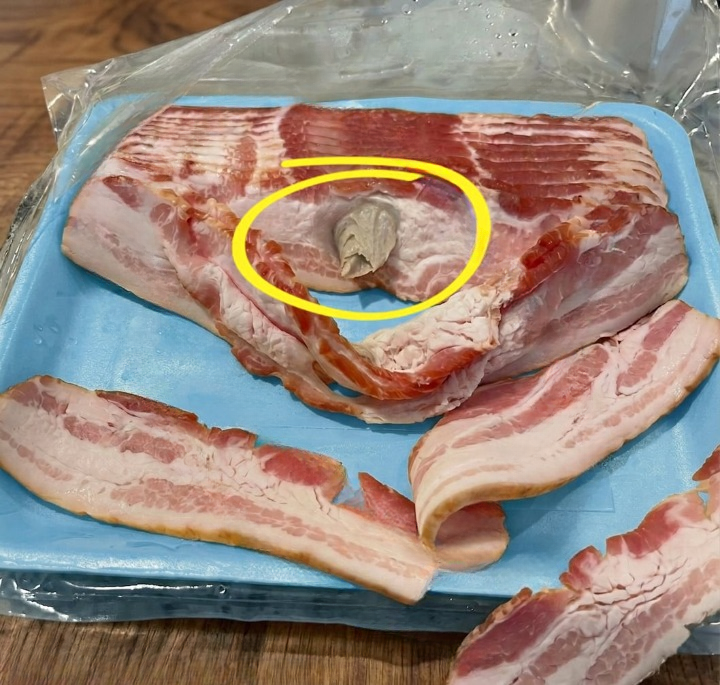
What to Know When You Notice Something Unusual in Packaged Bacon: A Guide to Food Safety
Posted on October 28, 2026 | By Admin
Buying bacon is a routine part of grocery shopping for many households. It is a familiar breakfast ingredient that can be prepared in several ways and paired with eggs, toast, vegetables, or other foods. Because packaged bacon is widely available in supermarkets, shoppers may not give much thought to its packaging, storage conditions, or appearance until something seems unusual.
Imagine returning home from the grocery store with your usual shopping bags. You place everything on the kitchen counter, put away the refrigerated items, and begin preparing breakfast. You open a package of bacon expecting it to look just as it did on previous shopping trips. However, something catches your attention. Perhaps the color looks different from what you expected, the package contains an unfamiliar piece of material, or the bacon has an unusual odor.
At that moment, an ordinary breakfast can turn into a series of questions. Is the product safe to eat? Could the unusual appearance be harmless? Should the package be returned to the store? And how can you determine whether a packaged meat product has been handled or stored properly?
These are reasonable questions, especially when food safety is involved. However, an unusual appearance does not automatically mean that a product is contaminated, and a product that looks normal is not necessarily safe in every circumstance. Understanding the warning signs, checking the packaging, and following appropriate food-handling practices can help consumers make more informed decisions.
This guide explains what to look for when purchasing packaged bacon, how to respond to unexpected findings, how to store and cook bacon safely, and when it may be appropriate to contact the retailer or manufacturer.
Why Checking Packaged Meat Before Cooking Matters
Packaged meat products pass through several stages before reaching a consumer’s kitchen. These stages can include processing, packaging, transportation, refrigeration, distribution, and retail storage. Each step must be managed appropriately to maintain product quality and reduce food-safety risks.
Although commercial food production involves procedures designed to support safety and consistency, consumers still benefit from checking the products they purchase. Packaging can become damaged during transportation, refrigerated products may be left outside suitable storage conditions, and items can remain in household refrigerators longer than intended.
Checking a package does not require specialized equipment or extensive knowledge of food science. A few simple observations can help identify obvious problems before the product is prepared.
Start by examining the outside of the package. Look for tears, punctures, broken seals, or signs that liquid has escaped. Check whether the package appears swollen or damaged in an unusual way. Review the expiration or use-by information where available, and follow the storage instructions printed on the label.
Next, consider the product’s appearance after opening it. Bacon naturally contains different proportions of meat and fat, so variations in color and shape are normal. Nevertheless, unexpected discoloration, unusual surface changes, or an unfamiliar odor may justify closer attention.
It is important to understand the difference between a quality concern and a confirmed safety problem. A package can have a cosmetic defect without presenting a significant health risk, while harmful microorganisms may sometimes be present without producing obvious changes in appearance or smell.
For this reason, no single observation should be treated as a complete test of food safety. Packaging condition, refrigeration history, date information, and the manufacturer’s instructions all contribute to the overall assessment.
Understanding the Normal Appearance of Bacon
One reason consumers sometimes become concerned about packaged bacon is that the product may not look exactly the same from one package to another.
Bacon is typically made from pork belly or other designated cuts, depending on the product. The meat contains both lean tissue and fat, and the proportions can vary naturally. Some slices have broad white areas of fat, while others contain more pink or reddish meat.
These differences do not necessarily indicate a problem. The curing process, ingredients, packaging method, and lighting can also influence how the product appears.
Variations in color
Uncooked bacon commonly displays shades of pink, red, and white. The lean portions may look darker or lighter depending on the product and its processing method. Fat can appear white or cream-colored.
A slight variation between slices is therefore not automatically a reason to discard a product.
However, pronounced discoloration that is inconsistent with the product’s usual appearance deserves attention, particularly when accompanied by an unpleasant smell, damaged packaging, or improper storage.
Consumers should avoid attempting to identify a specific contaminant solely by color. Different causes can produce similar visual changes, and photographs are not always sufficient to determine whether a food is safe.
If the product appears spoiled or otherwise questionable, the safer choice is to avoid eating it and seek guidance from the retailer or manufacturer.
Differences in texture
Bacon may feel moist because of its natural fat content and the curing process. Depending on the packaging method, slices can also stick together.
These characteristics alone do not prove that the product has deteriorated.
A distinctly slimy or sticky surface that seems inconsistent with the product’s normal condition can be a warning sign, particularly when accompanied by an off odor or other changes. Because consumers cannot reliably determine the cause of every texture change, questionable products should not be tasted as a way of testing their safety.
Natural fat and connective tissue
Small variations in fat distribution, the shape of the slices, and the presence of ordinary connective tissue can occur in meat products.
What looks unfamiliar to one shopper may be a normal feature of the cut or processing method. Nevertheless, if a piece of material appears foreign to the product, consumers should not assume that it is harmless.
Avoid pulling apart suspicious material unnecessarily. Keep the product and packaging available for documentation, and contact the retailer or manufacturer if the finding cannot be explained.
What to Do If You Find Something Unexpected Inside a Bacon Package
Finding something unusual in packaged food can be unpleasant, especially when the product was purchased for a meal that was supposed to be simple and enjoyable.
The most useful response is to pause, avoid consuming the product, and gather the information needed to decide what to do next.
1. Stop preparing the product
If you notice an unexpected object, unusual discoloration, a damaged seal, or another concerning feature, stop preparing the bacon.
Do not taste the product to see whether it is safe. Tasting cannot reliably identify harmful bacteria or other hazards.
If you have already placed the bacon in a pan, turn off the heat if it is safe to do so and set the product aside. Avoid allowing potentially contaminated food or its juices to come into contact with other ingredients.
2. Keep the package and label
The original packaging can provide useful information about the product.
Where possible, retain the label showing the product name, brand, lot or batch code, date information, and manufacturer details. These identifiers may help the retailer or manufacturer investigate a complaint.
If the package is leaking, place it in a separate, leak-resistant container or bag before storing it safely. Keep it away from ready-to-eat foods and follow any relevant instructions from the retailer or local food-safety authority.
Do not leave questionable raw meat at room temperature while deciding what to do. Refrigerate it promptly if it can be stored safely, unless the package or circumstances require a different precaution.
3. Take clear photographs
Photographs can help document what you observed without requiring you to handle the product more than necessary.
Take pictures of the package, its label, the date information, and the unusual feature. Use adequate lighting and include enough context to show where the issue appeared.
A photograph can support a complaint, but it cannot necessarily establish whether the product is contaminated or determine how an object entered the package.
Avoid making assumptions about the cause before the product has been examined by someone qualified to investigate the issue.
4. Contact the retailer
The supermarket where the product was purchased is often a practical first point of contact.
Explain what you observed, when you purchased the item, and whether the package was sealed when you opened it. Ask about the store’s refund, replacement, or product-complaint procedure.
If you still have the receipt, keep it available. Some retailers can use purchase records or product codes to investigate a concern.
A factual description is generally more useful than an accusation. For example, you can explain that the package contained an unexpected object or that the product had an unusual odor when opened.
This approach gives the retailer an opportunity to review the concern and determine whether additional action is necessary.
5. Contact the manufacturer if needed
Manufacturers may have customer-service departments that collect information about product quality and packaging concerns.
Provide the product name, batch or lot code, purchase date, and a clear description of the issue. Include photographs if the company accepts them.
The manufacturer may request additional information to help identify the production batch or determine whether other reports have been received.
Consumers should not assume that one unusual package proves a widespread problem. At the same time, a documented complaint can help the relevant business investigate a potential defect.
6. Report a serious concern to the appropriate authority
If you believe a food product may present a significant safety risk, you can contact the relevant food-safety authority in your country or region.
Reporting procedures differ by location. Some authorities provide online forms, telephone numbers, or instructions for submitting product details and photographs.
If several packages appear to have the same problem, or if the product has been associated with illness, it may be especially important to report the concern.
An official report does not automatically mean that a product is unsafe, but it can help the responsible authority decide whether further investigation is warranted.
How to Recognize Possible Signs of Spoilage
Food spoilage can involve changes in odor, texture, color, or appearance. However, the signs vary depending on the food, its processing method, and its storage history.
For bacon, several observations may justify caution.
An unpleasant odor
Freshly opened packaged bacon can have a characteristic smell associated with its ingredients and processing. The exact aroma may vary by brand and product type.
An unmistakably sour, rancid, putrid, or otherwise unpleasant odor that is not normal for the product should be treated as a warning sign.
Do not rely on smell alone to determine safety. Some disease-causing microorganisms do not produce a noticeable odor, and a product can appear acceptable while still being unsafe because of improper handling.
Unusual surface changes
A product that has developed an unexpected slimy surface, visible mold, or other unusual growth should not be consumed.
Do not attempt to make questionable bacon safe by rinsing it, trimming away the affected area, or cooking it more thoroughly than usual. These actions cannot reliably correct every possible food-safety problem.
If the product looks clearly spoiled, discard it according to local guidance or ask the retailer how to return it safely.
Damaged or leaking packaging
Packaging helps protect food from physical contamination and supports appropriate storage.
A torn seal, leaking package, or puncture can increase uncertainty about whether the product has been protected as intended. Unusual swelling can also justify caution, although packaging appearance alone does not establish the cause.
If the seal is broken or the package appears compromised, avoid consuming the product until the concern has been resolved.
Uncertain storage conditions
Temperature control is an important part of keeping perishable foods safe.
If bacon has been left unrefrigerated for an extended period, transported without adequate cooling, or stored in a refrigerator that is not sufficiently cold, the product may no longer be safe.
Do not assume that cooking will eliminate every risk associated with poor storage. Some hazards may not be reliably addressed by ordinary cooking.
When the storage history is uncertain, consider the time involved, the conditions, and the product’s instructions. If safety cannot reasonably be established, discard the product.
Can Cooking Make Questionable Bacon Safe?
Cooking is essential for preparing raw pork products safely, but it should not be used as a way to rescue food that may already be spoiled or contaminated.
Heat can destroy many harmful microorganisms when food reaches appropriate temperatures. Nevertheless, cooking does not correct every problem that can arise during processing or storage.
For example, cooking cannot remove a physical object that has accidentally entered the package. It also cannot be relied upon to eliminate every hazard associated with prolonged improper storage.
If bacon has an unusual odor, visible mold, a suspicious surface change, or a questionable storage history, do not assume that frying it until it becomes crisp will make it safe.
Instead, separate the product from other foods and follow appropriate disposal or return procedures.
For bacon that appears normal and