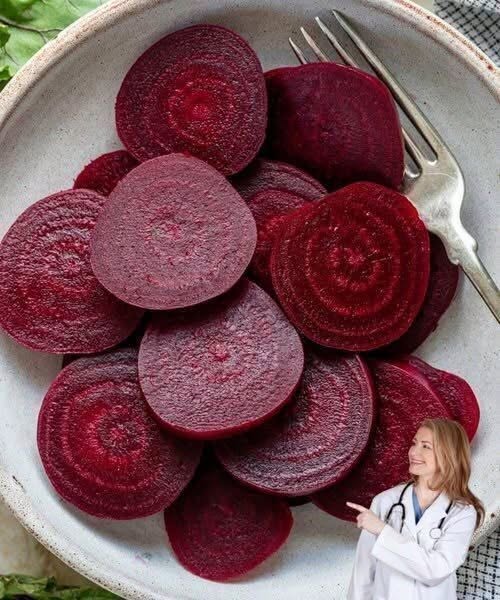
Beets are one of those vegetables that can attract attention simply because of their intense color.
Their deep red or purple appearance makes them stand out on a plate, but their nutritional profile is even more interesting. Beets contain dietary fiber, folate, potassium, and naturally occurring plant compounds, including nitrates and betalain pigments.
Because of these components, beets have been studied for their potential relationship with blood pressure, exercise performance, and cardiovascular health.
However, social media headlines sometimes go much further, suggesting that eating beets will produce a dramatic medical effect or “fix” a particular health problem.
The reality is more balanced.
Beets can be a nutritious addition to many diets, but they are food—not a replacement for medical treatment. Their effects can also vary from person to person.
Understanding what beets actually contain can help you appreciate their potential benefits without falling for exaggerated claims.
What Makes Beets Nutritionally Interesting?
Beets provide several nutrients that contribute to a balanced diet.
They contain carbohydrates, fiber, folate, potassium, and other micronutrients. They also contain naturally occurring plant compounds that give them their distinctive color.
One of the compounds that has received considerable scientific interest is dietary nitrate.
Nitrates occur naturally in several vegetables, including beets and leafy greens.
The body can convert dietary nitrate through several steps into nitric oxide, a signaling molecule involved in blood vessel function.
This is one reason researchers have studied beetroot and beetroot juice in relation to circulation and exercise.
That doesn’t mean eating beets produces the same effect as taking medication.
It simply means that their nutritional composition makes them an interesting food to include in a varied diet.
Beets and Blood Pressure
One of the most frequently discussed potential benefits of beet consumption involves blood pressure.
Research has examined whether dietary nitrate from beetroot can contribute to changes in blood pressure in some people.
Nitric oxide plays a role in blood vessel relaxation, and this has led researchers to investigate whether nitrate-rich foods can influence cardiovascular measurements.
Some studies have reported modest effects, particularly with beetroot juice or concentrated preparations.
However, results can vary, and the effects of a food should not be treated as a substitute for prescribed blood-pressure medication.
If you’ve been diagnosed with hypertension, continue following your healthcare professional’s recommendations.
Adding vegetables such as beets to a balanced diet can complement healthy eating habits, but it shouldn’t replace treatment that has been prescribed for you.
Why Beets May Be Interesting for Exercise
Beetroot has also attracted attention among athletes and physically active people.
The nitrate content may influence how the body uses oxygen during certain forms of exercise.
Some research has investigated whether consuming beetroot or beetroot juice before exercise can affect endurance or exercise efficiency.
The results have been promising in some settings, but they aren’t universal.
Factors such as the type of exercise, fitness level, amount consumed, and individual differences can influence the outcome.
This means beets shouldn’t be marketed as a guaranteed performance enhancer.
For most people, the biggest nutritional benefit may simply come from including another nutrient-rich vegetable in their diet.
Beets Provide Dietary Fiber
Fiber is an important component of a healthy diet.
It contributes to normal digestive function and can help make meals more satisfying.
Beets provide fiber, although the amount you consume depends on the portion and preparation method.
Eating whole beets also provides a different nutritional experience from drinking beet juice.
Juicing can reduce or remove much of the fiber found in the whole vegetable.
For everyday nutrition, eating a variety of whole vegetables can therefore be a useful approach.
What Are Betalains?
The vivid colors of beets come largely from plant pigments called betalains.
These compounds are responsible for the characteristic red, purple, and sometimes yellow colors of different beet varieties.
Betalains have antioxidant properties and have been studied in laboratory and nutritional research.
It is important, however, to distinguish between laboratory findings and proven health outcomes in people.
A compound showing biological activity in a laboratory does not automatically mean that eating a particular food will prevent or treat a disease.
Still, the presence of diverse plant compounds is one reason health professionals generally encourage people to eat a variety of fruits and vegetables.
Why Does Urine Sometimes Turn Pink or Red?
One of the most surprising effects of eating beets is that urine can sometimes become pink, red, or reddish-brown.
This phenomenon is commonly called beeturia.
It can look alarming if you aren’t expecting it.
After eating beets, some of the pigments can pass through the digestive system and appear in urine.
The color can vary from person to person.
Seeing reddish urine after eating beets can therefore be harmless.
However, not every episode of red or pink urine should automatically be blamed on beets.
If you haven’t recently eaten beets, or if the discoloration persists or is accompanied by pain, burning, fever, or other symptoms, contact a healthcare professional.
Blood in the urine can have other causes and should not be ignored.
Beets Can Also Change the Color of Stool
Beet pigments can sometimes make bowel movements appear reddish or darker than usual.
Again, this can be harmless when it follows beet consumption.
But it is important not to assume that every instance of red stool is caused by food.
If you notice unexplained blood in your stool, persistent changes in bowel habits, significant abdominal pain, or other concerning symptoms, medical advice is appropriate.
What About Kidney Stones?
People with a history of certain types of kidney stones may be advised to pay attention to foods containing oxalates.
Beets can contain oxalates.
This doesn’t mean that everyone should avoid them.
Dietary recommendations for kidney stones depend on the type of stone and the individual’s circumstances.
If you’ve previously had kidney stones, ask your healthcare professional or a registered dietitian whether you need to modify your intake of particular foods.
Avoid making major dietary restrictions based solely on generic internet lists.
Can Everyone Eat Beets?
For most people, beets can be included as part of a balanced diet.
They can be roasted, steamed, boiled, grated into salads, or incorporated into soups and other dishes.
However, individual nutritional needs differ.
People with certain medical conditions or dietary restrictions may need personalized advice.
If you’re taking medication or have a condition affecting your kidneys, blood pressure, blood sugar, or mineral balance, discuss major dietary changes with your healthcare professional.
Whole Beets or Beet Juice?
Both can provide nutrients, but they aren’t identical.
Whole beets contain fiber and require chewing and digestion.
Beet juice provides the naturally occurring compounds from the vegetable but typically contains much less fiber.
Concentrated beetroot products may also provide substantially larger amounts of nitrate than an ordinary serving of vegetables.
More concentrated does not automatically mean better.
If you’re considering beetroot supplements or concentrated products for a specific health or athletic goal, it’s worth discussing the approach with a qualified professional.
How Can You Add Beets to Your Meals?
You don’t need a complicated recipe to enjoy beets.
Try adding roasted beets to a salad with leafy greens, beans, nuts, and a simple dressing.
You can also grate raw beets into salads or combine cooked beets with other roasted vegetables.
Beets pair well with ingredients such as citrus, herbs, yogurt, vinegar, and nuts.
Their natural sweetness can also work well in savory dishes.
The important thing is variety.
There is no need to eat beets every day to have a healthy diet.
Don’t Expect One Food to Transform Your Health
Perhaps the most important lesson is that no individual food should be treated as a miracle ingredient.
Beets can contribute useful nutrients to your diet, but overall health depends on many factors.
Your eating pattern, physical activity, sleep, smoking status, alcohol intake, genetics, age, medical history, and access to appropriate healthcare all matter.
Adding beets to an otherwise poor diet won’t cancel out other unhealthy habits.
Likewise, you don’t need to eat beets if you dislike them.
There are many other vegetables that provide valuable nutrients and plant compounds.
Final Thoughts
So, what really happens when you eat beets?
You get a colorful vegetable containing fiber, folate, potassium, and naturally occurring plant compounds. Beets are also a notable dietary source of nitrate, which is one reason researchers have investigated their potential relationship with blood vessel function, blood pressure, and exercise performance.
Eating beets can also produce some harmless surprises, such as pink or reddish urine or stool caused by their natural pigments.
But be cautious of dramatic claims that suggest beets will cure a disease, replace medication, or produce a guaranteed medical effect.
The evidence surrounding beetroot and health is interesting, but individual results vary, and research findings should be interpreted in context.
For most people, the simplest takeaway is also the most useful one:
Beets can be a nutritious part of a varied and balanced diet.
Enjoy them because they’re flavorful, colorful, and packed with useful nutrients—not because a sensational headline promises a miracle.
And if you have a medical condition, take medication, or experience an unusual symptom that doesn’t clearly relate to something you’ve eaten, speak with a qualified healthcare professional rather than relying on an online health claim.