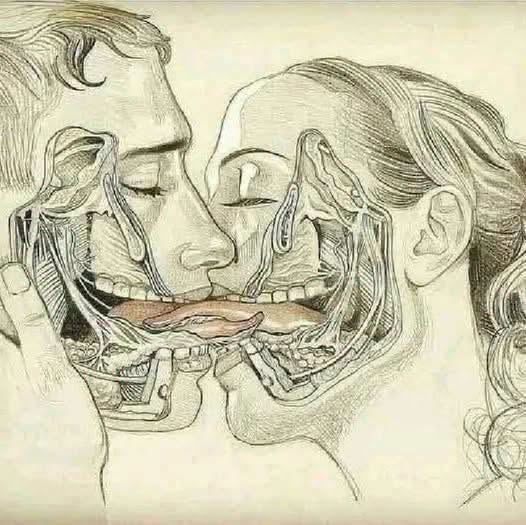
Kissing may seem like one of the simplest expressions of affection, but there is surprisingly much happening in the body and brain during a romantic kiss.
A kiss can communicate affection, attraction, excitement, comfort, or emotional closeness without requiring a single word. While different cultures and individuals have very different attitudes toward kissing, romantic kissing is a common form of connection between consenting adults.
But what actually happens inside the body when two people share a kiss?
The answer involves the senses, the nervous system, emotions, and even the chemistry of the brain.
Your Brain Becomes Highly Engaged
One of the first things that happens during a romantic kiss is increased sensory attention.
The lips are particularly sensitive because they contain many nerve endings. When people kiss, the brain receives information about pressure, movement, temperature, and touch.
At the same time, the brain is processing smell, taste, facial expressions, and the emotional context of the moment.
That’s why a kiss can feel surprisingly intense even when the physical movement itself is relatively simple.
The brain isn’t experiencing only one sensation.
It is combining information from several senses at once.
Your Heart Rate May Change
Romantic excitement can activate the body’s nervous system.
For some people, this can temporarily increase heart rate and make them feel more alert or excited.
You may notice your heart beating faster, your palms becoming warmer, or your breathing changing slightly.
These reactions aren’t necessarily signs that something unusual is happening.
They’re common responses to excitement and emotional stimulation.
The body’s response can vary considerably from person to person, however.
Some people become visibly nervous, while others feel relaxed and comfortable.
The Brain Releases Chemical Messengers
Romantic interaction can influence several chemical systems in the brain.
Dopamine is involved in reward and motivation, while oxytocin is associated with social bonding and attachment.
Other biological systems are involved in the body’s response to excitement and stress.
This doesn’t mean that one kiss automatically creates a permanent emotional bond.
Human relationships are much more complicated than that.
Instead, the broader point is that affectionate physical contact can interact with the brain systems involved in pleasure, attachment, and social connection.
Smell and Taste Can Play a Role
Kissing also involves the senses of smell and taste.
When people are physically close, they naturally encounter one another’s scent.
Taste can also become part of the experience.
That’s one reason personal hygiene can matter in romantic relationships.
Simple habits such as brushing your teeth, staying hydrated, and maintaining good oral hygiene can help make close interactions more comfortable.
However, nobody has to look or smell “perfect” to share affection.
Real relationships involve ordinary human experiences, and communication is often more important than trying to meet unrealistic expectations.
Saliva Can Be Exchanged
During kissing, saliva may naturally be exchanged.
This is one reason certain infections can potentially spread through kissing.
Some infections are more easily transmitted through close contact than others.
For example, viruses that cause cold sores can spread through oral contact, particularly when active sores are present.
Other illnesses may also spread through saliva or respiratory droplets depending on the infection.
That doesn’t mean kissing is inherently dangerous.
It simply means that people should understand that close physical contact can carry some health considerations.
If someone has an active cold sore, unexplained mouth sores, or another contagious illness, avoiding close contact until the situation improves can be a sensible precaution.
Consent Matters Every Time
One of the most important parts of any romantic interaction is consent.
A kiss should be something both people genuinely want.
Being in a relationship doesn’t automatically mean someone is comfortable with physical affection at every moment.
People can change their minds.
They can feel tired, uncomfortable, nervous, or simply not interested.
A respectful partner pays attention to verbal and nonverbal communication and accepts a “no” without pressure.
Consent isn’t complicated.
Both people should feel comfortable participating.
Not Everyone Enjoys Kissing
There is no universal rule that says everyone must enjoy romantic kissing.
Some people love it.
Some people feel indifferent.
Others may dislike it completely.
Personal preferences can be influenced by culture, upbringing, past experiences, sensory sensitivity, relationships, and individual personality.
There is nothing inherently wrong with having a different preference.
Healthy relationships allow people to communicate openly about what feels comfortable and what doesn’t.
Why Does a Kiss Feel Romantic?
A romantic kiss can carry emotional meaning because it combines physical closeness with personal connection.
People don’t usually interpret a romantic kiss in isolation.
They understand it in the context of the relationship.
A kiss from a stranger can feel completely different from a kiss shared with a long-term partner.
The difference isn’t necessarily the physical action itself.
It’s the meaning attached to it.
Trust, affection, attraction, familiarity, and emotional safety can all influence how a person experiences physical affection.
Kissing Can Be a Form of Communication
People often use words to communicate feelings.
But physical affection can also communicate something.
A gentle kiss might express affection.
A brief kiss can serve as a greeting in some cultures.
A kiss on the forehead may communicate comfort or care.
A romantic kiss may express attraction or closeness.
Of course, people don’t always interpret these gestures in the same way.
That’s why communication remains important.
Never assume that another person understands a gesture exactly as you intended it.
Your Facial Muscles Are Working Too
Kissing isn’t a completely passive activity.
The lips, jaw, facial muscles, and surrounding areas all participate in the movement.
Depending on the type and duration of the kiss, different muscles may be involved.
This isn’t a special workout that will dramatically transform someone’s face, however.
Claims that kissing provides major fitness or anti-aging benefits should be treated cautiously.
A kiss can involve muscle movement, but it shouldn’t be considered a substitute for exercise or a health treatment.
Breathing Can Change Naturally
When people are emotionally excited or physically close, their breathing patterns may change.
Some people breathe more quickly.
Others become more conscious of their breathing and naturally slow down.
If someone feels anxious, they may become particularly aware of their heartbeat or breathing.
Taking things slowly can help.
There’s no need to treat kissing like a performance.
Comfort and communication matter much more than trying to imitate something seen in a movie or online.
First Kisses Can Feel Awkward
Movies often portray romantic kisses as perfectly timed and effortless.
Real life isn’t always like that.
A first kiss can be awkward.
Two people may move at different speeds.
Someone may laugh nervously.
They may bump noses.
They may not know where to put their hands.
None of this means the relationship is doomed.
In fact, a little awkwardness is completely normal when two people are learning how to communicate with one another.
Good relationships aren’t built on perfection.
They’re built on trust, patience, communication, and respect.
Hygiene Can Make a Difference
Because kissing involves close contact, oral hygiene is worth considering.
Regular brushing, flossing, dental checkups, and appropriate mouth care can contribute to good oral health.
Fresh breath can also make close interactions more pleasant.
But hygiene should never become a source of shame.
Everyone experiences things such as morning breath, dry mouth, or occasional dental issues.
A caring partner can discuss these matters respectfully rather than embarrassing the other person.
Kissing and Emotional Connection
Physical affection can sometimes strengthen feelings of closeness within a relationship.
A kiss can provide reassurance after a difficult day.
It can become part of a greeting or goodbye.
It can be a quiet expression of affection when words aren’t necessary.
However, physical affection isn’t the only way people build emotional intimacy.
Talking honestly, spending quality time together, listening, supporting one another, and respecting boundaries are equally important.
A strong relationship cannot be reduced to physical chemistry alone.
What About Compatibility?
Some people believe that kissing can reveal whether two people are “compatible.”
There’s some truth in the sense that personal preferences can affect attraction.
If two people have very different comfort levels with physical affection, they may need to communicate about those differences.
But a single awkward kiss doesn’t provide a scientific test of whether a relationship will succeed.
Human compatibility involves far more than physical interaction.
Shared values, communication, trust, goals, kindness, and mutual respect are often much more important over the long term.
The Most Important Part Is Mutual Comfort
There isn’t a secret technique that guarantees a perfect kiss.
What works for one couple may not work for another.
The most useful approach is to pay attention to the other person’s comfort and communicate when necessary.
If both people are comfortable, the experience can remain natural.
If either person feels uncomfortable, stopping is completely appropriate.
Romance shouldn’t involve pressure.
The Bigger Picture
So, what happens when people share a romantic kiss?
The lips and facial muscles respond to touch.
The brain processes multiple sensory signals.
The nervous system can respond to excitement.
Heart rate and breathing may change.
Chemical messengers associated with reward and social connection are involved.
Taste and smell contribute to the experience.
And, perhaps most importantly, the emotional meaning of the moment can make the experience feel significant.
But there is no single reaction that every person will have.
Everyone experiences affection differently.
That’s why the most important “secret” isn’t a particular technique.
It’s mutual respect.
A good kiss isn’t about copying something from a movie, meeting an unrealistic expectation, or proving anything.
It’s about two people being comfortable, present, and willing to share a moment of affection.