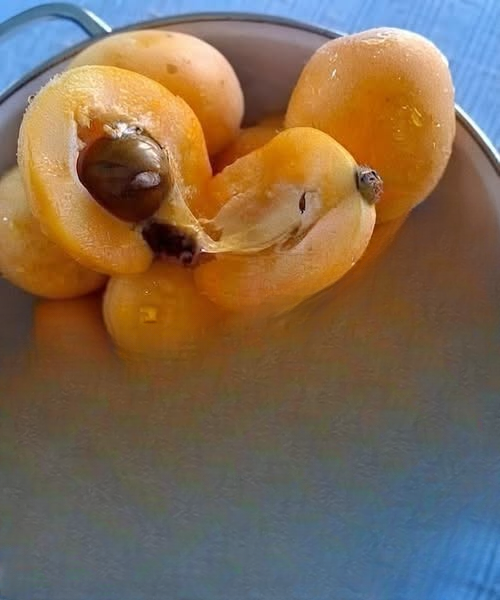
At first glance, this small golden-orange fruit can easily be mistaken for a miniature apricot, a yellow plum, or even an unusual type of peach. But once you cut it open and notice the soft golden flesh surrounding several large, shiny brown seeds, the answer becomes much clearer.
The fruit is called a loquat, scientifically known as Eriobotrya japonica. Despite the scientific name suggesting a connection to Japan, the loquat originally came from southeastern China before spreading to other parts of Asia, the Mediterranean region, the Middle East, and many other areas with warm climates.
Although loquats are common in some countries, many people in other parts of the world have never tasted one. That is unfortunate because a properly ripened loquat can be wonderfully sweet, juicy, refreshing, and slightly tangy.
What Exactly Is a Loquat?
The loquat belongs to the Rosaceae family, meaning it is related to several familiar fruits, including apples, pears, peaches, plums, apricots, cherries, and strawberries.
Loquats grow on evergreen trees that can reach several meters in height. One interesting characteristic is that these trees may produce fruit during cooler parts of the year in climates where conditions are suitable.
The fruits themselves are generally small and oval or slightly rounded.
Depending on the variety and stage of ripeness, their skin may range from pale yellow to golden yellow, yellow-orange, or a deeper orange color.
Once ripe, the flesh becomes soft and juicy.
The inside, however, contains one of the fruit’s most recognizable features: several relatively large brown seeds. These seeds can occupy a surprisingly large portion of the fruit, which is one reason loquats sometimes provide less edible flesh than their size initially suggests.
What Does a Loquat Taste Like?
The flavor is one of the main reasons people who grow up eating loquats often look forward to their season.
A ripe loquat is typically sweet with a mild tanginess.
People sometimes describe the taste as something between an apricot, peach, apple, and citrus fruit. The exact flavor can vary depending on the variety, growing conditions, and ripeness.
An underripe loquat tends to taste more acidic and tart.
As the fruit ripens, its natural sweetness becomes stronger and the flesh becomes softer.
A good ripe loquat should generally have a pleasant fruity aroma and feel slightly soft when gently pressed. It should not feel excessively mushy or show significant signs of spoilage.
For many people, fresh loquats are at their best when eaten shortly after ripening.
How Do You Eat a Loquat?
Eating a loquat is quite simple.
Start by washing the fruit thoroughly under running water.
You can then cut it in half or gently tear it open with your fingers.
The large seeds in the center should be removed before eating.
The skin is edible, although some people prefer to peel it because they do not enjoy its texture. Once the seeds are removed, the soft golden flesh can be eaten immediately.
A simple method is:
Wash the fruit, open it, remove the seeds, and enjoy the flesh.
That is really all you need to do.
Fresh loquats can make an easy snack, especially during their peak season.
One Important Warning: Do Not Eat the Seeds
This is the most important safety point to remember.
The large brown seeds inside loquats should not be eaten, chewed, ground, or added to smoothies.
Loquat seeds contain cyanogenic compounds that can potentially release cyanide when broken down in the body.
That does not mean the edible fruit itself should be feared.
The flesh is the part normally consumed.
Simply remove the seeds and discard them.
There is no reason to intentionally experiment with eating or processing them.
Are Loquats Nutritious?
Yes. Like many whole fruits, loquats can be included as part of a varied and balanced diet.
They provide water, naturally occurring carbohydrates, dietary fiber, potassium, vitamin C, carotenoids related to vitamin A, and several other naturally occurring plant compounds.
However, it is better to think of loquats as another nutritious fruit rather than describing them as a miracle food.
No single fruit can provide everything the body needs.
Eating a variety of fruits and vegetables remains one of the best ways to consume a broad range of vitamins, minerals, fiber, and plant compounds.
A Source of Dietary Fiber
Whole loquats contain dietary fiber.
Fiber plays an important role in digestive health and can contribute to regular bowel movements. It can also help promote feelings of fullness and support a healthy digestive environment.
That does not mean eating a few loquats will automatically solve digestive problems.
A healthy digestive routine usually depends on overall eating habits, including enough fruits, vegetables, legumes, whole grains, and adequate fluids.
Loquats can simply be one enjoyable part of that pattern.
Vitamin C and Carotenoids
Loquats also contribute some vitamin C to the diet.
Vitamin C is involved in several normal functions in the body, including immune function, collagen formation, wound healing, iron absorption, and protection of cells from oxidative stress.
Their beautiful yellow-orange color also comes partly from natural pigments known as carotenoids.
Some carotenoids can be converted by the body into vitamin A, which plays an important role in normal vision, immune function, skin health, and cell growth.
The exact nutritional content can vary depending on the variety and ripeness of the fruit.
Can Loquats Be Part of a Heart-Conscious Diet?
Loquats naturally contain fiber and potassium while being relatively low in fat.
Potassium is involved in fluid balance, nerve function, and muscle contraction, while adequate potassium intake is generally associated with normal blood pressure regulation.
However, eating loquats alone does not prevent heart disease.
Overall cardiovascular health is influenced by many factors, including diet, exercise, blood pressure, cholesterol levels, smoking, sleep, body weight, genetics, and existing health conditions.
Loquats are best viewed as one nutritious food within a broader healthy lifestyle.
A Naturally Sweet Snack
Because loquats contain water and fiber while providing natural sweetness, they can be a pleasant alternative to heavily processed snacks.
Someone craving something sweet may enjoy fresh fruit instead of automatically reaching for candy, cookies, or a sugary drink.
Still, claims that loquats somehow “burn fat” or cause rapid weight loss should be treated cautiously.
No single fruit can specifically melt belly fat.
Weight management depends on overall energy intake, physical activity, sleep, eating patterns, and other individual factors.
What About People Managing Blood Sugar?
Loquats naturally contain carbohydrates and sugars, just like other fruits.
They also provide water and fiber.
For people managing blood glucose, portion size, total carbohydrate intake, and the rest of the meal can matter.
Whole fresh fruit is generally different from sweetened loquat juice, syrup, or desserts containing large amounts of added sugar.
Anyone with specific dietary or medical needs should follow guidance appropriate to their individual situation.
Loquat Leaf Tea Is Not the Same as Eating the Fruit
In some cultures, loquat leaves are traditionally used to prepare tea.
You may also find loquat leaf products or concentrated extracts sold online with claims about various health benefits.
It is important to separate traditional use from established medical treatment.
Research has examined compounds found in loquat leaves, but that does not mean loquat leaf tea has been proven to cure serious diseases such as diabetes, cancer, or infections.
The fruit and leaves are not interchangeable.
Anyone considering concentrated extracts or supplements, especially while taking medication, should consider discussing them with an appropriate healthcare professional.
Other Ways to Enjoy Loquats
Fresh loquats may be the simplest option, but they can also be used in many recipes.
People commonly turn them into jams, jellies, syrups, desserts, sauces, pies, preserves, and fruit drinks.
Their sweet-tart flavor can work particularly well in homemade preserves.
However, preparation changes the nutritional profile.
A fresh loquat is very different from a jam or syrup containing a large quantity of added sugar.
For someone interested primarily in the fruit’s natural flavor and nutritional qualities, eating it fresh or minimally processed is often the simplest approach.
How to Choose a Good Loquat
Selecting ripe fruit can make a major difference in flavor.
Look for loquats with a golden-yellow to orange appearance, depending on the variety.
The fruit should generally smell pleasant and feel slightly soft when gently pressed.
Avoid fruit with obvious mold, extensive bruising, severe damage, or signs that it has begun to spoil.
Because ripe loquats can be delicate, handle them carefully.
If you are lucky enough to live somewhere loquat trees grow naturally, you may find that freshly picked fruit tastes very different from fruit that has spent a long time in transportation or storage.
A Fruit Worth Discovering
The loquat may not be as famous as apples, oranges, bananas, or peaches, but it deserves more attention.
Its attractive golden-orange color, juicy texture, and unique sweet-tart flavor make it an enjoyable seasonal fruit.
For people trying it for the first time, the large seeds may be surprising, but once those are removed, the flesh can be eaten fresh or used in many different recipes.
The most important thing to remember is simple: enjoy the flesh and discard the seeds.
So the next time you see a small orange-yellow fruit that looks somewhere between an apricot and a plum, take a closer look.
You may have discovered a loquat—one of those fruits that can remain unfamiliar for years until the first taste makes you wonder why you had never tried it before.