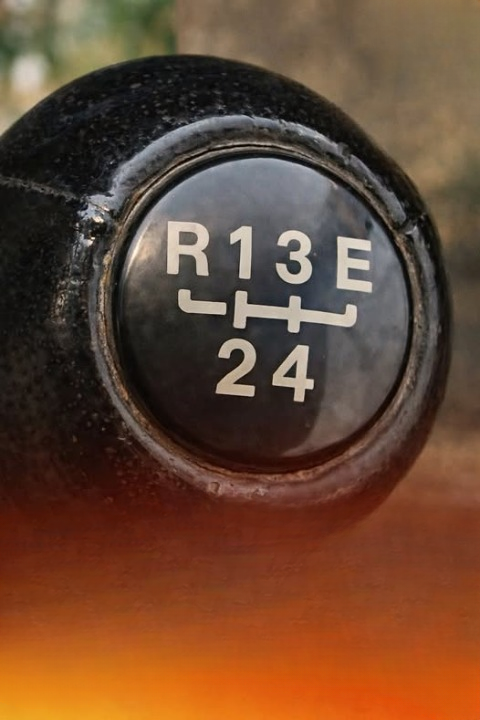
What Does the “E” on a Car Gear Selector Mean? A Guide for Modern Drivers
For generations, drivers became familiar with a relatively simple set of letters on a vehicle’s gear selector.
P usually meant Park.
R meant Reverse.
N meant Neutral.
D meant Drive.
Those four letters became so familiar that many drivers could operate an automatic transmission without giving much thought to what the individual settings actually did.
But modern vehicles have introduced many additional letters, symbols, buttons, and driving modes. Depending on the manufacturer and transmission design, a gear selector may include markings such as S, L, M, B, ECO, E, or other symbols.
One marking that can sometimes cause confusion is the letter E.
What does it mean?
The important thing to understand is that “E” does not have one universal meaning across every vehicle. Automakers can use the letter for different purposes depending on the transmission, model, and market.
In some vehicles, it may be associated with an economy-oriented driving mode. In others, an E position can have a transmission-specific function. On certain older or specialized systems, it may represent a particular automatic transmission setting rather than a simple “economy” mode.
That is why the safest approach is to check the vehicle’s owner’s manual rather than assuming that every E has the same meaning.
Still, understanding why manufacturers use additional gear-selector markings can help drivers make better sense of modern vehicles.
Why Gear Selectors Have Become More Complicated
Older automatic vehicles often had relatively straightforward controls.
A driver might see:
P – Park
R – Reverse
N – Neutral
D – Drive
Some vehicles added 2 and 1 for lower gears.
The basic idea was easy to understand.
Modern vehicles, however, have become much more sophisticated.
Automatic transmissions may have several forward gears, continuously variable transmissions may operate differently from conventional gearboxes, and hybrid vehicles may combine electric motors with gasoline engines.
Manufacturers also increasingly provide drivers with selectable driving modes.
These can influence things such as:
- Transmission shift behavior
- Throttle response
- Engine braking
- Fuel efficiency
- Regenerative braking
- Acceleration characteristics
- Traction management
- Climate-control behavior
- Steering response
As a result, the letters displayed around the selector can vary considerably between vehicles.
The same letter can therefore mean different things on different models.
The Most Important Rule: Don’t Guess
If you see an unfamiliar E on a gear selector, don’t assume it automatically means “Economy.”
That interpretation may be correct on one vehicle and incorrect on another.
Vehicle manufacturers design their controls around specific transmission systems, and the owner’s manual explains what each position does.
This is particularly important because changing a selector into an unfamiliar position while driving can affect the way the vehicle accelerates, shifts, or slows.
If you have just purchased a used vehicle and notice an unfamiliar letter, take a few minutes to look it up in the owner’s manual.
If you don’t have the physical manual, the manufacturer may provide documentation through its official website or owner-support system.
Why “E” Is Often Associated With Efficiency
One reason drivers commonly associate E with economy is that vehicle manufacturers frequently use letters and symbols to communicate efficiency-related features.
For example, a vehicle may offer an economy-oriented mode designed to encourage smoother driving or alter powertrain behavior.
The purpose is generally to make the vehicle operate in a way that can reduce unnecessary energy consumption under appropriate driving conditions.
But efficiency is not simply a matter of pressing a button.
Driving style has an enormous influence on fuel or energy use.
Rapid acceleration, unnecessary braking, excessive idling, high speeds, heavy loads, underinflated tires, and frequent short trips can all influence efficiency.
An economy-oriented mode cannot eliminate those factors.
What an Economy-Oriented Mode Can Change
Depending on the vehicle, an economy mode may adjust several characteristics.
One common approach is to modify accelerator response.
Instead of making the vehicle respond aggressively to small accelerator movements, the system may provide a more gradual response.
The transmission may also shift earlier into higher gears when conditions allow.
This can help keep engine speed lower during steady driving.
Some vehicles can also modify other systems when an efficiency mode is selected.
For example, the vehicle may alter:
- Air-conditioning behavior
- Throttle mapping
- Transmission shift points
- Hybrid power distribution
- Regenerative braking strategy
- Cruise-control behavior
The exact changes depend entirely on the manufacturer.
This is why a general description of “E means economy” should not be treated as a universal rule.
Conventional Automatic Transmissions
To understand why different letters exist, it helps to understand the basic operation of an automatic transmission.
A conventional automatic transmission contains multiple gear ratios.
Instead of requiring the driver to manually select each gear, the transmission automatically changes between ratios according to factors such as:
- Vehicle speed
- Engine speed
- Accelerator position
- Engine load
- Transmission temperature
- Selected driving mode
- Road conditions
The transmission control system continually evaluates these factors.
When you accelerate from a stop, the vehicle normally starts in a lower gear ratio.
As speed increases, the transmission can shift into progressively higher ratios.
Higher gears are generally useful for maintaining speed efficiently.
A lower gear can provide more multiplication of engine torque, which is useful for acceleration or certain driving conditions.
Why Earlier Shifting Can Improve Efficiency
Imagine driving at a steady speed on a relatively level road.
The vehicle does not need maximum engine output.
Keeping engine speed unnecessarily high would generally waste energy.
A transmission can therefore shift into a higher ratio when conditions permit.
An efficiency-oriented setting may encourage this type of behavior.
However, the vehicle’s computer is still responsible for determining whether a shift is appropriate.
If you suddenly press the accelerator firmly, the transmission may still downshift because the vehicle needs additional power.
This means an economy setting does not prevent normal acceleration.
It simply changes how the powertrain generally responds.
“E” Is Not the Same as Neutral
This distinction is especially important.
Some drivers may see an unfamiliar letter and assume it represents a special neutral or low-power state.
It does not necessarily do so.
Neutral is normally represented by N.
In Neutral, the transmission is disengaged from normal drive power transmission in a way that allows the vehicle to roll under appropriate conditions.
An E setting, where present, is a separate function defined by the manufacturer.
Never substitute one setting for another based only on the letter.
“E” Is Also Not Automatically the Same as “Eco”
The words Economy, Eco, and Efficiency are closely related concepts, but manufacturers do not necessarily use the same terminology.
One vehicle may display:
ECO
Another may use:
ECON
Another might display:
E
And another might not use a letter at all and instead provide a button or menu option.
The important information is what the manufacturer says the control does.
What About Hybrid Vehicles?
Modern hybrid vehicles make the situation even more interesting.
A hybrid powertrain can combine an internal-combustion engine with one or more electric motors.
The vehicle’s control computer determines when different sources of power should be used.
In some hybrid systems, the driver may see an E or another efficiency-related indicator associated with the powertrain.
But again, the exact meaning depends on the vehicle.
Hybrid systems can also use regenerative braking.
During certain braking or deceleration situations, the electric motor can operate in a way that helps recover some energy and store it in the battery.
This differs from a conventional vehicle, where braking energy is primarily converted into heat through the brake system.
Because hybrid vehicles combine multiple technologies, their gear selectors may look different from those found in traditional gasoline-powered cars.
Why Some Vehicles Have “B”
Another letter that often causes confusion is B.
On certain hybrid and electric vehicles, B can refer to a driving mode that increases the use of regenerative or engine braking when the driver releases the accelerator.
This can be useful on long descents or in situations where additional deceleration is desirable.
But B does not have exactly the same meaning on every vehicle.
Once again, the owner’s manual is the final authority.
This illustrates a broader point:
Letters on gear selectors are not universal definitions.
They are labels created by manufacturers for specific vehicle systems.
What Does “S” Usually Mean?
Drivers may also encounter S.
On many automatic vehicles, S is associated with a Sport-oriented transmission mode.
Selecting it may cause the transmission to hold lower gears longer or respond more readily to acceleration.
This can make the vehicle feel more responsive.
However, it may also increase engine speed and potentially increase fuel consumption.
On some vehicles, S can have a different meaning.
Therefore, the same caution applies.
Don’t rely on the letter alone.
What Does “L” Mean?
Another common marking is L, which often means Low.
A low-range setting can help provide additional engine braking or keep the transmission in lower gear ratios.
It can be useful in certain conditions, including steep descents or situations where additional low-speed control is desirable.
However, modern transmissions have become much more capable of selecting appropriate ratios automatically.
As a result, many drivers rarely need to use traditional low settings during ordinary driving.
Manual Mode Can Add Even More Letters
Some automatic vehicles include a manual-shift mode.
The selector may show:
M
or provide + and – controls.
This allows the driver to request higher or lower gear ratios manually.
The transmission computer typically continues to protect the vehicle from inappropriate selections.
For example, the system may refuse a requested gear if selecting it would cause the engine to operate outside a safe range.
This is one of the advantages of modern electronically controlled transmissions.
The driver has more control without necessarily having to manage every mechanical aspect of the transmission.
Why Modern Gear Selectors Can Be Confusing
There was a time when almost every driver understood the basic pattern of an automatic selector.
Today, the situation is different.
Vehicles may have:
- Traditional floor-mounted shifters
- Electronic gear selectors
- Rotary dials
- Push-button selectors
- Steering-column selectors
- Touchscreen gear controls
- Compact electronic switches
- Hybrid-specific controls
Some vehicles don’t even have a conventional mechanical connection between the selector and transmission.
Instead, electronic signals tell the vehicle’s control systems which operating mode the driver has selected.
This technology is often called shift-by-wire.
It allows manufacturers greater flexibility in interior design.
It also means that the letters and symbols on the control panel may be more important than ever.
Why Reading the Owner’s Manual Matters
The owner’s manual is often overlooked.
Many drivers read only the sections they need when something goes wrong.
But the manual contains important information about vehicle-specific controls.
If your vehicle has an unfamiliar gear position, check the transmission section.
Look for explanations of:
- Each selector position
- Recommended uses
- Driving restrictions
- Towing procedures
- Hill-driving guidance
- Parking procedures
- Manual shifting
- Economy or sport modes
- Warning indicators
This can prevent misunderstandings.
A five-minute review can be much more useful than relying on assumptions based on another vehicle.
Should You Use an Economy Setting All the Time?
If your vehicle has an economy-oriented setting and the manufacturer allows it for normal driving, it can generally be used whenever its characteristics suit the situation.
However, drivers should understand that efficiency settings may change