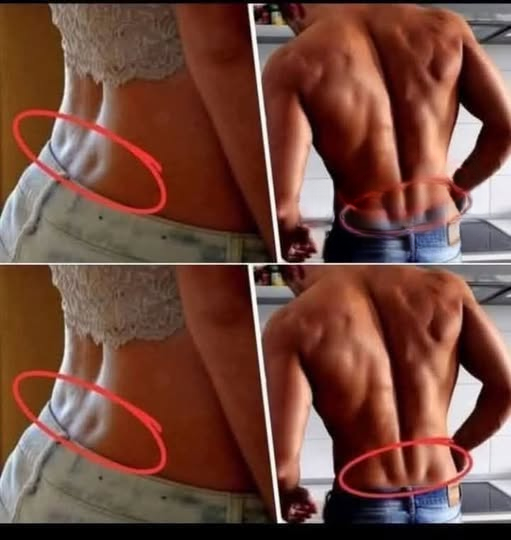
The human body is full of fascinating natural features. Some people have freckles, dimples on their cheeks, or a distinctive birthmark that makes them unique. Others may notice two small indentations located just above the hips on the lower back. These subtle marks often attract curiosity and are commonly referred to as the “Dimples of Venus” in women or the “Dimples of Apollo” in men.
Over the years, these small indentations have become the subject of countless social media posts and viral articles. Some claim they reveal hidden personality traits, indicate exceptional health, or even predict athletic ability. While these stories can be entertaining, most of them have little scientific evidence behind them.
So what are these small dimples really? Why do some people have them while others do not? Let’s explore the anatomy, genetics, and common myths surrounding one of the body’s most interesting natural features.
What Are Lower Back Dimples?
Lower back dimples are small, symmetrical indentations that appear on either side of the lower spine, just above the buttocks where the pelvis begins.
Unlike facial dimples, these are not created by muscles. Instead, they occur because of the way the skin is attached to the underlying tissues near the pelvic bones.
For people who have them, they are completely natural and considered a normal variation in human anatomy.
Why Do Some People Have Them?
The biggest factor is genetics.
The shape of your pelvis, the structure of connective tissue, and how the skin attaches to underlying ligaments are all largely inherited.
If your parents or close relatives have these dimples, there’s a greater chance that you may have them as well.
They are not something you can develop through exercise, nor do they usually disappear unless significant changes in body composition alter how visible they appear.
Are They a Sign of Good Health?
This is one of the biggest misconceptions online.
Many articles claim that people with lower back dimples are automatically healthier than everyone else.
Current medical evidence does not support that idea.
Having these indentations does not automatically mean someone is:
- Fitter
- Stronger
- Healthier
- More athletic
- More flexible
Likewise, not having them does not indicate poor health.
They are simply an anatomical characteristic, much like having attached or unattached earlobes.
Can Exercise Create Them?
Many fitness influencers claim certain workouts will “give you back dimples.”
In reality, exercise cannot create the connective tissue attachments responsible for these indentations.
However, strengthening the muscles of the lower back and reducing body fat may make existing dimples more noticeable in some individuals.
Popular exercises that improve lower-body strength include:
- Squats
- Deadlifts
- Hip bridges
- Lunges
- Core strengthening exercises
These workouts benefit overall fitness, but they do not create the dimples themselves.
Why Are They Called the “Dimples of Venus”?
The term “Dimples of Venus” comes from Venus, the Roman goddess traditionally associated with beauty.
Because these indentations have long been viewed as an attractive physical feature in some cultures, they became associated with her name.
For men, they are sometimes referred to as the Dimples of Apollo, after the Roman god associated with youth and physical beauty.
These names are cultural rather than medical.
Healthcare professionals generally describe them simply as lower back dimples.
Do They Affect Movement?
No.
For the vast majority of people, these dimples have absolutely no effect on:
- Walking
- Running
- Sitting
- Standing
- Athletic performance
- Daily activities
They are simply part of normal anatomy.
Most people never experience any problems related to them.
Can They Cause Pain?
The dimples themselves do not cause pain.
If someone experiences persistent discomfort in the lower back, the cause is usually related to muscles, joints, ligaments, nerves, or other medical conditions—not the dimples.
Anyone experiencing ongoing back pain should consult a qualified healthcare professional for evaluation rather than assuming it is related to these natural indentations.
Why Are They More Visible on Some People?
Visibility depends on several factors.
Body Structure
Some individuals naturally have more pronounced pelvic anatomy.
This makes the dimples easier to notice.
Connective Tissue
The way skin attaches to deeper tissues differs from person to person.
These natural differences affect appearance.
Body Composition
Changes in body fat can make the dimples appear more or less noticeable.
This varies greatly between individuals.
Common Myths
Because these dimples are relatively uncommon, many myths have developed around them.
Let’s separate fact from fiction.
Myth 1: They Mean You’re Exceptionally Healthy
There is no scientific evidence supporting this.
Healthy people may or may not have them.
Myth 2: They Predict Athletic Ability
Athletic performance depends on many factors including training, nutrition, genetics, sleep, and conditioning—not lower back dimples.
Myth 3: Only Women Have Them
Not true.
Men can have them as well.
The names may differ culturally, but the anatomy is the same.
Myth 4: Everyone Can Get Them by Working Out
Exercise improves strength and fitness but cannot create the connective tissue attachments responsible for these dimples.
Appreciating Natural Differences
One of the most interesting things about the human body is its incredible variety.
No two people look exactly alike.
Some people have:
- Freckles
- Dimples
- Curly hair
- Straight hair
- Widows’ peaks
- Attached earlobes
- Lower back dimples
These differences make every individual unique.
Rather than viewing one feature as “better” than another, it’s helpful to appreciate the remarkable diversity found in human anatomy.
Taking Care of Your Back
Whether or not you have lower back dimples, maintaining back health is important.
Healthy habits include:
- Staying physically active
- Practicing good posture
- Lifting heavy objects correctly
- Maintaining a healthy weight
- Stretching regularly
- Strengthening core muscles
- Sleeping on a supportive mattress
These habits contribute far more to long-term comfort than any naturally occurring physical feature.
When Should You See a Doctor?
Lower back dimples themselves usually require no medical attention.
However, you should consult a healthcare professional if you experience:
- Persistent back pain
- Numbness or tingling
- Weakness in the legs
- Difficulty walking
- Sudden changes after an injury
These symptoms are unrelated to cosmetic dimples and deserve proper evaluation.
The Role of Genetics
Many of our physical characteristics are inherited.
Height.
Eye color.
Hair texture.
Bone structure.
Skin tone.
Body proportions.
Lower back dimples are simply another example of how genetics influence our appearance.
They are one small reminder that every person carries a unique combination of inherited traits.
Final Thoughts
The two small indentations sometimes seen on the lower back are simply a natural anatomical feature known as the Dimples of Venus or Dimples of Apollo. They are largely determined by genetics and the way the skin connects to the underlying structures of the pelvis.
While they are often surrounded by myths and exaggerated online claims, current scientific understanding suggests they are neither a guarantee of exceptional health nor a sign of poor health. They are simply one of the many ways human bodies naturally differ from one another.
The best approach to overall wellness remains the same for everyone: eat a balanced diet, stay active, get enough sleep, manage stress, and seek medical advice when needed. Features like lower back dimples may be interesting to learn about, but true health is built through everyday habits—not by the presence or absence of a particular physical trait.
Understanding the facts behind common myths helps us appreciate the human body for what it truly is: wonderfully diverse, naturally unique, and deserving of care and respect.