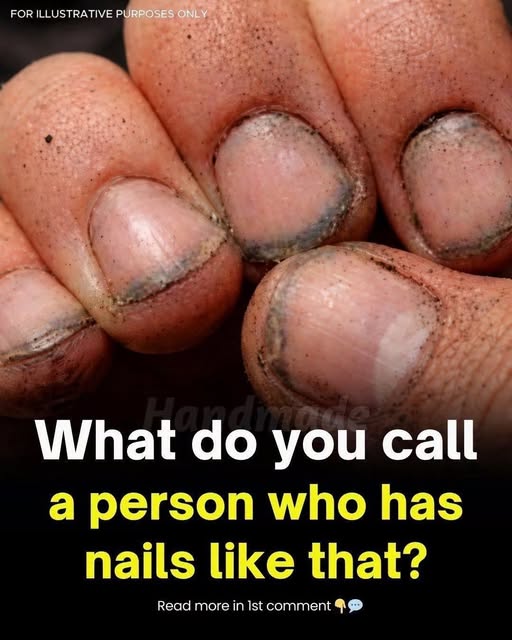
Have you ever looked at your fingernails and wondered whether their appearance says anything about your daily routine?
Maybe you’ve noticed dirt beneath your nails after working in the garden.
Perhaps your nails look different after spending the day repairing something, cooking, cleaning, painting, or working outdoors.
Or maybe you’ve simply wondered why some people’s nails always look perfectly clean while others occasionally have dirt or discoloration underneath them.
It’s easy to make assumptions based on appearances, but the truth is much more interesting.
Dirty or discolored fingernails don’t automatically tell you anything about a person’s character, personality, intelligence, or personal values.
Nails can look different for many ordinary reasons.
Work, hobbies, outdoor activities, nail-care routines, skin conditions, exposure to materials, and simple everyday life can all affect their appearance.
So instead of judging someone by their nails, it’s more useful to understand what can actually influence nail cleanliness and appearance.
Why Does Dirt Collect Under Fingernails?
Fingernails create a small space between the nail plate and the fingertip.
That space can collect particles during everyday activities.
Soil, dust, food particles, fibers, grease, and other materials can become trapped there.
This is especially common after activities involving direct contact with dirt or materials.
For example, someone who spends an afternoon gardening may finish with soil underneath their nails.
A mechanic may have traces of grease.
A painter may have small amounts of pigment or other materials.
Someone working with wood may have sawdust.
These examples don’t necessarily indicate poor hygiene.
They may simply reflect what the person was doing that day.
Occupation Can Affect Nail Appearance
A person’s job can have a major influence on their hands.
People who work outdoors or with physical materials may naturally have more visible residue on their hands and nails.
Construction workers, gardeners, farmers, mechanics, artists, cooks, cleaners, and many other professionals regularly handle substances that can temporarily affect the appearance of their hands.
Someone who works in an office may have fewer visible marks simply because their hands are exposed to different materials.
That difference doesn’t tell us who is cleaner or more responsible.
It often tells us what kind of work someone has been doing.
Hobbies Matter Too
Work isn’t the only explanation.
Hobbies can affect fingernails as well.
Gardening is a great example.
Even with gloves, soil can sometimes find its way onto the hands.
People who enjoy woodworking, crafting, painting, cooking, fishing, hiking, or automotive projects may also notice changes after their activities.
It’s perfectly normal for hands to become temporarily dirty while participating in practical hobbies.
The important thing is cleaning them afterward.
Nail Appearance Isn’t a Personality Test
One of the biggest misconceptions about dirty nails is the idea that they reveal someone’s personality.
There isn’t a reliable way to determine whether a person is responsible, careless, successful, intelligent, or trustworthy simply by looking at their fingernails.
Appearance is affected by circumstances.
Someone can have dirty nails after spending two hours working outside and still have excellent personal hygiene.
Another person may have clean-looking nails simply because they haven’t been doing activities that cause visible residue.
Judging character from appearance can therefore be misleading.
Why Handwashing Is Important
Although dirty nails don’t automatically indicate poor hygiene, cleaning your hands regularly is still important.
Hands come into contact with countless surfaces throughout the day.
They can pick up dirt, microorganisms, and other substances.
Washing hands with soap and clean running water helps remove many of these contaminants.
It’s particularly important before eating or preparing food, after using the bathroom, after handling animals, after outdoor activities, and whenever hands are visibly dirty.
Don’t Forget the Area Under the Nails
When washing your hands, don’t focus only on your palms.
The backs of your hands, fingertips, spaces between your fingers, and areas around and underneath your nails also deserve attention.
A thorough wash can help remove accumulated dirt and other substances.
Keeping nails reasonably short can also make them easier to clean.
Why Long Nails Can Collect More Material
Longer nails provide additional space where particles can become trapped.
That doesn’t mean long nails are unhygienic.
Many people maintain long nails successfully with regular cleaning and proper care.
However, longer nails may require more attention during handwashing and routine maintenance.
If you’re involved in activities where your hands become dirty frequently, shorter nails may be more practical.
Nail Polish Can Change What You See
Nail polish and other cosmetic products can alter the appearance of the nails.
Dark colors can sometimes make it difficult to notice subtle changes underneath.
Some products can also leave temporary staining or discoloration after removal.
This is another reason not to make assumptions based solely on nail appearance.
A nail that looks unusual may simply have been affected by cosmetic products.
Nail Staining Has Many Possible Causes
Nails can become stained by contact with various substances.
Hair dye, tobacco smoke, certain foods, pigments, cleaning products, and other materials may temporarily change their appearance.
Repeated exposure can sometimes make discoloration more noticeable.
If you’re concerned about a persistent change, especially one that doesn’t have an obvious explanation, discussing it with a healthcare professional can be helpful.
Nails Naturally Change Over Time
Nails aren’t static.
They grow continuously and can change in texture and appearance over the years.
Age, everyday wear, environmental exposure, and personal habits can all contribute to differences.
Some people naturally have smoother nails than others.
Others may have visible ridges or variations that have been present for years.
Not every difference is a sign of a problem.
Nail Care Doesn’t Have to Be Complicated
Healthy-looking nails generally don’t require an elaborate routine.
Simple habits can make a significant difference.
Keep nails clean.
Trim them regularly.
Avoid biting or picking at them.
Protect your hands when using harsh cleaning products.
Moisturize if your skin becomes dry.
Clean under the nails gently rather than aggressively scraping the skin.
If you use nail tools, keep them clean and avoid sharing personal grooming equipment.
These basic steps can help maintain comfortable, well-cared-for hands.
What About Suddenly Changing Nails?
A new or unexplained nail change can sometimes be worth paying attention to.
For example, if a nail suddenly becomes significantly thicker, changes color, separates from the nail bed, becomes painful, or develops an unusual mark that persists, consider discussing it with a healthcare professional.
The reason is not that every unusual nail change indicates a serious problem.
There are many possible causes, including injury, infection, inflammation, cosmetic products, and other conditions.
Professional evaluation can help determine the cause.
Injuries Can Affect Nail Appearance
A minor injury can sometimes change the way a nail looks as it grows.
You might hit a finger, pinch it, or repeatedly put