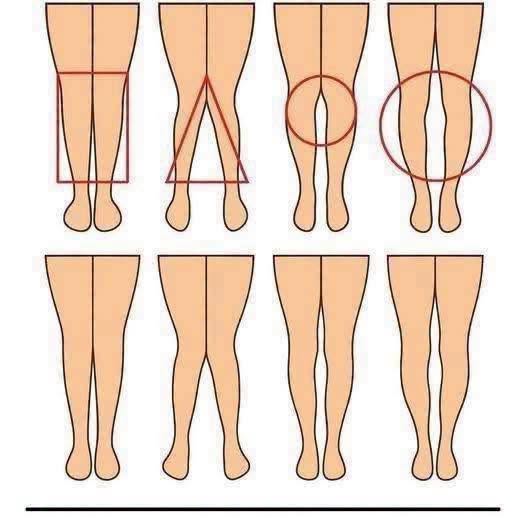
Have you ever noticed how much information a person’s legs can provide without them saying a word?
The way someone walks, stands, exercises, or moves throughout the day can sometimes offer clues about their habits, strength, mobility, and overall physical condition.
But there is an important distinction to make.
A person’s legs cannot reliably tell you everything about their personality, relationships, private life, or character. Many claims circulating online make dramatic statements about what someone’s body supposedly reveals, but appearance alone is rarely enough to support those conclusions.
What legs can tell us is often much more practical.
They can provide visible clues about muscle development, physical activity, posture, mobility, and certain changes that may deserve attention.
And sometimes, simply paying attention to your legs can help you become more aware of your general well-being.
Leg Strength Can Reflect Physical Activity
The muscles in the legs are among the largest muscle groups in the human body.
Walking, climbing stairs, cycling, running, dancing, swimming, hiking, and many other activities rely on them.
Regular movement can contribute to stronger leg muscles over time.
This doesn’t mean that someone with muscular legs is necessarily more athletic, or that slimmer legs indicate a lack of fitness. Genetics, age, body composition, occupation, training style, nutrition, and many other factors influence how a person’s legs look.
Two people can follow completely different lifestyles and still have similar-looking legs.
That’s why appearance should never be treated as a definitive measurement of fitness.
Functional ability is often more informative.
Can you comfortably walk for a reasonable distance?
Can you climb stairs?
Can you stand up from a chair?
Can you maintain balance?
Can you perform everyday activities without unusual difficulty?
These practical abilities can provide more meaningful information about physical function than appearance alone.
Walking Patterns Can Change Over Time
The way a person walks can also provide clues about mobility.
Most people develop their own natural walking pattern, influenced by body structure, footwear, previous injuries, habits, and other factors.
A temporary change may occur after exercise or a minor injury.
However, a persistent change in walking pattern can sometimes be worth discussing with a healthcare professional, particularly if it is accompanied by pain, weakness, numbness, swelling, dizziness, or balance problems.
For example, someone may begin favoring one leg because of discomfort.
Another person may notice that their balance has changed.
Someone else might have difficulty lifting the front of a foot while walking.
These observations don’t automatically point to a particular medical condition.
There can be many possible explanations.
The important point is that a noticeable, persistent change deserves attention rather than being ignored.
Your Legs Carry You Every Day
It’s easy to take our legs for granted.
We use them when getting out of bed.
We walk to the kitchen.
We stand while preparing meals.
We climb stairs.
We travel to work.
We shop for groceries.
We exercise.
We sit down and stand back up countless times.
Because leg movement is such a normal part of daily life, people may not notice gradual changes until an ordinary activity becomes unexpectedly difficult.
That’s why paying attention to your normal level of mobility can be useful.
If something changes significantly, consider what may have caused it.
Have you recently changed your exercise routine?
Started a new job that requires standing?
Been sitting for long periods?
Experienced an injury?
Changed your footwear?
Or is the change occurring without an obvious explanation?
These questions can help you understand what you’re experiencing.
Swelling Is Something to Pay Attention To
Occasional swelling can happen for many everyday reasons.
Standing for long periods, traveling, physical activity, heat, and other factors can affect how the legs feel.
But persistent or unexplained swelling is something that shouldn’t simply be dismissed.
Pay attention to whether swelling affects one leg or both, whether it comes and goes, and whether other symptoms appear at the same time.
If swelling is sudden, severe, painful, or accompanied by symptoms such as difficulty breathing or chest discomfort, seek urgent medical attention.
The important lesson is not to diagnose yourself based on an online article.
Instead, recognize unusual changes and know when professional advice may be appropriate.
Skin Changes Can Also Be Noticeable
The skin on the legs can change for many reasons.
Dryness, irritation, bruising, changes in pigmentation, scars, insect bites, and other ordinary conditions can all affect appearance.
Some changes may be harmless and temporary.
Others may benefit from evaluation, particularly if they don’t improve, repeatedly return, become painful, bleed, or change noticeably over time.
It’s also useful to remember that everyone’s skin is different.
Color, texture, hair growth, visible veins, and other features vary naturally between individuals.
There is no single appearance that defines “healthy-looking” legs.
Visible Veins Aren’t Always a Problem
Many people have visible veins on their legs.
Their appearance can be influenced by genetics, age, body composition, activity level, and other factors.
In some people, veins become more prominent over time.
Visible veins alone don’t necessarily indicate a health problem.
However, if a vein becomes painful, swollen, warm, or associated with significant skin changes, it may be worth seeking medical advice.
Again, the symptom matters more than simply how something looks.
Strong Legs Don’t Have to Look a Certain Way
One of the biggest misconceptions about fitness is that strength has a particular appearance.
It doesn’t.
A person’s leg strength cannot reliably be determined simply by looking at the shape of their legs.
Someone may have considerable strength without having highly defined muscles.
Another person may have visible muscle definition but have a different level of endurance or functional strength.
Fitness has multiple components.
Strength is one.
Cardiovascular endurance is another.
Flexibility, coordination, balance, mobility, and recovery also matter.
That’s why comparing your body with someone else’s can be misleading.
The more useful comparison is often with your own previous abilities.
Balance Becomes Increasingly Important
Legs aren’t just responsible for moving the body forward.
They also play an important role in balance.
Balance involves muscles, joints, vision, the nervous system, and the brain working together.
Simple activities such as standing from a chair, walking on different surfaces, stepping over an obstacle, or climbing stairs require coordination.
Maintaining strength and mobility can therefore be valuable throughout adulthood.
Activities such as walking, resistance training, stretching, and balance exercises may help support physical function when performed appropriately.
People with existing medical conditions or significant mobility concerns should seek individualized advice before starting a new exercise program.
Your Daily Routine Can Affect Your Legs
Your lifestyle can influence how your legs feel.
If you spend most of the day sitting, you may notice stiffness when you stand.
If your job requires prolonged standing, your legs may feel tired by the end of the day.
If you recently increase your exercise routine, temporary muscle soreness may occur.
If you’re traveling for many hours, sitting continuously can make your legs feel uncomfortable.
These experiences aren’t necessarily signs of a serious problem.
They can simply reflect how your body responds to changes in activity.
Regular movement throughout the day can be helpful for many people.
Even short periods of walking or changing position can break up long periods of sitting.
Footwear Can Make a Difference
Shoes affect the way your feet interact with the ground and can influence comfort while walking or exercising.
Poorly fitting footwear may contribute to discomfort, blisters, pressure points, or changes in how someone moves.
Different activities also require different types of footwear.
A pair of shoes that feels comfortable for casual walking may not be appropriate for running or a particular sport.
If you regularly experience foot or leg discomfort during activity, reviewing your footwear may be one practical place to start.
Persistent pain, however, should not automatically be blamed on shoes.
A healthcare professional can help determine the underlying cause when necessary.
Don’t Judge Someone’s Health by Appearance
Perhaps the most important message is this:
You cannot determine a person’s health simply by looking at their legs.
Body shape is influenced by countless factors.
Genetics.
Age.
Hormones.
Activity.
Nutrition.
Medical history.
Medications.
Occupation.
Lifestyle.
And ordinary individual variation.
Two healthy people can have completely different body shapes.
Likewise, someone can appear physically fit while experiencing a health issue that isn’t visible from the outside.
This is why sensational claims about what someone’s body supposedly “reveals” should be treated cautiously.
Appearance can provide observations.
It cannot provide a complete medical assessment.
What Should You Actually Pay Attention To?
Rather than worrying about whether your legs look a particular way, consider how they function.
Notice changes such as:
-
New or persistent pain.
-
Unexplained swelling.
-
Significant changes in mobility.
-
Repeated balance problems.
-
New weakness.
-
Persistent numbness or tingling.
-
Skin changes that don’t improve.
-
Difficulty performing activities that were previously comfortable.
None of these symptoms automatically means that something serious is happening.
But unusual or persistent changes are worth discussing with an appropriate healthcare professional.
A Better Way to Think About Your Legs
Your legs are much more than a physical feature.
They are part of the system that allows you to walk, stand, exercise, explore, work, travel, and participate in everyday life.
Instead of judging them based on appearance, think about what they allow you to do.
Can you move comfortably?
Can you maintain your usual activities?
Are you noticing any changes?
Are you giving your muscles enough movement and recovery?
Those questions are much more useful than trying to fit yourself into an arbitrary idea of what legs are supposed to look like.
And if you’re interested in improving leg strength and mobility, small consistent habits can make a meaningful difference.
Regular walking, appropriate resistance exercises, mobility work, adequate rest, and a balanced diet can all play a role in supporting overall physical well-being.
Most importantly, don’t compare your body with someone else’s.
There is enormous natural variation in the way healthy bodies look.
Your legs don’t need to resemble anyone else’s to be valuable, strong, or capable.
So the next time you see a headline claiming that a person’s legs can reveal everything about them, look beyond the sensational wording.
Your legs can certainly tell you something—but the most meaningful information comes from how they function, how they feel, and whether anything has changed from your normal baseline.
That’s a far more useful story than judging a person by appearance alone.