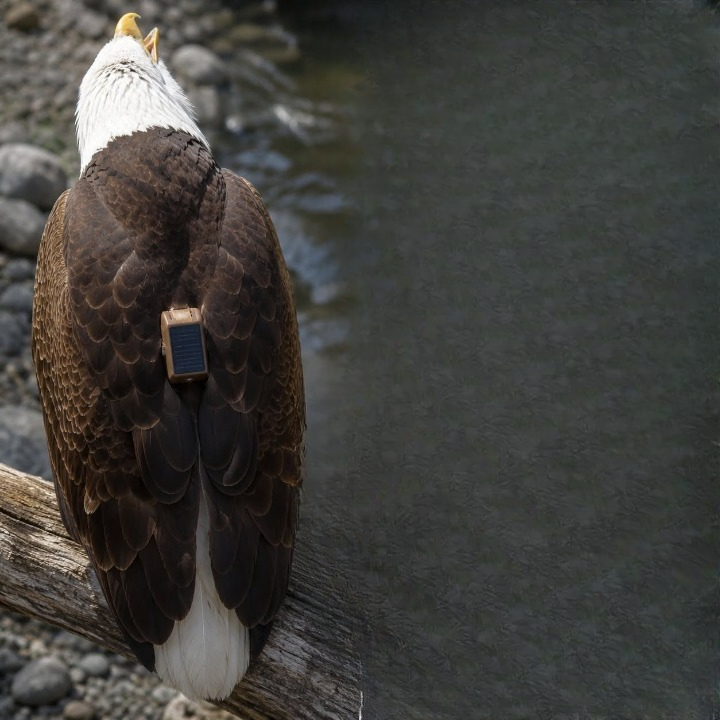
Twenty Years of Tracking One Eagle Revealed Surprising Secrets About Migration, Survival, and Wildlife Conservation
For decades, scientists have relied on technology to answer one of nature’s greatest mysteries: where do birds go when they disappear beyond the horizon?
While bird migration has fascinated people for centuries, modern satellite tracking has transformed our understanding of these remarkable journeys. By following individual birds over many years, researchers have uncovered migration routes, breeding habits, survival strategies, and environmental challenges that were once impossible to observe.
Among the most valuable discoveries have come from long-term studies of large birds of prey such as eagles. Tracking a single eagle throughout much of its life can provide an extraordinary window into how wildlife adapts to changing landscapes and climates.
Why Scientists Track Eagles
Eagles occupy the top of many food chains, making them important indicators of ecosystem health.
Because they require large territories and depend on healthy populations of prey, changes in eagle behavior often reflect broader environmental conditions.
Researchers monitor eagles to better understand:
- Seasonal migration
- Nesting success
- Habitat use
- Survival rates
- Food availability
- Human impacts on wildlife
- Climate-related changes
Information collected over many years helps conservation organizations make informed decisions about protecting both birds and their habitats.
How Modern Tracking Works
Advances in technology have dramatically improved wildlife research.
Today, many large birds can safely wear lightweight GPS transmitters designed specifically for long-term monitoring.
Depending on the equipment used, these devices may record:
- Geographic location
- Flight altitude
- Speed
- Direction of travel
- Time of day
- Environmental conditions
Some units transmit data through satellites or cellular networks, allowing researchers to follow birds without repeatedly capturing them.
The Value of Long-Term Research
Tracking an eagle for only a few months provides useful information.
Following the same bird for ten, fifteen, or even twenty years offers something much more valuable.
Long-term studies help scientists observe:
- Changes in migration routes
- Adaptation to habitat loss
- Effects of drought
- Responses to severe weather
- Breeding patterns over multiple generations
These observations reveal trends that shorter studies often miss.
Migration Is More Complex Than It Appears
Many people imagine migration as a simple trip between two locations.
In reality, it is far more dynamic.
An eagle may:
- Alter its route because of storms.
- Pause for several days during unfavorable weather.
- Return to familiar resting areas year after year.
- Explore new feeding locations when prey becomes scarce.
Researchers have discovered that experienced birds often make more efficient journeys than younger individuals.
This suggests that migration involves learning as well as instinct.
The Importance of Weather
Large birds of prey depend heavily on air currents.
Rather than constantly flapping their wings, eagles frequently soar on rising columns of warm air called thermals.
Using these natural air currents allows them to conserve energy while traveling long distances.
Wind direction, temperature, and atmospheric conditions can all influence daily travel distances.
Memory and Navigation
Scientists continue studying exactly how birds navigate across vast distances.
Evidence suggests that many migratory species may combine several navigation methods, including:
- Visual landmarks
- The position of the sun
- Star patterns
- Earth’s magnetic field
- Learned migration routes
Young birds may rely more heavily on instinct, while older birds appear to refine their routes through experience.
Unexpected Challenges Along the Way
Long-distance migration is rarely easy.
Throughout a lifetime, an eagle may encounter:
- Wildfires
- Hurricanes
- Habitat destruction
- Urban development
- Power lines
- Severe drought
- Food shortages
Despite these challenges, many birds demonstrate remarkable resilience by adjusting their movements and finding alternative habitats.
What Researchers Have Learned
Years of tracking have revealed several important insights.
Eagles Often Return to Familiar Locations
Many individuals revisit the same nesting sites and seasonal feeding grounds year after year.
Flexibility Improves Survival
Rather than following identical routes every season, birds often adjust their travel based on environmental conditions.
Habitat Protection Matters
Preserving key stopover locations can be just as important as protecting breeding areas.
Without safe places to rest and feed during migration, long journeys become much more difficult.
Technology Continues to Improve
Modern tracking equipment is becoming:
- Smaller
- Lighter
- More accurate
- Longer lasting
- More energy efficient
Researchers can now gather far more detailed information than was possible only a few decades ago.
These advances support more effective conservation planning while minimizing disturbance to wildlife.
Why Long-Term Studies Matter
Conservation depends on understanding how animals respond to changing environments.
Data collected over many years allows scientists to identify gradual trends that would otherwise go unnoticed.
For example, long-term monitoring may reveal:
- Earlier migration caused by warmer temperatures
- Shifts in breeding ranges
- Changes in food availability
- Population recovery after conservation efforts
These findings help governments, researchers, and conservation organizations develop science-based management strategies.
How the Public Can Help
Protecting birds of prey isn’t limited to scientists.
Individuals can contribute by:
- Supporting habitat conservation.
- Respecting nesting areas.
- Properly disposing of fishing line and litter.
- Reporting injured wildlife to licensed rehabilitators.
- Participating in local bird-monitoring programs.
- Learning about native wildlife.
Even small actions can contribute to healthier ecosystems.
Looking Ahead
As technology continues to evolve, scientists are gaining an increasingly detailed understanding of how birds interact with the world around them.
Long-term tracking studies not only reveal where eagles travel but also help answer broader questions about migration, adaptation, and environmental change.
Every new dataset adds another piece to the puzzle, helping researchers protect these magnificent birds for future generations.
Final Thoughts
Following a single eagle over many years demonstrates the remarkable value of patience in scientific research. While individual observations may seem ordinary on their own, decades of carefully collected data can reveal patterns that reshape our understanding of wildlife. By combining modern technology with long-term conservation efforts, researchers continue uncovering the extraordinary journeys that unfold high above our heads—journeys that remind us how interconnected the natural world truly is.