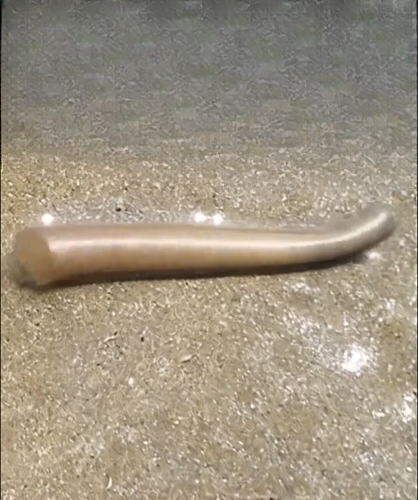
Trumpet Worm Tubes: Exploring Nature’s Remarkable Designs and the Wonders Hidden Beneath the Sand
“I never knew that.” Sometimes, a small discovery in nature can change the way we look at the world around us. An unusual shape in the sand, a tiny structure near the shoreline, or a pattern left behind by an animal can inspire questions that stay with us for years.
Many people remember childhood moments when they first encountered something unfamiliar outdoors. Perhaps they found a collection of shells along the beach, noticed tiny holes in damp sand, or discovered an intricate structure they could not explain. These experiences often become lasting memories because they combine curiosity with the excitement of learning something new.
Among the fascinating examples of natural construction are the tubes and burrows made by marine worms. Depending on the species and environment, these structures can resemble small funnels, narrow chimneys, or delicate formations rising from sandy or muddy surfaces. They may look unusual to someone seeing them for the first time, but they are part of the remarkable ways animals adapt to their surroundings.
The phrase “trumpet worm nests” is sometimes used informally to describe unusual tube-shaped formations associated with marine worms. However, the exact animal responsible for a particular structure cannot always be determined from its appearance alone. Different marine organisms create different kinds of tubes, and identifying them accurately may require information about the location, material, shape, and surrounding habitat.
Understanding these formations offers an opportunity to explore marine biology, animal behavior, and the ways even small creatures influence their environments.
The Fascination of Discovering Something Unfamiliar
Nature is filled with details that are easy to overlook during everyday life. A beach may appear to consist simply of sand, rocks, shells, and water, yet a closer look reveals an environment full of activity.
Tiny animals live beneath the surface, move through sediment, filter food from the water, and construct shelters suited to their needs. Some are visible only at certain times, while others spend much of their lives hidden inside burrows or protective tubes.
For a child exploring a shoreline, these details can be especially intriguing. A strange formation in the sand may seem mysterious because its purpose is not immediately obvious. Is it a plant, a shell, a mineral deposit, or something made by an animal?
That uncertainty encourages observation.
Instead of immediately recognizing the object, the observer begins comparing its shape with familiar things. A narrow opening may resemble a miniature chimney. A flared top might look like a funnel. A group of structures could appear to form a small settlement.
These comparisons are a natural part of learning. They help people describe unfamiliar objects before they know exactly what those objects are.
The next step is asking questions. What made the structure? Why is it shaped that way? Does it serve as a shelter? Does the animal live inside it permanently, or does it use it only temporarily?
Scientific curiosity often begins with questions like these. An ordinary walk along a beach can become an introduction to ecology when someone takes the time to examine the details.
What Are Marine Worm Tubes?
Marine worms belong to a broad group of animals that live in oceans, coastal waters, estuaries, and other aquatic environments. Many species are segmented worms, including members of the group known as annelids.
These animals vary considerably in size, appearance, feeding behavior, and habitat. Some move freely through sediment, while others spend much of their lives inside burrows or tubes.
Tube-building species create structures that provide shelter and, in some cases, support feeding or other essential activities. The construction materials differ among species. Some worms use mucus to bind grains of sand or fragments of shell together, while others produce more substantial protective tubes made from secreted materials or incorporate surrounding particles into their shelters.
The resulting structures can have very different appearances.
Certain tube-dwelling worms produce relatively simple, narrow tubes. Others create more noticeable formations with flared openings or branching shapes. Some species live in tubes attached to rocks, shells, or other hard surfaces, while others inhabit sediment on the seafloor.
Because so many different organisms construct shelters, a tube-like formation should not automatically be attributed to one particular kind of worm.
The term “trumpet worm” may be used descriptively in casual discussions, but common names are not always standardized across regions. Scientific identification requires more precise information than a resemblance to a trumpet or funnel.
Even so, these formations demonstrate an important biological principle: animals can alter their immediate surroundings by constructing structures that help them survive.
Why Some Worm Tubes Have Flared Openings
One of the most noticeable features of certain marine worm tubes is an opening that widens near the top. Depending on the species, the shape may resemble a trumpet, funnel, or small collar.
This appearance can make the formation look deliberately designed, especially when several similar structures occur close together.
However, the shape of a tube reflects the building behavior and environmental conditions of the organism that created it. It should not be assumed that every flared opening serves the same purpose.
For some tube-dwelling animals, the opening provides access between the protected interior and the surrounding water. Other structures may help maintain the tube’s form or reflect how the animal incorporates particles into its construction.
Water movement, sediment conditions, and the availability of suitable building materials can influence the final appearance. A structure exposed to strong currents may develop differently from one formed in relatively sheltered water.
The animal’s own behavior also matters. As it builds or repairs its shelter, the arrangement of materials may create distinctive ridges, collars, or wider sections.
These differences are useful reminders that natural structures often emerge through repeated biological processes rather than through planning in the human sense.
A worm does not need to understand engineering to create a structure suited to its environment. Its inherited behavior, physical abilities, and interactions with available materials can produce an effective shelter over time.
How Tube-Building Animals Construct Their Shelters
The construction process varies considerably between species, but many tube-building marine worms use materials that are readily available in their surroundings.
Some species produce mucus or other secretions that help bind particles together. Sand grains, fragments of shells, and other small pieces of sediment may become incorporated into the tube. In other species, the tube is made primarily from materials secreted by the animal itself.
The precise method depends on the organism.
A worm living in loose sand faces different challenges from one attached to a rock in an area exposed to waves. The structure must remain sufficiently stable for the animal to use it, while still allowing the worm to carry out essential activities.
In some species, the tube provides protection from physical disturbance and potential predators. It may also help the animal remain positioned in an area where food is available.
Tube construction can involve maintenance as well as initial building. Sediment may shift, currents may disturb the surrounding material, and parts of the structure may become damaged. Depending on the species, the animal may repair or extend its shelter when necessary.
This process illustrates how biological structures can be both practical and responsive to local conditions.
A tube that appears simple from the outside may represent a highly specialized solution to the challenges of living underwater. Its design reflects the relationship between the animal’s body, its behavior, and the environment in which it lives.
Life Beneath the Surface of the Sand
A sandy beach may look inactive when the tide is low, but the sediment can contain a surprising variety of organisms.
Small crustaceans, worms, mollusks, microscopic life, and other animals may inhabit spaces between grains or burrow below the visible surface. Some emerge when conditions are favorable, while others remain hidden for long periods.
The sand itself is not simply an empty collection of mineral particles. It forms part of a living habitat where water, oxygen, organic material, and nutrients interact.
Marine worms may feed on suspended particles, organic matter within sediment, or other food sources, depending on the species. Some process sediment as they move through it, while others use specialized structures to collect food from the surrounding water.
Their activities can contribute to the movement and redistribution of material in the seabed.
This movement is one reason scientists study organisms that live in sediment. Animals that burrow, feed, or construct tubes can influence the physical and chemical conditions of their immediate surroundings.
Their effects vary by species, population, and habitat, but they may contribute to processes such as sediment mixing and the circulation of water through small spaces in the seafloor.
These interactions demonstrate that even apparently empty areas can support complex ecological communities.
When people notice a tiny tube or burrow on a beach, they are observing one visible sign of a much larger system operating beneath their feet.
The Role of Marine Worms in Coastal Ecosystems
Marine worms are important components of many aquatic food webs. Depending on the species, they may consume organic material, filter particles from the water, or feed on other small organisms.
They can also serve as food for fish, shorebirds, crustaceans, and other animals. This makes them part of the connections through which energy and nutrients move through coastal ecosystems.
Tube-building species can influence the habitats around them as well. Their structures may provide small surfaces or spaces that other organisms use, although the extent of this effect depends on the species and local conditions.
Some worms live in dense groups, creating areas where many tubes occur close together. When present in sufficient numbers, these structures may change the texture of the sediment surface and affect how water moves through the area.
Other species occur individually or in scattered patches, making their tubes less noticeable.
The importance of these animals is not measured only by their size. A small organism can have a meaningful ecological role when it is abundant, performs a specialized function, or forms part of an important food source.
Studying marine worms helps researchers understand how coastal environments function and how seemingly minor organisms contribute to larger ecological processes.
It also reminds us that an ecosystem is made up of many connected relationships rather than a collection of isolated animals and plants.
Why Similar Structures Can Look So Different
People sometimes assume that similar-looking formations must have been made by the same species. In nature, however, different organisms can independently produce structures that share a general shape.
This happens because animals often face similar environmental challenges. A creature that needs a protected space may construct a tube, while another may create a burrow or attach itself to a hard surface.
The final results can resemble one another even when the organisms, materials, and construction processes are different.
For example, a tube made from sand grains held together by secretions may look quite different under close examination from a tube composed mainly of material produced by the animal. Both may have a narrow body and a widened opening, but their composition and structure can reveal important differences.
Other organisms can also create formations that people mistake for worm tubes. Shell fragments, plant material, mineral deposits, and abandoned burrows may all produce unusual patterns along a shoreline.
Weathering can further change an object’s appearance. Waves may remove part of a tube, wind may cover it with sand, and drying may cause certain materials to become more fragile.
For these reasons, a reliable identification should consider more than shape alone.
Scientists may examine the organism itself, the structure’s composition, its location, and the surrounding ecological conditions. In some cases, close photographs or specimens may help, but collecting material should always be done in accordance with local rules and conservation guidance.
For casual observers, it is often enough to appreciate the formation without assigning it a precise scientific name.
The Influence of Tides and Water Movement
Coastal habitats change constantly. Tides cover and expose sections of the shore, waves move sediment, and currents redistribute small particles.
These processes affect animals that live within or on the seabed.
A tube that is visible during low tide may be submerged at high tide. Another may remain underwater most of the time, becoming noticeable only when the water is unusually shallow or when sediment shifts around it.
Water movement can also affect the stability of the structure. Gentle currents may carry food particles toward certain organisms, while stronger movement may disturb loose material or damage exposed tubes.
Some tube-building species live in relatively sheltered locations, such as bays or protected coastal areas. Others inhabit environments where water movement is more pronounced.
The surrounding sediment matters, too. Fine