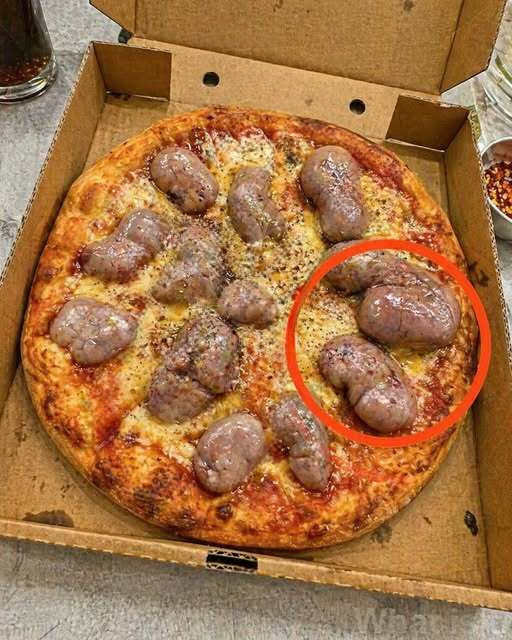
Those Strange Bubbles on Your Pizza May Have a Simple Explanation
After a long and exhausting day, sometimes the simplest things can feel like the perfect reward.
A quiet evening, a comfortable chair, a favorite movie, and a hot pizza delivered to the front door can be enough to make the day feel a little easier. There is something reassuring about ordering a familiar meal and knowing that, for the next hour or so, you do not have to think about cooking, cleaning, or planning dinner.
That was exactly what I had in mind one evening.
I had ordered a pizza from a local restaurant and was looking forward to eating it while watching a movie. When the delivery arrived, I brought the box inside, opened it, and expected to see the usual combination of melted cheese, tomato sauce, toppings, and a golden crust.
Instead, something immediately caught my attention.
The surface of the pizza had several unusual bubbles.
Some were small and barely noticeable. Others were larger, raised areas in the crust and cheese that made the pizza look different from what I expected. At first, I simply stared at it.
I wondered whether something had gone wrong during preparation.
Had the pizza been cooked incorrectly? Had the dough somehow changed during delivery? Was there a problem with the cheese? Or was there some other explanation that I had never considered?
For a moment, I was unsure whether I even wanted to take the first bite.
But after looking more closely, I realized that those unusual bubbles were not necessarily a sign that something was wrong with the pizza. In fact, bubbling is often a normal part of making and baking pizza.
The experience reminded me of how many ordinary foods can look surprising when we do not know what is happening beneath the surface.
Why Does Pizza Bubble in the First Place?
Pizza dough is made from a surprisingly simple group of ingredients.
Most traditional dough contains flour, water, yeast, salt, and sometimes a small amount of oil or other ingredients. Yet those basic ingredients can undergo several changes before the dough becomes the finished crust sitting on a plate.
One of the most important processes is fermentation.
When yeast is used in dough, it consumes available sugars and produces carbon dioxide as part of its activity. That gas becomes trapped within the developing dough structure.
As the dough rests and ferments, tiny pockets of gas can form throughout it.
Those pockets are one reason properly fermented pizza dough can develop a light, airy texture rather than becoming completely dense.
When the dough eventually enters a hot oven, the gases inside the dough expand. Water within the dough also turns into steam.
Both processes can contribute to pockets that become larger during baking.
Some of these pockets remain relatively small. Others expand significantly and form visible bubbles.
So what might initially look unusual can actually be a normal consequence of the way pizza dough behaves under high heat.
The Heat of the Oven Changes Everything
The oven plays an important role in creating the appearance of a pizza crust.
Professional pizza ovens can reach very high temperatures, allowing the dough to cook relatively quickly. Home ovens generally operate at lower temperatures, but the same basic principles still apply.
As the pizza heats up, moisture inside the dough begins to turn into steam.
At the same time, gases already trapped in the dough expand.
The dough itself becomes more flexible before eventually setting into its finished structure.
If a particular section of dough has a larger pocket of trapped gas, that section can rise more dramatically.
This can create a rounded bubble.
Sometimes the bubble appears in the crust. Sometimes it forms underneath the cheese. In other cases, a section of cheese may rise and create a small dome on the surface.
The final appearance depends on numerous factors, including the dough recipe, fermentation time, thickness, oven temperature, moisture content, toppings, and how the pizza was shaped.
That means no two pizzas will necessarily look exactly the same.
Why Some Pizza Bubbles Become So Large
One of the most interesting things about pizza is that the dough does not always expand evenly.
Imagine stretching a piece of dough by hand.
Some areas may become slightly thinner than others. Some sections may contain more trapped air. Other areas may be thicker and more resistant to expansion.
When the dough is exposed to intense heat, those differences become more noticeable.
A thinner section may expand quickly because it has less material resisting the pressure from the expanding gas and steam.
This can produce a large bubble.
Pizza makers sometimes refer to these raised sections as bubbles or blisters, depending on their appearance and location.
For some styles of pizza, large air pockets are actually desirable.
They can create a crust that is crisp on the outside while remaining lighter and more open inside.
The Role of Fermentation
Fermentation is one of the most important parts of pizza making.
Although the process may sound complicated, the basic idea is relatively straightforward.
Yeast interacts with sugars in the dough, producing carbon dioxide and other compounds. Over time, the dough develops both structure and flavor.
The length of fermentation can influence the final texture.
A dough that has been allowed to ferment appropriately may develop numerous small gas pockets. During baking, those pockets can expand and create an airy crust.
Different pizza makers use different fermentation schedules.
Some doughs are prepared relatively quickly, while others are allowed to rest for many hours.
Certain recipes involve longer fermentation periods, sometimes under controlled temperatures.
The exact method depends on the style of pizza being made.
This is one reason a pizza from one restaurant may have a completely different crust from a pizza purchased somewhere else.
What About Bubbles Under the Cheese?
Seeing a bubble underneath melted cheese can be especially surprising.
Cheese melts as it heats, becoming softer and more fluid. Meanwhile, moisture within the pizza can turn into steam.
If that steam becomes trapped beneath a layer of cheese, the cheese can temporarily lift away from the surface.
The result can look like a small raised pocket.
As the pizza cools, some of these areas may flatten again.
Other bubbles may remain visible because the crust underneath has already expanded and set.
Again, appearance alone does not necessarily indicate a problem.
The important thing is to consider the pizza as a whole rather than assuming that an unusual shape automatically means something is wrong.
Why Does the Crust Sometimes Have Dark Spots?
Bubbles are not the only feature that can make a pizza look unusual.
A properly baked pizza may have areas of darker coloration, particularly around the edges and raised portions of the crust.
High heat causes browning reactions that contribute to the flavor and appearance of baked foods.
This is one reason a pizza crust can develop a golden-brown or darker surface while the interior remains softer.
Small dark spots can also occur where the dough comes into direct contact with a hot surface or where flour or other ingredients become more heavily toasted.
The appearance of the crust can therefore vary considerably from one pizza to another.
The Difference Between Appearance and Food Quality
One of the biggest lessons from seeing unusual bubbles on a pizza is that appearance alone is not always a reliable way to determine whether food is suitable to eat.
Foods naturally change shape during cooking.
Bread rises.
Pancakes develop uneven surfaces.
Cheese melts and stretches.
Pastry forms pockets.
Potatoes become crisp in some places and soft in others.
Pizza is no different.
A strange-looking section may simply be the result of heat, moisture, fermentation, or the physical structure of the ingredients.
That does not mean consumers should ignore genuine signs of food spoilage. It simply means that an unusual shape by itself is not necessarily evidence of contamination.
When Should You Actually Be Concerned?
Although bubbles can be completely normal, it is still sensible to pay attention to the overall condition of any food before eating it.
If a pizza has an unusual appearance accompanied by a clearly unpleasant odor, visible spoilage, damaged packaging, or another obvious quality concern, it may be better not to eat it.
Food should also be handled and stored appropriately.
For example, if a perishable meal has been left at an unsafe temperature for an extended period, the issue is not whether the crust contains bubbles. The larger concern is how the food was stored and handled.
This distinction is important.
A bubble created by baking is very different from a change caused by improper food storage.
The shape of the crust is primarily a cooking question.
Storage conditions are a food-handling question.
Keeping those two issues separate can make it easier to evaluate what you are actually seeing.
Why Pizza Sometimes Looks Different After Delivery
Another factor that can change the appearance of a pizza is the delivery process itself.
A pizza continues to change after leaving the oven.
As it travels from the restaurant to your home, heat gradually escapes.
Steam can condense.
Cheese can settle.
The crust can soften slightly because of moisture trapped inside the box.
A pizza that looked perfectly flat when it left the restaurant might therefore appear somewhat different after several minutes in a closed box.
The cardboard container also plays a role.
Steam escaping from the hot pizza can collect inside the box, creating a humid environment.
This can affect the texture of the crust, particularly around the center.
That is one reason some people notice that restaurant pizza has a different texture when eaten immediately at the restaurant compared with the same pizza after a delivery trip.
Why Some Pizza Crusts Are More Airy Than Others
Pizza styles vary dramatically.
A thin-crust pizza may have a relatively flat structure with a crisp texture.
A thicker pizza may contain more dough and therefore have a softer interior.
Some traditional styles emphasize a puffy outer edge with a lighter interior.
Other styles are designed to be extremely thin and crunchy.
There are also pan pizzas, deep-dish variations, focaccia-style pizzas, stuffed crusts, and many regional interpretations.
Each style produces different opportunities for air pockets to develop.
So if you order two pizzas from two different restaurants and notice that one has many large bubbles while the other is nearly flat, that does not necessarily indicate that one was prepared incorrectly.
The recipes and cooking methods may simply be different.
The Science Hidden Inside an Ordinary Pizza
One reason everyday foods can be so fascinating is that they combine several basic scientific principles.
Pizza provides a simple example.
Yeast fermentation produces gas.
Heat causes gases to expand.
Water turns into steam.
Proteins change as they are heated.
Cheese melts.
Starches absorb water and change structure.
The surface of the dough undergoes browning.
All of these processes happen during a relatively short period.
By the time the pizza