Walk into a modern kitchen, and you’ll find appliances that perform their tasks almost effortlessly. Today’s toasters quietly brown slices of bread with the push of a button. They automatically pop the toast up when it’s ready, offer adjustable browning settings, and require very little attention from the user.
It wasn’t always that simple.
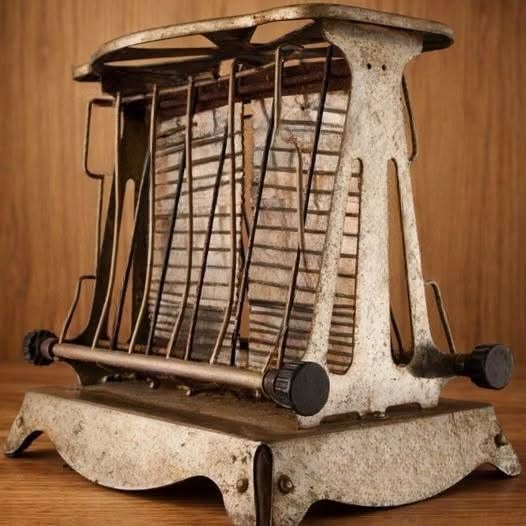
Nearly a century ago, preparing breakfast was a much more hands-on experience, and one small appliance played an important role in introducing families to the growing world of household electricity. It wasn’t sleek, enclosed, or fully automatic. Instead, it was made of exposed metal, glowing heating coils, and a simple wire rack that required constant attention.
This remarkable appliance was known as the turnover toaster.
Although it may appear unusual by today’s standards, it represented a significant step in the evolution of kitchen technology and helped shape the breakfast routines of millions of households during the early twentieth century.
A Kitchen From Another Era
Imagine stepping into an average family kitchen in the 1920s or 1930s.
The room feels different from today’s kitchens.
Cabinets are made from solid wood.
The countertops are simple and practical.
Natural light fills the room through large windows while the aroma of freshly brewed coffee drifts through the air.
Electricity is still considered a relatively modern convenience in many homes.
Household appliances are becoming increasingly common, but every new invention feels exciting.
Among the coffee pots, mixing bowls, and cast-iron cookware sits a curious-looking device unlike anything found in today’s kitchens.
Its metal frame is completely exposed.
Thin wires hold slices of bread in place.
Heating coils are fully visible rather than hidden behind protective panels.
To someone seeing it for the first time today, it might resemble an unfinished machine or an engineering prototype.
Yet decades ago, it represented modern convenience.
How the Turnover Toaster Worked
Unlike modern pop-up toasters, the turnover toaster required active participation from the user.
The process was simple but demanded careful attention.
First, slices of bread were placed into a wire holder positioned between exposed electric heating elements.
When plugged in, the metal coils gradually heated until they glowed with a warm orange color.
Heat radiated directly onto one side of the bread.
There were no digital displays.
No countdown timers.
No automatic sensors.
Instead, the cook watched carefully as the bread slowly changed color.
Once one side reached the desired level of browning, the entire wire rack had to be manually turned over so the opposite side could toast evenly.
After both sides were finished, the bread was carefully removed before it became overly browned.
Success depended entirely on observation and timing.
Breakfast Was Once a Shared Activity
Modern appliances often work quietly in the background.
Many tasks can be completed while we check our phones, prepare lunches, or answer emails.
Earlier generations experienced breakfast differently.
Preparing toast required someone to remain nearby.
The glowing heating coils encouraged attention rather than distraction.
Families often gathered around the kitchen while breakfast was being prepared, creating opportunities for conversation before everyone began the day’s activities.
Children watched parents carefully judge when the bread was ready.
Parents taught older children how to use the appliance safely.
Simple routines became family traditions.
The toaster wasn’t merely making breakfast.
It became part of the rhythm of everyday life.
Why Early Electric Appliances Were So Exciting
Today we rarely stop to think about electricity.
We simply expect appliances to function whenever we need them.
For families living during the early years of widespread household electrification, electric appliances represented remarkable progress.
Many households had previously relied on wood-burning stoves or gas-powered cooking equipment.
Electric devices offered cleaner operation and introduced entirely new possibilities for home cooking.
Owning an electric toaster symbolized more than convenience.
It reflected a changing lifestyle.
Families began embracing innovations that saved time while making everyday tasks easier.
The turnover toaster became one of many inventions that introduced people to the possibilities of modern electrical technology.
Simplicity Through Mechanical Design
One reason many vintage kitchen appliances remain fascinating today is their straightforward engineering.
The turnover toaster contained relatively few moving parts.
Its design relied on durable metal construction and basic electrical principles.
Without complicated electronics, software, or digital displays, users could easily understand exactly how the appliance functioned.
Everything remained visible.
The glowing heating coils demonstrated how electricity generated heat.
The wire frame showed precisely how bread was positioned.
The manual turning mechanism illustrated the importance of even cooking.
For many people interested in industrial design, these visible mechanical elements continue to make vintage appliances especially appealing.
Built to Last
Many household products manufactured during the early twentieth century emphasized durability.
Instead of lightweight plastics, manufacturers commonly used steel, chrome, aluminum, and other sturdy materials.
As a result, numerous vintage turnover toasters still exist today.
Collectors frequently discover them in antique shops, estate sales, flea markets, or family attics.
Some remain in excellent condition despite being nearly one hundred years old.
Others display signs of decades of use, including worn handles, slight discoloration, or small scratches that reflect years of family breakfasts.
Rather than reducing their appeal, these marks often add character and historical value.
Why Collectors Appreciate Vintage Toasters
Vintage kitchen appliances have become increasingly popular among collectors.
Their appeal extends beyond nostalgia.
They represent milestones in technological development.
Each design tells part of the story of how household life evolved throughout the twentieth century.
Collectors often look for examples with original finishes, manufacturer markings, instruction booklets, or original packaging.
Some restore non-functioning models for display.
Others simply enjoy preserving these artifacts as reminders of an important period in industrial design.
Museums dedicated to household history frequently include early electric appliances because they demonstrate how technological innovation gradually transformed everyday routines.
The Difference Between Yesterday and Today
Comparing a turnover toaster with a modern toaster reveals how dramatically consumer expectations have changed.
Today’s appliances emphasize automation.
Users expect consistent results with minimal effort.
Safety features have expanded significantly.
Heating elements are enclosed.
Automatic shutoff systems reduce overheating.
Temperature controls provide consistent browning.
Removable crumb trays simplify cleaning.
The early turnover toaster required much greater attention.
Yet many enthusiasts argue that this slower process encouraged people to remain engaged with what they were preparing.
Rather than rushing through breakfast, families often took a little more time to enjoy the experience together.
A Symbol of Everyday Innovation
History often celebrates major inventions such as airplanes, automobiles, or computers.
Equally important, however, are the smaller innovations that quietly improved everyday life.
The turnover toaster belongs to that category.
It didn’t change the world overnight.
Instead, it gradually improved ordinary mornings.
It helped introduce electricity into kitchens.
It encouraged confidence in emerging household technology.
It paved the way for increasingly sophisticated appliances that followed.
Sometimes progress arrives through dramatic breakthroughs.
Other times it arrives one slice of toast at a time.
Why These Objects Still Matter
Old household items often survive because families recognize their sentimental value.
A vintage toaster may remind someone of grandparents preparing breakfast.
It may recall childhood weekends spent gathered around the kitchen table.
It may simply represent an era when everyday routines unfolded at a slower pace.
Even individuals who never personally used one can appreciate the craftsmanship, thoughtful engineering, and historical significance these appliances represent.
They remind us that innovation doesn’t always begin with advanced computers or digital technology.
Sometimes it begins with practical solutions designed to make ordinary life just a little better.
Looking Back With Appreciation
The next time you press the lever on your modern toaster and wait for perfectly browned bread to pop up automatically, consider the generations who prepared breakfast very differently.
Their mornings involved observation, patience, and participation.
The humble turnover toaster asked users to remain present throughout the process, carefully watching glowing heating elements and deciding exactly when each slice had reached the perfect golden color.
Although technology has advanced tremendously since those early days of household electrification, these vintage appliances continue to tell an important story.
They remind us how innovation gradually entered everyday homes, transforming simple routines while preserving the warmth of family traditions.
Today, the turnover toaster stands as more than an old kitchen appliance. It represents curiosity, craftsmanship, and the remarkable period when electricity began reshaping homes around the world. For collectors, historians, and anyone who appreciates vintage design, it remains a fascinating reminder that even the simplest inventions can leave a lasting mark on daily life.
Sometimes the most memorable pieces of history aren’t found in grand museums or famous landmarks—they’re discovered in the familiar objects that once sat quietly on family breakfast tables, helping generations begin each new day.