The Truth Behind the Viral Claim That a Teen Was Sentenced to 452 Years
A dramatic courtroom story has circulated widely online claiming that a teenager was sentenced to an astonishing 452 years in prison.
The headline is difficult to ignore.
It suggests an extraordinary punishment, an emotional courtroom reaction, and a young person facing almost unimaginable consequences.
But there is a major problem with the story.
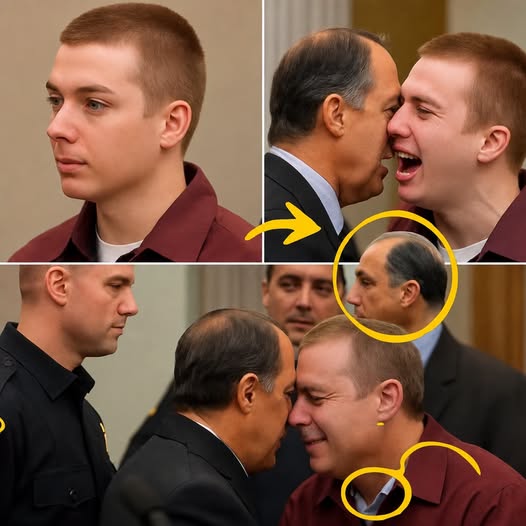
The widely shared courtroom footage associated with the claim does not show a teenager being sentenced to 452 years.
Fact-checking and reporting that traced the footage found that the video was taken from an earlier court proceeding and was later presented online with a misleading caption. The defendant associated with the footage was subsequently sentenced to 15 years in 2016, rather than 452 years.
The story is therefore less about an unprecedented 452-year sentence and more about how quickly a dramatic legal claim can spread when real footage is combined with inaccurate context.
How the 452-Year Story Began
The viral story appeared alongside short courtroom footage showing a young man reacting emotionally during a legal proceeding.
The footage itself was real.
That helped make the accompanying claim appear believable.
But a real video does not automatically prove that the caption attached to it is accurate.
According to fact-checking reports, the footage showed a court proceeding involving a probable-cause determination rather than a judge announcing a 452-year prison sentence. The defendant connected with the footage was later sentenced to 15 years in 2016.
Once the video was reposted with the dramatic “452 years” description, however, the number began traveling independently of its original context.
Websites and social-media accounts repeated the claim.
Some versions added additional details.
Others used emotionally charged descriptions without providing court documents or reliable reporting to support the extraordinary sentence.
Why the Number Attracted So Much Attention
The number 452 immediately creates curiosity.
A reader naturally wants to know:
Why would a teenager receive such a sentence?
What happened in the case?
Who was the judge?
Where did the case take place?
Could a court actually impose hundreds of years?
Those questions are precisely what make extraordinary numbers so effective in viral headlines.
The problem is that curiosity can encourage people to share a story before checking whether the central claim is accurate.
In this case, the most important detail—the alleged 452-year sentence—was not supported by the documented record associated with the viral footage.
A Real Courtroom Does Not Guarantee a Real Caption
One of the most useful lessons from this story is the difference between authentic footage and authentic context.
A video can genuinely show a courtroom.
The person in the video can genuinely be emotional.
The judge, attorneys, and courtroom can all be real.
Yet the caption describing what happened can still be incorrect.
Short clips are especially vulnerable to this problem because they often remove the events before and after the moment shown.
A viewer may see a young defendant reacting emotionally and naturally assume the accompanying narration explains why.
But without the original recording, court documents, or reliable reporting, the viewer cannot necessarily know what happened.
What the Fact-Checking Found
The reporting available on the viral claim provides a much different picture.
Fact-checkers traced the courtroom footage to an earlier legal proceeding.
The emotional reaction seen in the clip was connected to a probable-cause hearing rather than the announcement of a 452-year sentence.
Further reporting identified the defendant associated with the footage and noted that he received a 15-year sentence in February 2016.
That information directly conflicts with the version of the story circulating online.
The distinction matters because the central claim isn’t simply exaggerated.
It changes the nature of the entire story.
Why People May Have Believed It
Misinformation often becomes convincing when it combines real and false elements.
In this case, viewers encountered genuine courtroom footage.
They saw a young person experiencing an emotional moment.
They were then given an extraordinary number—452 years.
The combination created a narrative that appeared complete.
But the missing context was crucial.
The video did not establish that the person had just received the sentence described in the caption.
The number did not come with a verifiable court order.
And repeated posts did not create independent confirmation.
They simply repeated the same claim.
Repetition Is Not Verification
When a story appears on dozens of websites, it can create the impression that many independent sources have confirmed it.
That isn’t necessarily the case.
Online articles often copy information from other websites.
Social-media accounts repost material without checking the original source.
A dramatic claim can therefore appear in hundreds of places while still having no reliable primary documentation behind it.
The 452-year story demonstrates why readers should look for the original court record or reputable reporting rather than counting the number of websites repeating the same headline.
Can Prison Sentences Really Add Up to Hundreds of Years?
There is an important distinction here.
Extremely large numerical sentences can exist in criminal cases when penalties for multiple convictions are ordered consecutively.
In such circumstances, the individual numbers can be added together to produce a total that is far longer than a normal human lifespan.
That general legal concept does not make the specific 452-year viral claim true.
The important question is always whether the particular court actually imposed the sentence being reported.
In this case, the available fact-checking evidence does not support the claim that the defendant in the viral footage received 452 years.
The Importance of Court Records
Legal stories deserve a particularly high level of scrutiny because small differences can completely change the meaning of a case.
A preliminary hearing is not the same thing as a sentencing hearing.
A criminal charge is not the same thing as a conviction.
A prosecutor’s request is not the same thing as a judge’s ruling.
And a headline is not the same thing as a court document.
When an online story claims that someone received an extraordinary sentence, readers should look for information such as:
- The defendant’s name
- The court and jurisdiction
- The case number
- The date of sentencing
- The actual sentencing order
- Reputable local reporting
- Official court records
If those details are missing, an extraordinary claim deserves additional verification.
How Old Footage Can Become a New Story
Another interesting part of the episode is the way older footage can acquire a completely different meaning when it is reposted.
A video recorded years earlier may have originally been published with a specific explanation.
Later, someone can download it, remove the original context, add new captions, and upload it again.
Viewers who encounter the second version may never realize that the footage is old.
They may assume the events happened recently.
They may also assume the new caption describes exactly what occurred in the video.
That can turn a real historical event into the visual foundation for an entirely different story.
The Emotional Reaction Was Real—but the Explanation Was Different
The young man’s emotional reaction in the footage helped the viral story spread.
But an emotional reaction alone doesn’t establish what caused it.
People can react strongly to many different developments in a courtroom.
Without the surrounding proceedings, viewers cannot reliably determine the reason for a person’s reaction.
This is an important lesson for anyone watching short legal clips online.
Emotion is evidence that someone was emotional.
It is not, by itself, evidence of the explanation supplied by a social-media caption.
Why the Story Deserved a Closer Look
A claim that a teenager had been sentenced to 452 years should immediately prompt a basic question:
Where is the documentation?
Such an extraordinary sentence should be easy to verify if it actually occurred.
There should be a court, a judge, a defendant, a case history, and sentencing records.
Instead, the viral versions of the story relied heavily on a short video and dramatic descriptions.
Fact-checking later showed that the footage did not support the central claim.
The Real Lesson Is About Online Verification
The most useful lesson from this story isn’t about an unusual prison sentence.
It is about how quickly an inaccurate claim can become familiar.
When people see the same statement repeatedly, they may begin to assume it has been confirmed.
But information doesn’t become true through repetition.
A claim should be checked against evidence.
That is especially important when a story involves criminal cases, children or teenagers, major legal consequences, or extraordinary numbers.
What the Verified Record Tells Us
The available reporting provides a much more ordinary legal timeline than the viral headline suggests.
The courtroom footage was connected to an earlier proceeding.
The proceeding was not a sentencing hearing in which a teenager was given 452 years.
The defendant associated with the footage was later sentenced to 15 years in 2016.
That doesn’t make the underlying legal case unimportant.
It simply means the viral description should not be treated as an accurate account of what happened.
A Reminder Before Sharing Dramatic Legal Stories
The next time an extraordinary courtroom story appears in your social-media feed, it is worth pausing before sharing it.
Ask where the information came from.
Look for the original reporting.
Check whether the date matches the footage.
Search for the court and defendant.
And, when possible, look for official records.
A few minutes of verification can reveal that a story that seemed shocking is actually based on an old video, an incorrect caption, or a completely different event.
That is what happened with the viral claim about a teenager receiving a 452-year prison sentence.
The footage was real.
The dramatic caption was not an accurate description of what the footage showed.
And the documented sentence associated with the defendant was 15 years, not 452.
In the end, the story offers a useful reminder: when a legal claim seems extraordinary, the evidence matters more than the headline.