The Story Behind “Unchained Melody”: How a Song From 1955 Became One of the Most Beloved Ballads in Music History
Some songs become popular for a short period before gradually disappearing from public attention. Others possess something special that allows them to remain meaningful for generations. Their melodies continue to appear on radio stations, in movies, at weddings, and during quiet moments when people want to reconnect with memories from the past.
“Unchained Melody” belongs to the second category.
Originally written in 1955, this beautiful romantic ballad has become one of the most recognizable songs in the history of popular music. Its emotional melody, memorable arrangement, and powerful interpretation have allowed it to survive changing musical trends for more than seven decades.
Although many listeners immediately associate the song with The Righteous Brothers, its history actually began years before their famous recording.
The music was composed by Alex North, while the lyrics were written by Hy Zaret. The song was originally created for a motion picture called Unchained, a prison drama released in 1955. Its first film performance was delivered by singer Todd Duncan.
During the same year, several other artists recorded their own interpretations, helping the composition gain popularity long before the version that would eventually become its most famous recording.
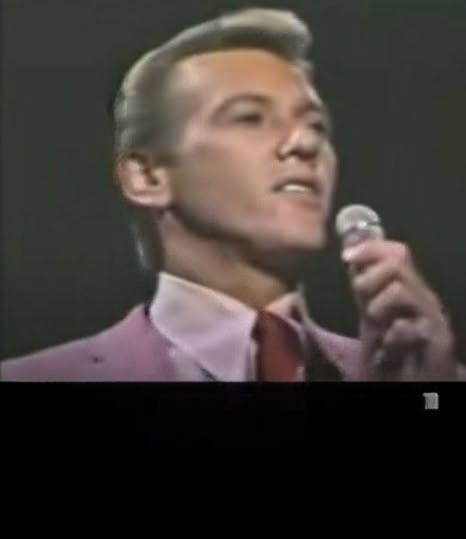
Then, in 1965, The Righteous Brothers released their unforgettable interpretation, featuring Bobby Hatfield’s remarkable lead vocal.
Decades later, the song experienced another extraordinary revival when it appeared in the romantic film Ghost, starring Patrick Swayze and Demi Moore.
What followed was a remarkable musical journey that introduced the composition to audiences who had not even been born when it was first written.
But what made this particular song so special?
Why did its melody continue connecting with listeners across different generations? And how did a relatively obscure prison film become associated with one of the most recognizable romantic songs ever recorded?
To understand its remarkable history, we need to return to the beginning.
1. The Beginning of an Extraordinary Musical Journey in 1955
<AsyncImage query=”Unchained 1955 movie original theatrical poster prison film” aspectRatio=”16:9″ width=”100%”/>
The story of “Unchained Melody” began in the American film industry during the early 1950s.
At that time, Hollywood regularly commissioned original musical compositions for motion pictures. Songs could help establish the atmosphere of a film, communicate emotions, and create a memorable connection between the audience and the story.
In 1955, composer Alex North was working on music for a prison drama titled Unchained.
The movie explored life inside a correctional institution and examined the experiences of prisoners living under strict restrictions.
North was asked to create music that would complement the emotional atmosphere of the production.
Rather than composing a conventional background theme, he developed a melody with a strong romantic and emotional character.
He subsequently worked with lyricist Hy Zaret, who wrote the words that transformed the composition into a song about distance, longing, and the desire to reconnect with someone important.
The result was “Unchained Melody.”
Interestingly, the word “unchained” does not appear in the song’s lyrics.
The title was connected to the original motion picture rather than being a phrase taken directly from the words of the composition.
This unusual detail has become one of the interesting facts frequently discussed by music historians.
The song would eventually become much more famous than the film that originally introduced it.
2. Who Were Alex North and Hy Zaret?
<AsyncImage query=”Alex North composer portrait black and white” aspectRatio=”4:3″ width=”100%”/>
Understanding the history of “Unchained Melody” also means recognizing the contributions of its creators.
Alex North was an accomplished American composer whose work covered film, theatre, and concert music.
He was particularly respected for bringing emotional complexity and distinctive musical arrangements to motion pictures.
Before becoming widely recognized in Hollywood, North developed his musical abilities through formal training and experience in different musical environments.
His film compositions eventually included several important productions.
Among his best-known works was the music for A Streetcar Named Desire (1951), which demonstrated his ability to create distinctive musical atmospheres.
He also composed music for major films such as Spartacus (1960) and Cleopatra (1963).
His collaboration with Hy Zaret on “Unchained Melody” became one of the most successful songwriting achievements associated with his career.
<AsyncImage query=”Hy Zaret songwriter black and white portrait” aspectRatio=”4:3″ width=”100%”/>
Hy Zaret, whose birth name was Hyman Zaritsky, was an American songwriter and lyricist.
He worked on numerous musical projects throughout his career and became particularly associated with the words of “Unchained Melody.”
His lyrics gave the composition an emotional identity that helped it connect with listeners.
Rather than focusing on the prison setting of the original movie, the words explored the universal experience of missing someone and wishing to be reunited.
That decision helped the song move beyond its original cinematic purpose.
People who had never watched Unchained could still understand the emotions expressed through the music.
The partnership between North and Zaret demonstrated how a strong melody and carefully written lyrics could create something with a life far beyond its original assignment.
3. The Original Performance by Todd Duncan
<AsyncImage query=”Todd Duncan opera singer portrait black and white” aspectRatio=”4:3″ width=”100%”/>
Many modern listeners assume that The Righteous Brothers were the first performers to record “Unchained Melody.”
However, the original film version was sung by Todd Duncan.
Duncan was an accomplished American baritone singer who had already established an important reputation in classical music and opera.
He was also historically significant for his role in the original Broadway production of Porgy and Bess.
His performance in Unchained introduced the composition to movie audiences in 1955.
The original version had a different atmosphere from the later popular recording.
It was connected to the dramatic setting of the prison film and presented the melody through Duncan’s classical vocal background.
Although the movie itself did not achieve the lasting recognition of the song, its musical contribution became extraordinary.
Duncan’s original performance is an important part of the composition’s history because it represents the beginning of its journey.
Without that first introduction, the later interpretations might never have developed in quite the same way.
4. Why Was the Song Written for a Prison Movie?
One of the most interesting questions about “Unchained Melody” concerns the relationship between its emotional subject and the movie for which it was created.
Unchained was a drama about prison life.
The story examined the experiences of inmates and the difficulties associated with confinement.
The film’s subject naturally involved themes of separation, restricted freedom, and the desire for a different future.
North’s composition and Zaret’s lyrics provided an emotional contrast to the film’s institutional setting.
Although the song eventually became strongly associated with romantic relationships, its emotional themes were broad enough to connect with different experiences.
Separation is something people understand in many ways.
It can involve distance between romantic partners, family members, friends, or individuals whose circumstances prevent them from being together.
This emotional flexibility helped make the song suitable for audiences beyond the original movie.
The title remained connected to the film, but the composition gradually developed an identity of its own.
5. The Song’s Early Success in 1955
<AsyncImage query=”1950s vintage vinyl records jukebox music record player” aspectRatio=”16:9″ width=”100%”/>
The success of “Unchained Melody” did not begin with The Righteous Brothers.
Several musicians recorded versions during 1955, and some achieved impressive chart results.
Among the most important early recordings were those by Les Baxter, Al Hibbler, and Roy Hamilton.
Les Baxter’s interpretation was instrumental, allowing listeners to experience the melody without a lead vocal.
His recording became particularly successful in the United States.
Al Hibbler delivered a vocal interpretation that highlighted the emotional character of the composition.
Roy Hamilton also recorded a popular version that helped establish the song’s place in the music industry.
The fact that several interpretations became successful during the same year demonstrated the strength of the underlying composition.
It was not dependent on one particular singer or arrangement.
Different performers could approach the music from different artistic perspectives while preserving its central emotional appeal.
This early popularity also established the song as a musical standard.
A musical standard is a composition that continues to attract performers long after its original release.
“Unchained Melody” would eventually become one of the most widely recorded examples of this tradition.
6. The Song Received an Academy Award Nomination
The success of “Unchained Melody” also extended into the world of cinema awards.
The composition received an Academy Award nomination for Best Original Song following the release of Unchained.
This recognition was important because it acknowledged the contribution of North and Zaret to the original motion picture.
Although the song did not win, the nomination helped establish its reputation as an important film composition.
The award also demonstrated that a song created for a relatively modest production could attract considerable attention.
Over the following decades, the composition became far more famous than the movie itself.
This is an unusual but not entirely uncommon development in entertainment history.
Sometimes a song, a character, or a particular scene develops a cultural life that extends far beyond the original production.
In this case, the music became the lasting connection between audiences and a film that many modern listeners have never seen.
7. The Righteous Brothers Enter the Story
<AsyncImage query=”The Righteous Brothers Bobby Hatfield Bill Medley 1960s black white photograph” aspectRatio=”16:9″ width=”100%”/>
Ten years after the original composition appeared, “Unchained Melody” entered another important chapter.
The Righteous Brothers were already becoming popular during the 1960s.
The American musical duo consisted of Bobby Hatfield and Bill Medley.
Their distinctive sound combined powerful vocals with elements of soul, pop, and rhythm and blues.
They became especially recognizable through recordings such as “You’ve Lost That Lovin’ Feelin’.”
Their music had a strong emotional quality, and both performers possessed distinctive vocal abilities.
In 1965, they recorded their interpretation of “Unchained Melody.”
The recording featured Bobby Hatfield singing the lead vocal.
Although the record was credited to The Righteous Brothers, the performance is essentially a solo vocal by Hatfield.
His interpretation gave the composition a different character from the earlier recordings.
The arrangement allowed the melody to build gradually, creating an emotional performance that became increasingly powerful as it progressed.
The recording was produced by Phil Spector and became one of the best-known examples of the duo’s musical legacy.
It reached No. 4 on the American pop chart in 1965.
More importantly, it eventually became the version most closely associated with the song among international audiences.