The Spotted Lanternfly: A Homeowner’s Guide to Identifying, Preventing, and Managing This Invasive Pest
Introduction
The spotted lanternfly has become one of the most concerning invasive insects in many parts of the United States. Although it does not bite people or spread diseases, this pest can cause significant damage to trees, gardens, vineyards, and agricultural crops. As its population continues to expand, homeowners are increasingly finding these insects on trees, fences, patios, and even outdoor furniture.
Learning how to identify the spotted lanternfly and understanding the most effective control methods can help protect your landscape while reducing its spread to neighboring communities.
What Is the Spotted Lanternfly?
The spotted lanternfly is an invasive planthopper native to parts of Asia. It was first discovered in the United States in 2014 and has since spread to multiple states through accidental transportation on vehicles, firewood, outdoor equipment, and shipping materials.
Unlike many garden pests that attack only one plant, the spotted lanternfly feeds on dozens of tree and plant species. This broad diet allows it to establish itself in a variety of environments, including residential neighborhoods, parks, farms, and forests.
How to Identify a Spotted Lanternfly
Recognizing this insect during each stage of its life cycle is the first step toward effective management.
Egg Masses
During late fall through early spring, females lay egg masses that resemble smears of dried mud or gray putty. Each mass may contain 30 to 60 eggs hidden beneath a protective coating.
Egg masses are commonly found on:
- Tree trunks
- Wooden fences
- Outdoor furniture
- Firewood
- Stone surfaces
- Vehicles
- Recreational equipment
Nymph Stage
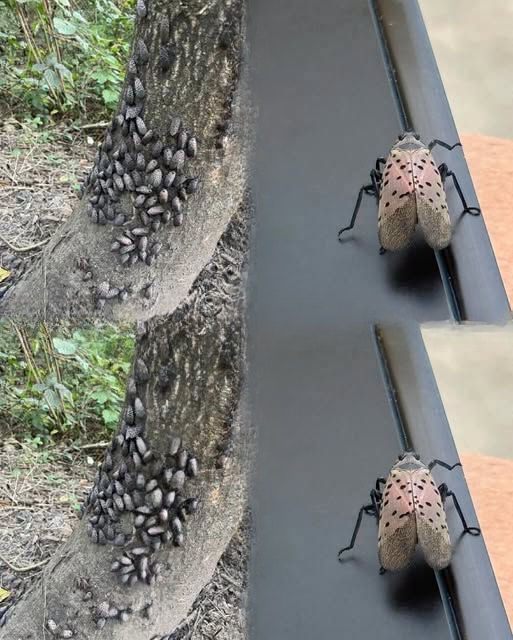
Young lanternflies, called nymphs, appear in several growth stages.
Early nymphs are:
- Small
- Black
- Covered with bright white spots
As they mature, they develop striking red patches while retaining the white spots and black coloration.
Adult Lanternflies
Adults are approximately one inch long.
Key identifying features include:
- Gray forewings with black spots
- Bright red hind wings
- Black markings near the wing tips
- Yellow and black abdomen
When resting, only the gray spotted wings are usually visible.
Why Are They Harmful?
Spotted lanternflies feed by inserting their mouthparts into plants and extracting sap.
Heavy infestations can weaken plants by reducing their ability to transport nutrients.
Common problems include:
- Wilting leaves
- Reduced plant growth
- Premature leaf drop
- Lower fruit production
- Increased vulnerability to disease
While healthy mature trees often survive attacks, repeated infestations can stress plants and make them less resilient over time.
Plants They Commonly Attack
Although they feed on many plant species, some of their favorites include:
- Maple trees
- Willow trees
- Black walnut
- Birch
- Grapevines
- Apple trees
- Peach trees
- Cherry trees
- Hops
- Various ornamental trees
One of their preferred hosts is the invasive tree-of-heaven, which often supports large lanternfly populations.
Signs of an Infestation
Homeowners may notice several warning signs before seeing large numbers of insects.
These include:
- Sticky residue on leaves
- Black sooty mold growing on surfaces
- Clusters of insects on tree trunks
- Sap oozing from bark
- Increased activity from bees and wasps attracted to sugary secretions
If these symptoms appear alongside spotted lanternflies, action should be taken quickly.
Why They Produce Sticky Residue
As lanternflies consume plant sap, they excrete excess sugary liquid known as honeydew.
Honeydew can:
- Coat outdoor furniture
- Cover decks
- Drip onto patios
- Encourage mold growth
- Attract nuisance insects
The sticky coating is often one of the first signs homeowners notice.
How the Pest Spreads
Unlike many invasive insects, spotted lanternflies do not rely solely on natural movement.
People unknowingly transport them by moving:
- Campers
- Trailers
- Firewood
- Landscaping equipment
- Lawn furniture
- Shipping pallets
- Construction materials
Checking outdoor items before traveling can reduce accidental spread.
Natural Predators
Researchers continue studying native predators that may help reduce lanternfly populations.
Some animals observed feeding on them include:
- Certain bird species
- Praying mantises
- Spiders
- Assassin bugs
While these predators may consume lanternflies, they generally do not provide enough control to stop large infestations.
Safe Control Methods
Homeowners have several options for managing lanternflies around their property.
Remove Egg Masses
Scraping egg masses into a container filled with rubbing alcohol or soapy water prevents future generations from hatching.
This is one of the simplest and most effective prevention methods.
Use Sticky Traps Carefully
Sticky bands wrapped around tree trunks can capture climbing nymphs.
To avoid trapping birds and beneficial wildlife, protective guards or mesh coverings should be installed over the traps.
Reduce Host Plants
If your property contains invasive tree-of-heaven specimens, removing them may reduce lanternfly populations over time.
Tree removal should be planned carefully, especially if multiple trees are present.
Insecticides
When infestations become severe, insecticides labeled for spotted lanternfly control may be appropriate.
Always:
- Read the product label.
- Follow application instructions.
- Protect pollinators by avoiding unnecessary spraying.
- Consider consulting a licensed pest management professional for large infestations.
Can They Harm People?
The good news is that spotted lanternflies do not:
- Bite humans
- Sting people
- Spread diseases
- Damage homes directly
Their primary impact is on plants, agriculture, and outdoor living spaces.
Should You Report Sightings?
Reporting requirements vary depending on your state or local agricultural agency.
In areas where the insect is newly detected, officials may encourage residents to report sightings to help monitor its spread.
Checking your state’s agriculture or natural resources website can provide current guidance.
Preventing Future Infestations
A few simple habits can make a significant difference:
- Inspect vehicles before traveling.
- Remove egg masses during winter.
- Monitor trees regularly.
- Eliminate invasive host plants where practical.
- Keep outdoor equipment clean.
- Educate neighbors about identification.
Community participation is one of the most effective ways to slow the spread of invasive pests.
Final Thoughts
The spotted lanternfly continues to pose challenges for homeowners, gardeners, and farmers alike. Early identification and consistent management are the best defenses against this invasive insect. By inspecting your property regularly, removing egg masses, and using appropriate control methods when necessary, you can help protect your landscape while contributing to broader efforts to reduce the pest’s spread.
Staying informed and acting early can make a meaningful difference in preserving healthy trees, gardens, and outdoor spaces for years to come.