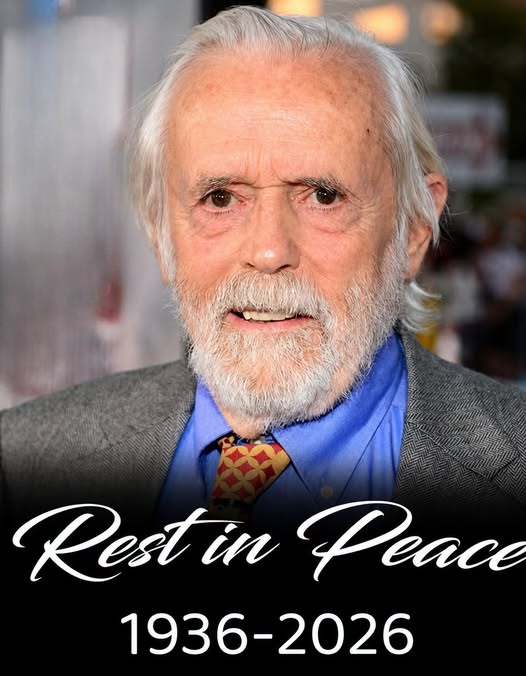
Hollywood has lost one of its most dependable and recognizable character actors. Matt Clark, whose career stretched across more than five decades, died on March 15, 2026, at his home in Austin, Texas. He was 89. His family reported that his death followed complications from back surgery.
Clark was never the typical Hollywood leading man. He rarely appeared at the center of a movie poster, and his name was not always immediately recognized by audiences. Yet his face, voice, and performances became familiar to generations of movie and television viewers.
With roughly 120 acting credits listed in his filmography, Clark built the kind of career that many performers dream about: long, varied, respected, and filled with memorable supporting performances.
A Career Built on Character
Born on November 25, 1936, in Washington, D.C., Clark grew up in nearby Arlington, Virginia. Before committing himself fully to acting, he served in the U.S. Army and attended George Washington University.
His interest eventually turned toward theater. He moved to New York and studied acting at HB Studio, working with respected teachers including Herbert Berghof and William Hickey. He also became involved with the Living Theatre and worked in Off-Broadway productions before moving into film and television.
His screen career began during the 1960s, with an early appearance in Black Like Me in 1964. A few years later, he appeared in the acclaimed drama In the Heat of the Night, putting him alongside major performers and establishing the kind of grounded screen presence that would define much of his career.
Clark had a gift for making supporting characters feel authentic. Whether he played a lawman, a rancher, a bartender, a soldier, a worker, or an ordinary citizen, he brought an understated realism to the role.
That quality became especially valuable in Westerns.
A Familiar Face in the Western Genre
For decades, Clark became closely associated with Western films and television.
He appeared alongside some of the biggest names in American cinema, including John Wayne, Robert Redford, Paul Newman, and Clint Eastwood. His credits included films such as The Cowboys, The Life and Times of Judge Roy Bean, Jeremiah Johnson, The Outlaw Josey Wales, Pat Garrett & Billy the Kid, and Brubaker.
Clark once spoke enthusiastically about his affection for Westerns, explaining that he enjoyed the opportunity to step into the world of boots, spurs, horses, and frontier characters.
That enthusiasm showed in his performances.
He didn’t need lengthy speeches or dramatic close-ups to make an impression. Often, a few lines and a carefully delivered expression were enough.
His work with legendary directors and performers also placed him in some of the most recognizable films of the era.
Working Alongside Hollywood Legends
One of the remarkable aspects of Clark’s career was the number of major actors with whom he shared the screen.
He appeared with Clint Eastwood in The Outlaw Josey Wales and The Beguiled, worked with Robert Redford in Jeremiah Johnson and Brubaker, and appeared with Paul Newman in The Life and Times of Judge Roy Bean. He also shared the screen with John Wayne in The Cowboys.
For a character actor, those opportunities can become defining moments.
But Clark’s career was never limited to one genre.
He appeared in dramas, comedies, crime stories, television movies, Westerns, and other productions. His television résumé included appearances on programs such as Bonanza, Kung Fu, Little House on the Prairie, Dynasty, Grace Under Fire, and The Jeff Foxworthy Show.
His ability to move comfortably between different types of roles helped keep him working for decades.
The Role Many Fans Remember
For a generation of moviegoers, one of Clark’s most recognizable appearances came in Back to the Future Part III.
Released in 1990, the film sent Marty McFly and Doc Brown into the Old West. Clark played Chester, the bartender, appearing alongside Michael J. Fox and Christopher Lloyd.
It was not a starring role, but it was exactly the sort of memorable supporting performance at which Clark excelled.
Decades later, the role remained connected to his public identity.
Clark even participated in a Back to the Future reunion during the franchise’s 40th anniversary celebrations in 2025, where he had the opportunity to reconnect with Michael J. Fox.
For fans, seeing the veteran actor return to the world of the beloved trilogy was a reminder of how many different eras of Hollywood he had witnessed.
More Than Just an Actor
Clark’s talents extended beyond performing.
In 1988, he directed Da, an adaptation of Hugh Leonard’s play. The film starred Martin Sheen and Bernard Hughes and demonstrated that Clark was interested not only in acting but also in the broader process of filmmaking.
He also directed episodes of television, adding another dimension to a career that already included theater, film, and television acting.
For someone who spent so much time working in front of cameras, Clark maintained an appreciation for the craft itself rather than simply the celebrity surrounding it.
That attitude became part of how colleagues remembered him.
An “Actor’s Actor”
Following Clark’s death, filmmaker Gary Rosen described him as the kind of character performer who could make virtually every scene more memorable.
That sentiment captures why Clark’s career matters.
Hollywood history is often told through its biggest stars. Their names dominate posters, award ceremonies, and retrospectives. But movies depend on hundreds of performers whose work creates the world surrounding those stars.
Clark was one of those performers.
He helped make fictional towns feel inhabited. He made Western saloons feel authentic. He could give a small character a sense of history without explaining everything about them.
His work was often quiet.
But quiet does not mean insignificant.
A Career That Never Seemed to Stop
Clark continued acting well into his later years.
Among his later appearances were 42, the 2013 baseball drama about Jackie Robinson, and A Million Ways to Die in the West, released in 2014. The latter became his final screen appearance.
By the end of his career, his résumé represented an extraordinary range of American entertainment.
He had worked during the era of classic television Westerns.
He had appeared in major films of the 1970s.
He remained active through the blockbuster era of the 1980s and 1990s.
And he continued taking roles into the 2010s.
Few performers maintain that kind of longevity.
The Importance of the Character Actor
There is something special about recognizing an actor’s face without immediately remembering his name.
That was Matt Clark.
Audiences might see him in a movie and think, “I’ve seen that man before.”
They probably had.
He was part of the fabric of American film and television.
Character actors often provide the connective tissue between major stars and the worlds their stories inhabit. They don’t necessarily get the dramatic monologues or romantic storylines, but they make fictional environments believable.
Clark understood that role.
He approached supporting parts with the seriousness of a leading performer.
That dedication helped him remain valuable to filmmakers for more than 50 years.
Remembering the Man Behind the Roles
Clark’s family remembered him as someone who valued the work itself rather than fame.
That philosophy seems fitting for an actor whose career was built on substance rather than celebrity.
He accumulated an enormous body of work without becoming obsessed with being the most recognizable person in the room.
He simply kept working.
He worked with talented directors.
He worked alongside legendary performers.
He accepted supporting roles.
He returned to television.
He directed.
And he continued practicing his craft long after many actors of his generation had stepped away.
His family said he felt fortunate about his career and that he died on his own terms.
A Legacy That Will Continue on Screen
Matt Clark’s death marks the end of a remarkable chapter in American character acting.
He may not have been the name audiences searched for when buying a movie ticket, but his work is woven into many films and television programs that people continue to watch.
From Western classics to Back to the Future Part III, from television dramas to later films such as 42 and A Million Ways to Die in the West, his performances remain part of the stories he helped bring to life.
That may ultimately be the greatest legacy a character actor can leave.
The audience presses play.
The story begins.
And there he is again.
A familiar face.
A believable voice.
A character who feels as though he has stepped into the scene from somewhere beyond the frame.
Matt Clark spent more than half a century creating those moments.
He never needed to be the loudest person in Hollywood.
He simply needed to make the scene better.
And he did.
Matt Clark was 89. His career may have been built around supporting roles, but his contribution to American film and television was anything but small.