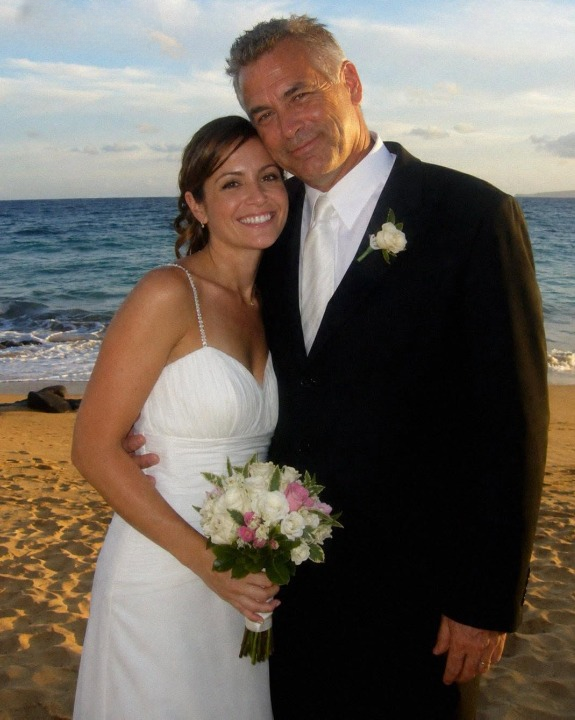
Stepping into a family that has already built its emotional walls is like trying to walk through a glass labyrinth; you can see the light, but every turn leads to an invisible barrier. When I married Walter, I was thirty years old and full of quiet optimism. He was fifty-four, a widower who had spent the years since his first wife’s passing raising two children, Adam and Madison, who were now in their mid-twenties.
I never entered that marriage with the illusion of stepping into a maternal role. I didn’t expect them to call me Mom, nor did I demand it. My only hope was that, with time, patience, and mutual respect, they might eventually accept me as a companion in their father’s life and a peaceful presence in their family orbit.
They never gave me that chance.
Because Walter had built a successful career in real estate development and accumulated a comfortable amount of wealth, Adam and Madison locked onto a single, immovable narrative: she’s after his money.
It didn’t matter that I had my own flourishing career as an architectural draftsperson. It didn’t matter that I consistently paid my own way, maintained separate accounts, and never once asked Walter to buy me a luxury car, jewelry, or support my personal expenses. To them, my presence in their father’s life was a direct threat to their eventual inheritance.
At holiday gatherings, birthdays, and Sunday dinners, the atmosphere was thick with a toxic, silent hostility. Sometimes I would catch Adam and Madison whispering across the table, their eyes darting toward me before breaking into tight, cynical smirks. Other times, the restraint slipped entirely. They made passive-aggressive comments about gold-diggers, dropped thinly veiled remarks about prenuptial agreements, and treated me like an opportunistic tenant living in their future estate.
In their minds, I was simply an interloper marking time, waiting for their father to pass away so I could cash out and leave them with nothing.
They couldn’t have been more catastrophically wrong.
Sixteen Years of Real Life
While his children were busy calculating their future inheritances, Walter and I were busy building a genuine, rock-solid life together. We spent sixteen happy, deeply fulfilling years side by side. We traveled to quiet coastal towns, laughed over burnt pancakes on lazy Sunday mornings, held each other through the sudden loss of my own mother, and navigated the everyday friction of blending two different worlds.
The wealth Walter had accumulated was a byproduct of his hard work, but it was never the glue of our marriage. The glue was his steady laugh, his patience, the way he squeezed my hand when I was anxious, and the absolute safety I felt just being in his presence.
Then, the shadow fell.
It started with persistent back pain and unexplained fatigue, leading swiftly to a diagnosis that stopped our world dead in its tracks: stage-four pancreatic cancer.
From that moment on, the illusions of our life stripped away, leaving only the raw, agonizing truth of mortality. Caring for Walter became my entire existence. I transformed our living room into a comfortable hospice suite, administered endless rounds of medication, drove him to chemotherapy appointments through blinding rainstorms, and sat beside his hospital bed for days on end, whispering words of comfort when the pain became too great for him to bear.
Adam and Madison showed up, of course. They dropped by on Sunday afternoons, stayed for twenty minutes, brought expensive coffees they drank themselves, and occasionally asked about the status of the estate planning. But when it came to the grueling, heartbreaking reality of daily caregiving—changing bed linens at 3:00 AM, holding a bucket while he vomited, wiping his forehead, and watching the man I loved slowly slip away piece by piece—I was entirely alone in the trenches.
When Walter finally passed away on a crisp autumn evening, holding my hand as his final breath faded, something inside me broke. I didn’t care about the house, the bank accounts, or the property. I only cared that the light of my life was gone.
The Funeral and the Inheritance
The funeral was a blur of black fabric, whispered condolences, and hollow ceremonies. I stood frozen beside his heavy mahogany casket during the final graveside service, barely registering the murmurs of the mourners around me.
Even at the graveside, grief couldn’t entirely silence greed. Standing a few feet away, sheltered beneath an umbrella, I heard Adam and Madison murmuring urgently to each other. Their conversation wasn’t about their father’s gentle nature or his fierce love for them; it was about probate timelines, real estate valuations, and how quickly the lawyers could freeze the assets so I couldn’t “drain the accounts.”
As the final prayers were spoken and the crowd began to drift toward the parking lot, Walter’s longtime family lawyer, a kind man named Mr. Harrison, approached me. His expression was solemn, his eyes clouded with genuine sorrow as he handed me a heavy, cream-colored envelope sealed tightly with red wax.
At that exact moment, Adam and Madison rushed over, hovering like hawks.
“Mr. Harrison,” Adam demanded, his voice sharp and impatient, cutting through the quiet dignity of the cemetery. “We need to talk about the estate. We want the full inventory of our father’s assets as of today.”
Mr. Harrison turned slowly, looking at the two adult children with a gaze of profound disappointment. He adjusted his coat, cleared his throat, and spoke with calm, deliberate authority.
“Your father’s legal will has already been executed according to his exact instructions,” Mr. Harrison said steadily. “Walter left his entire multi-million-dollar fortune, his properties, and his investment portfolios entirely to his children, Adam and Madison. Every last cent.”
Adam and Madison exchanged a triumphant, thinly veiled look of sheer elation. The tension that had defined their posture all afternoon instantly melted away. They smiled, visibly relieved, their greedy calculations confirmed.
Mr. Harrison didn’t smile back. Instead, he looked down at the heavy wax-sealed envelope resting in my trembling hands.
“However,” the lawyer continued, his voice softening as he looked directly at me, “that was only the public estate. Walter left something else behind. This… this was meant for you.