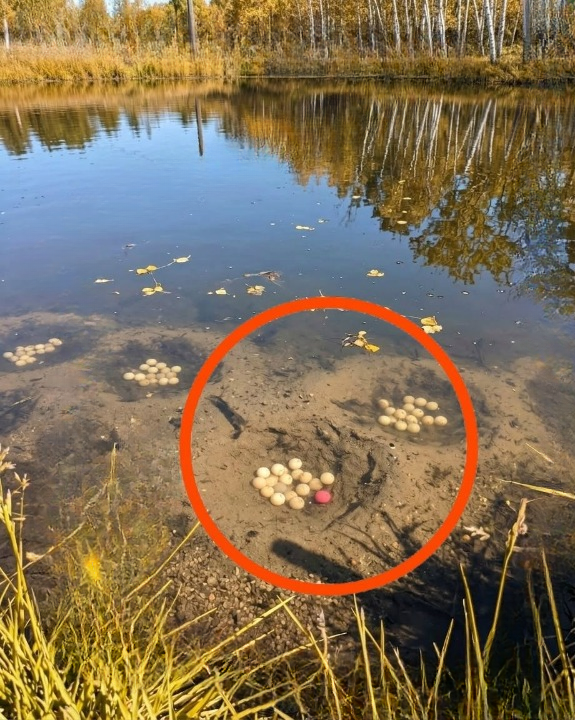
The Mysterious Artificial Lake in Our Village: What Lies Beneath Its Quiet Surface?
There is a place in our village that many people pass every day without giving it a second thought. It is an artificial lake surrounded by familiar houses, green trees, and narrow roads that connect different parts of the community. For most residents, it is simply another feature of the local landscape. Some people walk past it on their way home, others occasionally stop to enjoy the peaceful surroundings, and a few visit when they want to spend some quiet time away from the noise of everyday life.
At first glance, there is nothing particularly unusual about this lake.
Its surface often appears calm, reflecting the surrounding trees and the changing colors of the sky. During the warmer months, the area becomes especially pleasant, attracting people who enjoy walking outdoors or spending a little time in nature. Birds can sometimes be seen near the water, while the gentle movement of the surface creates an atmosphere that feels completely different from the busy streets nearby.
However, something about this artificial lake has always made me curious.
Unlike a natural lake that develops over many years through geological and environmental processes, this one was created by human activity. Its shape, depth, and surroundings were influenced by decisions made long before many current residents became familiar with the area.
That simple fact raises several interesting questions.
Why was the lake originally created? How deep is it? What materials were used to construct it? Does anything interesting exist beneath its surface? And perhaps most importantly, how much do the people living nearby actually know about its history?
These questions gradually turned an ordinary walk around the village into an interesting exploration of a place that I had previously overlooked.
An Ordinary Place With an Interesting Story
The first thing that makes the lake interesting is its location.
It sits between familiar parts of the village, surrounded by places that residents recognize immediately. Houses, small roads, vegetation, and open spaces form the landscape around it.
Because it has been part of the local environment for so long, many people have become accustomed to seeing it.
Children may grow up knowing it simply as the village lake. Older residents might remember what the surrounding area looked like before it was created. Others may have heard stories about its construction but never thought to investigate whether those stories were accurate.
This is common with places that become permanent features of a community.
When something has existed for years, people often stop asking questions about it. It becomes part of the background, just like a bridge, an old building, or a familiar road.
Yet every man-made structure has a story.
An artificial lake does not appear naturally in the same way as a mountain pond or a river basin. It usually exists because someone identified a purpose for collecting or storing water.
Depending on its original design, it may have been created for agricultural irrigation, water management, recreation, landscaping, industrial use, or environmental purposes.
Without historical records, it would be difficult to determine the exact reason this particular lake was constructed.
Nevertheless, understanding its possible purpose is the first step toward appreciating its importance.
Why Would a Village Need an Artificial Lake?
Artificial lakes have been created throughout history for many different reasons.
In agricultural communities, water storage has traditionally been important. Farmers need reliable water sources to support crops, especially during periods when rainfall becomes less frequent.
A reservoir can help collect water during wetter seasons and make it available when conditions become drier.
In other locations, artificial lakes are connected to flood management. They can provide temporary storage for excess water, helping manage runoff under appropriate design and operating conditions.
Some lakes are created as part of landscaping projects. They improve the appearance of public spaces, create attractive recreational areas, and sometimes support local wildlife.
Others are associated with industrial activities, former excavation sites, or infrastructure projects.
This means that the history of an artificial lake can reveal much more about a community than its appearance initially suggests.
It may be connected to local agriculture, economic development, environmental planning, or changes in how people used the surrounding land.
For our village, discovering the original purpose would help explain why the lake was placed in that particular location.
It would also provide useful information about how the area has changed over time.
Looking Closely at the Water
One afternoon, I decided to spend more time observing the lake instead of simply walking past it.
The weather was pleasant, and the surrounding area was relatively quiet. A light breeze moved through the trees, creating small ripples across the water.
From a distance, the lake looked almost perfectly peaceful.
Its surface reflected sections of the sky, nearby vegetation, and parts of the surrounding landscape. Occasionally, a small movement disturbed the reflection before the water returned to its usual appearance.
It was difficult not to wonder what existed beneath that surface.
Unlike a clear mountain lake, an artificial lake in a village environment may contain suspended sediment, natural organic material, and other substances that affect visibility.
The water’s appearance can change depending on rainfall, sunlight, surrounding vegetation, and seasonal conditions.
In some places, the bottom may be visible near the shoreline. In deeper sections, however, the water can become too dark or cloudy to reveal anything.
This does not necessarily indicate a problem.
Water clarity depends on several environmental factors, and appearance alone cannot establish whether a lake is clean, polluted, or suitable for swimming.
Proper water testing is needed to understand its condition.
Still, the contrast between the quiet surface and the unknown environment underneath makes artificial lakes fascinating places to observe.
What Could Be Beneath the Surface?
One of the most interesting questions about any artificial lake concerns its underwater environment.
People sometimes imagine that an artificial lake must contain something unusual because it was created through human activity.
In reality, what exists beneath the surface depends largely on how the lake was constructed and how its environment has developed over time.
Some artificial lakes have relatively simple bottoms consisting of soil, clay, gravel, or other construction materials.
Others may contain vegetation, natural sediment, stones, and organic matter that have accumulated over many years.
In older lakes, leaves, branches, and other natural materials can gradually settle on the bottom.
Fish and other aquatic organisms may also become part of the ecosystem if environmental conditions allow them to survive.
The presence of wildlife depends on several factors, including water quality, oxygen levels, temperature, available food, and whether species were introduced or reached the lake naturally.
This creates an interesting relationship between human construction and natural development.
Although people may have created the original water body, nature can gradually transform it into a habitat supporting different forms of life.
However, determining exactly what exists beneath this particular lake would require proper investigation.
A visual inspection from the shoreline cannot reveal its full underwater structure.
How Artificial Lakes Change Over Time
Artificial lakes are not necessarily permanent in appearance or condition.
Like natural bodies of water, they can change considerably as years pass.
One important process is sediment accumulation.
Rainwater flowing from nearby land can carry small particles of soil, sand, and organic material into the lake. These materials gradually settle and collect on the bottom.
Over long periods, sediment accumulation can reduce the available water depth.
The rate of this process depends on the surrounding landscape, soil conditions, rainfall patterns, vegetation, and the design of the lake.
Another important change involves aquatic vegetation.
Plants may begin growing along the shoreline and, under suitable conditions, spread into shallow sections.
This vegetation can provide habitat for insects, small aquatic organisms, and birds.
However, excessive plant growth can sometimes indicate an imbalance in nutrient levels or other environmental conditions.
Water temperature also changes throughout the year.
During summer, shallow water may become considerably warmer than deeper sections. In winter, colder temperatures can affect the behavior and activity of aquatic organisms.
These seasonal changes are part of the natural development of many artificial lakes.
Understanding them can help local communities recognize why regular monitoring and maintenance are important.
The Wildlife That May Call the Lake Home
Although the lake was created by people, its surroundings may provide opportunities for wildlife.
Birds are among the easiest animals to observe near village lakes.
Depending on the location and habitat, visitors may notice different species resting near the shoreline, searching for food, or flying across the water.
Insects can also be common around freshwater environments.
Some aquatic insects spend part of their lives underwater, while others depend on vegetation near the shoreline.
Small fish and other aquatic organisms may be present if the lake provides suitable conditions.
Even seemingly ordinary water bodies can support surprisingly complex ecological relationships.
For example, aquatic plants provide shelter for certain organisms. Insects become food for birds and fish, while decomposing organic material contributes nutrients to the ecosystem.
These relationships help maintain the ecological character of the lake.
However, wildlife should never be disturbed simply to satisfy curiosity.
Feeding unfamiliar animals, introducing fish, or removing aquatic plants can affect the natural balance of a water body.
The best way to appreciate the environment is often through quiet observation.
Why the Lake May Look Different Throughout the Year
Anyone who visits the same lake during different seasons may notice that its appearance changes considerably.
Spring often brings renewed vegetation and increased activity around the shoreline.
Trees begin producing fresh leaves, flowers appear in nearby green spaces, and the surrounding environment becomes more colorful.
Summer can bring warmer temperatures and stronger sunlight.
The water may appear brighter during the day, while reflections become especially noticeable in the early morning and evening.
Autumn creates a different atmosphere.
Leaves fall from nearby trees, and some may collect along the shoreline or float across the water.
The colors of the surrounding vegetation can make the lake appear completely different from how it looked during summer.
Winter may be the quietest season.
Depending on the local climate, vegetation becomes less active, daylight hours become shorter, and the water may appear darker under cloudy skies.
In particularly cold conditions, some shallow water bodies may experience surface ice.
These seasonal changes are worth documenting because they help create a better understanding of the lake’s environmental history.
Photographs taken from the same location over several years can reveal changes that are difficult to notice during ordinary visits.
The Importance of Water Quality
One subject that deserves particular attention is water quality.
A lake can look attractive from the outside while still requiring environmental monitoring.
Water quality is influenced by many factors, including rainfall, surrounding land use, wastewater management, agricultural activity, and the condition of nearby drainage systems.
In some situations, excess nutrients can enter a lake through runoff.
These nutrients may encourage the growth of algae and aquatic plants.
Under certain conditions, excessive algae growth can create environmental problems, including reduced oxygen levels and unpleasant changes in water appearance.
Some types of algae can also produce harmful toxins.
For this reason, unusual discoloration, persistent foam, dead fish, or strong unpleasant odors should not be ignored.
Such observations do not automatically prove contamination, but they may indicate that professional assessment is needed.
Testing water samples can provide more reliable information about its condition.
Depending on the purpose of the assessment, specialists may examine temperature, pH, dissolved oxygen, turbidity, nutrient levels, and possible contaminants.
This information can help determine whether the lake is supporting a healthy ecosystem.
It can also guide decisions about maintenance and environmental protection.
Why People Should Avoid Entering Unknown Artificial Lakes
A calm-looking lake can create the impression that the water is safe for recreational activities.
However, appearances can be misleading.
Artificial lakes may contain sudden changes in depth, underwater obstacles, soft sediment, submerged vegetation, and other hazards.
Some may also have steep or unstable banks.
Even when the water appears still, conditions below the surface can be difficult to predict.
For this reason, people should avoid swimming or entering an artificial lake unless the responsible authorities have confirmed that the area is suitable for that activity.
Children should always be supervised around open water, and visitors should respect any warning signs or restricted areas.
These precautions are especially important in lakes that were originally constructed for industrial, agricultural, or water-management purposes rather than recreation.
The safest way to explore an unfamiliar lake is from designated viewing areas and stable public paths.
Could the Lake Have a Hidden History?
One of the most appealing aspects of exploring an older artificial lake is the possibility of discovering information about the past.
Perhaps the lake was constructed as part of an agricultural project.
Perhaps it was connected to an earlier infrastructure development.
It may even have been created when the surrounding village looked very different from how it appears today.
These are possibilities rather than established facts, but they provide interesting directions for historical research.
Older residents may remember construction activities or changes in the surrounding landscape.
Historical photographs may show what the area looked like before the lake existed.
Local government archives, planning documents, and environmental reports may contain information about its original construction.
Old maps can also be useful.
By comparing historical maps with modern satellite images, researchers can identify when the water body first appeared and how the surrounding area developed.
This type of investigation can turn a simple village landmark into an interesting local history project.
It can also preserve information that might otherwise disappear as generations change.
How a Community Can Help Protect Its Lake
Artificial lakes can become valuable parts of local communities when they are properly maintained.
Residents can contribute to their protection through simple and responsible actions.
One of the most important steps is preventing waste from entering the water.
Plastic bottles, food packaging, household rubbish, and other discarded materials can damage the appearance of the lake and create problems for wildlife.
People should use appropriate waste containers and report illegal dumping when they notice it.
Protecting vegetation near the shoreline is another important consideration.
Plants can help stabilize soil and reduce the amount of sediment entering the water.
Removing vegetation without a clear environmental reason may create additional problems.
Communities can also support regular monitoring.
If the lake is managed by local authorities, residents can ask whether water-quality testing and maintenance inspections are carried out.
Public information about the lake’s purpose, ownership, and safety conditions would also help visitors understand how the area should be used.
Environmental education can make a meaningful difference.
When people understand the value of local water resources, they are more likely to treat them responsibly.
A Place Worth Understanding
After spending more time around the lake, I began to see it differently.
What initially appeared to be an ordinary artificial water body gradually became a subject worth exploring.
Its history, construction, ecological development, and relationship with the surrounding village all raised interesting questions.
The lake was no longer simply a place to walk past.
It represented a connection between human activity and the natural environment.
Although its original purpose may have