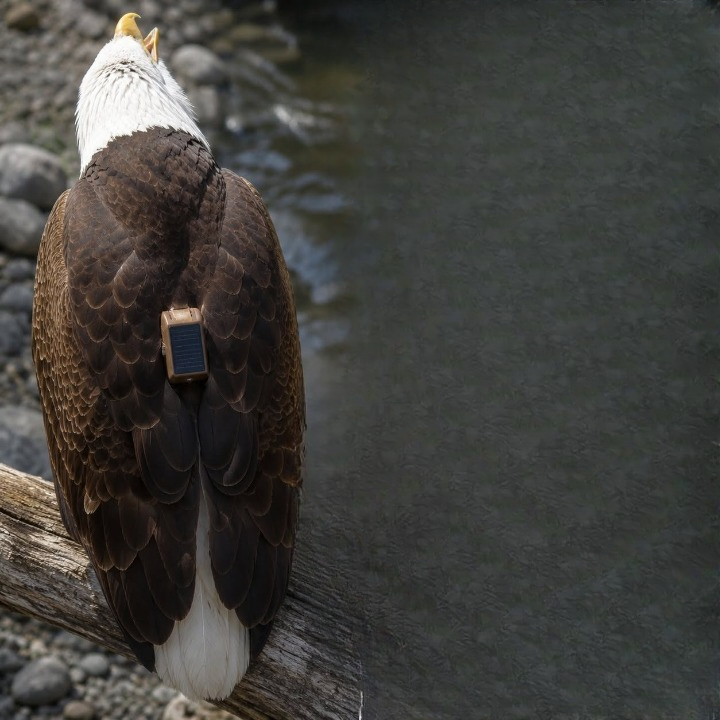
The Incredible Journey of an Eagle: What Years of Tracking Can Teach Us About the Secrets of Bird Migration
Posted on June 9, 2026 | By Admin
A Journey Across Continents That Captured Scientific Attention
For centuries, eagles have fascinated people with their strength, remarkable eyesight, impressive wingspans, and ability to travel across vast landscapes.
They are often associated with freedom, independence, and the power of nature. Yet beyond their impressive appearance lies something equally remarkable: their ability to navigate complex environments, recognize familiar territories, and travel long distances in search of food, suitable habitats, and breeding grounds.
Modern technology has given scientists an opportunity to understand these abilities in greater detail.
Through satellite tracking, GPS transmitters, photography, and long-term wildlife observations, researchers can follow individual birds and study how their movements change over time.
Imagine following an eagle’s journey across mountains, forests, valleys, rivers, and coastlines. Each recorded location provides another small piece of information about where the bird travels, how it responds to changing conditions, and which landscapes are important for its survival.
What might initially appear to be a collection of unpredictable movements can reveal fascinating patterns when examined carefully.
The story of a long-traveling eagle offers an opportunity to explore one of nature’s most interesting subjects: how large birds navigate the world.
The First Clues Hidden in GPS Tracking Data
Wildlife researchers have developed increasingly sophisticated methods for monitoring animal movements.
One of the most useful technologies is GPS tracking.
A lightweight tracking device can be attached to a bird using equipment designed for wildlife research. Depending on the system, it may record location coordinates, movement patterns, altitude, and other environmental information.
These records can help scientists understand where an eagle spends its time.
For example, researchers may discover that a bird regularly returns to the same valley, follows a particular mountain range, or visits different regions during particular seasons.
When thousands of location records are placed on a map, they create a visual representation of the bird’s movements.
At first, the resulting pattern may appear complicated.
A single line might stretch across a mountain range, while another follows a river or bends around a large area of difficult terrain.
However, these movements are not necessarily random.
They may reflect the eagle’s search for food, its response to weather, its preference for certain landscapes, or its seasonal movements.
The challenge for researchers is to understand what those patterns mean.
Why Eagles Travel Such Long Distances
Not every eagle species follows the same migration pattern.
Some species remain within relatively small territories throughout the year, while others travel considerable distances between breeding and wintering areas.
Their movements depend on several factors.
Food availability
Eagles are predators and scavengers, depending on the species and circumstances. Their survival depends on access to suitable food sources.
When food becomes scarce in one location, an eagle may explore other areas.
Seasonal weather
Temperature, snow cover, rainfall, and wind conditions can influence where eagles travel.
Cold weather may make certain hunting grounds less accessible, while seasonal changes can affect the availability of prey.
Breeding requirements
During the breeding season, many eagles return to suitable nesting territories.
These locations provide access to food, appropriate nesting sites, and conditions that support raising young birds.
Habitat conditions
Forests, wetlands, grasslands, mountains, and coastal regions can all provide important resources for different eagle species.
An eagle’s movements may reflect the availability of these habitats across a large geographical area.
Understanding these factors helps researchers interpret tracking information more accurately.
The Remarkable Navigation Abilities of Eagles
One of the most fascinating questions about migrating birds is how they find their way.
Unlike humans, eagles do not rely on road signs, printed maps, or digital navigation systems.
Instead, birds use a combination of natural environmental cues.
These may include:
- Visual landmarks such as mountains, coastlines, and rivers.
- The position of the sun.
- Familiar geographical features.
- Wind direction and atmospheric conditions.
- Natural magnetic information that may contribute to orientation in birds.
The importance of each navigation cue can vary between species and circumstances.
Researchers continue to investigate how birds combine different sources of information when traveling over long distances.
For an eagle crossing a large landscape, recognizing familiar geographical features may be particularly useful.
A mountain valley visited during previous journeys can become an important reference point.
Likewise, coastlines and rivers may help birds maintain a general direction while moving between different habitats.
These natural abilities demonstrate how wildlife has adapted to complex environments over thousands of generations.
The Science Behind Soaring Flight
Eagles are especially impressive because of the way they use the atmosphere to travel efficiently.
Although their wings are powerful, maintaining continuous flapping flight over long distances would require considerable energy.
Instead, many large birds take advantage of rising air currents.
One important phenomenon is known as thermal soaring.
Thermals are columns of warm air that rise when the sun heats the ground unevenly.
When an eagle encounters a suitable thermal, it can circle within the rising air to gain altitude.
After reaching a higher position, it may glide toward another area of rising air.
This method allows the bird to cover considerable distances without continuously flapping its wings.
Eagles can also benefit from orographic lift.
This occurs when wind encounters a mountain, hill, or other elevated landscape and is forced upward.
The rising air can provide additional lift for soaring birds.
These techniques are particularly valuable for large birds because they help conserve energy during extended journeys.
The landscape itself can therefore influence how an eagle travels.
Mountain ranges, valleys, and open areas may create different opportunities for efficient flight.
Why Mountain Ranges Can Influence an Eagle’s Route
A map showing an eagle’s movements may reveal that the bird repeatedly follows mountain systems.
This does not necessarily mean that the eagle is choosing the shortest possible route.
Instead, the route may offer better flying conditions or access to suitable habitats.
Mountain landscapes can provide:
- Rising air currents that support soaring.
- Elevated viewpoints for observing potential prey.
- Rocky ledges and cliffs suitable for nesting.
- Areas with relatively undisturbed habitat.
- Natural geographical features that help with orientation.
However, mountains can also create challenges.
Strong winds, sudden weather changes, snow, and difficult terrain may affect flight conditions.
For this reason, understanding the relationship between eagle movements and mountain geography is an important part of migration research.
Researchers can compare GPS records with weather information and landscape maps to investigate these relationships.
What GPS Data Can Reveal About an Eagle’s Daily Life
Satellite tracking does more than show where an eagle travels.
It can also provide information about how the bird uses its environment.
For example, repeated location records may help identify areas where an eagle spends considerable time.
These places might include feeding grounds, nesting territories, resting areas, or seasonal habitats.
Researchers may also compare movement patterns between different times of the year.
A bird might travel widely during one season and remain closer to a particular territory during another.
Changes in movement can provide clues about environmental conditions or shifts in the bird’s behavior.
However, GPS information must be interpreted carefully.
A location point alone cannot explain exactly what an eagle was doing.
It may show where the bird was recorded, but it does not necessarily reveal whether it was hunting, resting, soaring, or interacting with another bird.
Combining tracking information with field observations and other scientific methods produces a more complete picture.
The Importance of Long-Term Wildlife Research
Studying an animal over an extended period can provide information that short observation projects might miss.
Wildlife behavior changes with age, experience, environmental conditions, and seasonal circumstances.
A young eagle may explore different areas while developing its own movement patterns.
An adult may become more familiar with a particular territory and repeatedly return to locations that provide suitable resources.
Long-term monitoring can help scientists identify these changes.
It may also reveal how individual birds respond to major environmental events.
For example, researchers can investigate whether an eagle changes its movements after:
- A severe winter.
- Changes in prey availability.
- Habitat disturbance.
- Wildfires.
- Drought conditions.
- Changes in land use.
These observations can help scientists understand how wildlife responds to an increasingly changing environment.
They can also contribute to conservation planning.
What Makes Eagle Migration So Fascinating?
Migration is one of the most impressive behaviors found in the animal kingdom.
Birds can travel across enormous distances while facing changing temperatures, weather systems, predators, and limited food supplies.
Some species travel between continents during regular seasonal migrations.
Others move shorter distances in response to local environmental conditions.
Eagles display a wide variety of movement patterns.
For example, the golden eagle is known for its powerful flight and broad geographical distribution.
The bald eagle often moves between breeding and wintering territories, with some populations traveling considerable distances.
The steppe eagle undertakes extensive seasonal migrations across parts of Eurasia and Africa.
Each species has different ecological requirements and movement strategies.
Understanding these differences is important because there is no single migration pattern that applies to every eagle.
How Young Eagles Learn to Survive
An eagle’s life begins in a nest, often located in a high and relatively protected position.
Depending on the species, nests may be built on cliffs, trees, or other suitable structures.
Young eagles initially depend entirely on their parents.
They receive food, protection, and opportunities to develop their physical abilities.
As they grow, their feathers become more developed, their muscles strengthen, and they gradually begin exploring the space around the nest.
Eventually, they reach the stage when they are ready to leave the nest.
This first period of independent flight is an important milestone.
Young eagles must develop the skills necessary to locate food, avoid danger, and navigate their surroundings.
Their early movements may be less predictable than those of experienced adults.
Over time, they gain familiarity with their environment.
Although birds are born with many instinctive behaviors, experience also plays an important role in how individuals use their surroundings.
The Challenges Facing Eagles in the Modern World
Despite their impressive abilities, eagles face numerous challenges.
Human activity has changed many of the landscapes that birds depend on.
Some threats affect particular species more severely than others, but several concerns are important across different regions.
Habitat loss
Deforestation, construction, agricultural expansion, and other forms of land development can reduce suitable nesting and feeding areas.
Electrocution and collisions
Power infrastructure can create risks for large birds, particularly where poorly designed poles and exposed equipment are present.
Wind turbines, vehicles, and other structures can also pose collision hazards.
Pollution
Environmental contaminants can affect wildlife directly or indirectly through food chains.
Some chemicals may accumulate in prey animals and eventually affect predators.
Illegal persecution
In certain regions, eagles are deliberately harmed because of conflicts involving livestock, hunting interests, or misunderstandings about their ecological role.
Climate change
Changing temperatures and weather patterns may influence prey availability, habitat conditions, and seasonal movement.
Conservation organizations and researchers work to understand these threats and develop practical solutions.
Why Protecting Eagle Habitats Matters
Protecting eagles requires more than focusing on individual birds.
Their survival depends on healthy ecosystems.
An eagle needs suitable nesting areas, access to food, and landscapes where it can move safely.
Conservation efforts therefore often include habitat protection, responsible land management, wildlife monitoring, and public education.
Protecting wetlands, forests, grasslands, and mountain environments can benefit many species beyond eagles.
These habitats support a wide range of birds, mammals, reptiles, insects, and plants.
In this way, eagle conservation can contribute to broader environmental protection.
Scientific tracking information can help identify important locations that deserve attention.
If researchers discover that particular valleys or mountain corridors are repeatedly used by migrating birds, those areas may become valuable priorities for conservation planning.
How Scientists Study Eagles Without Disturbing Them
Wildlife research must balance scientific curiosity with animal welfare.
Tracking devices can provide valuable information, but they must be used responsibly.
Researchers generally follow established procedures when capturing, handling, and fitting equipment to birds.
The size and weight of a tracking device are important considerations.
A transmitter that is too heavy or poorly fitted could interfere with normal movement or flight.
For this reason, wildlife specialists carefully select equipment and attachment methods appropriate for the species.
Research projects may also use:
- Remote cameras.
- Nest observations.
- Field surveys.
- Bird identification records.
- Satellite imagery.
- Weather monitoring.
- Computer-based movement analysis.
These methods can provide useful information while reducing unnecessary disturbance.
The ultimate goal is to understand wildlife behavior without compromising the animals being studied.
What a Single Eagle Can Teach Us About the Natural World
Individual animals can provide valuable insights into larger ecological questions.
One eagle’s movements may reveal which habitats it uses, how its behavior changes throughout the year, and which geographical features influence its journey.
However, scientists must be careful not to assume that one bird represents every member of its species.
Different individuals may have different experiences and movement patterns.
Age, sex, breeding status, habitat availability, and environmental conditions can all influence behavior.
Comparing information from multiple birds helps researchers identify broader patterns.
Nevertheless, following an individual animal over time can make scientific research easier for the public to understand.
It gives people a way to connect with a living creature and appreciate the challenges it faces throughout its life.
Instead of seeing migration as an abstract scientific concept, readers can begin to understand it as a series of journeys made by individual animals.
Technology Is Changing the Way We Understand Wildlife
Modern tracking technology has transformed wildlife research.
In the past, scientists often depended on direct observations, physical markings, and occasional reports from people who encountered tagged birds.
These methods remain valuable, but satellite and GPS systems provide a more detailed picture of animal movements.
Researchers can now study routes that extend across large geographical areas.
They can compare movements between seasons, investigate habitat preferences, and examine how environmental conditions influence travel.
Computer mapping systems make it possible to visualize complex movement records.
This information can also be shared with conservation organizations and other researchers.
However, technology is only one part of the process.
Accurate scientific interpretation still requires experience, field knowledge, and careful analysis.
A map filled with location points is interesting, but understanding the reasons behind those movements requires much more work.
The Mystery That Keeps Researchers Looking to the Skies
Eagles have survived and adapted to many different environments.
Their ability to fly efficiently, locate food, recognize landscapes, and respond to environmental conditions continues to attract scientific interest.
Even with modern tracking systems, many questions remain.
How do different eagle species combine navigation cues?
How do young birds develop familiarity with migration routes?
How do changing environmental conditions affect long-distance movement?
Why do some individuals travel farther than others?
These questions remind us that wildlife research is an ongoing process.
Each new observation can provide additional information, challenge an existing assumption, or introduce another question worth investigating.
The more scientists learn about eagles, the more clearly they can understand the complex relationship between animals and their environments.
Final Thoughts: A Powerful Reminder of Nature’s Remarkable Abilities
The story of an eagle traveling across vast landscapes captures something that has fascinated people for generations.
Its journey represents more than physical movement.
It reflects the remarkable adaptations that allow wildlife to survive in changing environments.
From soaring on rising air currents to recognizing geographical features, eagles demonstrate how animals use their natural abilities to navigate the world.
Modern GPS tracking has opened a new window into these behaviors