“With your patient,” he corrected gently.
The chief physician stood quietly in the hospital corridor, his expression serious but composed. There was something about the way he spoke that immediately made me uneasy.
“Your sister,” he continued. “Elena.”
My breath caught.
For a moment, I couldn’t process what he had just said.
Elena.
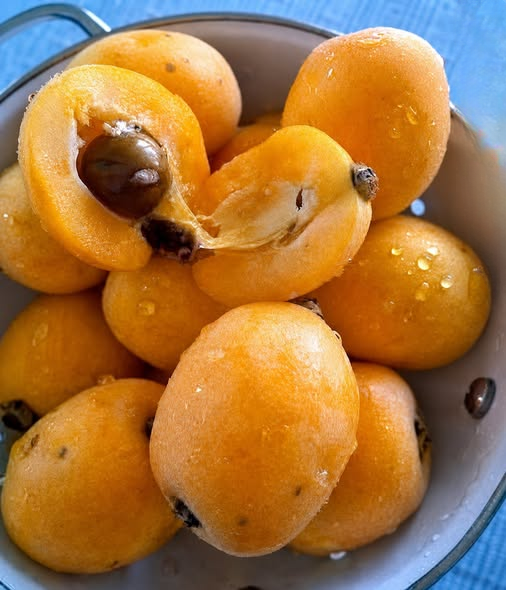
Only a few weeks earlier, I had been sitting beside our grandmother on the old wooden porch, peeling golden loquats into a small bowl while Elena argued with me about something that seemed completely unimportant at the time.
Now everything felt different.
I had spent much of my life believing that protecting the people I loved meant making decisions for them.
I thought I was helping.
I thought I was being responsible.
I thought I knew what was best.
But the events surrounding those loquats—and what eventually happened to Elena—forced me to reconsider everything I believed about family, responsibility, and the meaning of letting someone choose their own path.
Sometimes love means holding on.
And sometimes, much harder, it means opening your hand.
The Tree in Our Grandmother’s Yard
Our grandmother’s house stood at the end of a quiet country road.
It wasn’t impressive by modern standards. The paint had faded in several places, the porch boards creaked whenever someone walked across them, and the kitchen cabinets had been repaired so many times that nobody remembered what the original doors looked like.
But to Elena and me, it was home.
We had spent countless summers there.
Grandmother had raised us after our parents were no longer able to care for us. She taught us how to cook, how to save money, how to recognize when someone was telling the truth, and how to appreciate small things.
Her favorite part of the property was an old loquat tree growing beside the back fence.
Every spring, it produced hundreds of small golden fruits.
Grandmother called them her “little suns.”
She would wake before everyone else, walk outside with a basket, and carefully collect the ripe ones.
Then she’d bring them into the kitchen and make jam.
Sometimes she would simply place a bowl of them on the table.
Elena loved them.
I didn’t understand why at first.
“They’re just fruit,” I used to tell her.
She would laugh.
“You’re getting old before your time.”
Elena always had a way of making ordinary things feel important.
She would sit beneath that tree for hours, reading books or drawing in a notebook.
I was different.
I was always planning.
Always worrying.
Always thinking about what could go wrong.
If rain was expected, I checked the roof.
If the car made an unfamiliar sound, I wanted it inspected.
If Elena mentioned moving away, I immediately started asking questions.
Where?
Why?
How much would it cost?
Was it safe?
Did she have enough money?
Did she have a backup plan?
I told myself those questions came from love.
Maybe they did.
But I eventually realized that love and control can sometimes look remarkably similar.
When Elena Wanted to Leave
After Grandmother became older, the responsibility of maintaining the house gradually shifted toward us.
Elena wanted to keep it exactly as it was.
I wanted to make practical changes.
The roof needed repairs.
The plumbing was old.
The electrical system needed updating.
The garden required constant maintenance.
I believed we needed to sell the property before it became a financial burden.
Elena disagreed.
“This place isn’t just a house,” she told me.
“I know.”
“No, you don’t.”
She looked toward the backyard.
“You keep talking about what it costs. I’m thinking about what it means.”
That sentence stayed with me.
At the time, however, I dismissed it.
I thought Elena was being sentimental.
Then she told me she had accepted a position in another city.
She planned to move.
I reacted badly.
“How long have you been thinking about this?”
“A while.”
“And you didn’t tell me?”
“I knew you’d try to talk me out of it.”
She wasn’t wrong.
I immediately began listing everything that could go wrong.
The apartment might be expensive.
The job might not work out.
She didn’t know anyone there.
What if she became lonely?
What if she needed help?
What if something happened?
Elena listened patiently.
Then she said something I didn’t expect.
“You’re not afraid that I’ll fail.”
I frowned.
“Then what am I afraid of?”
“You’re afraid I won’t need you anymore.”
I didn’t have an answer.
The Hospital Call
Several weeks later, I received a call from the hospital.
Elena had become ill and had been admitted for evaluation.
I drove there immediately.
When I arrived, the chief physician asked to speak with me.
That’s when he mentioned Elena.
“She has asked that you be contacted,” he explained.
My stomach tightened.
“Is she okay?”
“She is receiving appropriate care. But there is something important you need to understand.”
He paused.
“Your sister is an adult. We need to respect her decisions about her care.”
I nodded.
Of course.
But inside, I felt that familiar urge to take control.
I wanted answers.
I wanted every test explained.
I wanted to know what medication she had received.
I wanted to know what would happen next.
Most importantly, I wanted someone to promise me that everything would be fine.
The doctor couldn’t make that promise.
Instead, he told me Elena wanted to speak with me.
When I entered her room, she looked exhausted but awake.
She smiled when she saw me.
“You came.”
“Of course I came.”
She reached toward the chair beside her.
I sat down.
For several minutes, neither of us said anything.
Then she whispered:
“You’re going to try to fix everything, aren’t you?”
I almost laughed.
“That’s what I do.”
“I know.”
She smiled.
“But I don’t need you to fix this.”
Those words were difficult to hear.
The Argument About the Tree
A few days later, Elena asked me about the loquat tree.
I thought she was joking.
“You’re in a hospital and you’re thinking about a fruit tree?”
“I’m thinking about Grandmother.”
That changed everything.
She explained that before leaving home, she had spoken to Grandmother about the property.
Grandmother had made Elena promise something.
“What?”
“She wanted us to keep the tree.”
I stared at her.
“That old tree?”
Elena smiled.
“See? That’s exactly what I’m talking about.”
I didn’t understand.
She explained that Grandmother had once told her the tree represented something important.
It had survived storms.
It had survived drought.
It had survived years when nobody had enough time to care for it properly.
Yet every spring, it produced fruit.
Grandmother believed people were like that.
“You don’t have to control everything to survive,” Elena told me.
I looked away.
For years, I had believed the opposite.
I thought survival came from planning every possibility.
Elena believed it came from learning when to bend.
The Price of Permission
When Elena was finally preparing to leave the hospital, she asked me to do something.
She wanted to return to Grandmother’s house.
I immediately objected.
“You need to rest.”
“I will.”
“You shouldn’t be worrying about the house.”
“I’m not worried about the house.”
“Then what are you worried about?”
She looked at me.
“Whether you’ll finally let me make my own decisions.”
I had no response.
The truth was uncomfortable.
I had spent years asking Elena to seek my permission.
Permission to move.
Permission to change jobs.
Permission to travel.
Permission to spend money.
Permission to make decisions I personally considered risky.
I never explicitly demanded these things.
I simply made my disapproval so obvious that she often felt she needed my approval before moving forward.
That was the part I hadn’t wanted to acknowledge.
I wasn’t protecting her.
At least, not always.
Sometimes I was protecting myself from the fear of losing control.
Returning to the House
A month later, we returned to Grandmother’s house together.
The place looked smaller than I remembered.
The porch still creaked.
The kitchen still smelled faintly of old wood and dried herbs.
And the loquat tree was still standing.
Elena walked toward it slowly.
Several golden fruits were hanging from the branches.
She reached up and picked one.
Then she handed it to me.
“Try it.”
I smiled.
“You know I don’t like them.”
“You’ve never liked them because you decided you didn’t.”
I took a bite.
She watched me expectantly.
I chewed.
Then I laughed.
“It’s actually good.”
Elena laughed too.
“Finally.”
We sat beneath the tree that afternoon.
For the first time in years, I didn’t make a list of problems.
I didn’t ask what Elena planned to do next.
I didn’t tell her what I thought she should do.
I simply listened.
She told me about the city she wanted to move to.
She told me about the job.
She told me about the apartment she had found.
She told me she was nervous.
And instead of immediately telling her why she shouldn’t go, I said:
“You’re allowed to be nervous.”
She looked at me.
“And you’re allowed to go.”
Her eyes filled with tears.
“So you’re not going to stop me?”
I shook my head.
“No.”
What the Loquats Really Meant
Elena eventually moved.
It wasn’t easy.
There were problems.
Her new job wasn’t perfect.
Her apartment had issues.
She missed home.
There were days when she called me because she felt overwhelmed.
But something had changed between us.
When she called, I no longer immediately tried to solve everything.
Sometimes I simply listened.
Sometimes she wanted advice.
Sometimes she only wanted someone to say, “I understand.”
I learned to ask:
“Do you want me to help you solve this, or do you just want me to listen?”
That simple question changed our relationship.
Because helping someone doesn’t always mean taking over.
Sometimes the most respectful thing you can do is trust them enough to let them find their own answer.
The Last Harvest
The following spring, Elena came home for a visit.
The loquat tree was full again.
We picked fruit together.
She filled an entire basket.
I watched her smile as she moved from branch to branch.
“Grandmother would have loved this,” she said.
“She would.”
We carried the basket to the kitchen.
Elena made jam using Grandmother’s old recipe.
While we waited for it to cool, she looked at me.
“Do you remember what you said when I told you I was moving?”
“I said a lot of things.”
“You told me I’d regret it.”
I sighed.
“I was wrong.”
She smiled.
“You were scared.”
I nodded.
“I was.”
She placed a small jar of jam on the table.
“That’s okay.”
I looked at her.
“Is it?”
“Yes.”
She hugged me.
“People can be wrong because they’re afraid. What matters is whether they’re willing to change.”
That sentence stayed with me.
Learning to Let Go
I used to believe that letting go meant losing something.
Now I understand that sometimes letting go is how you give someone room to become who they are meant to be.
The loquat tree taught me that.
Grandmother had never tied it down.
She never forced every branch to grow in a particular direction.
She simply cared for it, gave it water when it needed water, protected it when necessary, and allowed it to grow.
That is what I should have done with Elena.
Not abandoned her.
Not ignored her.
Not stopped caring.
Just trusted her.
Today, the old house still stands.
The porch is older.
The paint is more faded.
The garden is less organized than it used to be.
And the loquat tree is enormous.
Every spring, it produces hundreds of golden fruits.
Whenever Elena visits, we sit beneath it together.
Sometimes we talk for hours.
Sometimes we say almost nothing.
And every year, she takes a basket of loquats home.
I used to think the tree was something I had to protect.
Now I understand that it was never mine to control.
Neither was Elena.
Neither is anyone we love.
The hardest lesson I ever learned was that caring for someone doesn’t give you ownership over their choices.
You can love someone deeply and still allow them to walk a different road.
You can offer advice without demanding obedience.
You can protect without controlling.
And you can stay close without holding someone in place.
The price of permission was realizing that Elena never needed my permission in the first place.
She needed my trust.
And perhaps, all those years ago, when Grandmother sat beneath that tree eating golden loquats, she already understood something that took me decades to learn: