The Fortune, the Marriage, and the Secret Waiting Behind It
Just minutes after my divorce became official, my father gave me one piece of advice that seemed strangely urgent.
“Change the PIN on every bank card,” he said. “And don’t use any of the old ones again.”
I didn’t ask why.
After everything that had happened, I trusted my father enough to follow his instructions without questioning them. I changed the PINs, updated several passwords, and made a note to review my financial accounts when I had more time.
At that moment, I thought the hardest chapter of my life was finally over.
I was wrong.
A few hours later, my former husband’s nearly million-dollar celebration began to unravel because of one unexpected comment from a waiter. What happened next exposed a series of secrets that had been hidden from me for months.
But even that public embarrassment wasn’t the worst part.
The real shock was waiting behind the story of my marriage.
And when I finally discovered why Adrian had married me, I realized that the person I had trusted most had been carefully controlling my life while convincing everyone around me that he was protecting me.
Part One: The Bottle on the Nightstand
The screen of my phone had gone dark, leaving only my reflection staring back at me.
I looked exhausted.
For several minutes, I remained seated on the edge of my bed, unable to move. One sentence kept repeating in my mind.
“Come alone if you want to know why Adrian married you.”
The message had come from an unknown number.
There was no name.
No explanation.
Only those words.
Normally, I would have deleted the message immediately. But something about it felt different. It wasn’t simply threatening or mysterious. It connected to a question I had been quietly asking myself for months.
Why had Adrian married me?
At first, the question seemed ridiculous.
We had met at a charity event hosted by my family. He had been charming, intelligent, and confident. He seemed genuinely interested in me rather than my family’s wealth.
At least, that’s what I believed.
Our relationship developed quickly. Within a year, we were married.
My grandfather had built Sterling Capital from a modest investment firm into a major financial company. After his death, responsibility gradually moved toward my father and eventually toward me.
Being part of that family came with expectations.
People watched everything I did.
Every mistake became a headline inside the company.
Every disagreement became office gossip.
And every personal decision was examined as though it could affect the entire business.
For a long time, Adrian appeared to understand that pressure better than anyone.
He told me I didn’t have to carry everything alone.
He attended meetings when I was overwhelmed.
He reminded me to rest.
He encouraged me to speak with a private physician when my anxiety became difficult to manage.
He seemed like the perfect husband.
But over the previous six months, something had changed.
I began forgetting things.
At first, the mistakes were small.
I misplaced documents.
I missed appointments.
I occasionally forgot conversations I was certain had happened.
Then the problems became more serious.
I walked into meetings without remembering why I had been called there.
I signed documents without remembering reviewing them.
During one particularly important board meeting, my hands shook so badly that I struggled to hold a pen.
Adrian immediately stepped in.
“She’s under tremendous pressure,” he told the board.
Several directors exchanged sympathetic looks.
I felt embarrassed, but I was also grateful.
He was protecting me.
At least, that’s what I thought.
Then came the whispers.
Olivia is struggling.
She isn’t ready to lead the company.
She’ll never be like her grandfather.
Those comments hurt more than I admitted.
I began wondering whether something was genuinely wrong with me.
Adrian always seemed ready with an explanation.
“You need rest.”
“You’re pushing yourself too hard.”
“You’ve been under pressure for months.”
Every morning, he brought me espresso and reminded me to take the medication prescribed by the physician he had recommended.
The small blue bottle became part of my routine.
I trusted him.
Until that night.
I picked up the bottle from my nightstand and studied the label.
Something about it suddenly seemed unfamiliar.
I had reviewed pharmaceutical companies during a previous Sterling Capital acquisition. I wasn’t a doctor, but I had enough familiarity with certain classes of medication to know that the name on the bottle didn’t match what I remembered being prescribed.
My heart began racing.
I checked the label again.
Then I searched through my medical records.
The prescription listed there was different.
The medication I had been taking was not what I believed it was.
I didn’t know exactly how the substitution had happened.
But suddenly, the last six months made sense in a frightening new way.
The confusion.
The exhaustion.
The memory problems.
The difficulty concentrating.
The constant feeling that I wasn’t completely myself.
Someone had interfered with my medication.
And the person who had always been closest to me was Adrian.
I didn’t know whether he had done it himself or whether someone else had been involved.
But I knew one thing.
I could no longer assume that he was protecting me.
I placed the bottle in a sealed bag instead of throwing it away. I knew I might need it later as evidence.
Then I called my physician directly using the number listed in my medical records.
The conversation confirmed my fears.
The medication I had been taking wasn’t the prescription I had been given.
The doctor sounded alarmed.
“Do not take anything else from that bottle,” she told me. “We need to document exactly what happened.”
For the first time in months, the fog surrounding my life began to lift.
And beneath it was anger.
Not panic.
Not confusion.
Anger.
I had spent months believing I was failing.
Perhaps I had never been failing at all.
Perhaps someone had been making sure I couldn’t see what was happening around me.
Part Two: Returning to Sterling Capital
The next morning, I walked into Sterling Capital wearing a charcoal suit and the gold necklace my father had given me years earlier.
The familiar marble lobby looked different.
For months, I had entered that building feeling nervous and uncertain.
That morning, I felt alert.
The receptionist looked surprised to see me.
“Good morning, Ms. Sterling.”
“Good morning.”
I walked toward the executive elevator.
“Do you have a meeting scheduled?” she asked.
“No.”
She hesitated.
I pressed the elevator button.
“I’ll make my own meeting.”
The doors opened.
I stepped inside.
As the elevator climbed toward the executive floors, I thought about everything I had overlooked.
Adrian knew my schedule.
He knew which meetings mattered.
He knew which directors questioned my leadership.
He knew my financial arrangements.
And because he was my husband, people assumed he had my best interests at heart.
The elevator doors opened.
The executive floor was unusually quiet.
Several desks were empty.
I walked toward the boardroom.
When I opened the door, I found Adrian sitting beside the conference table.
He wasn’t alone.
Bianca was there.
She was wearing a sapphire necklace I recognized from a luxury jewelry catalog.
I had seen the same necklace before.
Adrian had once told me he had purchased it as an anniversary surprise.
Apparently, the surprise had been for someone else.
Across the table sat Celeste.
I had heard that name only recently.
Celeste was connected to an old family secret that my father had refused to discuss.
She was my grandfather’s daughter from a relationship no one had ever acknowledged publicly.
My half-aunt.
The secret member of the Sterling family.
And she was sitting in my chair.
Adrian looked at me.
For several seconds, neither of us spoke.
Then Celeste smiled.
“Olivia,” she said calmly. “Sit down.”
I looked at the chair.
Then at her.
“I’d rather stand in my own building.”
Adrian studied my face.
He was searching for the weakness he had become accustomed to seeing.
He expected uncertainty.
Fear.
Confusion.
Instead, he saw someone who had finally started asking questions.
His expression changed.
Only slightly.
But I noticed.
That was the first confirmation that I was right to be suspicious.
Part Three: The Celebration
Later that afternoon, I received another message.
It was an invitation to a private celebration Adrian had organized.
Apparently, he had something important to celebrate.
A financial transaction.
A business deal worth approximately $998,000.
The message described it as a major personal victory.
Adrian had always loved appearances.
He liked expensive restaurants.
He liked impressive guests.
He liked telling people about successful deals.
Most importantly, he liked making sure everyone knew how successful he was.
I decided to attend.
Not because I wanted to celebrate him.
Because I wanted to see who else would be there.
The restaurant was elegant but discreet. Soft lighting, white tablecloths, and quiet conversations filled the room.
Adrian was seated near the center of the private dining area.
Bianca was beside him.
Several business associates were there as well.
When I entered, conversation stopped.
Adrian stood.
“Olivia.”
His smile looked convincing.
If I hadn’t known what I knew, I might have believed him.
“You came.”
“Yes.”
He walked toward me.
“I wasn’t sure you would.”
“I wasn’t sure either.”
His smile faded for a moment.
Then he recovered.
“Tonight is about new beginnings.”
I almost laughed.
Instead, I took a seat at the far end of the table.
Dinner began.
Adrian talked about the deal.
He described it as proof that he was finally stepping into his own success.
People congratulated him.
Someone raised a glass.
I remained quiet.
Then the waiter approached.
He carried a folder containing the reservation details and special arrangements for the evening.
He looked at Adrian.
“Mr. Vale, I just wanted to confirm something about the private payment arrangement.”
Adrian immediately stiffened.
“What arrangement?”
The waiter glanced down at his notes.
“The payment connected to the account ending in—”
Adrian interrupted him.
“That isn’t necessary.”
The waiter looked confused.
“I apologize. I was only confirming the information provided to us.”
Adrian stood.
“We can discuss it privately.”
But the damage had already been done.
One of the guests asked what payment the waiter was referring to.
Adrian tried to laugh it off.
Then the waiter made one simple observation.
“The account information listed here doesn’t appear to match the name on the reservation.”
Silence fell over the table.
I looked at Adrian.
He looked at me.
For the first time that evening, he appeared genuinely frightened.
Part Four: The Money
The waiter left after apologizing for the confusion.
But the conversation had changed.
People began asking questions.
Adrian attempted to redirect the discussion toward his business success.
The $998,000 transaction was suddenly the center of attention.
I had already changed my banking PINs earlier that day.
My father had insisted on it.
At the time, I hadn’t understood why.
Now I did.
My father had apparently received information suggesting that someone had been attempting to access accounts connected to me.
He hadn’t wanted to alarm me until he knew more.
But there was another detail I hadn’t considered.
Adrian had access to financial information because of our marriage.
He knew which institutions I used.
He knew my spending habits.
He knew the structure of several family accounts.
And if someone had been attempting to move money without my knowledge, my old security information could have been extremely useful.
The celebration was no longer a celebration.
It became an uncomfortable evening filled with questions.
Adrian left the restaurant early.
Bianca followed him.
I remained seated.
One of the older business associates approached me.
“Olivia, are you all right?”
I nodded.
“For the first time in a long time.”
He looked confused.
I didn’t explain.
Not yet.
I had learned something important.
When people are hiding something, they often reveal more when they believe they still control the conversation.
I needed to let Adrian believe he still had control.
Part Five: My Father’s Warning
I went directly to my father’s office.
He was waiting for me.
“You found out,” he said.
I stared at him.
“You knew?”
“I suspected.”
“About Adrian?”
He didn’t answer immediately.
Instead, he closed the office door.
“Your grandfather left instructions,” he said. “Instructions that were supposed to be opened only if certain conditions were met.”
“What conditions?”
“Your marriage becoming legally dissolved was one of them.”
I sat down.
My father opened a locked drawer.
Inside was a thin folder.
My name was written on the front.
I looked at him.
“What is this?”
“Something your grandfather prepared years ago.”
I opened the folder.
The first document contained financial records.
The second contained corporate correspondence.
The third contained the name Celeste.
I stared at it.
My father sighed.
“Your grandfather had another daughter.”
“I know.”
“No. You know she exists. You don’t know why she disappeared.”
I looked at the documents again.
According to the records, Celeste’s mother had once been involved with a company that competed directly against Sterling Capital.
My grandfather had discovered that confidential information was being transferred outside the company.
The investigation had never been completed publicly.
Celeste and her mother disappeared from the family’s public life.
But my grandfather continued monitoring the situation privately.
Then, years later, Adrian entered my life.
My father looked at me carefully.
“Your grandfather suspected someone might eventually try to gain influence over the company through you.”
My stomach tightened.
“You think Adrian married me for Sterling Capital?”
“We believe he may have had a reason beyond love.”
The words hurt.
Even though I had already suspected them.
My father continued.
“There were financial irregularities after your wedding. Nothing large enough to trigger immediate alarm. Small changes. Small transfers. Small requests for information.”
“And you never told me?”
“We didn’t have enough evidence.”
I understood.
Evidence.
That word had controlled everyone’s decisions.
And while everyone waited for proof, my marriage had been quietly falling apart.
Part Six: The Real Plan
Over the next several days, we investigated everything.
My father brought in independent financial specialists.
My physician documented the medication discrepancy.
Our attorneys reviewed the financial records.
And an outside security consultant examined my digital accounts.
The results were disturbing.
There had been repeated attempts to access information associated with me.
Some had occurred from devices connected to Adrian.
Others had originated from accounts associated with people who worked closely with him.
None of it alone proved the entire scheme.
Together, however, the pattern was difficult to ignore.
Adrian had been positioning himself around my finances and my business decisions.
At the same time, people inside Sterling Capital had been questioning my ability to lead.
The more I investigated, the clearer the pattern became.
If I appeared incapable of managing the company, someone else could argue that control should be transferred.
Adrian had spent months encouraging everyone to believe I was struggling.
He didn’t need to remove me directly.
He only needed to convince other people that I couldn’t continue.
The medication issue suddenly made sense too.
If I remained tired, confused, and uncertain, I would question myself before questioning him.
It was a frighteningly simple strategy.
And it had nearly worked.
Part Seven: Celeste’s Secret
There was still one question I couldn’t answer.
Why was Celeste involved?
I arranged a private meeting with her.
She arrived alone.
For several minutes, we simply looked at each other.
Finally, she spoke.
“I never wanted your life.”
I frowned.
“What does that mean?”
“Your company. Your money. Your position. None of it was supposed to be mine.”
“Then why did you come back?”
She looked down.
“Because Adrian contacted me first.”
My heart sank.
“What did he tell you?”
“That your family had stolen everything from me.”
I remained silent.
“He told me your grandfather had deliberately erased my mother from the family history. He said you had benefited from money that should have belonged to me.”
“Did you believe him?”
“At first.”
Celeste explained that Adrian had contacted her months before my divorce.
He had shown her selected documents.
He had told her that Sterling Capital had been built partly from assets connected to her mother.
He promised to help her recover what she believed was hers.
But eventually, Celeste began noticing inconsistencies.
The documents Adrian showed her didn’t match official records.
Dates had been altered.
Certain pages were missing.
And when she confronted him, he became evasive.
That was when she started investigating on her own.
“I realized he wasn’t trying to help me,” she said.
“What was he trying to do?”
“He wanted me to challenge your position.”
The room became silent.
If Celeste had publicly claimed a right to the company, it could have created a major legal and corporate dispute.
Adrian could then present himself as the person capable of resolving it.
He had been creating chaos from both sides.
My family.
Celeste.
Me.
Everyone had been given a different version of the story.
And Adrian had placed himself at the center.
Part Eight: The Final Conversation
I confronted Adrian one final time.
Not alone.
My father, attorney, and an independent investigator were present.
Adrian entered the conference room expecting another negotiation.
Instead, he saw the documents spread across the table.
The financial records.
The medication report.
The account-access history.
The messages.
The correspondence with Celeste.
His expression changed.
“You’ve misunderstood everything,” he said.
I shook my head.
“No. I misunderstood you.”
He tried to explain.
He said he had been trying to protect me.
He said the financial transfers were legitimate.
He said the medication problem was a mistake.
He insisted that Celeste had misunderstood his intentions.
But the more he talked, the weaker his story became.
Eventually, he stopped defending himself.
He looked at me.
“You really believe I married you for your family’s money?”
I answered honestly.
“I don’t know what you believed when you married me.”
He waited.
“But I know what you did afterward.”
That was the moment I understood something important.
I didn’t need him to confess.
I didn’t need him to apologize.
I didn’t even need him to admit what he had done.
The truth existed independently of his approval.
Part Nine: Rebuilding My Life
The months that followed were complicated.
There were legal proceedings.
Financial reviews.
Corporate changes.
Private conversations with people I had trusted for years.
Some employees resigned.
Others came forward with information they had been too afraid to share before.
The medication issue was formally investigated.
My financial accounts were secured.
My legal team reviewed every major transaction connected to Adrian.
The divorce remained final.
And Sterling Capital eventually returned to stable leadership.
But the biggest change happened inside me.
I stopped measuring myself through other people’s opinions.
For months, I had believed the whispers.
I thought perhaps I really wasn’t capable of leading.
I thought maybe my grandfather’s legacy was simply too large for me.
Now I understood that confidence can disappear when someone repeatedly convinces you to doubt your own judgment.
I had allowed Adrian to become the narrator of my life.
He told me what I was feeling.
He told me what I needed.
He told other people what was supposedly wrong with me.
And eventually, I started believing him.
That was the part I had to recover from.
Not the money.
Not the embarrassment.
Not even the betrayal.
My independence.
Part Ten: What My Father Really Meant
Several weeks later, I asked my father why he had told me to change my bank PINs immediately after the divorce.
He smiled sadly.
“Because your grandfather taught me something.”
“What?”
“Never leave yesterday’s keys on today’s doors.”
I laughed quietly.
It sounded like something my grandfather would have said.
My father continued.
“Your marriage gave Adrian access to parts of your life that should have remained separate. Once the divorce was finalized, I wanted every point of access changed immediately.”
I looked out the window.
The city below was moving as usual.
Cars passed.
People hurried along sidewalks.
Businesses opened.
Nothing about the outside world suggested that my life had nearly collapsed.
But I knew better.
Sometimes the greatest danger isn’t obvious.
Sometimes it looks like a loving spouse bringing you coffee every morning.
Sometimes it sounds like a friend telling you to rest.
Sometimes it appears as a business partner offering to solve your problems.
And sometimes the person standing closest to you is the person you should have questioned first.
Part Eleven: A New Beginning
A year after the divorce, I returned to the same restaurant where Adrian’s celebration had fallen apart.
I went alone.
The waiter who had unintentionally exposed the financial inconsistency recognized me.
He smiled.
“It’s good to see you again.”
I smiled back.
“It is.”
He asked whether I wanted the same table.
I looked toward the corner where Adrian had once sat surrounded by people who believed his story.
“No,” I said. “I’d like a different table.”
It was a small decision.
But it felt meaningful.
I didn’t want to keep living inside memories created by someone else.
I wanted new ones.
That evening, I ordered dinner, opened my notebook, and began writing a list of everything I wanted to accomplish over the next year.
Not what my father wanted.
Not what my grandfather expected.
Not what Adrian had convinced me I should become.
What I wanted.
For the first time in years, the future felt like mine.
The mysterious message, the medication discrepancy, the financial records, the hidden family history, and the disastrous celebration had all led me to the same conclusion.
Trust should never mean ignoring your own instincts.
Love should never require surrendering your independence.
And success should never depend on allowing someone else to define your worth.
I had spent months believing that my life was falling apart.
In reality, the life I thought I had was falling away.
And beneath it was something stronger.
A life I could finally build for myself.
The Lesson I Took With Me
The greatest lesson from everything that happened was not about money.
It wasn’t even about marriage.
It was about awareness.
People often assume that manipulation looks dramatic. In reality, it can be subtle.
It can appear as repeated reassurance.
It can sound like concern.
It can hide behind phrases such as, “I’m only trying to help.”
That’s why paying attention to changes in your own life matters.
If something suddenly doesn’t make sense, ask questions.
If financial information looks unfamiliar, verify it.
If medical instructions seem different from what you remember, contact your healthcare professional directly.
If someone repeatedly tells you that you can’t trust your own judgment, step back and seek an independent perspective.
And when a relationship begins making you feel smaller rather than stronger, don’t ignore that feeling.
I learned all of this the hard way.
But I also learned something else.
Starting over isn’t failure.
Sometimes starting over is the first real act of freedom.
My marriage had ended.
My trust had been broken.
My family had been forced to confront secrets that should have been addressed years earlier.
My company had survived a period of uncertainty.
And I had survived the moment when I finally realized that the person I trusted most wasn’t the person I thought he was.
The $998,000 celebration was memorable.
The waiter’s sentence changed everything.
But the real turning point happened much earlier, when I finally looked at my own life and asked a question I should have asked months before:
What if the problem isn’t me?
Once I asked that question, everything changed.
And this time, I was ready to find the answer for myself.
The Drive They Wanted Me to Forget
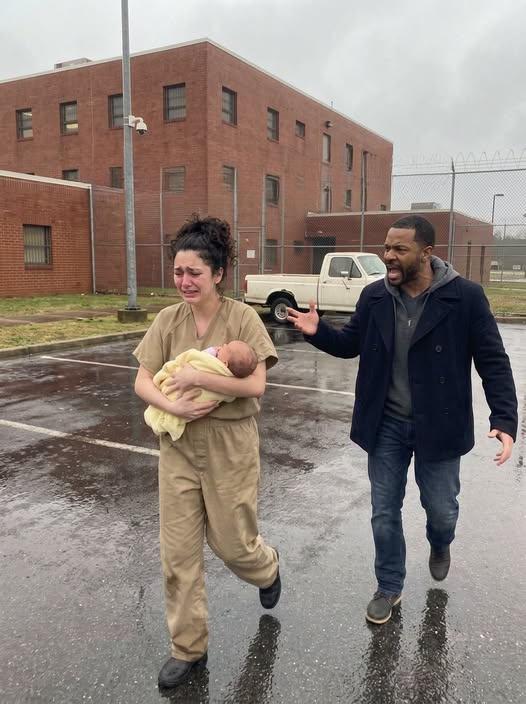
Four years after being convicted of a crime she insisted she had never committed, Valerie Lawson walked out of Ironwood Women’s Correctional Facility carrying a single bag and a secret she had protected for years.
She had expected freedom to feel overwhelming. Instead, it felt strangely quiet.
The morning air was cool, and the street beyond the facility looked almost ordinary. Cars passed in the distance. A bus stopped near the corner. Families and visitors moved through the parking area without paying much attention to her.
Valerie had imagined this moment countless times during her years in prison.
She had imagined calling her father.
She had imagined seeing her brother.
She had imagined walking into the home she once shared with her family and closing the door behind her.
None of those things happened.
Instead, three dark SUVs waited beside the road.
The emblem on their doors was unmistakable.
Vanguard Enterprises.
And standing beside the first vehicle was her older brother, Conrad.
He had helped raise Valerie after their mother died. For most of her childhood, she had considered him more than a brother. He had been a protector, a mentor, and the person she believed would always stand beside her.
Then came the trial.
When Valerie needed him most, Conrad had told investigators that he could not clearly remember whether she had been at his house on the night of the alleged theft.
That single statement weakened her alibi.
The prosecution used it to strengthen its case.
Valerie had spent four years living with the consequences.
Now Conrad was waiting for her at the prison gate.
“Valerie,” he said.
She stopped but did not approach him.
“Come home with me,” he said quietly.
She looked at the SUVs, then back at her brother.
“I don’t have a home with you anymore.”
Conrad’s face tightened.
“We need to talk.”
“We needed to talk four years ago.”
He took a step toward her.
“I know.”
“No,” Valerie said. “I don’t think you do.”
She remembered the night she had begged him to review the laboratory security footage that could have supported her version of events.
She remembered standing outside his house in the cold, explaining that the cameras might prove she had never entered the laboratory on the night the samples disappeared.
She remembered Conrad refusing to come outside.
And she remembered the curtains moving behind the window.
Someone had been watching her.
Someone had chosen not to open the door.
“I made a mistake,” Conrad said.
Valerie studied him.
“You made a choice.”
Then she walked away.
She didn’t take the SUV.
She didn’t accept his offer to return to the family home.
She boarded a public bus with one bag of clothes, very little money, and a small USB drive hidden inside the lining of her coat.
For four years, she had protected that drive.
Not because she knew exactly what it contained.
Because she had promised someone she would keep it safe.
That someone was Dr. Arlene Douglas.
The Promise
Before her imprisonment, Valerie had worked in the research division connected to Vanguard Enterprises. Her role involved administrative oversight, laboratory documentation, and compliance reviews. She wasn’t a scientist, but she understood how important accurate records were.
Dr. Arlene Douglas was one of the researchers working on Project M-17, a privately funded medical research program that Vanguard had supported for several years.
Arlene was respected, careful, and unusually protective of the research data.
Several weeks before Valerie’s arrest, Arlene had become concerned about inconsistencies in the project records.
Some clinical results didn’t match archived laboratory notes.
Several files appeared to have been modified after the original entries were completed.
Arlene believed someone was changing information in the system.
She told Valerie to be careful.
Then she gave her a USB drive.
“Don’t open this unless you have to,” Arlene had said.
Valerie remembered the conversation clearly.
“Why are you giving it to me?”
Arlene had hesitated.
“Because I don’t know who I can trust anymore.”
Valerie had promised to keep it safe.
Two weeks later, Arlene died in a road accident while traveling to Baltimore.
Authorities classified the incident as an accident.
Valerie never felt comfortable with that conclusion.
But before she could investigate, she became the focus of an internal inquiry.
Laboratory samples were missing.
Research records had disappeared.
And someone claimed Valerie had been responsible.
She denied everything.
The case eventually went to court.
The USB drive remained hidden.
Valerie never mentioned it.
Not to the investigators.
Not to the prosecutors.
Not even to Conrad.
She believed the wrong person could use it to destroy the remaining evidence or manipulate the records further.
So she waited.
For four years, the drive stayed hidden inside the lining of her coat.
Until the morning she walked out of prison.
The Diagnosis
Two months before her release, Valerie received another piece of devastating news.
A prison physician told her that tests had revealed advanced lung cancer.
Her doctors explained that the condition was serious and that treatment decisions would need to be made quickly.
Valerie struggled to process the information.
She had already lost four years of her life.
Now she was being forced to think about how much time remained.
The diagnosis changed her priorities.
She no longer wanted to spend whatever time she had left protecting people who had not protected her.
But she still wanted the truth.
That was why she went directly to Saint Jude Medical Center after leaving prison.
She had heard that Dr. Brenda Miller, a researcher who had worked closely with Arlene, was still there.
Valerie asked for a private meeting.
Forty minutes later, Brenda entered the consultation room.
She recognized Valerie immediately.
For several seconds, neither woman spoke.
Then Brenda sat down.
“I heard you were being released.”
“I was.”
Brenda looked at Valerie carefully.
“How are you?”
Valerie gave a small smile.
“That’s a complicated question.”
She removed the USB drive from her coat.
Brenda’s expression changed.
“Where did you get that?”
“Arlene gave it to me.”
Brenda stared at the device.
“She told me to give it to you if anything happened to her.”
Brenda slowly reached for it.
“Arlene’s dead,” she whispered.
“I know.”
Brenda looked toward the closed door.
“You shouldn’t have brought this here.”
“Why?”
“Because if what’s on that drive is what I think it is, people have been looking for it for years.”
Valerie felt a chill move through her.
“Then we need to know what’s on it.”
Brenda connected the drive to an isolated computer.
Folders appeared on the screen.
Archived databases.
Research correspondence.
Laboratory logs.
Audio recordings.
Clinical reports.
Original versions of files that had later appeared in altered form.
Brenda leaned closer to the monitor.
“These are original records.”
“That’s what Arlene told me.”
Brenda opened one of the files.
Her expression became increasingly serious.
“The results were changed.”
Valerie stared at the screen.
“Changed by whom?”
Before Brenda could answer, the door opened.
Savannah Lawson entered.
She wore a cream-colored suit and carried herself with the confidence of someone who expected to be welcomed anywhere.
Savannah was Valerie and Conrad’s adopted sister.
She had also been one of the people whose accusations helped lead to Valerie’s conviction.
Behind her came Conrad.
Valerie’s stomach tightened.
Savannah looked at the computer.
Then at the USB drive.
Then at Valerie.
“I can’t allow you to release that information,” she said.
Brenda stood.
“This is a private consultation.”
Savannah ignored her.
“Valerie has just been released from prison. She’s under enormous stress.”
Valerie folded her arms.
“You seem unusually informed about my situation.”
Savannah smiled.
“I’m your sister.”
“You haven’t acted like one.”
Savannah’s expression hardened.
Then she said something that changed the entire conversation.
“You shouldn’t be making decisions right now.”
Valerie stared at her.
“How do you know about my medical condition?”
Silence.
Conrad turned toward Savannah.
For the first time, he looked uncertain.
Valerie understood immediately.
She had told almost no one about her diagnosis.
Yet Savannah already knew.
The question was no longer whether someone had been watching Valerie.
The question was how long they had been watching her.
A Different Kind of Investigation
Brenda disconnected the drive and placed it inside a protective case.
“We’re not opening anything else until we have proper legal and technical safeguards,” she said.
Valerie agreed.
For the first time since leaving prison, she realized that rushing could be dangerous.
The evidence mattered.
But so did preserving it correctly.
Brenda contacted an independent attorney experienced in corporate investigations.
Valerie also contacted a lawyer who had no connection to Vanguard Enterprises.
Together, they began reviewing the material.
The files suggested that Project M-17 had not simply suffered from accidental recordkeeping errors.
Someone had altered important information.
The changes affected several reports.
Some original results appeared more promising than the versions later submitted to regulators and internal reviewers.
Other records had been edited in the opposite direction, making certain research procedures appear less complete than they actually were.
The pattern was complicated.
But one thing was becoming clear.
Arlene had discovered something important before she died.
And someone had a reason to keep it hidden.
Valerie’s conviction suddenly looked different too.
If she had been blamed for missing samples and altered records, perhaps she had been useful as a distraction.
The possibility was difficult to accept.
It meant that her four years in prison might have been part of a larger effort to prevent the truth from emerging.
Conrad’s Doubt
Conrad eventually asked Valerie to meet him privately.
She agreed, but only in a public location with her attorney nearby.
He arrived alone.
For a while, he said nothing.
Then he looked at her.
“I didn’t know.”
Valerie didn’t answer.
“I didn’t know what Savannah was doing.”
“You testified against me.”
“I know.”
“You could have checked the cameras.”
He looked down.
“I was afraid.”
That answer surprised her.
“Afraid of what?”
Conrad hesitated.
“The company was already in trouble. Investors were asking questions. People inside Vanguard were arguing about the research program. Savannah told me you had been involved in changing the records.”
Valerie felt anger rising.
“And you believed her?”
“I believed what I was shown.”
“That’s not the same thing.”
“I know.”
He rubbed his forehead.
“After your conviction, I started seeing things that didn’t make sense.”
Valerie remained silent.
“Then Arlene’s files disappeared from the company archive.”
“And you still said nothing.”
“I was trying to protect the family.”
Valerie looked directly at him.
“You were protecting the wrong thing.”
Conrad had no answer.
The Hidden Connection
As investigators compared the original files with Vanguard’s archived versions, they discovered something unexpected.
Several altered documents had been accessed through credentials connected to a senior executive’s account.
That executive was Savannah.
The discovery did not automatically prove that she had personally altered every document.
But it established a connection that investigators could no longer ignore.
Then they found the emails.
Some messages showed that Savannah had communicated with outside consultants about the project shortly before Arlene’s death.
Other messages discussed Valerie’s role in the laboratory and the possibility of making her appear responsible for missing information.
The evidence was finally beginning to form a coherent picture.
Savannah had not acted alone.
There were other people involved.
But the central question remained unanswered.
Why Valerie?
The answer appeared in an old corporate memorandum.
Years earlier, Valerie had been listed as one of the people who could access compliance records for Project M-17.
If someone needed a person to blame, she was an ideal target.
She had access.
She worked near the research team.
And most importantly, she had no reason to expect that her own family would turn against her.
Until they did.
The Meeting
Savannah requested a meeting with Valerie and the attorneys.
She arrived confident.
“You’re making a serious mistake,” she said.
Valerie looked at her calmly.
“Maybe.”
Savannah placed a folder on the table.
“There are legitimate explanations for every document you’ve found.”
Valerie’s attorney opened the folder.
“We’ll let the investigators determine that.”
Savannah looked at Valerie.
“You really want to destroy the family after everything we’ve done for you?”
Valerie almost smiled.
“I spent four years in prison because of this family.”
Savannah’s expression changed.
“That isn’t fair.”
“Neither was my conviction.”
Conrad was sitting nearby.
He finally spoke.
“Savannah, tell me the truth.”
She looked at him.
“I have been telling the truth.”
“Then explain the emails.”
She said nothing.
That silence was more revealing than any argument.
The Truth About Arlene
The investigation eventually uncovered evidence that Arlene had been preparing to report irregularities in Project M-17.
She had copied original records because she feared they would be changed or deleted.
The USB drive Valerie had protected contained part of that archive.
It also contained a recorded conversation.
Arlene’s voice was calm but serious.
“If you’re hearing this, I wasn’t able to finish what I started.”
Valerie listened in silence.
“The research results are being manipulated. I don’t know how high this goes, but I know the changes aren’t accidental.”
The recording continued.
Arlene explained that she had tried to report the problem internally but had been discouraged from pursuing it.
She had begun documenting everything independently.
Then came the sentence that changed Valerie’s understanding of the entire case.
“Valerie is not responsible.”
Valerie closed her eyes.
For four years, she had waited to hear those words from someone who knew the truth.
Now she finally had them.
A Second Chance
The investigation continued for months.
Valerie’s conviction was eventually reviewed in light of the newly discovered evidence.
The process was slow.
There were legal challenges, independent audits, and extensive examinations of the original records.
But the evidence was strong enough to reopen the case.
Valerie didn’t expect an immediate apology.
She didn’t expect her lost years to be returned.
Nothing could give her those years back.
What she wanted was the truth.
And eventually, the official record began to change.
The evidence supported Valerie’s claim that she had not been responsible for the laboratory misconduct for which she had been convicted.
The people who had contributed to the deception faced their own legal and professional consequences.
Vanguard Enterprises underwent major internal changes.
Project M-17 was independently reviewed.
And the story of Arlene Douglas was finally told accurately.
Valerie’s medical condition remained serious.
But she refused to allow the diagnosis to define the rest of her life.
She pursued treatment options with qualified physicians and spent more time with people she trusted.
She also made a decision about Conrad.
Forgiveness would not happen quickly.
Perhaps it would never happen completely.
But she no longer wanted anger to control every remaining chapter of her life.
“You were my brother before you were part of Vanguard,” she told him one afternoon.
Conrad nodded.
“I know.”
“I needed you then.”
“I know.”
“If you want any relationship with me now, it has to be based on honesty.”
He agreed.
Whether he could keep that promise was something only time would reveal.
The Drive Was Never the Real Treasure
Months later, Valerie returned to the hospital where she had first shown Brenda the USB drive.
The device was no longer hidden in her coat.
It had been securely preserved as evidence and copied through proper legal procedures.
Valerie no longer needed to carry it everywhere.
She had spent years believing the small piece of technology was the key to everything.
In a way, it was.
But she eventually realized that the drive itself had never been the most important thing.
The real value was the truth it preserved.
For years, other people had told Valerie who she was.
They called her dishonest.
They questioned her judgment.
They treated her as though her conviction defined her character.
But none of those labels changed what had actually happened.
The evidence simply gave her the opportunity to prove it.
Valerie still had difficult days ahead.
She still had medical appointments.
She still had painful memories.
And she still had to rebuild relationships that had been damaged by years of mistrust.
But she was free.
Not merely free from prison.
Free from the version of herself that other people had forced her to accept.
She had lost four years.
She couldn’t recover them.
What she could recover was her voice.
Her choices.
Her future.
And perhaps that was what freedom meant after all.
Not pretending the past never happened.
Not forgetting the people who betrayed you.
But refusing to let their choices determine who you become next.
Valerie had walked out of prison carrying one small drive.
She had expected it to contain evidence.
Instead, it became the beginning of a much larger truth.
And when she finally looked back at the prison gates, she realized something she had not understood on the day of her release.
The gates had opened behind her.
But the real journey had only just begun.