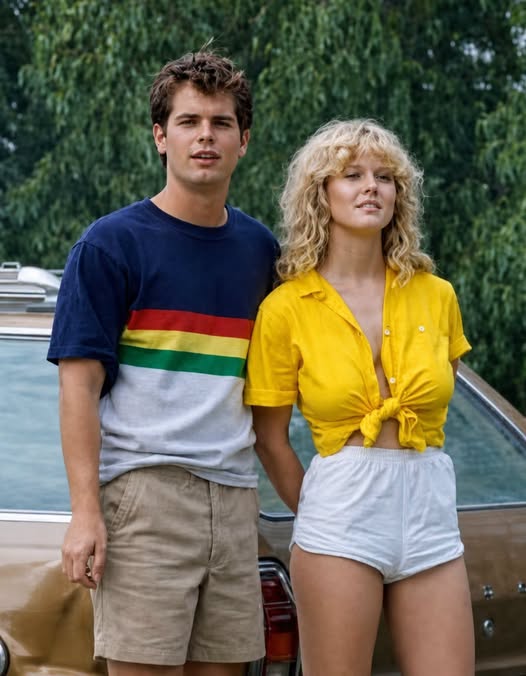
The Forgotten 1980s Horror Film That Became a Cult Favorite
Some movies become famous immediately.
Others take years to find their audience.
A film can arrive in theaters with little attention, disappear from public conversation, and then slowly develop a dedicated following through television broadcasts, home video releases, late-night screenings, and word of mouth.
That is one of the most interesting things about older horror cinema.
Not every film that becomes memorable was a major box-office success. Some productions were made with limited resources, unfamiliar actors, simple locations, and modest expectations. Yet those same limitations can sometimes give a movie an atmosphere that larger productions struggle to reproduce.
The fictional town at the center of Evil Town represents that type of setting.
Rather than relying entirely on elaborate effects or enormous sets, the story creates tension by placing unusual events inside an environment that initially appears ordinary.
Quiet streets.
Older homes.
Small businesses.
Familiar neighbors.
A community that seems almost frozen in time.
The contrast between an ordinary setting and unsettling circumstances became one of the film’s most memorable characteristics.
Although Evil Town never achieved the level of recognition enjoyed by many better-known horror movies from the 1980s, its unusual atmosphere helped it develop a reputation among viewers interested in obscure and independently produced genre films.
Today, its appeal is less about whether it delivers conventional scares and more about what it represents.
It is a snapshot of a particular period in horror filmmaking, when filmmakers experimented with practical effects, regional locations, atmospheric storytelling, and stories that could be produced without enormous budgets.
A Different Kind of Horror Movie
The 1980s are often remembered as an especially productive period for horror cinema.
Major studios released highly successful films, while independent filmmakers produced countless smaller projects.
The decade saw the growth of several recognizable horror traditions.
There were supernatural stories.
Slasher films.
Creature features.
Psychological thrillers.
Paranormal mysteries.
Dark comedies.
And films that blended several of these categories together.
Because so many productions appeared during the period, a number of movies inevitably disappeared from mainstream memory.
Some were released in only a limited number of theaters.
Others received little advertising.
Some found their audiences later through VHS rentals and television.
That environment allowed unusual films to survive long after their initial release.
Evil Town fits comfortably within that larger history.
Its greatest strength isn’t necessarily a complicated mythology.
Instead, the movie creates a sense that something isn’t quite right about a place that otherwise looks completely normal.
That approach has remained effective because audiences understand the setting.
A quiet town doesn’t immediately look threatening.
A familiar street doesn’t appear mysterious.
An ordinary house doesn’t necessarily suggest anything unusual.
But when a filmmaker slowly changes the way viewers perceive those familiar surroundings, the environment itself can become part of the story.
The Importance of the Setting
One of the defining characteristics of many memorable horror films is location.
A haunted house is obvious.
An isolated cabin immediately creates expectations.
An abandoned hospital can communicate uneasiness before a character says a word.
But a normal town presents a different challenge.
The filmmakers must create tension without relying on an obviously frightening environment.
That is where Evil Town finds much of its identity.
The town appears familiar.
People know one another.
Daily routines continue.
Buildings look lived-in rather than abandoned.
The streets aren’t necessarily empty.
The setting doesn’t immediately announce that something terrible is about to happen.
Instead, the audience gradually begins to understand that appearances can be misleading.
This approach gives the movie a slower, more atmospheric quality.
Rather than asking viewers to constantly react to sudden shocks, the story encourages them to pay attention to small details.
A strange conversation.
An unexplained event.
A character behaving differently.
A location that suddenly feels less comfortable than it did a few minutes earlier.
These details can create suspense without requiring constant action.
Why Ordinary Places Can Feel Unsettling
There is something psychologically effective about placing an unusual story in an ordinary environment.
People are familiar with quiet neighborhoods.
They understand small communities.
They recognize the routines of everyday life.
Because of that familiarity, the audience doesn’t need much explanation to understand the setting.
When something unusual happens, the contrast becomes more noticeable.
Imagine seeing a strange event in a deserted building.
The audience expects something unusual.
Now imagine seeing the same event in a normal neighborhood on a sunny afternoon.
The difference can be much more effective.
The ordinary surroundings create a sense of contrast.
This technique has been used by horror filmmakers for decades.
The unsettling element doesn’t necessarily need to come from the physical environment.
Sometimes it comes from the realization that something unexpected is happening in a place that should feel safe.
That idea contributes significantly to the lasting appeal of movies such as Evil Town.
The Influence of the 1980s
To understand why obscure horror movies from the period remain interesting, it helps to consider the filmmaking environment of the 1980s.
Home video was becoming increasingly important.
VHS technology changed the way audiences discovered movies.
A film no longer had to succeed during its initial theatrical release to remain available to viewers.
Video rental stores created enormous catalogs.
People could browse shelves and discover movies they had never heard of.
This helped smaller productions develop audiences.
A film that might have been overlooked in theaters could become a memorable weekend rental.
Friends could recommend it.
A viewer could discover it years after release.
Someone might find the movie simply because its cover looked interesting.
This created an unusual second life for many films.
Their reputations were no longer determined entirely by opening-weekend revenue.
A movie could slowly develop a following.
That is one reason so many older genre films are still discussed today.
The Era of Practical Effects
Another important part of 1980s horror was the use of practical effects.
Before modern digital effects became common, filmmakers often relied on physical materials.
Makeup.
Props.
Miniatures.
Models.
Mechanical effects.
Artificial blood.
Physical creature designs.
These techniques created a distinctive visual quality.
Even when an effect wasn’t completely convincing, viewers could appreciate the craftsmanship behind it.
In some cases, limitations actually contributed to a film’s character.
A modern production might digitally transform a location.
A lower-budget production might have to find a real building and work around its limitations.
That can make the finished film feel more grounded.
Evil Town belongs to a period when filmmakers frequently had to solve creative problems with practical methods.
The result was often imperfect.
But imperfections can become part of a movie’s identity.
Why Imperfections Matter
Modern audiences sometimes evaluate older movies according to standards that didn’t exist when those films were made.
They may notice visible effects.
Simple sets.
Unusual editing.
Performances that feel different from modern acting styles.
Dialogue that sounds dated.
Music that reflects the period.
But these qualities can also provide historical value.
A film doesn’t have to be technically perfect to be interesting.
In fact, imperfections can help viewers understand the circumstances under which the movie was produced.
A limited budget might explain why a particular location was used repeatedly.
A small cast might explain why characters interact so frequently.
A simple special effect might reveal the practical techniques available to filmmakers at the time.
Rather than treating these elements only as flaws, they can be viewed as evidence of a particular filmmaking era.
The Appeal of Cult Horror
The term “cult film” is often used to describe movies that develop dedicated audiences outside the mainstream.
Cult status isn’t necessarily determined by box-office success.
A film can become culturally important because a relatively small group of viewers continues to discuss, recommend, collect, and revisit it.
Horror has always been particularly well suited to this phenomenon.
Fans often search for obscure productions.
They compare different releases.
They discuss forgotten directors and actors.
They collect posters, tapes, DVDs, books, and other memorabilia.
They share memories of discovering movies late at night or through video stores.
This creates communities around films that might otherwise have disappeared.
Evil Town fits into this tradition because its appeal is connected to discovery.
Finding an obscure older horror film can feel different from watching a heavily promoted modern release.
There is a sense of historical curiosity.
What was this movie trying to accomplish?
Why was it made?
Why did some viewers remember it?
Why did others forget it?
Those questions can be just as interesting as the story itself.
The Power of Nostalgia
Nostalgia also plays an important role.
For viewers who grew up during the 1980s, older horror movies can bring back memories of a very different entertainment environment.
There were video rental stores.
Late-night television broadcasts.
Movie posters in shop windows.
Magazine advertisements.
Printed television schedules.
Film recommendations passed between friends.
Discovering a movie often required more effort.
There wasn’t a search engine that could instantly provide thousands of reviews.
People relied on conversations, advertisements, rental-store shelves, and chance discoveries.
That process made certain movies feel special.
A film discovered unexpectedly could remain in someone’s memory for decades.
When those viewers return to the movie later, they aren’t only watching the story.
They’re remembering the period in which they first encountered it.
Small-Town Horror
Small-town settings are particularly common in horror because they create a useful combination of familiarity and isolation.
Everyone seems to know everyone.
Rumors travel quickly.
Family histories overlap.
People recognize unfamiliar vehicles.
A stranger can immediately attract attention.
At the same time, a small community can create the illusion that there are fewer places to hide.
This type of setting also allows filmmakers to explore relationships.
Characters aren’t anonymous.
They have histories.
They know each other’s families.
They may have old disagreements.
They may be connected in ways the audience doesn’t immediately understand.
As a result, the town itself can become almost like another character.
It has its own routines and memories.
When those routines are disrupted, the audience notices.
The Role of Atmosphere
Atmosphere is one of the most important tools available to a horror filmmaker.
A story doesn’t necessarily need constant action to create tension.
Lighting can influence the mood.
Music can suggest that something is about to happen.
Weather can change how a location feels.
Camera movement can create uncertainty.
Even silence can be effective.
Older horror films frequently relied on atmosphere because they didn’t have the same technological resources available to modern productions.
A filmmaker couldn’t simply add a digital effect whenever a scene needed additional intensity.
Instead, directors had to think carefully about composition.
Where should the camera be?
What should the audience see?
What should remain outside the frame?
When should the music begin?
When should it stop?
These decisions can create suspense without showing everything.
What the Audience Doesn’t See
One of the oldest techniques in suspense filmmaking is withholding information.
The audience doesn’t always need to see what is happening.
Sometimes it is more effective to hear something.
A sound from another room.
A door closing.
Footsteps.
A distant voice.
A vehicle arriving.
These details allow viewers to imagine possibilities.
The imagination can sometimes be more powerful than a visual effect.
This is particularly relevant when looking at older horror movies.
Filmmakers had fewer tools, but that encouraged creativity.
They had to think about how to suggest something without necessarily showing it.
That restraint can make older movies feel different from modern productions that frequently display everything.
Why Forgotten Movies Return
There are several reasons an obscure film can return to public attention decades later.
The first is availability.
Once a movie becomes easier to find, new audiences can discover it.
Another factor is online discussion.
Film communities often revisit older productions.
People search for forgotten titles.
They upload reviews.
They discuss scenes.
They compare versions.
They share recommendations.
This can revive interest in films that had been largely absent from mainstream discussion.
Streaming has also changed how viewers discover older movies.
A person may be browsing a catalog and encounter a title they have never heard of.
That viewer may then recommend it to friends.
A forgotten movie can suddenly become relevant again.
The Difference Between Famous and Memorable
Popularity and memorability are not always the same thing.
Some movies become enormous commercial successes but gradually disappear from everyday conversation.
Others attract a much smaller audience but remain deeply memorable to the people who discovered them.
That distinction is important when discussing older horror.
A film doesn’t necessarily need to be considered one of the greatest productions of its decade to be worth discussing.
It can be historically interesting.
It can reflect the filmmaking practices of its time.
It can demonstrate how independent filmmakers worked.
It can illustrate the evolution of genre storytelling.
Or it can simply remind viewers of an earlier era of cinema.
Those are legitimate reasons to revisit an obscure film.
The Human Side of Horror
Despite the supernatural or frightening elements often associated with the genre, many horror stories are ultimately about human concerns.
Fear of isolation.
Fear of losing control.
Fear of the unknown.
Fear of being unable to protect someone.
Fear of discovering that something familiar isn’t what it seems.
These themes are not limited to horror.
They appear throughout literature and cinema.
What horror does particularly well is exaggerate those concerns and place them into situations where ordinary rules no longer seem reliable.
That helps explain why audiences continue returning to the genre.
Why the 1980s Still Matter
The 1980s occupy an interesting place in film history.
It was a period of experimentation.
Filmmakers were working with changing technologies.
Home video was expanding.
Independent production was becoming increasingly visible.
Genre movies were attracting dedicated audiences.
The visual language of horror was evolving.
Some pro