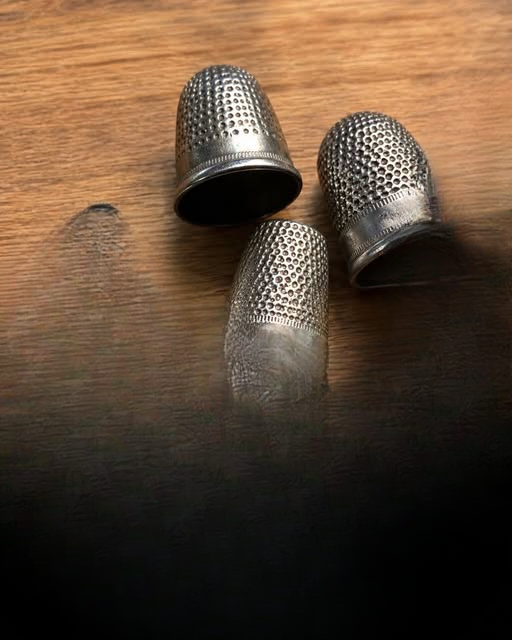
A thimble is one of those small household objects that can easily go unnoticed.
It is usually associated with sewing baskets, grandparents, handmade clothing, embroidery, and quiet afternoons spent repairing fabric. Its design is simple: a small protective covering placed over a finger, usually with tiny indentations or dimples across its surface.
Yet behind that simple shape is a remarkably long history.
For centuries, people have needed ways to protect their fingers while pushing needles through tough materials. Long before modern sewing machines, specialized fabrics, and mass-produced clothing, people worked with leather, woven fibers, animal hides, and other materials by hand.
The thimble developed as a practical solution to one of the oldest problems in needlework: how to push a needle safely and repeatedly through material without injuring your finger.
Over time, this modest tool evolved from a practical piece of protective equipment into an object that could also reflect craftsmanship, technology, fashion, wealth, and personal identity.
Today, thimbles may be less essential than they once were, but their history provides an interesting glimpse into the development of handmade crafts.
The Basic Purpose of a Thimble
The fundamental purpose of a thimble has remained remarkably consistent.
When sewing by hand, a person often pushes a needle through fabric using the fingertip or the side of a finger. When the material is thick or the stitching is repetitive, this can become uncomfortable or even painful.
A thimble provides a protective barrier.
It also gives the sewer a firm surface against which to push the needle, making certain types of stitching faster and more controlled.
This may seem like a minor invention, but for people who spent hours sewing by hand, such protection could make a significant difference.
The simplicity of the idea may explain why forms of finger protection appeared in different cultures over long periods of history.
Early Forms of Finger Protection
The exact origins of the thimble are difficult to establish because early examples could have been made from materials that did not survive.
Before metalworking became widespread, people used materials such as bone, leather, wood, or other locally available substances for tools and protective equipment.
Archaeological discoveries have included objects interpreted as possible sewing-related finger protectors, although the precise purpose of some very early examples is not always certain.
What is clear is that needlework itself has a very ancient history.
Humans have been stitching materials together for thousands of years. Early sewing was essential for producing clothing, shelters, bags, footwear, and other useful objects.
As sewing techniques became more advanced, the need for tools that made repetitive stitching easier also increased.
The thimble belongs to this broader history of practical inventions designed to make manual work safer and more efficient.
Thimbles in the Ancient World
Metalworking eventually allowed craftsmen to produce stronger and more durable protective objects.
Roman-era examples of thimble-like objects have been discovered, including pieces made from bronze. Similar forms of finger protection have also been associated with other ancient cultures.
These early objects were generally functional rather than decorative.
Their purpose was simple: protect the finger and help the user work with a needle.
A small bronze object might not seem particularly important compared with larger archaeological discoveries, but everyday tools can reveal a great deal about ordinary life.
A thimble suggests that people were engaged in repeated textile work and that they had developed specialized tools to make that work more comfortable.
It is a reminder that history is not only about kings, battles, and monuments. It is also about the ordinary objects people used every day.
The Growth of Needlework in Europe
During the Middle Ages, sewing and textile production became important parts of everyday economic life across Europe.
Clothing had to be made and repaired by hand, while specialized crafts such as tailoring, embroidery, leatherworking, and upholstery required considerable skill.
Thimbles became increasingly useful to people performing this type of work.
Early European thimbles were commonly made from materials such as brass or bronze. Some were cast, while others were formed using metalworking techniques that gradually became more sophisticated.
Their appearance was generally practical.
They were small enough to fit comfortably on the finger and sturdy enough to withstand repeated contact with a needle.
The familiar dimples found on many thimbles also served a practical purpose. They helped keep the needle from slipping when pressure was applied.
Nuremberg and the Development of Thimble Making
One of the most interesting chapters in thimble history is associated with Nuremberg, Germany.
During the late medieval and early modern periods, Nuremberg became an important center of metalworking and manufacturing.
Its craftsmen were known for producing a wide variety of small metal objects, including thimbles.
As manufacturing techniques improved, thimbles could be produced more consistently in larger quantities.
This was an important development.
Instead of every thimble being individually shaped as a unique handmade object, specialized craftsmen could develop more standardized methods of production.
The result was a product that could be made more efficiently while maintaining the basic qualities people needed: strength, durability, and a comfortable shape.
The rise of specialized production also demonstrates how seemingly ordinary household objects were connected to broader developments in European trade and manufacturing.
From Useful Tool to Decorative Object
Although the thimble began as a practical object, it did not remain purely functional.
As metalworking techniques improved and wealthier customers sought personalized objects, decorative thimbles began to appear.
Some were made from silver or other valuable materials. Others featured engraved designs, decorative patterns, inscriptions, or elaborate finishes.
This transformation was not unique to thimbles.
Many everyday tools eventually became objects that could communicate personal taste or social position.
A simple sewing tool could become a carefully decorated gift or a treasured possession.
For some people, the value of such an object was no longer determined solely by its usefulness.
Its craftsmanship, material, history, and connection to a particular person could become equally important.
Thimbles as Gifts and Keepsakes
By the 18th and 19th centuries, decorative thimbles could serve as gifts or keepsakes.
A finely made thimble could be given to someone who enjoyed sewing or needlework. Some were engraved with initials, dates, names, or messages, giving them a personal connection that went beyond their practical purpose.
This helped establish the thimble as a small sentimental object.
A person could preserve a thimble for decades, eventually passing it down to another family member.
That is one reason old thimbles can be fascinating today.
Even when an individual object has little monetary value, it may still have an interesting story.
A worn surface might show that it was used frequently. An engraving might identify the original owner. A particular manufacturing style might indicate the approximate period in which it was produced.
The Industrial Revolution Changes Sewing
The Industrial Revolution transformed the way textiles and clothing were produced.
Factories introduced machines capable of producing fabric and garments on a much larger scale than traditional hand production.
The development and widespread adoption of sewing machines also changed the role of hand sewing.
Tasks that once required long hours of manual stitching could increasingly be performed with mechanical assistance.
This did not eliminate hand sewing, of course.
People continued to repair clothing, make quilts, embroider designs, and create handmade garments.
However, the everyday importance of the thimble gradually changed as industrial manufacturing became more widespread.
A tool that had once been essential for many sewing tasks became less necessary for some forms of modern clothing production.
The Thimble in the Modern World
Today, thimbles are still used by people who sew by hand.
Quilters, embroiderers, tailors, textile artists, leatherworkers, and sewing enthusiasts may use them to protect their fingers and improve control while working.
Modern thimbles are available in many forms.
Some are traditional metal designs, while others are made from leather, plastic, rubber, silicone, or other materials.
Some cover the fingertip completely, while others are designed to provide protection only where pressure from the needle is greatest.
This variety shows that the basic idea remains useful even though the materials and manufacturing methods have changed.
Thimbles as Collectibles
For some people, however, thimbles are interesting for a completely different reason.
They are collectibles.
Collectors may search for antique examples, unusual designs, advertising thimbles, commemorative pieces, regional examples, or thimbles made from particular materials.
Small size makes them relatively easy to store and display, which has helped them remain popular among collectors.
Some collections contain dozens or even hundreds of examples, each with its own shape, decoration, markings, or manufacturing characteristics.
Collecting thimbles can also become a way of exploring social history.
A thimble made for everyday household use tells one story. A silver thimble given as a gift tells another. A decorated promotional thimble may reveal something about advertising and consumer culture.
The object itself may be tiny, but the history surrounding it can be surprisingly large.
Why Old Thimbles Are So Interesting
One reason historical thimbles continue to attract attention is their combination of simplicity and variety.
At first glance, many thimbles look almost identical.
Look closer, however, and differences begin to appear.
The material may be different.
The shape may vary.
The dimples may have different patterns.
The rim may reveal manufacturing techniques.
Decorative details may provide clues about when or where an object was produced.
Marks or inscriptions can sometimes offer additional information.
For historians and collectors, these details can turn a small sewing accessory into an object worth examining carefully.
More Than Just a Sewing Tool
The history of the thimble is ultimately a story about human ingenuity.
People have always looked for ways to make repetitive tasks safer and more efficient. The thimble is a remarkably simple answer to a very practical problem.
Its basic design has survived for centuries because it works.
At the same time, the history of the thimble shows how technology and culture can change an ordinary tool.
A protective finger covering could become a carefully crafted metal object. It could become a personalized gift, a decorative item, or eventually a collectible.
The thimble therefore occupies an interesting place between technology, craftsmanship, and everyday life.
A Small Object With a Long History
It is easy to overlook a thimble.
Sitting quietly in a sewing box, it may appear to be nothing more than a small piece of metal or plastic.
But its history reaches into some of the oldest traditions of human craftsmanship.
People have been sewing for thousands of years, creating clothing and useful objects with nothing more than simple needles, thread, and their own hands.
The thimble developed alongside those traditions, offering protection and control to people whose work depended on careful, repetitive stitching.
From early forms of finger protection to bronze examples from the ancient world, from European workshops to decorative silver pieces, and from household sewing baskets to modern collector displays, the thimble has continually adapted to changing times.
Its importance may have diminished as machines transformed textile production, but it never completely disappeared.
Today, it remains a practical tool for many craftspeople and a fascinating historical object for collectors.
Perhaps that is what makes the thimble so remarkable.
It is small enough to fit on a fingertip, yet its story connects ancient craftsmanship, medieval manufacturing, industrial change, personal traditions, and modern collecting.
The next time you see one sitting inside a sewing box, it may be worth taking a second look.
That tiny object represents far more than sewing.
It represents the human habit of solving practical problems, improving tools, preserving traditions, and finding beauty in objects designed for everyday life.