The 1972 Academy Awards: A Memorable Evening That Reflected Hollywood’s Changing Culture
The Academy Awards have long represented one of the most recognizable traditions in the entertainment industry. Each year, filmmakers, actors, writers, musicians, and other professionals gather to celebrate achievements in cinema. The ceremony combines artistic recognition with formal fashion, public appearances, acceptance speeches, and moments that become part of Hollywood history. Yet the significance of the Oscars extends beyond trophies and celebrity appearances. The event also provides a glimpse into the social attitudes, creative priorities, and cultural changes shaping the film industry.
The 44th Academy Awards, held on April 10, 1972, offered a particularly interesting reflection of its era. The ceremony took place during a period when American society was experiencing substantial changes in politics, popular culture, music, fashion, and public attitudes toward traditional institutions. Hollywood was also undergoing a creative transition. Established studio conventions were giving way to new filmmaking approaches, while younger directors and performers were attracting audiences with stories that felt more contemporary and realistic.
Although the Academy Awards continued to celebrate professional achievement, the atmosphere surrounding the event reflected a broader transformation in entertainment. The contrast between Hollywood’s traditional image of elegance and the changing expectations of audiences became increasingly noticeable. The industry was no longer defined exclusively by the polished studio productions that had dominated earlier decades.
Understanding the 1972 ceremony requires looking beyond the red carpet. Its historical importance becomes clearer when considered alongside the films of the period, the evolution of celebrity culture, the changing role of actors and directors, and the relationship between entertainment and society.
Hollywood at a Turning Point
By the early 1970s, Hollywood was moving through a period of considerable change. The traditional studio system, which had exercised substantial control over filmmaking for decades, no longer operated with the same influence it once possessed. Television had changed how audiences consumed entertainment, while younger moviegoers increasingly sought stories that reflected contemporary life.
During Hollywood’s earlier studio era, major production companies maintained extensive systems for developing films, managing performers, and distributing movies. Actors often worked under long-term contracts, and studios played a major role in shaping their public identities. Carefully managed publicity campaigns helped establish stars as recognizable personalities whose appearances and interviews reinforced particular images.
By the late 1960s and early 1970s, this model was evolving. Independent productions, changing audience preferences, and new creative voices were encouraging filmmakers to experiment with different subjects and storytelling techniques.
Movies increasingly explored complicated relationships, personal uncertainty, social divisions, and morally ambiguous characters. Rather than presenting every leading character as an uncomplicated hero, filmmakers began giving audiences protagonists whose decisions were difficult to interpret or whose circumstances challenged conventional expectations.
This transition did not happen overnight. Traditional studio productions continued to attract large audiences, and familiar genres remained commercially important. Nevertheless, the industry was becoming more varied, with filmmakers experimenting more openly with tone, subject matter, and visual style.
The Academy Awards provided a useful snapshot of this changing environment. The films recognized by the Academy reflected both established filmmaking traditions and newer creative directions.
The 44th Academy Awards and Its Major Winners
The 44th Academy Awards ceremony recognized films released during 1971. It was held at the Dorothy Chandler Pavilion in Los Angeles, with actor Helen Hayes, actor Alan King, comedian Sammy Davis Jr., and actress Jack Lemmon serving as hosts.
The ceremony’s Best Picture award went to The French Connection, a crime drama directed by William Friedkin. The film had attracted attention for its energetic pacing, realistic atmosphere, and unconventional approach to the police thriller.
Gene Hackman received the Academy Award for Best Actor for his performance as detective Jimmy Doyle, a character inspired by a real New York City police detective. Hackman’s performance helped establish the film’s central character as a determined but imperfect professional operating in a complicated urban environment.
Jane Fonda won Best Actress for Klute, in which she portrayed Bree Daniels, a New York City woman whose life becomes connected to a missing-person investigation. The performance demonstrated Fonda’s ability to portray a character with conflicting emotions, professional ambitions, and personal vulnerabilities.
The Best Director award went to William Friedkin for The French Connection. The film also received recognition for its editing and screenplay, helping establish it as one of the defining American crime films of the period.
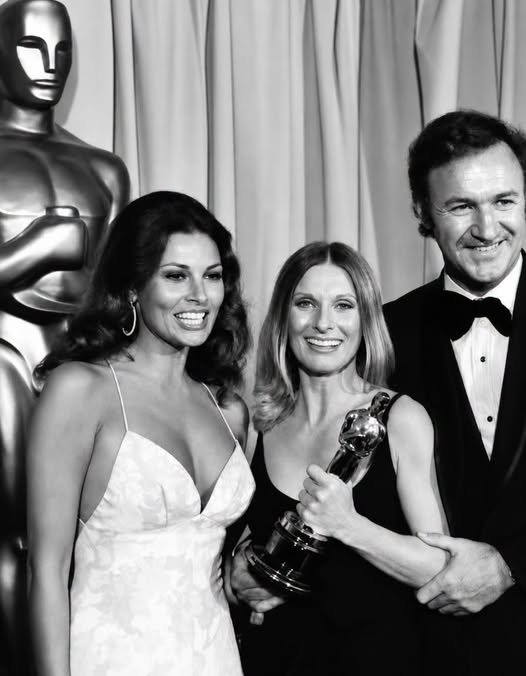
Other notable winners included Ben Johnson, who received Best Supporting Actor for The Last Picture Show, and Cloris Leachman, who won Best Supporting Actress for the same film. Directed by Peter Bogdanovich, the movie examined the lives of young people in a small Texas community during the early 1950s.
These results illustrate the variety of films attracting attention at the time. Some were character-driven dramas, while others explored crime, relationships, and social expectations through more contemporary filmmaking techniques.
The ceremony also reflected the Academy’s ongoing relationship with established Hollywood traditions. Awards continued to recognize acting, directing, writing, music, and technical achievement, even as the kinds of films receiving attention were evolving.
Why The French Connection Was Significant
Among the films recognized at the 1972 ceremony, The French Connection stood out for its approach to the crime genre.
Released in 1971, the film followed two New York City detectives investigating an international narcotics-smuggling operation. Rather than relying exclusively on elaborate sets or carefully choreographed action, the production made extensive use of real urban locations and a documentary-inspired visual style.
The city itself became an important part of the film’s atmosphere. Crowded streets, public transportation, ordinary buildings, and everyday urban activity helped create a sense of immediacy. The setting felt like a functioning city rather than a carefully controlled cinematic environment.
Director William Friedkin emphasized movement, tension, and observation. The camera frequently placed viewers close to the characters, allowing them to experience the uncertainty and pressure surrounding the investigation.
The film also presented its central detective as a complicated figure. Jimmy Doyle is persistent and capable, but his methods and behavior are not always presented as admirable. This characterization reflected a broader trend toward protagonists who possessed both strengths and weaknesses.
Gene Hackman’s performance was essential to that approach. Instead of portraying the detective as a perfectly composed authority figure, Hackman gave him impatience, intensity, and a rough personal style. The character’s professional determination existed alongside flaws that made him feel less idealized.
The Academy’s recognition of the film demonstrated that a crime drama with an unusually gritty presentation could compete successfully for Hollywood’s most prominent awards.
Its success also illustrated the growing influence of directors who wanted to challenge established conventions. The film did not abandon traditional storytelling, but it approached familiar material with a style that felt fresh to contemporary audiences.
Jane Fonda and the Changing Representation of Women
Jane Fonda’s Best Actress victory for Klute was another important element of the ceremony.
In the film, Fonda portrayed Bree Daniels, a woman who works as a call girl while pursuing opportunities in the modeling industry. Her character becomes involved in an investigation led by a detective searching for a missing man.
The story explores the tension between personal independence, professional survival, privacy, and vulnerability. Bree is not simply a supporting figure in someone else’s investigation. Her experiences, choices, and emotional responses help shape the direction of the narrative.
Fonda’s performance was praised for its complexity. She portrayed a character who could be confident in one situation and uncertain in another, presenting a more complicated picture than the idealized female characters often associated with earlier Hollywood productions.
The film arrived during a period when conversations about women’s rights, employment, relationships, and personal autonomy were becoming increasingly prominent in American public life. Cinema did not single-handedly create these conversations, but it offered a platform through which filmmakers could examine them.
Fonda was also a prominent public figure whose career extended beyond acting. Her professional activities and public positions contributed to a complicated relationship between her celebrity identity and the roles she played on screen.
Her Oscar win therefore represented more than the recognition of a single performance. It formed part of a larger period in which actresses were taking on a wider range of characters and audiences were becoming more familiar with stories centered on women’s experiences.
That shift was gradual and incomplete. Hollywood continued to produce conventional romantic stories and films built around familiar gender roles. Nevertheless, performances such as Fonda’s demonstrated that complex female characters could occupy the center of major productions and receive significant industry recognition.
The Importance of The Last Picture Show
Another notable film from the 1972 awards was The Last Picture Show, directed by Peter Bogdanovich.
Set in a small Texas town in the early 1950s, the film follows a group of residents dealing with changing relationships, limited opportunities, and uncertainty about the future. The town’s declining cinema serves as a powerful symbol of a community whose social and economic circumstances are changing.
The film’s black-and-white photography distinguished it from many contemporary productions. Its visual style recalled earlier periods in American filmmaking while its storytelling reflected newer approaches to character development and realism.
Rather than presenting small-town life as entirely nostalgic or uncomplicated, the film explored disappointment, ambition, loneliness, and the difficulty of leaving familiar surroundings. Its characters often struggle to understand what they want from life, and their decisions produce consequences that cannot always be easily resolved.
Ben Johnson won Best Supporting Actor for his portrayal of Sam the Lion, an older local businessman whose presence connects different generations of the community. Cloris Leachman received Best Supporting Actress for her portrayal of Ruth Popper, a woman experiencing dissatisfaction and emotional isolation within her marriage.
Their performances demonstrated the power of supporting roles in shaping a film’s emotional depth. Neither character needed to dominate every scene to leave a lasting impression.
The film’s recognition also illustrated how Hollywood was becoming more receptive to stories that examined ordinary lives without relying on conventional happy endings. Its emotional effect emerged from observation and character development rather than from a single dramatic revelation.
The New Hollywood Movement
The films associated with the 1972 Academy Awards are often discussed in connection with what historians call New Hollywood.
This term describes a period, especially prominent from the late 1960s through the 1970s, when a generation of filmmakers began changing American cinema. Directors such as Francis Ford Coppola, Martin Scorsese, William Friedkin, Peter Bogdanovich, and others developed approaches that differed from many of the conventions associated with the classical studio era.
The movement was not a single organization or a unified artistic philosophy. Its participants had different backgrounds, interests, and creative methods. What connected many of them was a willingness to experiment with narrative structure, character psychology, location shooting, and subject matter.
Several factors contributed to this transformation.
First, audience expectations were changing. Younger moviegoers had different cultural experiences from previous generations and were often interested in films that reflected contemporary uncertainty.
Second, the financial difficulties experienced by several major studios encouraged experimentation. Companies needed new ways to attract audiences and compete with television.
Third, advances in filmmaking technology made some production methods more flexible.