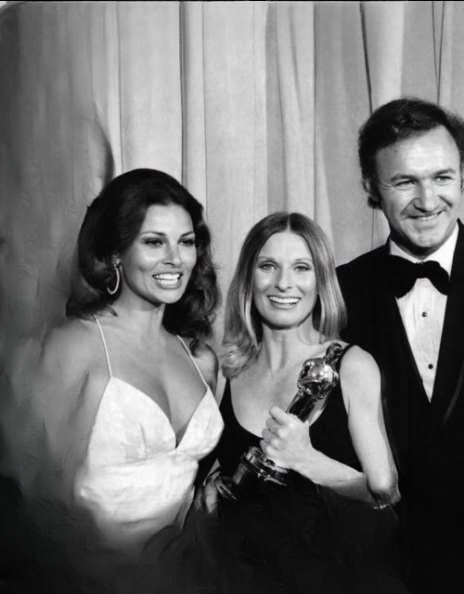
The 1972 Academy Awards: A Defining Moment in Hollywood’s Changing Identity
Hollywood has long been associated with glamour, creativity, and the ability to turn ordinary stories into extraordinary experiences. For generations, audiences have looked to the film industry for entertainment, inspiration, and a glimpse into a world filled with memorable performances and celebrated personalities. The Academy Awards, commonly known as the Oscars, became one of the most recognizable symbols of that world.
Yet the history of Hollywood is about much more than elegant ceremonies, expensive clothing, and acceptance speeches. Behind the familiar image of the entertainment industry lies a constantly changing business shaped by cultural shifts, creative disagreements, technological developments, and changing audience expectations.
The 44th Academy Awards, held on April 10, 1972, took place during an especially interesting period in American cinema. Filmmakers were experimenting with new storytelling techniques, established conventions were being reconsidered, and a younger generation of directors and performers was helping redefine what movies could accomplish.
The ceremony did not single-handedly transform Hollywood, nor did every important change in the industry begin that evening. Nevertheless, the event provides a useful starting point for examining a period when American filmmaking was moving in new directions.
To understand its significance, it helps to look beyond the ceremony itself and consider the cultural environment, the films being recognized, and the changing relationship between Hollywood and its audiences.
Hollywood Before the Cultural Changes of the 1970s
For much of the twentieth century, the American film industry developed around a powerful studio system. Major production companies controlled substantial portions of filmmaking, from financing and casting to distribution and publicity. Many performers became closely associated with particular studios, while established production methods helped companies deliver films to large audiences.
This system created an extraordinary range of popular entertainment. Hollywood produced musicals, historical dramas, westerns, romantic comedies, crime stories, and family films that reached viewers across the United States and around the world.
The studio system also helped establish the movie star as a central figure in popular culture. Publicity campaigns, magazine interviews, carefully managed appearances, and award ceremonies contributed to the image of celebrities as larger-than-life personalities.
The Academy Awards became an important part of that cultural landscape. The ceremony celebrated filmmaking achievements while providing studios, actors, directors, and producers with a highly visible platform.
However, the industry was never completely insulated from social change.
By the 1960s, television had become a major competitor for audiences, and changes in American society were influencing the stories people wanted to see. Younger moviegoers increasingly encountered films that addressed complicated relationships, moral uncertainty, political tensions, and characters who did not fit traditional heroic models.
Filmmakers also began exploring more personal approaches to storytelling. Some rejected conventional endings, while others experimented with editing, cinematography, and narrative structure.
These developments did not affect every studio or genre in the same way. Large-scale productions continued to attract audiences, and familiar entertainment remained popular. Nevertheless, the industry was becoming more diverse in its creative ambitions.
By the beginning of the 1970s, Hollywood was navigating a period of transition rather than operating under one universally accepted formula.
The 44th Academy Awards and the Films That Defined the Evening
The 1972 ceremony recognized films released during 1971, a year that offered a varied selection of dramas, historical stories, and character-driven productions.
Among the most notable titles was The French Connection, directed by William Friedkin. The crime drama received widespread recognition and won several Academy Awards, including Best Picture, Best Director, and Best Actor for Gene Hackman.
The film stood out for its energetic approach to police investigation, its use of New York City locations, and its emphasis on tension and atmosphere. Rather than presenting a polished, distant version of urban life, it placed viewers close to the movement and uncertainty of its environment.
Another important film recognized at the ceremony was A Clockwork Orange, directed by Stanley Kubrick. Its nomination for Best Picture reflected the Academy’s engagement with a challenging work that explored violence, social control, and questions about individual freedom.
The film’s controversial subject matter and distinctive visual style made it a major topic of cultural discussion. Its presence among the year’s most prominent releases illustrated how American cinema was making room for stories that were not designed to offer simple moral reassurance.
Other films from the period explored social relationships, personal identity, and the consequences of individual choices. Together, these productions demonstrated that filmmakers were experimenting with a wider range of themes and styles.
The awards ceremony offered a snapshot of that creative landscape. It brought different approaches to filmmaking into the same public conversation, allowing audiences and industry professionals to consider what kinds of stories deserved recognition.
Why the Early 1970s Were Important for American Cinema
The early 1970s are frequently associated with a period of artistic experimentation in Hollywood. Directors and writers explored complex characters, morally ambiguous situations, and stories that challenged familiar expectations.
This development had several causes.
Audience preferences were changing. Many younger viewers were interested in films that reflected the uncertainties and conflicts of contemporary life. They did not necessarily want every story to conclude with a clear victory or a reassuring resolution.
At the same time, some filmmakers were interested in moving away from the visual polish and narrative predictability associated with earlier studio productions. They experimented with natural lighting, location shooting, unconventional pacing, and dialogue that sounded closer to everyday conversation.
Economic circumstances also influenced the industry’s direction. Studios faced pressure to attract audiences in a competitive entertainment market, encouraging them to consider new creative approaches.
The result was not a complete abandonment of traditional Hollywood filmmaking. Instead, different styles existed alongside one another.
Large productions continued to have an important place in the industry, while smaller films offered opportunities for more personal storytelling. Established stars worked alongside emerging performers, and experienced directors shared the cinematic landscape with younger filmmakers.
The period is best understood as a broad transition in which several influences came together rather than a single moment when Hollywood suddenly changed.
The Academy Awards as a Reflection of Industry Priorities
The Oscars have always served several purposes at once. They recognize professional achievements, generate publicity, and provide a public account of the films that industry voters consider significant.
The awards can also reveal changing attitudes toward filmmaking.
When a film receives major recognition, its success may encourage audiences to seek it out and give studios a reason to invest in similar projects. An award can increase a production’s visibility, strengthen its reputation, and contribute to the careers of the people involved.
However, awards do not offer a complete record of cinematic history.
Many films that later become influential receive limited recognition when they are first released. Other productions win prestigious awards but gradually attract less attention from audiences. Artistic influence, commercial success, and award recognition are related, but they are not identical.
The 1972 ceremony provides a useful example of this distinction.
The recognition given to films such as The French Connection and A Clockwork Orange highlighted different approaches to contemporary storytelling. Their inclusion in the awards conversation showed that major cinematic institutions could acknowledge productions with contrasting tones, themes, and visual styles.
Still, the ceremony represented only one part of a much larger industry. Countless other films, performers, technicians, and writers contributed to the period without appearing among the evening’s most prominent winners.
Understanding the Oscars requires looking at both what the ceremony celebrates and what falls outside its spotlight.
The French Connection and the Appeal of Realistic Storytelling
One of the defining films of the 1971 awards season was The French Connection, which helped establish a lasting model for crime cinema.
The film follows police detectives investigating an international drug-smuggling operation. Its narrative focuses on persistence, surveillance, uncertainty, and the difficulties of pursuing a complex investigation.
Gene Hackman’s performance as detective Jimmy “Popeye” Doyle became one of the film’s most widely recognized elements. His character was forceful and determined, but not presented as a flawless hero. The performance contributed to a portrayal of law enforcement that felt rougher and less idealized than many conventional screen interpretations.
Friedkin’s direction also played an important role. The use of real locations, kinetic camera work, and tightly constructed sequences gave the film a sense of immediacy.
Rather than making every scene appear carefully arranged for the audience’s comfort, the production often allowed the environment to contribute to the tension. Streets, vehicles, buildings, and crowds became active parts of the story.
The film’s success demonstrated that audiences could respond strongly to crime narratives built around atmosphere and imperfect characters.
Its awards recognition also helped bring attention to a style of filmmaking that would influence later directors and productions.
That influence should not be overstated as the work of a single film. Crime stories had a long history before 1971, and filmmakers had already explored realism in numerous ways. Nevertheless, The French Connection became an important reference point for the development of modern crime cinema.
A Clockwork Orange and the Limits of Conventional Storytelling
Stanley Kubrick’s A Clockwork Orange presented a very different cinematic experience.
Based on Anthony Burgess’s novel, the film follows Alex, a young man whose violent behavior leads to an attempt by authorities to alter his responses through an experimental rehabilitation method.
The story raises difficult questions about personal freedom, punishment, social responsibility, and the ethics of controlling human behavior.
Kubrick’s visual approach helped distinguish the film from more conventional productions. Its stylized environments, carefully arranged compositions, unusual music choices, and deliberate contrasts created an unsettling atmosphere.
The film also challenged viewers to consider the relationship between individual choice and institutional power. Rather than providing a simple answer to its central questions, it encouraged debate about whether behavior can be changed without undermining a person’s autonomy.
Its subject matter generated controversy, and reactions to the film varied considerably. Some viewers praised its ambition and visual inventiveness, while others objected to its treatment of violence and its provocative tone.
That range of reactions illustrates an important feature of cinema: a film’s cultural significance does not depend on universal approval.
Works that challenge familiar expectations can become subjects of extended discussion precisely because audiences disagree about what they mean.
The film’s presence in the 1972 awards conversation reflected the willingness of major industry institutions to recognize a production that departed from conventional storytelling, even as its themes remained contentious.
The Changing Image of the Hollywood Star
The entertainment industry has long relied on performers whose public identities become closely associated with their work. Stars attract audiences, support publicity campaigns, and help give films a recognizable identity before viewers enter a theater.
During earlier periods of Hollywood history, studios often exercised considerable influence over how performers appeared in public. Publicity departments helped shape the stories surrounding actors, while studio arrangements could limit their freedom to choose projects or manage their professional identities independently.
By the late 1960s and early 1970s, the relationship between performers and studios was changing.
Actors increasingly became associated with individual projects rather than exclusively with long-term studio arrangements. Directors and writers also gained greater visibility as creative figures, while audiences became more interested in the artistic identity behind a film.
This did not mean that celebrity publicity disappeared. The star system remained important, and glamorous events continued to play a major role in promoting movies.
Instead, the image of the Hollywood professional became more varied.
A performer could be celebrated for appearing in a lavish production one year and an intimate, challenging drama the next. Directors could develop recognizable styles that attracted audiences independently of the actors involved.
Award ceremonies reflected these developments by bringing performers, filmmakers, producers, and technical specialists together in one highly visible event.
The changing industry demonstrated that Hollywood’s identity was not built on celebrity alone. It also depended on creative collaboration, business decisions, and the evolving expectations of moviegoers.
The Red Carpet and the Business of Celebrity
The red carpet has become one of the most recognizable elements of major entertainment awards. Photographers document arrivals, fashion coverage attracts additional audiences, and interviews provide opportunities for performers to discuss their latest projects.
Although today’s coverage is shaped by digital platforms and continuous online publishing, the relationship between celebrity appearances and film promotion has existed for decades.
The visual presentation of an awards ceremony helps create a sense of occasion. Formal clothing, carefully prepared speeches, and the gathering of familiar personalities distinguish the event from an ordinary industry meeting.
That presentation is not inherently deceptive. An awards ceremony is a public celebration, and visual design is part of its purpose.
Problems arise only when the polished image is mistaken for a complete account of the industry.
Film production involves financial uncertainty, long working hours, creative disagreements, technical challenges, and projects that may never reach a wide audience. A successful premiere or award can represent the visible outcome of years of collaboration.
The ceremony presents a concentrated version of that work, not the entire process.
The 1972 Oscars took place in an era when television broadcasting was already an important part of entertainment culture. The ceremony connected the film industry with viewers who could follow major moments without attending in person.
Over time, television and digital media expanded that relationship, allowing audiences to discuss speeches, fashion, winners, and unexpected moments almost immediately.
The presentation has changed, but the basic relationship between recognition and publicity remains an important part of the awards business.
How Television Changed the Awards Experience
Television transformed the way major entertainment ceremonies reached the public.
Before televised events became a familiar part of popular culture, audiences depended more heavily on newspapers, magazines, radio broadcasts, and newsreels to learn about major entertainment occasions.
Television allowed viewers to experience the ceremony more directly. They could see performers arrive, hear acceptance speeches, and watch the announcement of winners as events unfolded.
This created a shared cultural experience that extended beyond the film industry itself.
The Academy Awards became not only a professional ceremony but also a television event. Its value to broadcasters included entertainment, public interest, and the opportunity to attract viewers through a combination of celebrity appearances and dramatic competition.
As the television audience expanded, the presentation of the ceremony became increasingly important. Timing, staging, camera placement, musical performances, and the pacing of announcements all contributed to the viewer experience.
These considerations introduced new challenges.
A ceremony must serve the people working in the film industry while remaining accessible to viewers who may have seen only some of the nominated productions. It must recognize achievements without allowing the proceedings to become difficult to follow.
The growth of television also changed the way memorable moments were remembered. A speech or unexpected reaction could reach a much larger audience than those physically present.
Today, online platforms have expanded that process even further. Moments from older ceremonies can be rediscovered, discussed, and compared with more recent events.
The 1972 ceremony therefore belongs to a broader history of entertainment awards adapting to changing media technologies.
The Relationship Between Hollywood and American Culture
Films do not exist separately from the societies in which they are produced. They reflect the interests, anxieties, values, and disagreements of their time, although individual productions interpret those influences in different ways.
The late 1960s and early 1970s were periods of substantial cultural change in the United States. Public debates about politics, social expectations, authority, and personal freedom influenced many forms of creative expression.
Filmmakers responded in varied ways. Some addressed contemporary concerns directly, while others explored them through historical settings, speculative stories, crime narratives, or personal dramas.
The connection between cinema and society was not always straightforward. A film could reflect prevailing attitudes, challenge them, or present contradictory perspectives within the same story.
Audiences also interpreted movies according to their own experiences. A production that seemed provocative to one viewer might appear insightful to another, while a story that initially attracted limited attention could become more meaningful to later generations.
The Academy Awards formed part of this cultural exchange by highlighting selected works and helping direct public attention toward them.
However, award nominations should not be treated as a complete representation of public opinion. Academy voters constitute a particular professional group, and their choices reflect a specific voting process.
The wider history of American cinema includes many voices, genres, and audiences beyond the productions recognized at a particular ceremony.
That broader perspective makes the 1972 Oscars more interesting than a simple list of winners. The event can be understood as one snapshot of an industry negotiating its place in a changing culture.
Why Awards Do Not Tell the Whole Story
The Academy Awards provide a valuable record of which films and performances received recognition at a particular moment. Yet their history also demonstrates the limitations of any single award system.
Voting members make choices according to their professional experiences, artistic preferences, and understanding of the eligible films. Those choices may reflect the strengths of a production, but they cannot measure every aspect of its cultural or historical significance.
Some films become influential because they introduce new techniques or inspire later filmmakers. Others remain beloved because of their performances, music, humor, or emotional impact.
A production may have modest commercial results when first released but develop a dedicated audience over time. Another may achieve substantial immediate success without retaining the same level of attention in later decades.
There is no single measure that captures all these possibilities.
The 1972 awards season included films that attracted attention for different reasons. The French Connection became an important reference point for crime cinema, while A Clockwork Orange continued to generate discussion about adaptation, visual style, and controversial themes.
Their differing qualities illustrate why film history benefits from more than a ranking of award winners.
Awards provide a starting point for discovery. They identify works that attracted professional recognition and encourage audiences to explore the films themselves.
The more complete picture emerges when viewers also consider production histories, contemporary reviews, audience responses, and the influence a film had on later creative work.
What Modern Hollywood Can Learn From the Era
The early 1970s offer several useful lessons for understanding the entertainment industry today.
One is the importance of creative risk. Films that depart from established formulas can introduce new perspectives and encourage audiences to reconsider familiar genres.
Risk does not guarantee success. Unconventional productions may struggle commercially, and experimentation can produce mixed results. Nevertheless, an industry that allows room for different approaches is better positioned to explore a wide range of stories.
A second lesson concerns the relationship between artistic ambition and commercial pressures. Filmmaking requires resources, distribution, and an audience willing to engage with the finished work. Creative decisions therefore take place within a business environment.
The balance between those considerations has never been simple. Studios must consider financial realities, while filmmakers may want to pursue ideas that do not fit established expectations.
A third lesson is that cultural influence often develops over time. A film’s immediate reception does not always predict its long-term reputation. Later audiences may discover new meanings in older productions or appreciate techniques that were less widely recognized when the films first appeared.
Finally, the history of Hollywood demonstrates that change is usually gradual and uneven. Different styles, business models, and audience preferences coexist rather than replacing one another completely.
These lessons remain relevant as contemporary studios navigate streaming services, international markets, new production technologies, and changing viewing habits.
The details differ from those of 1972, but the underlying challenge remains familiar: how can an entertainment industry balance creative freedom, financial sustainability, and the expectations of a diverse audience?
Hollywood’s Continuing Evolution
The entertainment industry continues to evolve as new technologies and distribution methods change how films are financed, produced, marketed, and watched.
Streaming services have expanded access to international productions and given some projects alternatives to traditional theatrical distribution. Digital filmmaking tools have changed production workflows, while social media allows performers and filmmakers to communicate directly with audiences.
At the same time, movie theaters remain an important part of the industry, and major theatrical releases continue to generate significant cultural attention.
These developments show that Hollywood is not a fixed institution. It is a collection of creative and commercial relationships that changes in response to audience behavior and technological possibilities.
The Academy Awards have adapted to these changes while retaining their central purpose of recognizing achievements in filmmaking.
The ceremony’s format, public reach, and cultural position have changed over the decades, but its ability to generate discussion about cinema remains an important part of its identity.
Looking back at the 1972 ceremony helps place those developments within a longer historical context. It reminds viewers that the entertainment industry has faced periods of uncertainty before and that the films celebrated at one moment may later become reference points for broader discussions about art and culture.
The industry’s history is therefore best understood as an ongoing process rather than a series of isolated turning points.
Conclusion: A Ceremony That Reflects a Changing Film Industry
The 44th Academy Awards took place during a significant period in American filmmaking. The recognition given to productions such as The French Connection and A Clockwork Orange highlighted the variety of approaches emerging within Hollywood and demonstrated that major awards could bring different creative visions into the same public conversation.
The ceremony did not single-handedly rewrite the rules of entertainment. Hollywood’s evolution was shaped by many forces, including changing audiences, new filmmakers, shifting business conditions, and broader cultural developments.
Nevertheless, the 1972 Oscars provide a useful lens through which to examine that transition.
They reveal an industry balancing established traditions with new creative ambitions, celebrity culture with artistic achievement, and commercial expectations with the desire to tell challenging stories.
The history of Hollywood is richer when viewed through that complexity. Its most meaningful developments rarely come from a single evening or one dramatic announcement. They emerge from years of experimentation, collaboration, disagreement, and changing audience interests.
For modern viewers, revisiting this period offers more than nostalgia. It provides an opportunity to understand how the films of one generation can influence the stories told by the next.
The glamour of the Academy Awards remains part of their appeal, but the lasting significance of cinema lies in the work itself: the performances, images, ideas, and stories that continue to engage audiences long after the ceremony has ended.