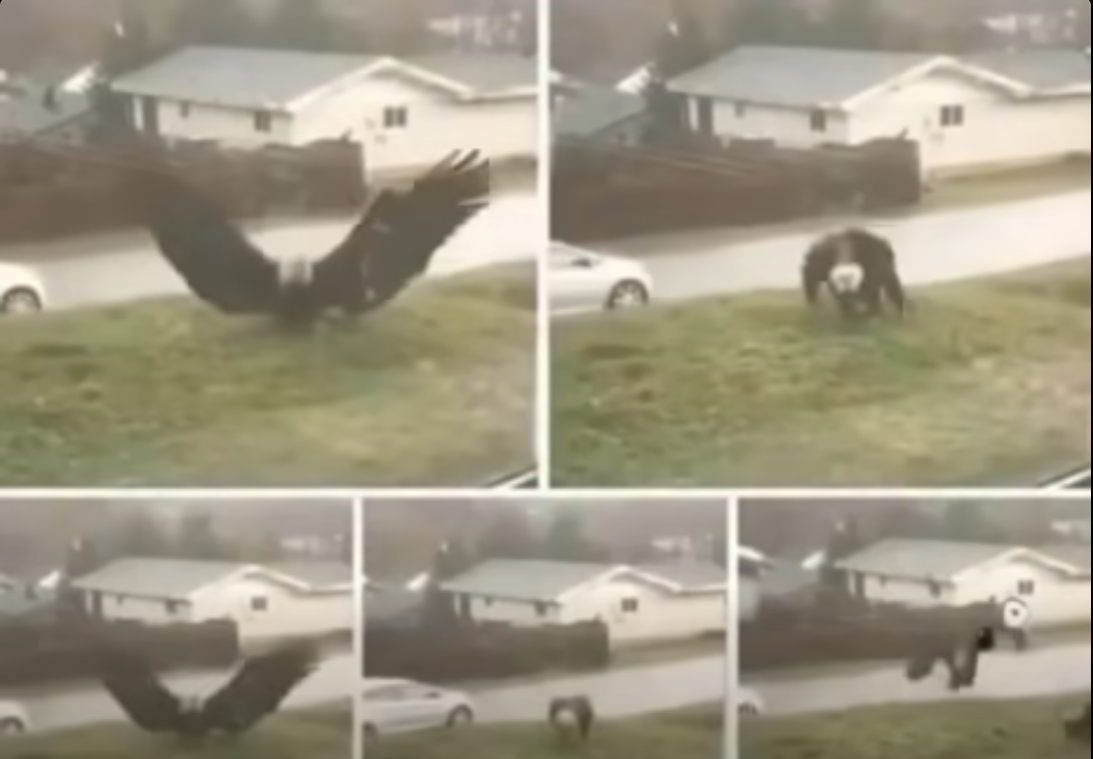
Reports of a Giant Eagle in South Texas Spark Interest in Wildlife Identification and Conservation
Reports of an unusually large bird of prey can quickly attract attention from wildlife enthusiasts, birdwatchers, and people interested in the natural world. Large raptors already inspire curiosity because of their powerful wings, sharp eyesight, and important role in maintaining healthy ecosystems. When a bird appears larger than expected, questions naturally arise about its species, health, and possible origins.
An online account describes a large bird reportedly being cared for by a wildlife rehabilitation facility in South Texas. According to the account, specialists were examining its physical characteristics and considering different methods of identifying it. However, the available description does not provide a verifiable facility name, an official wildlife agency statement, or independently confirmed measurements. The claim that the bird represents an unidentified species has therefore not been established by the information provided.
Even so, the story offers an opportunity to explore how wildlife professionals identify unusual birds, why large raptors sometimes appear outside their expected ranges, and how rehabilitation centers protect animals while determining their needs.
Understanding these processes helps separate genuine wildlife discoveries from speculation and highlights the importance of evidence-based conservation.
Why Large Birds of Prey Attract Attention
Eagles and other large raptors occupy an important place in many ecosystems. As predators and scavengers, depending on the species, they help regulate animal populations and contribute to the natural movement of nutrients through the environment.
Their impressive size and hunting abilities have also made them subjects of scientific study and public fascination for generations.
North America is home to several large birds of prey, including bald eagles, golden eagles, and various vultures and hawks. Their appearance, body proportions, habitat preferences, and behavior can differ considerably.
Some species have broad wings suited to soaring over open landscapes, while others are adapted to hunting in forests, wetlands, or coastal environments. Their size can also vary according to sex, age, geographic population, and individual condition.
Consequently, a bird that looks unusually large to an observer is not necessarily a new or unknown species. It may belong to a familiar species, have particularly large proportions, or appear different because of the viewing angle, posture, or photographic perspective.
Accurate identification requires examining several characteristics together rather than relying on size alone.
How Wildlife Experts Identify an Unusual Bird
When wildlife professionals encounter a bird that cannot immediately be identified, they generally begin with observations and measurements that can be compared with established scientific information.
The first step may involve recording the bird’s overall appearance, including its feather patterns, beak shape, leg structure, eye coloration, and the proportions of its wings and tail.
Experts may also measure its body length, wingspan, and other relevant dimensions. These measurements can help narrow the possibilities, although no single measurement is necessarily sufficient to establish a species.
The bird’s age and sex may also influence its appearance. In some raptor species, males and females differ in size, and young birds may have plumage that differs noticeably from that of adults.
Photographs taken from several angles can provide useful documentation. If the bird is injured or otherwise requires treatment, veterinary examinations may offer additional information about its physical condition.
Researchers then compare their observations with identification guides, scientific publications, museum collections, and reliable wildlife databases.
This process can be particularly important when a bird has unusual coloration, damaged feathers, an atypical appearance, or characteristics that are difficult to assess from photographs alone.
The objective is to determine which explanation best fits the evidence, not to assume that an unfamiliar appearance automatically represents a scientific discovery.
Could an Unusually Large Eagle Be a New Species?
A large bird that appears different from familiar eagles can inspire speculation about whether it belongs to an unknown species. In scientific research, however, identifying a new species requires substantially more evidence than an unusual appearance.
Scientists generally look for consistent characteristics that distinguish the organism from known species. Depending on the case, these may include anatomical differences, genetic evidence, behavior, ecology, and information about its geographic distribution.
Individual animals can vary considerably within a species. Differences in body size, feather coloration, and proportions may reflect ordinary genetic variation, age, sex, nutrition, or environmental conditions.
A bird may also appear unusual because it belongs to a species that is uncommon in the location where it was observed.
For example, a raptor outside its typical range may be a rare visitor rather than an unknown species. Misidentification can also occur when a photograph does not clearly show the features needed for reliable classification.
A credible claim of a previously undocumented species would therefore require careful comparison with known birds and independent scientific review.
Until such evidence is available, it is more accurate to describe an animal as unidentified or unusual than to suggest that it represents a new branch of the bird family.
Understanding the Role of DNA Testing
Genetic analysis has become an important tool in modern wildlife research. By examining DNA, scientists can investigate relationships between populations, confirm some species identifications, and study genetic diversity.
If an unusual bird presents identification challenges, genetic testing may help clarify its relationship to known species. Researchers can compare selected genetic markers with reference samples from documented populations.
However, DNA testing is not an automatic solution to every identification problem.
The reliability of a result depends on the quality of the sample, the genetic regions examined, and the availability of appropriate reference data. Closely related species may share many genetic similarities, and some identification questions require multiple types of evidence.
Genetic results must also be interpreted alongside the bird’s physical characteristics and other relevant observations.
For example, an apparent genetic difference does not automatically establish that an animal belongs to a new species. The difference may reflect ordinary variation within a known population or a relationship that requires additional investigation.
In a genuine case involving an unusual raptor, researchers would need to explain what was tested, which comparisons were made, and how the findings support their conclusions.
The account concerning the reported South Texas bird does not provide confirmed genetic results. It would therefore be premature to claim that DNA analysis has revealed an unknown species or unusual genetic lineage.
Why South Texas Is Important for Birdwatching
South Texas supports a rich variety of wildlife because of its location, climate, and diverse habitats. The region includes grasslands, shrublands, wetlands, river corridors, agricultural landscapes, and coastal environments.
These habitats provide food and shelter for resident birds as well as species that pass through during migration.
The region’s position near the meeting of different ecological zones makes it particularly interesting to birdwatchers. Species associated with different parts of North America can sometimes be observed within relatively short distances of one another.
Seasonal movements may also bring birds into areas where they are not commonly seen. Weather conditions, food availability, habitat changes, and the timing of migration can influence where individual birds appear.
A rare sighting may therefore reflect the natural movement of a known species rather than the discovery of an unfamiliar animal.
South Texas is also home to a range of conservation programs and wildlife organizations that monitor birds, restore habitat, and educate the public about native species.
For researchers, unusual sightings can provide useful information about distribution and behavior, particularly when observations are carefully documented and compared with historical records.
How Migration and Weather Influence Bird Sightings
Bird migration is influenced by several interconnected factors. Food availability, breeding conditions, daylight patterns, weather, and habitat quality can all affect the movement of different species.
Some birds travel long distances between breeding and wintering grounds. Others make shorter seasonal movements or move in response to changes in local conditions.
Strong winds and storms can sometimes push birds away from their usual routes. An individual may arrive in an unfamiliar location because of weather conditions, limited food supplies, or changes in the availability of suitable habitat.
Such movements can produce surprising sightings, especially when a bird is encountered far from the area where observers