Petticoat Junction: The Story, Characters, and Behind-the-Scenes Details That Made It Memorable
For millions of television viewers during the 1960s, Petticoat Junction offered a cheerful escape into a fictional rural community where family, friendship, and small-town adventures provided the foundation for each episode.
Set in the fictional community of Hooterville, the series centered on the Shady Rest Hotel, a modest country inn operated by Kate Bradley and her three daughters. The hotel was located near a railroad line, and the nearby train became one of the show’s most recognizable features.
At a time when television was increasingly becoming a central part of American family life, Petticoat Junction developed a distinctive identity. Its relaxed rural setting, colorful characters, gentle humor, and family-oriented stories helped it become a familiar part of American television history.
Although the series was designed primarily as a comedy, there is more to its history than what appeared on screen. Changes in the cast, evolving storylines, production decisions, and the changing television landscape all contributed to the show’s development.
A Different Kind of Television Setting
When Petticoat Junction premiered in 1963, many popular television programs were built around suburban families, workplaces, or urban environments.
The series took a different approach.
Hooterville was intentionally presented as a rural community where life moved at a slower pace. The Shady Rest Hotel became the center of many stories, bringing together travelers, local residents, railroad workers, neighbors, and members of the Bradley family.
The setting allowed the writers to create situations that felt removed from the pace of modern city life. The hotel was not portrayed as a polished luxury destination. Instead, it had a comfortable, lived-in quality that became part of its charm.
That imperfect setting also helped distinguish the show from more sophisticated television comedies of the period.
The Bradley Family
At the heart of the series was Kate Bradley, the widowed mother who managed the Shady Rest Hotel.
Kate was portrayed as warm, practical, and protective of her daughters. She often found herself trying to maintain order while dealing with the unexpected situations that came with operating a busy country hotel.
Her daughters were an important part of the show’s appeal.
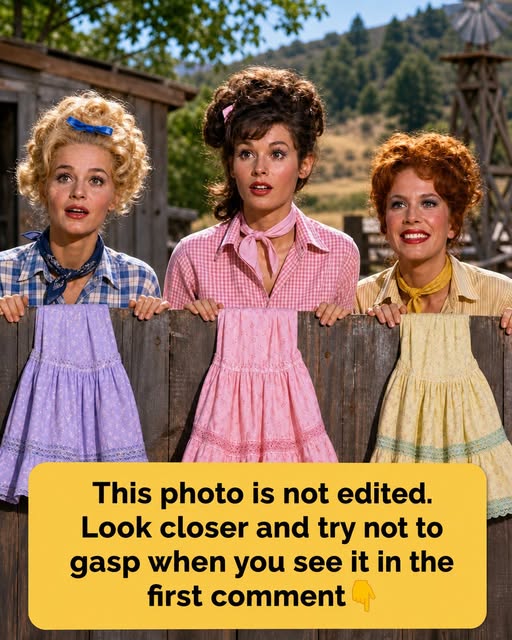
The three Bradley sisters were Billie Jo, Bobbie Jo, and Betty Jo. Each daughter had her own personality, interests, and storyline, allowing the series to explore different aspects of family life.
Their names were deliberately similar, which itself became part of the show’s distinctive style.
Rather than treating the daughters as identical characters, the writers gave each sister a somewhat different personality. Their individual interests and relationships helped create separate storylines within the larger family setting.
The Shady Rest Hotel
The Shady Rest Hotel was much more than a backdrop.
It functioned almost like another character in the series.
Its location near the railroad helped explain why so many people passed through the area. The hotel also provided a natural meeting place where the Bradley family could interact with recurring characters and visitors.
The building’s somewhat worn appearance was consistent with the show’s rural atmosphere. It was not intended to look like an expensive resort. Instead, it represented a family-run establishment where hospitality mattered more than luxury.
That idea was central to the show’s tone.
The Shady Rest was presented as a place where guests could expect a meal, a room, conversation, and sometimes an unexpected adventure.
The Famous Hooterville Cannonball
One of the most recognizable elements of Petticoat Junction was the Hooterville Cannonball.
The small train became closely associated with the series and appeared throughout its run.
The Cannonball was operated by Floyd Smoot and later became an important part of the show’s visual identity. Its slow, old-fashioned appearance fit perfectly with the fictional community surrounding it.
The train also served a practical storytelling purpose.
Because the railroad connected Hooterville with other locations, it gave characters a reason to come and go. It could introduce visitors, create travel-related storylines, and provide another setting for the show’s humor.
Over time, the train became almost as recognizable to viewers as the Shady Rest Hotel itself.
Why the Train Mattered So Much
The Hooterville Cannonball represented more than transportation.
It reinforced one of the show’s central ideas: Hooterville existed at a different pace from the modern world.
The train was old-fashioned, leisurely, and somewhat unconventional. That matched the atmosphere of the series.
Rather than emphasizing speed and efficiency, the show frequently used the railroad as part of its relaxed rural setting.
For viewers, the train became one of those television details that immediately brought the fictional world of Hooterville to mind.
Connections to Other Hooterville Shows
Fans of classic television may recognize Hooterville from another series.
Petticoat Junction was connected to Green Acres, another CBS comedy created by producer Paul Henning.
Both programs used Hooterville as part of their fictional universe, and characters occasionally appeared across the two series.
This shared setting helped create a larger television world in which the rural community could support different stories and characters.
For audiences at the time, these connections added another layer of familiarity. A character who appeared on one program could suddenly turn up on another, creating the feeling that the fictional community continued to exist beyond the boundaries of a single show.
The Role of Sam Drucker
Another important connection between the Hooterville programs was Sam Drucker.
Drucker operated the general store and post office and became a familiar figure in the community.
He was portrayed as someone who seemed to know nearly everyone in Hooterville. His store provided another natural gathering place where characters could exchange news, discuss local events, and become involved in the latest situation.
The general store therefore served a similar purpose to the Shady Rest Hotel.
Both locations brought people together and gave the writers opportunities to move stories forward without relying on complicated settings.
Changes Behind the Camera
Like many long-running television programs, Petticoat Junction went through changes during its run.
Actors left, new performers joined the cast, and characters sometimes changed direction.
One of the most noticeable examples involved the three Bradley daughters. Different actresses portrayed the sisters at various points in the series.
These changes were partly a normal consequence of a television production lasting several years. Performers’ careers developed, contracts changed, and production decisions evolved.
For viewers who watched the show from beginning to end, however, such changes could be noticeable.
The identities and personalities of the Bradley sisters remained important to the series, even as individual performers changed.
The Bradley Sisters and Their Different Personalities
Billie Jo, Bobbie Jo, and Betty Jo were not simply three versions of the same character.
Billie Jo was often associated with entertainment and a desire for a more glamorous life.
Bobbie Jo was portrayed as more bookish and intellectual.
Betty Jo was often presented as the youngest and more romantic of the sisters.
These differences gave the writers opportunities to tell stories centered on different personalities and interests.
It also made the Bradley family feel more complete. Each daughter could respond differently to the same situation, creating much of the gentle humor that characterized the series.
A Show Built Around Family
Despite the train, hotel, rural setting, and recurring visitors, family remained at the center of Petticoat Junction.
Kate Bradley’s relationship with her daughters provided an emotional foundation for the program.
The family did not always agree, and the daughters occasionally found themselves involved in situations that tested their mother’s patience. But the series generally returned to the idea that family members cared about one another.
This helped distinguish the program from comedies that relied primarily on exaggerated conflict.
The humor often came from misunderstandings, unusual circumstances, and the contrast between Hooterville’s residents and outsiders.
The Rural Setting Was Part of the Appeal
The fictional world of Hooterville offered viewers something increasingly unusual for television: a strong sense of place.
The countryside, railroad, hotel, general store, farms, and neighboring communities created a recognizable environment.
Even when the individual plot of an episode was simple, the setting gave it personality.
This was one reason the series remained memorable for many viewers. People were not simply watching individual stories. They were returning to a fictional community that felt familiar.
What Made the Humor Work?
Much of the show’s humor came from character relationships rather than complicated jokes.
The Bradley family had an established rhythm. Recurring characters had recognizable personalities, and viewers understood how they might react when something unexpected happened.
That familiarity allowed the writers to create comedy from relatively ordinary situations.
A visitor arriving at the hotel, a problem involving the railroad, a family misunderstanding, or a local disagreement could become the basis for an episode.
The humor was generally light and accessible, making the series suitable for a broad television audience.
The Importance of the Supporting Characters
Although the Bradley family was central to the program, the supporting cast helped create Hooterville’s personality.
Characters associated with the railroad, general store, neighboring businesses, and local community appeared regularly enough to become familiar faces.
Their relationships with the Bradleys gave the fictional town a sense of continuity.
This was especially important for a series built around a small community. The same people could reappear from one episode to another, giving viewers the feeling that Hooterville continued to exist even when the camera was not focused on them.
How Television Production Changed During the Series
The 1960s were a period of significant change in American television.
Color broadcasting became increasingly common, television production techniques evolved, and networks competed for larger audiences.
Petticoat Junction existed during this transition.
As the series progressed, its visual presentation and production style naturally developed. Later episodes could look different from earlier installments, reflecting broader changes in television production.
The show’s longevity itself was significant because maintaining a television comedy over several seasons required a dependable combination of cast members, writers, producers, and production staff.
The Show’s Connection to American Popular Culture
Although Petticoat Junction was rooted in a fictional rural community, its influence extended beyond its original episodes.
The characters, hotel, railroad, and Hooterville setting became recognizable pieces of classic American television.
The series also demonstrated how a relatively simple setting could support a successful long-running comedy.
Instead of relying on elaborate locations or dramatic storylines, the program built its identity around a family, a small community, and a collection of recurring characters.
That formula proved effective for television audiences of the era.
Why Viewers Still Remember It
Decades after the series ended, Petticoat Junction continues to attract interest from people who enjoy classic television.
Part of that appeal comes from nostalgia.
For viewers who remember watching the show when it originally aired, returning to Hooterville can bring back memories of a very different television era.
For younger viewers discovering the program later, the series provides a window into the style and conventions of American television comedy during the 1960s.
The pacing, sets, costumes, dialogue, and storytelling all reflect the period in which the show was produced.
More Than Just a Nostalgia Trip
It is easy to think of Petticoat Junction simply as an old-fashioned sitcom.
But looking at the series more closely reveals several interesting elements of television history.
It demonstrates how producers created fictional communities, how recurring characters could build audience loyalty, and how television shows could connect with one another through shared settings.
It also shows how casting changes could affect a long-running series while allowing its basic identity to remain intact.
The program’s continued recognition suggests that its central combination of family, community, humor, and rural Americana left a lasting impression.
The End of the Series
Petticoat Junction eventually came to an end in 1970 after seven seasons.
By that time, American television had changed considerably from the environment in which the series first premiered.
New programs, new production styles, and changing audience interests were shaping the television landscape.
Even so, the show’s run represented a substantial period of success.
Seven seasons gave its characters enough time to become familiar to generations of viewers, while the fictional world of Hooterville became part of the broader history of American sitcoms.
A Lasting Place in Classic Television
The enduring appeal of Petticoat Junction comes from the combination of elements that made Hooterville distinctive.
There was the Shady Rest Hotel, where Kate Bradley and her daughters welcomed visitors.
There was the Hooterville Cannonball, slowly moving through the countryside and providing one of the show’s most recognizable images.
There were recurring neighbors, local businesses, family disagreements, friendships, romances, and everyday situations that could become surprisingly entertaining.
None of these elements needed to be particularly complicated.
Together, they created a fictional community that viewers could return to week after week.
Looking Back at Hooterville
Television has changed dramatically since Petticoat Junction first appeared.
Modern sitcoms often move faster, use different storytelling techniques, and explore settings that would have been unusual on television in the 1960s.
Yet there is something distinctive about returning to a series built around a small family-run hotel and a rural community.
The world of Hooterville was deliberately simple.
Its characters were familiar, its locations were recognizable, and its stories often revolved around relationships rather than spectacle.
That simplicity became part of the show’s identity.
The Lasting Legacy of Petticoat Junction
The legacy of Petticoat Junction is not limited to individual episodes or characters.
The series became part of a group of rural television comedies that captured a particular period in American popular culture.
Its connection to Green Acres helped expand the fictional world of Hooterville, while its own characters and locations developed identities that remained recognizable on their own.
For fans of classic television, the series offers more than a collection of old episodes. It provides a glimpse into how American audiences once imagined small-town life, family relationships, and rural communities.
The Shady Rest Hotel, Kate Bradley, the three Bradley sisters, and the Hooterville Cannonball remain among the memorable elements associated with that era.
A Small Town With a Big Television History
The fictional community of Hooterville may never have appeared on a real map, but it became a familiar destination for television viewers.
At the center of it all was a family-run hotel, a small railroad, a collection of eccentric neighbors, and a community where almost everyone seemed to know everyone else.
That formula helped Petticoat Junction establish its own identity during one of television’s most recognizable eras.
Its story is ultimately a reminder that successful television does not always require an elaborate premise. Sometimes, a memorable setting, relatable family relationships, distinctive characters, and a little humor are enough to create a world viewers want to revisit.
For those discovering the series today, Hooterville remains a fascinating piece of television history—a fictional rural community whose characters, locations, and gentle comedy continue to remind audiences of a very different era of American television.