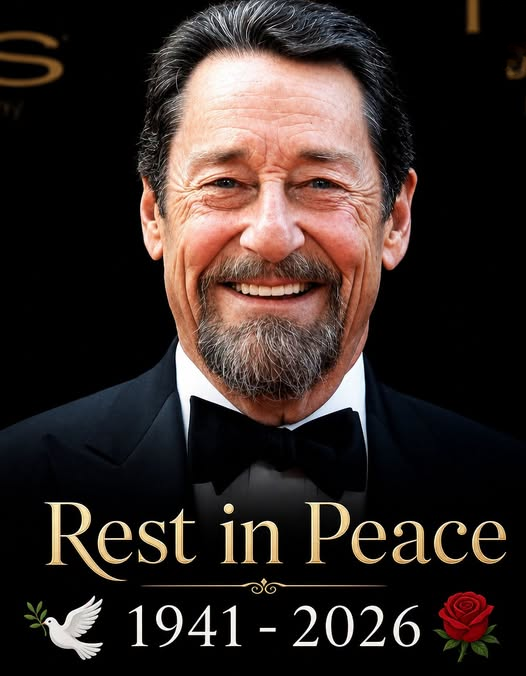
Peter Cullen, the Canadian-born actor whose unmistakable voice helped define Optimus Prime for generations of Transformers fans, has died at the age of 85.
Cullen passed away on August 26, 2026, at his home in Los Angeles. His agent, Kevin Motley, confirmed the news, saying that Cullen died peacefully surrounded by family. A cause of death was not disclosed.
For millions of viewers, Cullen’s name will forever be connected with Optimus Prime, the principled leader of the Autobots. His deep, steady delivery gave the character an unusual combination of authority, warmth, courage, and restraint.
But Cullen’s career was much broader than a single character.
He worked in radio, television, animation, film, and video games over a career that stretched across decades. Along the way, he voiced another beloved character, Eeyore from the Winnie the Pooh franchise, and contributed performances and vocal work to numerous other productions.
His death marks the end of a remarkable chapter in voice acting history, but the characters he helped create remain familiar to audiences around the world.
A Career That Began Long Before Optimus Prime
Peter Claver Cullen was born in Montreal, Quebec, on July 28, 1941.
Long before he became known as the voice of one of the most recognizable fictional leaders in popular culture, Cullen developed his craft through traditional performance work.
He studied at the National Theatre School of Canada and began working in radio and television during the 1960s. His early career included radio performances and announcing work, giving him extensive experience using his voice professionally.
Among his early television credits was announcing work on The Smothers Brothers Comedy Hour. He also appeared as a performer on The Sonny & Cher Comedy Hour.
These experiences were important because voice acting requires much more than simply having a distinctive voice.
An effective voice performer has to communicate personality, emotion, timing, and intention without relying on facial expressions or physical movement. Cullen developed those skills over many years before he ever stepped into the role that would make him internationally famous.
The Arrival of Optimus Prime
Everything changed in the early 1980s.
When the animated Transformers series was being developed, Cullen auditioned for the role of Optimus Prime.
The character was conceived as the leader of the Autobots, a heroic figure involved in the long-running conflict between the Autobots and Decepticons.
Cullen’s interpretation immediately gave the character a recognizable identity.
Rather than making Optimus Prime sound like an ordinary action hero, Cullen delivered the dialogue with measured authority. His performance was commanding without constantly being aggressive.
That distinction became one of the defining characteristics of the character.
The original syndicated Transformers animated series premiered in 1984, and Cullen became the voice most closely associated with Optimus Prime.
For children watching the series during the 1980s, Optimus Prime was more than a giant transforming robot.
He represented responsibility, leadership, loyalty, and courage.
Cullen’s voice helped communicate those qualities.
Why His Performance Became So Memorable
One of the reasons Cullen’s portrayal lasted so long was the contrast between strength and gentleness in his delivery.
Optimus Prime was physically imposing, but Cullen rarely needed to make the character sound unnecessarily threatening.
Instead, his voice carried a sense of confidence and responsibility.
That made even relatively simple lines feel important.
The performance also had emotional range.
When Optimus Prime was addressing his allies, Cullen could sound reassuring. During moments of conflict, his delivery became firm and commanding. In more emotional scenes, the same deep voice could convey sadness and vulnerability.
That combination became part of the character’s identity.
The Television Academy describes Cullen as being particularly known for his work as Optimus Prime across the Transformers franchise.
A Performance That Outlived the Original Series
Cullen’s association with Optimus Prime did not end when the original animated program concluded.
He returned to the character for later Transformers projects, including additional animated productions, video games, and the live-action film series.
His voice remained recognizable even as the visual presentation of the franchise changed.
The character appeared in increasingly sophisticated computer-generated environments, yet Cullen’s vocal performance provided continuity between different eras of the franchise.
He reprised Optimus Prime for Michael Bay’s live-action Transformers films, continuing the role across multiple installments. He also returned as the character in Transformers: Rise of the Beasts, released in 2023.
That longevity is unusual in entertainment.
Characters may survive for decades, but the actors associated with them often change.
Cullen became an important exception.
For many fans, hearing his voice meant hearing Optimus Prime.
Eeyore Showed Another Side of His Talent
Although Optimus Prime was Cullen’s most famous role, it was far from his only memorable performance.
He also became closely associated with Eeyore in Disney’s Winnie the Pooh productions.
The character was almost the opposite of Optimus Prime.
Where Optimus Prime was confident and inspirational, Eeyore was quiet, pessimistic, and often melancholy.
Yet Cullen made both characters immediately recognizable.
That contrast demonstrates the range of his abilities as a voice actor.
He could make one character sound like a determined leader while giving another a softer and more subdued personality.
Cullen voiced Eeyore in The New Adventures of Winnie the Pooh and continued performing the character in later projects connected with the franchise.
For families who grew up with Disney animation, his Eeyore performance became just as familiar as his work in Transformers.
Other Memorable Roles
Cullen’s résumé extended well beyond animation.
He contributed vocal performances to a wide range of television programs, movies, and other entertainment projects.
Among his credits was KARR, the artificial intelligence character from the television series Knight Rider. He also provided vocal effects associated with the creature in the 1987 film Predator.
His work included projects from different genres, demonstrating that his abilities were not limited to heroic animated characters.
He could perform comedy, drama, science fiction, fantasy, and creature effects.
That versatility helped make him one of the most recognizable professional voice performers of his generation.
The Importance of Voice Acting
Voice actors sometimes receive less public attention than actors who appear on screen.
Their faces may never appear in the finished production.
Their performances can be heard by millions of people while their names remain unfamiliar to casual viewers.
Cullen’s career demonstrated just how powerful voice acting can be.
A character’s voice can influence how an audience understands that character.
The right performance can make a fictional figure feel trustworthy, humorous, frightening, vulnerable, or inspiring.
In Cullen’s case, his voice became inseparable from Optimus Prime.
Even people who had not watched every Transformers episode could often recognize the character simply by hearing him speak.
That is an extraordinary accomplishment.
A Philosophy Behind the Voice
Cullen’s approach to Optimus Prime was influenced by advice he received before auditioning for the role.
According to accounts surrounding his career, his brother Larry encouraged him not to approach the character as simply another loud action hero.
Instead, the idea was to communicate strength while maintaining gentleness.
That philosophy became closely associated with Cullen’s portrayal.
A family statement released following his death encouraged people to remember his legacy through compassion, integrity, loyalty, and service to others. It also included the phrase, “be strong enough to be gentle.”
That sentiment fits the qualities many fans recognized in his version of Optimus Prime.
The character was powerful, but power was not presented as an excuse for cruelty.
Leadership was connected to responsibility.
Strength was connected to restraint.
Courage was connected to protecting others.
Those themes helped the character remain meaningful to audiences long after the original cartoons ended.
A Career Spanning Generations
Perhaps the most remarkable part of Cullen’s career was its longevity.
He began working professionally during the 1960s.
He became Optimus Prime in the 1980s.
He continued appearing in major entertainment projects decades later.
That meant several generations could encounter the same performer through completely different stages of their lives.
A child might first hear Cullen as Optimus Prime.
Years later, that same person might introduce the character to their own children.
Someone else might recognize him as Eeyore.
Another viewer might discover his work through a movie or television series.
His career therefore became part of several different generations of popular culture.
The Television Academy notes that Cullen’s career included television, film, and the Transformers franchise, among many other projects.
Recognition for His Work
Cullen’s contribution to entertainment was eventually recognized beyond individual character credits.
In 2023, he received a Lifetime Achievement Award from the National Academy of Television Arts & Sciences.
The recognition reflected a career that had reached far beyond one successful animated series.
By that point, Cullen had accumulated hundreds of credits and had become one of the most recognizable voices in animation and genre entertainment.
His influence was particularly significant in a field where performances are often remembered through characters rather than actors.
The Meaning of Optimus Prime to Fans
For many Transformers fans, Optimus Prime was more than a fictional robot.
The character represented a particular idea of leadership.
He was expected to make difficult decisions, protect others, and accept responsibility when circumstances became challenging.
Cullen’s delivery reinforced those qualities.
His Optimus Prime did not need to shout constantly to command attention.
There was weight behind the character’s words.
That quality became especially noticeable in emotional scenes.
When Optimus Prime spoke with determination, the voice sounded authoritative.
When he expressed concern for his fellow Autobots, it sounded sincere.
When the character faced loss, Cullen allowed the performance to become quieter and more reflective.
That emotional balance helped distinguish his portrayal from many conventional action characters.
Remembering Peter Cullen Beyond One Character
It would be easy to remember Cullen only as Optimus Prime.
After all, that role became one of the most recognizable voice performances in entertainment history.
But reducing his career to one character would overlook decades of work.
He was a radio performer.
A television performer.
An announcer.
A voice actor.
A film performer.
A contributor to animation.
And an artist who continued working across multiple forms of entertainment for many years.
His work as Eeyore alone demonstrated a completely different side of his talent.
His contributions to productions such as Knight Rider and Predator further showed his range.
His career was therefore not simply about having a recognizable voice.
It was about knowing how to use that voice to create distinct personalities.
Fans Around the World Mourn His Passing
News of Cullen’s death quickly spread among fans, fellow performers, and entertainment communities.
For those who grew up watching Transformers, the announcement carried a special significance.
Many people encountered his work when they were children and continued hearing his voice decades later.
That kind of connection is unusual.
Entertainment can sometimes become part of a person’s personal history.
A particular character may remind someone of childhood afternoons, family television nights, old toys, friendships, or a specific period of life.
Cullen’s performances became part of those memories for countless viewers.
His death therefore represents more than the loss of a working actor.
It is also the passing of a performer whose work became intertwined with the memories of several generations.
A Legacy That Will Continue
Peter Cullen may no longer be here to perform new roles, but his most famous performances will continue to be heard.
Optimus Prime remains one of the central characters in the Transformers universe.
Eeyore remains a beloved figure in the Winnie the Pooh world.
The films, television programs, recordings, and games featuring Cullen’s performances will continue introducing his work to new audiences.
That is one of the unique qualities of voice acting.
A recorded performance can outlive the person who created it.
Years from now, someone who has never met Peter Cullen may hear Optimus Prime speak for the first time and immediately understand why the voice became so memorable.
They may not know how long Cullen worked in radio.
They may not know about his early television career.
They may not know how many other characters he performed.
But they will hear the voice.
And through that voice, they will encounter a small part of his artistic legacy.
A Lasting Example of Professional Voice Performance
Cullen’s career also serves as an example of how a performer can build a lasting legacy without relying on a conventional on-screen celebrity image.
He allowed the characters to become the focus.
His voice carried the personality.
His performances were recognizable even when his face was nowhere on screen.
That is one of the greatest strengths of voice acting.
A successful voice performer disappears into the character while simultaneously giving that character a distinct identity.
Cullen achieved that repeatedly throughout his career.
Optimus Prime sounded like Optimus Prime because of him.
Eeyore sounded like Eeyore because of him.
Those performances became reference points for audiences and future performers alike.
What Comes Next for the Characters He Voiced?
The entertainment franchises Cullen worked on are likely to continue.
The Transformers universe remains an active part of popular culture, with films, animation, merchandise, games, and other projects continuing to reach audiences.
But future versions of Optimus Prime will inevitably be measured against the standard established by Cullen.
That does not mean another actor cannot bring something valuable to the character.
It simply reflects how strongly Cullen’s performance became associated with the role.
For fans, there will always be a particular version of Optimus Prime whose voice immediately evokes the original experience of discovering the character.
That version belongs to Peter Cullen.
A Quiet but Powerful Legacy
Cullen’s family has encouraged admirers to remember him through qualities such as compassion, integrity, loyalty, and service to others.
Those qualities are particularly fitting because they mirror many of the characteristics audiences associated with his best-known character.
Optimus Prime was not memorable merely because he was powerful.
He was memorable because he was responsible with that power.
Cullen’s performance communicated that distinction.
It is one reason the character remained relevant for so long.
Final Thoughts
Peter Cullen’s death closes an extraordinary chapter in the history of voice acting.
He was 85 when he died on August 26, 2026, at his Los Angeles home. His agent confirmed the death, and his family said he passed peacefully surrounded by loved ones. A cause of death has not been publicly disclosed.
His professional journey stretched from Canadian radio and television to some of the most recognizable animated and cinematic characters of the modern era.
He gave Optimus Prime a voice that represented strength, responsibility, and compassion.
He brought Eeyore a very different personality, demonstrating the remarkable range behind the same performer.
He contributed to numerous other productions and continued working across generations of entertainment.
But perhaps the simplest way to understand Cullen’s legacy is this:
Millions of people heard his voice during their childhood.
Many continued hearing it as adults.
And generations to come will still be able to hear the performances he left behind.
That is a remarkable legacy for any actor.
Peter Cullen’s voice may have fallen silent, but the characters he helped define will continue to speak.