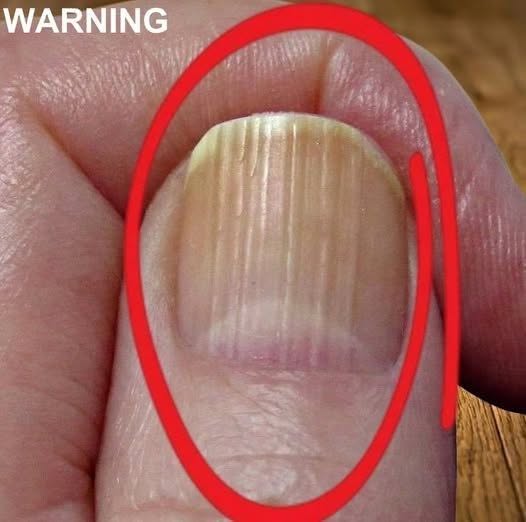
Have you ever looked closely at your fingernails and noticed small lines, ridges, grooves, or changes in their texture?
If you have, you’re certainly not alone.
Nails can change for many different reasons, and seeing a line or ridge doesn’t automatically mean that something is seriously wrong with your health. In fact, some nail changes are completely ordinary and may become more noticeable as people get older.
At the same time, nails can occasionally provide useful clues about what’s happening in the body. That’s why a new or unusual change may be worth paying attention to, particularly when it appears suddenly or is accompanied by other symptoms.
The key is understanding the difference between a common nail variation and a change that deserves professional attention.
Why Do Fingernails Have Lines?
Your fingernails are living structures connected to the skin beneath them.
New nail material develops in an area called the nail matrix, located beneath the skin near the base of the nail. As new cells are produced, the nail gradually grows forward.
Because nail growth occurs over time, interruptions or changes affecting the nail can sometimes leave visible marks.
These marks may appear as ridges, grooves, spots, discoloration, or differences in thickness.
However, a line on a nail has many possible explanations.
The appearance, direction, location, number of affected nails, and timing of the change can all provide useful information.
Vertical Ridges Are Often Common
One of the most common types of nail lines is a vertical ridge.
These ridges typically run from the base of the nail toward the fingertip.
For many people, vertical ridges become more noticeable with age. They can also simply be a normal feature of someone’s nails.
If you’ve had similar ridges for years and your nails otherwise look healthy, there may be little reason for concern.
That’s very different from a sudden, dramatic change in the appearance of several nails.
Horizontal Grooves Are Different
Some nail changes run horizontally across the nail.
These are sometimes called transverse grooves or Beau’s lines.
They can occur when nail growth is temporarily interrupted.
There are many potential reasons for this type of change, including illness, significant physical stress, injury, or other events that temporarily affect nail growth.
The presence of a horizontal groove doesn’t tell you exactly what caused it.
A healthcare professional would need to consider the person’s overall health and history.
Minor Injuries Can Leave Nail Marks
Something as simple as an injury can affect a nail.
You might accidentally hit your finger, close a drawer on it, pick at the cuticle, or experience repeated pressure from certain activities.
Depending on the injury, the nail may later develop a visible mark as it continues growing.
Sometimes the original incident happened weeks or months before the change becomes obvious.
That can make the mark seem mysterious.
Nail Care Can Also Matter
Frequent manicures, aggressive filing, picking at the cuticles, or repeated exposure to certain cosmetic products may affect the appearance of nails.
That doesn’t mean nail polish or manicures are inherently harmful.
Rather, nails and the surrounding skin can become irritated when they are repeatedly subjected to trauma or harsh treatment.
Gentle nail care can help maintain healthy-looking nails.
Avoid aggressively cutting or pushing back cuticles, and give damaged nails time to grow out when necessary.
Nutrition and Nail Health
Nutrition can influence the health of many tissues, including nails.
A balanced diet provides the body with proteins, vitamins, minerals, and other nutrients needed for normal growth.
However, it’s important not to assume that every nail ridge means you have a vitamin deficiency.
Social media frequently attributes specific nail patterns to specific nutritional deficiencies, but appearance alone generally isn’t enough to establish a diagnosis.
If a healthcare professional suspects a deficiency, they can consider your symptoms, diet, medical history, and, when appropriate, laboratory testing.
Dry or Brittle Nails Can Look Different
Nails can also become dry, brittle, or more fragile.
Repeated exposure to water, cleaning products, detergents, or other substances can contribute to changes in nail texture.
Age can also affect nail strength.
If your nails frequently split, peel, or break, consider whether environmental factors or nail-care habits could be contributing.
Using protective gloves during household cleaning and moisturizing the hands and nails regularly may help reduce dryness.
Don’t Automatically Assume the Worst
This is perhaps the most important point.
A line on your nail is not automatically a sign of a serious disease.
Online posts sometimes take a common physical feature and connect it directly to a frightening diagnosis.
That approach can cause unnecessary anxiety.
The human body naturally varies from person to person, and many visible changes have simple explanations.
Instead of asking, “What terrible disease does this mean?” it is more useful to ask, “Has this changed recently, and are there any other symptoms?”
When a Nail Change Deserves Attention
Although many nail changes are harmless, it is reasonable to have an unusual or persistent change evaluated when you’re concerned.
Consider speaking with a healthcare professional if you notice a new change that doesn’t seem to be improving, particularly if it affects only one nail or continues to progress.
You should also mention significant changes in nail color, thickness, shape, or texture if they occur without an obvious explanation.
The goal isn’t to assume that something serious is happening.
It’s simply to determine what is causing the change.
Dark Lines Should Be Evaluated Carefully
One type of nail change that deserves particular attention is a new dark or brown band running lengthwise along a nail.
There are many possible explanations for nail pigmentation, including harmless causes.
However, certain pigmented nail changes can sometimes require professional assessment.
This is especially relevant when a dark band is new, changes over time, becomes wider, or has an unusual appearance.
Don’t attempt to diagnose the cause yourself based solely on a photograph.
A dermatologist or other qualified healthcare professional can examine the nail and determine whether further evaluation is necessary.
One Nail Versus Several Nails
The number of nails affected can sometimes provide useful context.
A change affecting one nail may have a different explanation from a similar change appearing across many nails.
For example, an injury may affect one particular finger.
On the other hand, changes appearing across several nails could potentially reflect a broader factor.
This doesn’t mean that the number of affected nails provides a diagnosis.
It’s simply another piece of information a healthcare professional may consider.
Watch for Changes Over Time
One of the best things you can do is observe your nails over time.
Take a clear photograph if you notice something unusual.
You can then compare it with future photographs to see whether the appearance is changing.
This can be especially helpful because nails grow slowly, meaning changes may not be easy to track from memory.
If you regularly use nail polish, consider occasionally examining your natural nails so you can notice changes that might otherwise remain hidden.
Your Nails Are Only One Part of the Picture
A nail should never be considered in isolation when evaluating health.
If someone has an unusual nail change but feels completely well, the situation may be very different from someone who has a nail change accompanied by persistent fatigue, unexplained weight changes, swelling, pain, skin changes, or other symptoms.
A healthcare professional can consider all of these factors together.
That broader context is much more informative than a single symptom.
Avoid Self-Diagnosing From Viral Posts
Health-related social media content can be useful for starting conversations, but it shouldn’t replace professional medical advice.
A photograph of a nail may look similar to dozens of different conditions.
Lighting, camera settings, nail polish, skin tone, and image quality can also change how a nail appears.
Even trained professionals sometimes need an in-person examination to determine what’s happening.
If something concerns you, getting an appropriate evaluation is more reliable than trying to identify it through a viral post.
Healthy Nail Habits
There are several simple habits that can support healthy nails.
Keep nails clean and reasonably trimmed.
Avoid biting or picking them.
Protect your hands when working with harsh cleaning products.
Moisturize your hands and nails when they become dry.
Avoid excessive filing or aggressive cuticle treatment.
If you frequently use cosmetic nail products, follow the manufacturer’s instructions and give your nails time to recover if they become irritated or damaged.
These basic habits won’t prevent every nail condition, but they can reduce unnecessary damage.
What About Supplements?
If you notice nail ridges, it can be tempting to immediately purchase supplements advertised for stronger nails.
That isn’t always necessary.
Taking vitamins or minerals without knowing whether you actually need them may not solve the underlying issue.
A balanced diet is generally the best starting point.
If you suspect a nutritional problem, speak with a healthcare professional before taking high doses of supplements.
They can determine whether testing or dietary changes are appropriate.
Why Nail Changes Can Be Interesting Clues
Although nail lines shouldn’t be used for self-diagnosis, they can sometimes provide useful information.
Because nails grow gradually, they can reflect changes that occurred earlier in time.
A groove appearing several weeks after an illness, for example, may reflect a temporary interruption in nail growth.
This is one reason healthcare professionals may ask when you first noticed a change and whether you experienced an injury, illness, or other significant event beforehand.
When to Seek Prompt Medical Advice
Most nail changes aren’t emergencies.
However, if a nail change occurs alongside significant or rapidly developing symptoms, seek appropriate medical attention rather than relying on online explanations.
Likewise, a rapidly changing dark mark or other unexplained significant nail alteration should be assessed by a qualified professional.
The safest approach is to have concerning changes evaluated rather than trying to determine the cause from appearance alone.
Final Thoughts
Lines and ridges on your fingernails can certainly make you curious,