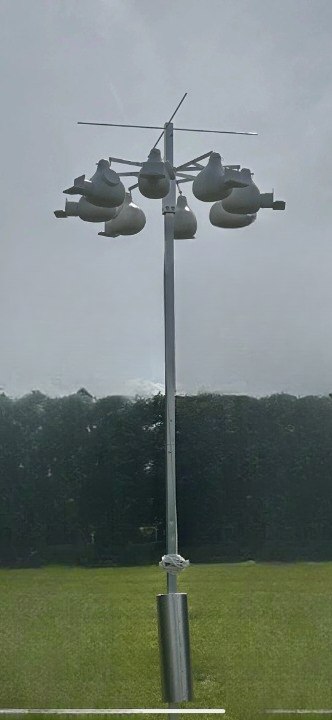
Mysterious White Devices on Tall Poles? Here’s What They Really Are
If you’ve walked through a park, nature reserve, or community green space lately, you may have noticed tall poles topped with several white, cup-shaped devices. From a distance, they can resemble security cameras, weather sensors, or even futuristic communication equipment.
Because these structures often appear in clusters and are installed several feet above the ground, many people naturally wonder what they’re for. Despite their unusual appearance, they usually have nothing to do with surveillance.
In many locations, these devices are part of scientific mosquito monitoring and management programs designed to protect public health.
Why They Look So Unusual
Unlike traditional insect traps, modern mosquito monitoring stations are built to withstand outdoor conditions while operating continuously throughout the season.
Mounted on poles, the devices remain above tall grass and vegetation, allowing them to attract mosquitoes more effectively while reducing the chance of accidental damage from people or animals.
Their clean white color also helps reduce heat absorption, allowing the equipment to function more consistently during hot summer weather.
They’re Designed to Monitor Mosquito Activity
Mosquito populations can increase rapidly after periods of warm temperatures and rainfall. Rather than waiting until residents report large numbers of biting insects, many local agencies monitor mosquito activity throughout the season.
Specialized traps may:
- Collect mosquito samples.
- Measure population density.
- Identify different mosquito species.
- Detect changes in seasonal activity.
- Support scientific research.
The information gathered helps experts determine where mosquito populations are increasing and whether additional control measures may be needed.
Why Monitoring Matters
Not every mosquito species poses the same level of concern.
Some species rarely bite humans, while others are capable of transmitting diseases under certain conditions. By identifying exactly which species are present in an area, health officials can make more informed decisions about mosquito management.
Monitoring also helps reduce unnecessary pesticide use by focusing efforts only where they’re needed.
How the Traps Work
Different mosquito traps operate in different ways, but many rely on combinations of natural attractants that mimic conditions mosquitoes seek when searching for a blood meal.
Some traps may use:
- Carbon dioxide
- Heat
- Light
- Airflow
- Specialized scent lures
Once mosquitoes enter the trap, they are safely contained for later identification by trained professionals.
The goal is surveillance—not elimination.
They Are Not Surveillance Cameras
One of the biggest misconceptions is that these white devices contain hidden cameras.
In reality, mosquito monitoring equipment generally has no interest in recording people or collecting video footage.
Instead, its purpose is to gather environmental and insect data that can support public health programs and scientific research.
Why They’re Installed in Parks
Parks often provide ideal mosquito habitat because they may contain:
- Trees
- Shrubs
- Wetlands
- Ponds
- Shaded areas
- Standing water after rainfall
Monitoring these locations helps researchers understand how mosquito populations change throughout the season.
Supporting Public Health
Mosquito surveillance allows local agencies to:
- Track seasonal trends.
- Identify emerging mosquito populations.
- Evaluate the effectiveness of control programs.
- Respond more quickly when mosquito numbers increase.
Early detection is often more effective than responding after populations become widespread.
What You Should Do If You See One
If you encounter one of these monitoring stations during a walk, it’s best to leave it undisturbed.
The equipment is typically placed in carefully selected locations where it can collect reliable scientific data.
Tampering with or moving a trap may interfere with ongoing research or reduce the quality of information being collected.
Protecting Yourself from Mosquitoes
Even with monitoring programs in place, reducing mosquito bites starts at home.
Simple preventive measures include:
- Emptying standing water from containers.
- Cleaning gutters regularly.
- Maintaining birdbaths and fountains.
- Wearing long sleeves when mosquitoes are active.
- Using insect repellent according to the product label.
- Repairing damaged window screens.
These habits help reduce mosquito breeding opportunities around your property.
Common Myths
Several misconceptions surround mosquito monitoring stations.
Myth: They’re hidden surveillance cameras.
Fact: Their primary purpose is collecting information about mosquito populations.
Myth: They release mosquitoes into the environment.
Fact: Monitoring traps are designed to capture mosquitoes, not release them.
Myth: They spray chemicals continuously.
Fact: Monitoring equipment generally collects data rather than applying insecticides.
Why Scientific Monitoring Is Important
Mosquito populations can change dramatically due to rainfall, temperature, humidity, and seasonal weather patterns.
Without reliable monitoring, officials would have far less information about where mosquitoes are increasing or which species are becoming more common.
Accurate data supports smarter, more targeted pest management strategies while helping communities prepare for changing environmental conditions.
Final Thoughts
Those unusual white devices mounted high on poles may look mysterious at first glance, but they’re often valuable tools used by scientists and public health professionals. Rather than watching people, they’re typically helping researchers better understand mosquito activity and improve community pest management efforts.
The next time you notice one during a walk through a park or nature area, you’ll know it’s more likely contributing to environmental research than recording your afternoon stroll.