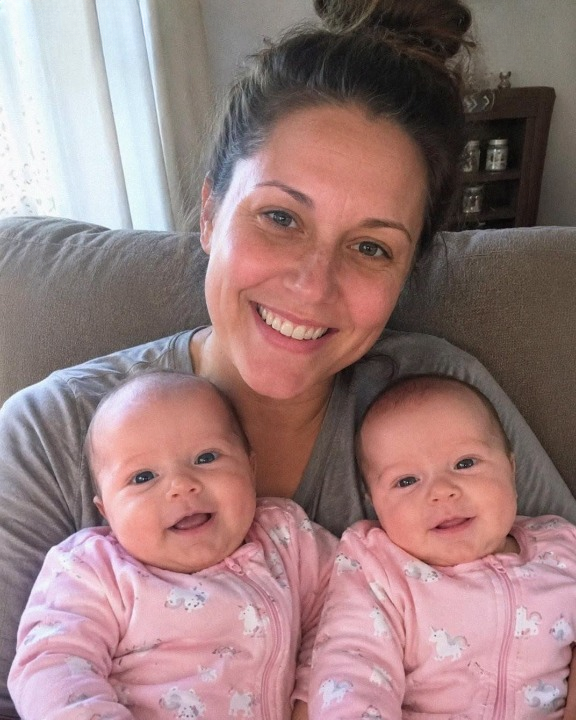
When my husband, Trevor, and I found out we were expecting twins, we were both overwhelmed.
At first, in the best possible way.
We had talked about children for years, but neither of us ever imagined that our first pregnancy would bring two babies at once.
I still remember the ultrasound technician smiling at us and saying, “Well, here’s one heartbeat.”
Trevor squeezed my hand.
Then she moved the wand slightly.
“And here’s the second.”
Trevor’s mouth actually fell open.
“Second?”
The technician laughed.
“Congratulations. You’re having twins.”
For the rest of that day, Trevor couldn’t stop smiling.
He called his parents.
He called his brother.
He told practically everyone at work before I had even decided how we wanted to announce the pregnancy.
That evening, he opened his laptop and started looking at double strollers.
“We’re going to need a bigger car,” he said.
“We’re going to need a bigger everything.”
He laughed.
“We’ve got this.”
I believed him.
For the first few months, Trevor seemed genuinely excited.
He came to appointments whenever he could.
He helped paint the nursery.
He spent nearly an entire Saturday assembling two cribs, although most of that time was spent complaining about the instructions.
He even started referring to the babies as “the girls” before we knew their sex.
Somehow, he turned out to be right.
Twin daughters.
We chose the names Sophie and Grace.
But as the pregnancy progressed, the excitement became mixed with fear.
My body struggled with carrying two babies.
By the third trimester, almost everything became difficult.
Sleeping.
Walking.
Standing.
Even getting comfortable on the couch felt like solving a complicated puzzle.
My ankles were constantly swollen, my back hurt, and I became exhausted after doing basic things around the house.
My doctor monitored me closely.
Eventually, she explained that the safest plan would be a scheduled C-section.
Trevor was sitting beside me when she gave us the date.
“Recovery is different for everyone,” the doctor explained, “but for the first few weeks, she’ll need significant support.”
Trevor nodded seriously.
“Absolutely.”
“She may have difficulty lifting, moving around quickly, and keeping up with two newborns.”
“I’ll be there.”
The doctor looked directly at him.
“Good. She shouldn’t be trying to manage everything alone.”
Trevor squeezed my hand.
“You won’t.”
I wish I could say that promise lasted longer than a week.
A few days later, I was sitting in our bedroom folding tiny baby clothes when Trevor walked in with an oddly cheerful expression.
“So,” he said, “I’ve got some news.”
I looked up.
“What?”
“My friends booked a place near the beach.”
I waited for the rest.
Trevor smiled.
“We’re leaving Thursday.”
For a moment, I genuinely thought I’d misunderstood him.
“Leaving?”
“Yeah. Just for a few days.”
I stared at him.
“My C-section is next week.”
“I know.”
I laughed nervously.
“Then what are you talking about?”
Trevor sat on the edge of the bed.
“It’s sort of a last trip before everything changes.”
I couldn’t believe him.
“Everything has already changed.”
“You know what I mean.”
“No, actually, I don’t.”
He sighed.
“Once the babies are here, we’re not going anywhere for a long time.”
“Correct.”
“So I want one last chance to relax.”
I stared at him.
“Trevor, I can barely walk from this room to the kitchen without stopping.”
“I’ll only be gone a few days.”
“What if something happens early?”
“It won’t.”
“You don’t know that.”
“The surgery is scheduled.”
“Babies don’t read calendars.”
He rolled his eyes.
That tiny gesture hurt more than I expected.
“You are seriously going to leave your wife, who is carrying twins and about to have major surgery, because you need to relax?”
Trevor stood.
“Why are you making this sound so dramatic?”
I stared at him.
“Because it is dramatic.”
“I’ve been stressed too.”
There it was.
The sentence I would remember for a very long time.
“I need a break before the crying and diapers start.”
I lowered the little onesie in my hands.
“What do you think I need?”
He didn’t answer.
“You get to take a beach vacation because you’re tired of anticipating the babies. Where exactly am I supposed to go to relax from being pregnant with them?”
Trevor rubbed his forehead.
“I’m coming back before the C-section.”
“You don’t know that.”
“I do.”
“Flights get delayed.”
“I’ll manage.”
“Weather changes.”
“I’ll manage.”
“Or I could go into labor.”
“You’re overthinking this.”
I stopped arguing.
Not because I agreed.
Because I suddenly realized Trevor had already decided.
His suitcase was packed the next morning.
I stood in the hallway watching him zip it closed.
“Please don’t go.”
Trevor looked at me.
“I’ll be back.”
“That isn’t what I said.”
He kissed my forehead.
“You worry too much.”
Then he left.
The house felt enormous after the front door closed.
I called my mother.
I didn’t intend to cry.
I started anyway.
She arrived less than an hour later carrying an overnight bag.
“I’m staying.”
“Mom, you don’t have to.”
“I know.”
She looked toward the door.
“Someone does.”
For the next few days, Mom helped with everything Trevor should have been doing.
She cooked.
She washed laundry.
She drove me to appointments.
She helped me stand up when my back hurt too badly.
Meanwhile, Trevor sent cheerful messages.
Photos of the beach.
Photos of seafood dinners.
Photos with his friends.
One picture showed him holding a colorful cocktail with the caption:
Last freedom before diaper duty.
I stared at it for a long time.
Then I put my phone down.
Two days before the scheduled C-section, my doctor called.
There had been a change.
One of the babies was showing signs that made her uncomfortable waiting until the original date.
“We’re moving the procedure forward,” she said.
My stomach dropped.
“To when?”
“Tomorrow morning.”
I immediately called Trevor.
No answer.
I called again.
Nothing.
Then I texted:
Doctor moved the C-section to tomorrow morning. Call me immediately.
Forty minutes later, he responded.
What? That’s early.
I stared at the screen.
Yes.
Then:
I’m looking at flights.
I wanted to believe he’d make it.
The next morning, Mom drove me to the hospital.
Trevor called while I was being prepared.
“My flight got delayed.”
I closed my eyes.
“How delayed?”
“I don’t know.”
“Trevor.”
“I’m trying.”
I looked at my mother sitting beside me.
She held my hand.
“Where are you right now?”
“Still at the airport.”
He was nearly twelve hundred miles away.
I knew.
He knew.
There was no realistic way he was making it back in time.
“I’m sorry,” he said.
I didn’t answer.
“Can we delay the surgery?”
My anger returned instantly.
“No.”
“I just thought—”
“The doctor moved it because the babies need to come out.”
“Okay.”
There was a pause.
“Send pictures.”
I ended the call.
An hour later, Sophie and Grace were born.
Healthy.
Tiny.
Beautiful.
The moment I heard them cry, everything else disappeared.
Mom cried beside me.
I cried too.
For a while, I didn’t think about Trevor at all.
Then a nurse asked, “Would Dad like to come in?”
Mom and I looked at each other.
“He isn’t here,” I said.
The nurse’s expression changed.
“I’m sorry.”
I hated how much that embarrassed me.
Not because I had done anything wrong.
Because Trevor had chosen to be absent.
The following days were a blur of feedings, pain medication, nurses, paperwork, and almost no sleep.
Trevor returned to town the day after the girls were born.
But by then, something inside me had already shifted.
He called repeatedly.
I answered once.
“I’m home,” he said.
“I’m aware.”
“When are you being discharged?”
“Tomorrow.”
“I’ll come pick you up.”
“No.”
There was silence.
“What?”
“My mother is taking us home.”
“Come on.”
“I don’t want to argue.”
“They’re my daughters too.”
“Exactly.”
I ended the call.
That night, while Sophie slept beside me and Grace made tiny noises in her bassinet, I made a decision.
Trevor kept talking about responsibility as if it were something that would begin once he returned.
It had already begun.
And I needed him to understand that being a father wasn’t a role he could enter when it became convenient.
So I called someone.
Not a lawyer.
Not his parents.
Someone Trevor respected more than almost anyone.
His grandfather.
Arthur.
Arthur was eighty-one years old, a retired school principal, and the man who had practically raised Trevor during parts of his childhood.
Trevor adored him.
More importantly, Arthur had very strong opinions about family responsibility.
I hadn’t told him what happened because I knew Trevor wouldn’t want him to know.
Now I called.
“Arthur?”
“How are my great-granddaughters?”
“They’re beautiful.”
“And you?”
I hesitated.
“That’s actually why I’m calling.”
I told him everything.
The vacation.
The doctor’s warning.
The changed surgery date.
The missed birth.
Arthur was silent for so long that I thought the call had disconnected.
“He’s home now?” he finally asked.
“Yes.”
“Good.”
His voice changed.
“What time are you being discharged tomorrow?”
The next afternoon, Mom drove me home with Sophie and Grace.
Walking into the house was emotional.
Two days earlier, I had left pregnant.
Now there were two car seats sitting in the living room.
Mom helped me settle in.
Then there was a knock at the door.
Arthur arrived carrying a small suitcase.
I looked at it.
“What’s that?”
“I’m staying for a few days.”
I smiled.
“You don’t need to do that.”
“I know.”
Apparently everyone except my husband understood that sentence.
Arthur sat in the living room waiting.
Trevor had texted that he would come by around six.
At six fifteen, the front door opened.
Trevor walked in carrying his vacation suitcase.
He looked tanned.
Rested.
Almost cheerful.
“I’m finally—”
Then he saw Arthur.
The suitcase slipped from his hand.
“No.”
Arthur raised an eyebrow.
Trevor stared.
“Grandpa? What are you doing here?”
Arthur folded his hands over the top of his cane.
“Waiting for you.”
Trevor looked at me.
“You called him?”
“I did.”
His face reddened.
“Why?”
Arthur answered.
“Because apparently someone needed to explain adulthood to you.”
Trevor looked like he wanted the floor to open beneath him.
“Grandpa, this isn’t—”
“Did you leave your wife days before she was scheduled to deliver twins?”
Trevor sighed.
“Yes, but—”
“Did her doctor tell you she needed help?”
“Yes.”
“Did she ask you not to go?”
Trevor looked at the floor.
“Yes.”
“And did you go anyway?”
“Yes.”
Arthur nodded.
“Then there is no ‘but.'”
The room became silent.
Trevor looked toward me.
“I was coming back.”
Arthur’s voice remained calm.
“You planned to.”
“Exactly.”
“And you discovered that plans fail.”
Trevor didn’t answer.
Arthur continued.
“That’s why responsible people don’t take unnecessary risks when other people depend on them.”
Trevor dropped onto the couch.
“I already feel terrible.”
“Good.”
I glanced at Arthur.
He wasn’t shouting.
That somehow made the conversation more powerful.
“You missed the birth of your daughters because you wanted to relax before becoming a father.”
Trevor rubbed both hands over his face.
“I know.”
“No. I don’t think you do.”
Arthur pointed toward the bassinets.
“Fatherhood didn’t begin when you walked through that door tonight.”
Trevor looked toward the babies.
“It began months ago.”
His eyes filled slightly.
“I made a mistake.”
I finally spoke.
“Yes.”
Trevor turned toward me.
“I’m sorry.”
I shook my head.
“I don’t need another apology.”
“What do you want?”
“Change.”
He looked confused.
“You don’t get to come back and act like everything starts fresh because your vacation is over.”
“I wasn’t planning to.”
“Then show me.”
Arthur nodded.
“Good answer.”
For the first time, Trevor looked genuinely ashamed.
He stood slowly and walked toward the bassinets.
“Can I see them?”
I hesitated.
Then nodded.
He looked down at Sophie first.
His face changed.
Then Grace.
“They’re so small.”
“Yes.”
He started crying.
I had never seen Trevor cry like that.
“I’m sorry I wasn’t there.”
I believed him.
But regret wasn’t enough.
That night, Arthur stayed in the guest room.
Trevor didn’t get much sleep.
For the first time, he participated in every feeding.
He changed diapers.
He brought me water.
He helped me move carefully while I recovered from surgery.
At three in the morning, both babies were crying, and Trevor looked completely overwhelmed.
“This is impossible.”
I stared at him.
“This is Tuesday.”
He actually laughed.
Then he picked up Grace.
Over the next several days, something changed in him.
Not magically.
There were still moments when I had to remind him that he couldn’t disappear into another room simply because he was tired.
But he started understanding the scale of what he’d left me to face.
One morning, while Arthur was making coffee, Trevor sat beside me.
“I’ve been thinking.”
“That’s promising.”
He smiled weakly.
“I don’t know why I thought I deserved a vacation more than you deserved help.”
I didn’t answer.
“I think I kept seeing the pregnancy as something happening to you.”
“Because it was.”
“I know.”
He sighed.
“But I forgot the responsibility was happening to both of us.”
That was the first thing he said that made me believe he truly understood.
We started couples counseling several weeks later.
I needed it.
So did he.
Trust had been damaged.
Missing the birth wasn’t something I could simply erase.
But Trevor stopped defending his decision.
That mattered.
Months later, Arthur visited again.
Trevor was sitting on the floor surrounded by diapers and baby toys.
Sophie was asleep on his chest.
Grace had somehow grabbed a handful of his hair.
Arthur smiled.
“Relaxing?”
Trevor looked up.
“Best vacation I’ve ever had.”
I laughed.
Then Trevor looked at me.
“Too soon?”
“Very.”
We both smiled.
People sometimes ask whether inviting Arthur over was petty.
Maybe a little.
But I didn’t invite him to humiliate Trevor.
I invited him because Trevor needed to hear the truth from someone he respected.
He had treated family responsibility like something he could postpone until he felt ready.
The twins taught him otherwise.
Life doesn’t always wait for the convenient date.
Babies don’t arrive according to vacation schedules.
And marriage doesn’t work when one person gets to escape the difficult parts while the other carries them alone.
When Trevor returned from his beach trip, he thought the surprise waiting in our living room was his grandfather.
It wasn’t.
The real surprise was realizing that he had come home to a family that had already learned how to manage without him.
If he wanted to belong in it, he had to do more than come back.
He had to finally show up.