For most of our fifteen years of marriage, I never expected gifts from my husband, Robert.
It wasn’t because he was unkind or uncaring. In many ways, he was dependable, hardworking, and always made sure our household bills were paid on time. But when it came to spending money on anything he considered unnecessary, Robert was incredibly cautious.
Flowers, in his opinion, were beautiful for only a few days before ending up in the trash.
Greeting cards were read once and tucked into a drawer.
Jewelry was an expense he could never justify.
Whenever birthdays or anniversaries came around, he would smile apologetically and remind me, “I’d rather save for our future than spend money on things that don’t last.”
Over the years, I accepted his perspective, even if part of me occasionally wished for a small surprise or thoughtful keepsake.
Whenever friends shared stories about weekend getaways, anniversary dinners, or beautifully wrapped presents from their spouses, I genuinely felt happy for them. At the same time, I quietly wondered what it might feel like to experience something similar.
Still, our marriage wasn’t defined by expensive gifts.
We built a comfortable life together through patience, hard work, and shared goals.
Robert worked for the county maintenance department, and although our income covered our needs, we carefully planned every expense.
If a household appliance stopped working, Robert repaired it himself whenever possible.
If furniture became worn, he restored it instead of replacing it.
His practical nature became one of the qualities I learned to appreciate, even if it occasionally tested my patience.
Then, several months before my thirty-fifth birthday, something about Robert began to change.
His daily routine became unusually demanding.
He started leaving the house before sunrise and often returned long after dark.
At first, I assumed his department was handling seasonal projects or emergency repairs.
But as the weeks passed, I noticed details that didn’t seem to fit.
His hands were covered with small scratches and calluses.
His work clothes carried traces of dust and sawdust rather than the usual signs of outdoor maintenance.
Most noticeably, he seemed exhausted.
One evening, while he quietly prepared a late dinner after returning home, I finally asked what had been on my mind for weeks.
“Robert, are you all right?”
He looked up briefly before focusing on the dishes again.
“Of course.”
“You’ve been working longer hours than ever.”
“It’s temporary.”
“Temporary because of work?”
He hesitated for only a moment.
“Something like that.”
Although his answer sounded sincere, I couldn’t shake the feeling that he was keeping something to himself.
Over the following weeks, our conversations became shorter.
Not because we argued, but because Robert always seemed physically drained.
More than once I suggested taking a day off to rest.
He simply smiled.
“Soon,” he would say.
“Everything will slow down soon.”
As my birthday approached, I expected nothing different from previous years.
Perhaps we’d enjoy dinner together at home.
Maybe we’d watch one of our favorite movies.
That would have been more than enough.
Instead, Robert surprised me.
On the morning of my birthday, he smiled and said,
“Tonight, I’d like you to wear your favorite dress.”
I laughed.
“You’re making this sound very formal.”
“It deserves to be.”
Those words stayed with me all day.
That evening, our close friends and family gathered for a small birthday celebration at home.
After dinner, everyone sang “Happy Birthday” while Robert disappeared briefly into another room.
When he returned, he carried an elegant cream-colored gift box tied with a satin ribbon.
The room became unexpectedly quiet.
He placed the box in front of me.
“I’ve been looking forward to this moment,” he said.
Carefully, I untied the ribbon and lifted the lid.
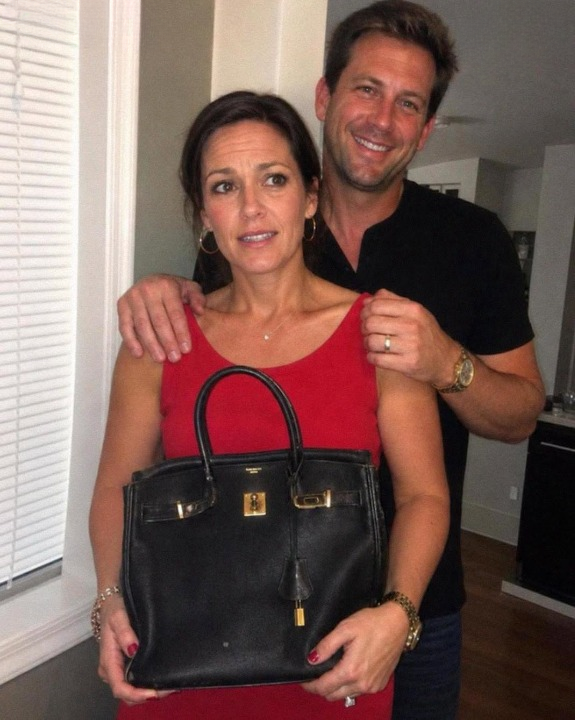
Inside rested a beautifully crafted black leather handbag.
Its classic design and exceptional craftsmanship immediately caught everyone’s attention.
My sister leaned toward me.
“Elaine,” she whispered with surprise, “that’s an incredible bag.”
Even before anyone said another word, I knew it was something special.
I gently lifted it from the box.
The leather felt remarkably soft.
Almost too soft.
Instead of the firm texture of a brand-new handbag, it carried the smooth character that develops only after years of careful use.
Curious, I examined it more closely.
Inside one of the interior pockets, my fingertips brushed against a folded piece of paper tucked behind the lining.
Without drawing attention, I slipped it back into place.
I smiled, thanked Robert warmly, and continued celebrating with our guests, but my thoughts kept returning to the unexpected discovery.
Where had this handbag come from?
Why did it seem to have such a history?
Most importantly, why had Robert, who had avoided expensive gifts throughout our marriage, suddenly chosen this one?
After our guests left and the house grew quiet, I carried the handbag into the kitchen where Robert was washing dishes.
He looked up and smiled.
“Did you like it?”
“I did,” I answered honestly.
“It’s beautiful.”
Then I placed the folded note on the counter between us.
“I also found this.”
Robert’s expression changed immediately.
He rested both hands on the countertop and took a slow breath.
“I wondered if you’d find it.”
The note wasn’t a secret message from another woman, as my anxious imagination had briefly feared.
Instead, it contained the name and contact information of a charitable organization that helped preserve meaningful personal belongings before they were donated to raise funds for families experiencing financial hardship.
Robert quietly explained everything.
For months, he had been volunteering after work at the organization, helping restore donated furniture, repairing household items, and organizing fundraising events.
The handbag had been donated by the family of an elderly woman who had requested that it be sold only to someone who would truly appreciate its story and craftsmanship.
Robert had purchased it through the charity auction.
Every dollar he spent supported families facing unexpected medical expenses and housing challenges.
“I didn’t want to tell you beforehand,” he admitted softly.
“I hoped the gift would represent more than something expensive. I wanted it to remind us that beautiful things can also create opportunities to help others.”
His months of long evenings, sore hands, and quiet exhaustion suddenly made perfect sense.
The scratches on his hands hadn’t come from overtime at work.
They came from repairing donated furniture and loading supplies into delivery trucks for families in need.
The gift wasn’t simply a handbag.
It was the result of months of generosity, patience, and hard work dedicated to making a difference in other people’s lives while planning a meaningful surprise for my birthday.
Looking back, I realized the greatest gift Robert had given me wasn’t the handbag itself.
It was the reminder that love isn’t always expressed through grand gestures or expensive purchases.
Sometimes it’s found in quiet sacrifices, thoughtful intentions, and acts of kindness that happen long before anyone notices them.