My Family Took Credit for the Anniversary Party I Paid For — Then I Finally Stopped Covering the Cost
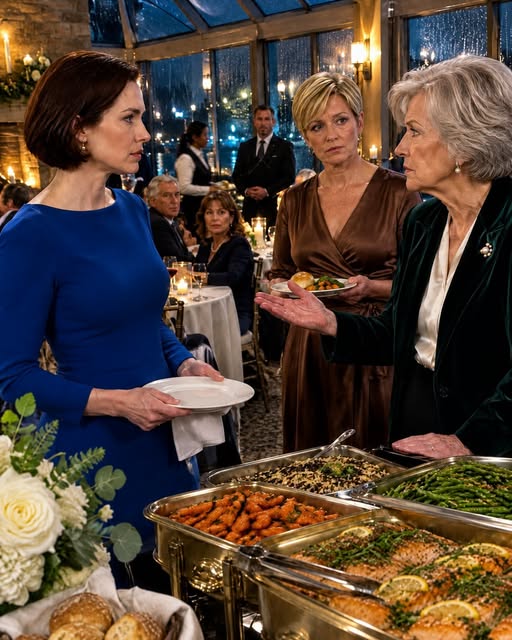
I was standing in a private dining room wearing a red dress when my mother looked at the plate in my hand and said something I had heard in one form or another for most of my life.
“Olivia, don’t take too much. You didn’t pay for this.”
The room became noticeably quieter.
I looked down at the simple white plate I was holding.
Across the table, my sister Camille was already sitting comfortably with a full plate in front of her. She gave me a brief smile before looking away.
“Let the guests go first,” my mother added.
I didn’t argue.
I didn’t explain.
I didn’t remind her that I had paid the restaurant deposit.
I didn’t tell anyone that my card was still on file for the remaining balance.
Instead, I looked around the room.
The candles.
The flowers.
The cream-colored tablecloths.
The menu my father had helped choose.
The photographs arranged near the fireplace.
Every detail had been selected because I wanted my parents to have a beautiful celebration for their fortieth wedding anniversary.
And nearly every detail had been paid for by me.
My family simply didn’t know that.
For a moment, I considered telling them.
Then I realized something.
I didn’t want to explain anymore.
I wanted to see what happened when I stopped quietly fixing everything.
The Daughter Who Always Handled Things
In my family, I had always been the dependable one.
If something needed organizing, someone called me.
If a relative needed help finding a hotel, I handled the reservation.
If a holiday dinner needed planning, I made the shopping list.
If someone forgot an important date, I remembered it.
If an unexpected bill appeared, I often found a way to take care of it.
None of these things seemed particularly important when I was younger.
I thought that was simply what families did.
You helped each other.
You contributed when you could.
You stepped in when someone needed assistance.
Over time, however, something changed.
Helping became expected.
And because I rarely complained, people began assuming I would always handle whatever needed to be handled.
My sister Camille was different.
She was outgoing, confident, and naturally comfortable being the center of attention.
She was good at photographs.
She was good at speeches.
She could walk into a room and make people feel as though something important was happening.
I wasn’t like that.
I was quieter.
I preferred working behind the scenes.
For a long time, I didn’t mind.
But eventually, I began noticing something uncomfortable.
Camille received credit for things I had arranged.
And I received responsibility for things she had promised to do.
Still, I kept helping.
Partly because I loved my parents.
Partly because I didn’t want family disagreements.
And partly because I had spent so many years believing that asking for recognition somehow made me selfish.
That belief had started when I was a child.
The Birthday I Never Forgot
I was nine years old when I first remember feeling that way.
It was my birthday.
Nothing extravagant.
Just a small gathering at home with a few relatives and some children from school.
There was cake.
There were balloons.
There were presents.
I remember being excited because my mother had bought a cake with white frosting and strawberries on top.
When everyone started eating, I reached toward a slice.
Before I could take it, my mother stopped me.
“Wait.”
I looked at her.
She said, in front of several people, “Don’t be greedy. Other people haven’t had any yet.”
I remember feeling embarrassed.
I wasn’t trying to take another piece.
I hadn’t even eaten my first.
But I didn’t argue.
I stepped back.
One of the other children looked at me.
I remember pretending not to care.
That moment may have seemed small to everyone else.
To me, it became a lesson.
Don’t ask for too much.
Don’t take up too much space.
Don’t expect anyone to notice what you need.
And most importantly, don’t make things uncomfortable.
I carried that lesson for years.
When Helping Became My Role
As I got older, I became increasingly useful to my family.
I was the person who checked reservation details.
The person who remembered birthdays.
The person who organized group dinners.
The person who paid a deposit when everyone else said they would “pay me back later.”
Sometimes they did.
Often they didn’t.
I rarely followed up.
It seemed easier to let small amounts go.
But eventually the amounts weren’t always small.
There were family trips.
Holiday gatherings.
Birthday celebrations.
Hotel rooms.
Restaurant deposits.
Flowers.
Gifts.
Transportation.
I wasn’t wealthy enough for these expenses to be insignificant.
I simply became very good at making things work.
And because I didn’t complain, people stopped asking whether I could afford it.
They simply assumed I could.
The Anniversary
When my parents’ fortieth anniversary approached, my mother called me.
“Olivia, you know how much this means to your father.”
“I know.”
“We should do something special.”
“Absolutely.”
There was a pause.
Then she said the sentence I had heard many times before.
“You’re so good at organizing these things.”
I already knew what was coming.
“Would you mind handling the arrangements?”
I should have asked what the budget was.
I should have asked who was contributing.
I should have established a clear limit.
Instead, I said yes.
Within a few days, I had found a restaurant called Alderwood with a private dining room called the Hearthstone Room.
It was elegant without being excessively formal.
The room had a fireplace, large windows, and enough space for our family and my parents’ close friends.
My father loved the menu.
My mother liked the atmosphere.
I paid the deposit.
Then I placed my card on file for the remaining balance.
I ordered flowers.
I arranged the table settings.
I selected photographs for a small display.
I worked with the restaurant to create a menu that included several of my father’s favorite dishes.
I even arranged for a cake.
I wanted the evening to be memorable.
Not because I wanted praise.
Because they were my parents.
And I loved them.
Then Camille Became Involved
A few weeks before the event, Camille called me.
“I’ve been thinking about the anniversary.”
“Okay.”
“I think we should make it more impressive.”
“What did you have in mind?”
She started listing ideas.
More flowers.
Additional decorations.
A larger dessert selection.
Different seating.
A larger guest list.
Some of the changes were fine.
Others increased the cost.
I reminded her that I was already covering the main arrangements.
“We can discuss the extra expenses,” I said.
She laughed.
“Don’t worry about it. We’ll figure it out.”
That should have been my warning.
Instead, I continued.
Then Camille began telling people she was organizing the anniversary.
At first, I assumed it was harmless.
Maybe she was simply excited.
Then I saw a post she had made online.
She had written about how special it was to be planning a celebration for her parents.
Friends commented.
“How thoughtful!”
“Your parents must be so proud.”
“What a beautiful daughter.”
My mother commented too.
“My girl.”
I stared at the screen.
My name wasn’t mentioned.
I almost wrote a comment explaining everything.
Then I closed the app.
It wasn’t worth it.
At least, that’s what I told myself.
The Seating Arrangement
A few days before the party, Camille sent me the updated seating arrangement.
I looked at it carefully.
My parents were at the main table.
Camille and her family were beside them.
Several relatives were seated near the fireplace.
The guests had comfortable places.
I looked for my own name.
It wasn’t there.
I called Camille.
“Where am I sitting?”
She sounded distracted.
“Oh, you’ll find somewhere.”
“What does that mean?”
“You’ll be moving around helping people anyway.”
I was silent.
She continued.
“You’re better at that stuff than I am.”
I looked at the reservation confirmation on my computer.
My name was clearly listed as the person who had made the booking.
Yet somehow, there wasn’t even a chair assigned to me.
I could have changed it.
I could have demanded a seat.
I could have confronted her.
Instead, I said:
“Okay.”
I hung up.
That was the moment I should have realized how far things had gone.
But I still didn’t want a fight.
The Evening of the Celebration
The night of the anniversary arrived.
I wore a red dress.
It wasn’t extravagant.
It was simply something I liked.
For once, I wanted to walk into a room without immediately becoming the person carrying boxes, checking reservations, or asking whether everyone had arrived.
I wanted to enjoy the celebration too.
When I entered the restaurant, several guests were already there.
The room looked beautiful.
The flowers were exactly as I had imagined.
The candles were arranged around the tables.
The photographs of my parents’ younger years were displayed near the fireplace.
For a moment, I felt proud.
Then Camille walked over.
“Everything looks great.”
“Thank you.”
She smiled.
“You really pulled it together.”
I almost laughed.
But I didn’t.
The restaurant staff began preparing dinner.
Guests settled into their seats.
My parents looked happy.
That was what mattered.
At least, I tried to tell myself that.
Camille’s Toast
Before dinner, Camille stood up.
She tapped her glass lightly.
Everyone turned toward her.
“I wanted to say a few words about Mom and Dad.”
My parents smiled.
Camille began talking about their marriage.
She mentioned family memories.
She talked about how important they had been to her.
Then she said:
“When I started planning this celebration, I wanted every detail to reflect how much they mean to me.”
People applauded.
My mother looked at her proudly.
Someone called out:
“Beautiful!”
My father smiled.
“What would we do without you, Camille?”
I stood near the edge of the room.
I listened.
She mentioned the flowers.
The room.
The menu.
The photographs.
The little details.
Almost everything she described had been arranged by me.
Not once did she say my name.
I looked at my mother.
She didn’t look toward me either.
For years, I had told myself that recognition didn’t matter.
But standing there, listening to someone else receive credit for hours of work I had done, I realized something.
It wasn’t really about the credit.
It was about being seen.
The Plate
Dinner was announced.
People began lining up.
I picked up a plate.
Before I could serve myself, my mother spoke.
“Olivia, don’t fill your plate.”
I looked at her.
“You didn’t pay for this.”
She said it casually.
Almost as though it were an ordinary reminder.
But something about those words hit differently that night.
Maybe it was because I was already tired.
Maybe it was because of everything that had happened during the previous weeks.
Or maybe it was because I suddenly remembered being nine years old.
Standing beside a birthday cake.
Being told not to take what wasn’t mine.
I looked around the room.
The flowers I had ordered.
The room I had reserved.
The menu I had selected.
The deposit I had paid.
The card that was still on file.
I realized that I had spent years allowing people to believe that I had no right to the very things I was providing.
And suddenly, I didn’t want to do it anymore.
I Didn’t Argue
I didn’t raise my voice.
I didn’t accuse anyone.
I didn’t tell the guests what had happened.
I simply put the plate down.
My sister approached me.
“Don’t do this tonight.”
“Do what?”
“Make everything uncomfortable.”
I looked at her.
“I’m not.”
“Then stay.”
I shook my head.
“I’m going home.”
She seemed surprised.
“You’re serious?”
“Yes.”
My mother looked over.
“Olivia, this is your father’s anniversary.”
“I know.”
“Don’t make this about yourself.”
I took a breath.
“I’m not making it about myself.”
Then I said something I had rarely said to my family.
“I’m simply choosing not to handle everything anymore.”
There was silence.
I walked to the coat rack.
I put on my coat.
And I left.
The Phone Call
Once I was outside, I sat in my car.
I didn’t drive away immediately.
My hands were shaking.
Not because I was angry.
Because I was doing something unfamiliar.
I was setting a boundary.
For most of my adult life, I had believed that boundaries were a form of rejection.
That if I said no, I was letting people down.
That if I asked others to contribute, I was being difficult.
That if I wanted credit for my work, I was being vain.
I finally understood that none of those things were necessarily true.
A boundary isn’t an attack.
Sometimes it’s simply information.
It tells people what you are and aren’t willing to do.
I took out my phone and called Daniel, the restaurant manager.
He answered quickly.
“Hello, Olivia.”
“Hi, Daniel. I need to make a change to the reservation.”
There was a pause.
“Of course.”
“I won’t be covering the remaining balance.”
He understood immediately.
“You are the person who made the reservation and placed the card on file.”
“That’s correct.”
“Would you like us to speak with the family about settling the remaining amount?”
I thought for a moment.
“Yes.”
He assured me that the restaurant would handle it professionally.
I thanked him.
Then I drove home.
The Conversation at the Restaurant
I wasn’t there when the restaurant presented the bill.
I only learned what happened later.
According to Daniel, the staff approached my parents after the meal.
The restaurant had to explain that the remaining balance needed to be settled.
My mother was surprised.
She apparently asked why.
Daniel explained that the original payment arrangement had been changed by the person who made the reservation.
Camille reportedly became quiet.
She had assumed everything had already been handled.
The problem was that no one had actually confirmed who would pay the additional expenses she had requested.
The upgraded flowers.
The extra items.
The additional guests.
The changes she had made.
For the first time, the family had to confront the practical reality of the evening.
Someone had to pay for it.
And that someone was no longer automatically going to be me.
The Call From My Mother
My phone rang later that night.
It was my mother.
I almost didn’t answer.
But I did.
“Olivia, what happened?”
“I went home.”
“We noticed.”
I stayed quiet.
“Why would you leave your father’s anniversary?”
“I didn’t want to cause an argument.”
“Then why did you change the payment?”
I took a breath.
“Because I was the person paying for the event, and I was treated as though I wasn’t even entitled to sit down and eat.”
There was silence.
Then my mother said:
“I didn’t mean it that way.”
“Maybe you didn’t.”
“Then why did you do this?”
I answered honestly.
“Because I realized I had been doing too much for too long without saying anything.”
Another pause.
“I thought you were happy to help.”
“I was happy to help.”
I stopped.
“But being willing to help doesn’t mean I don’t deserve respect.”
She didn’t respond immediately.
My Sister’s Reaction
Camille called the following afternoon.
Her first words were:
“You embarrassed everyone.”
I sat quietly.
“I didn’t embarrass anyone.”
“You left in the middle of the party.”
“I left after dinner began.”
“You changed the payment.”
“Yes.”
“Why?”
“Because I was paying for an event where I wasn’t even treated like a guest.”
She became defensive.
“I didn’t know you felt that way.”
“I know.”
“Then you should have told me.”
I thought about that.
She was right about one thing.
I should have spoken up sooner.
But I also realized something else.
My silence had allowed everyone to become comfortable.
I had trained people to expect me to handle things.
That didn’t mean they were entitled to continue expecting it forever.
“I should have said something earlier,” I told her.
She became quiet.
“Yes,” she said eventually.
It was the first time either of us had acknowledged it.
The Conversation With My Father
My father called a few days later.
His tone was different.
Less defensive.
More thoughtful.
“I heard what happened.”
“I’m sorry about the way the evening ended.”
“So am I.”
There was a long pause.
Then he said:
“I didn’t realize how much you had handled.”
I smiled sadly.
“That’s because I didn’t tell you.”
“Why didn’t you?”
I thought about the birthday cake.
The holidays.
The reservations.
The family trips.
The countless little things.
“Because I didn’t want to make anyone uncomfortable.”
My father sighed.
“Maybe we became too comfortable.”
That sentence meant more to me than he probably realized.
A Different Kind of Family Relationship
Things didn’t change overnight.
Real families rarely work that way.
There were awkward conversations.
There were misunderstandings.
There were moments when someone would still say, “Olivia can handle it.”
And I would respond:
“No, I can’t take that on.”
At first, it felt strange.
Then it became easier.
If someone wanted a family dinner, we discussed the budget.
If everyone wanted to travel, everyone contributed.
If my sister wanted a particular event, she helped organize it.
If my parents needed assistance, I helped when I genuinely could.
But I stopped automatically becoming the person responsible for everything.
And something surprising happened.
People began appreciating my help more.
Not because I demanded praise.
Because it was no longer invisible.
Camille and I
My relationship with Camille also changed.
We weren’t suddenly best friends.
We still disagreed.
We still had different personalities.
But we began having more honest conversations.
One day, she apologized.
Not dramatically.
Not with a speech.
She simply said:
“I got used to you taking care of things.”
“I know.”
“I shouldn’t have.”
“No.”
She looked uncomfortable.
“I’m sorry.”
I accepted the apology.
That didn’t mean everything was forgotten.
It meant we could move forward.
There is a difference between forgiving someone and pretending nothing happened.
I wanted a healthier relationship with my sister.
That required honesty.
What Happened to the Red Dress
I still have the red dress.
It’s hanging in my closet.
For a while, I considered getting rid of it.
Every time I saw it, I remembered that night.
Eventually, I changed my mind.
I realized the dress wasn’t connected to the humiliation.
It was connected to the moment I finally stood up for myself.
I had bought it because I wanted to feel visible.
And, in a strange way, that is exactly what happened.
Not because everyone suddenly applauded me.
Not because I became the center of attention.
But because I finally saw myself clearly.
I was someone who had been giving too much.
Someone who had confused keeping peace with keeping healthy relationships.
Someone who had learned to stay quiet when she should have spoken.
That night changed that.
What I Wish I Had Done Earlier
If I could go back, I wouldn’t change the decision to leave.
I would change something much earlier.
I would speak up.
I would tell my family when something was bothering me.
I would ask people to contribute.
I would say no when I couldn’t afford something.
I would ask for a seat at the table instead of assuming I didn’t deserve one.
And I would stop believing that being useful was the same thing as being loved.
That’s perhaps the biggest lesson I learned.
You shouldn’t have to constantly provide something to prove that you belong.
Family should be about more than what one person can organize, pay for, or fix.
The Real Cost of Always Saying Yes
Money wasn’t actually the most important part of what happened.
The financial expense could be calculated.
The deposits.
The decorations.
The food.
The reservations.
The additional requests.
Those numbers could eventually be sorted out.
The emotional cost was harder to measure.
Every time I said yes when I wanted to say no, I taught myself that my own needs could wait.
Every time someone took credit for something I had done and I stayed quiet, I made it easier for the pattern to continue.
Every time I paid a bill without discussing it, I removed someone else’s reason to consider their responsibility.
I don’t blame my family for every part of that.
I played a role too.
I allowed the pattern to continue because I was afraid of what would happen if I changed it.
But changing it was necessary.
What I Learned About Boundaries
Setting boundaries doesn’t have to involve anger.
It doesn’t require public confrontation.
It doesn’t mean cutting people out of your life.
Sometimes a boundary is simply saying:
“I can’t pay for that.”
Or:
“I can help for one hour, but I can’t manage the entire event.”
Or:
“If we’re doing this together, everyone needs to contribute.”
Or even:
“I would like a seat at the table too.”
Those sentences may feel uncomfortable when you’re not used to saying them.
But discomfort doesn’t automatically mean you’re doing something wrong.
Sometimes discomfort simply means you’re doing something different.
My Parents’ Anniversary
Despite everything, my parents’ fortieth anniversary still happened.
They had dinner.
They spent time with relatives.
They received cards and photographs.
They celebrated four decades together.
The ending wasn’t what I had imagined when I first booked the room.
But perhaps that was fitting.
The event wasn’t supposed to be about who organized it.
It wasn’t supposed to be about who received applause.
It was supposed to be about two people who had spent forty years building a life together.
And eventually, the attention returned to them.
As it should have.
The Next Family Dinner
Several months later, my mother hosted another family dinner.
When I arrived, there was a place setting with my name on it.
I smiled.
My mother noticed.
“I made sure you had a seat.”
“Thank you.”
She looked at me.
“And you’re not responsible for anything tonight.”
I laughed.
“Are you sure?”
“Very sure.”
My sister came into the room carrying a dish.
“I made this.”
I looked at her.
“Really?”
“Yes.”
She smiled.
“Apparently I’m capable of cooking.”
We both laughed.
It wasn’t a dramatic reconciliation.
It was better than that.
It was ordinary.
And ordinary can be meaningful.
The Empty Plate
Sometimes I think about that white plate.
It was such a small thing.
But that plate represented years of lessons I had absorbed without realizing it.
Don’t take too much.
Don’t ask for anything.
Don’t make yourself difficult.
Don’t expect recognition.
Keep everyone happy.
Make yourself useful.
And above all, don’t create conflict.
I no longer believe those are good rules for living.
I believe people should be generous because they want to be generous.
They should help because they can.
They should support their families when possible.
But they should also be allowed to have limits.
They should be able to say no.
They should be able to expect respect.
And they should never have to earn their place at their own family’s table.
That night, I left the restaurant without finishing dinner.
But I took something home with me that was worth much more.
I took back the understanding that my needs mattered too.
I didn’t need to shout.
I didn’t need revenge.
I didn’t need to embarrass anyone.
I simply needed to stop pretending that I was invisible.
And sometimes, that’s where a healthier relationship with family begins.