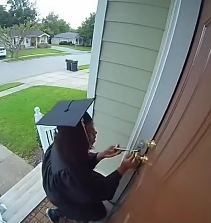
My Family Missed My Graduation but Remembered Me When They Needed Money: The Day I Finally Stood Up for Myself
An emotional fictional story about family expectations, financial pressure, self-respect, and the courage to establish boundaries.
Chapter 1: The Empty Seats at My Graduation
My graduation day was supposed to be one of the happiest moments of my life.
After years of studying, working part-time jobs, sacrificing weekends, and struggling through difficult financial periods, I had finally completed my Master’s degree in Data Analytics.
I had imagined the day many times.
I pictured my mother sitting in the front row, smiling proudly as my name was announced. I imagined my father taking photographs and my younger sister, Avery, teasing me about how serious I looked in my graduation gown.
Most importantly, I imagined looking into the audience and seeing the people who had watched me grow up.
But when the ceremony began, the seats reserved for my family remained empty.
My name is Camila Elaine Reed, and that afternoon I graduated from a university in Denver.
The stadium was filled with families, friends, and classmates. Parents held flowers, siblings waved signs, and cameras flashed whenever another graduate crossed the stage.
I sat among my classmates, trying to concentrate on the ceremony.
When the announcer called my name, I stood.
“Camila Elaine Reed, Master of Arts in Data Analytics.”
I walked across the stage, accepted my diploma, and shook hands with the university representative.
Then I turned toward the audience.
For a brief moment, I searched the front rows.
Nothing.
The seats I had hoped my family would occupy were empty.
I smiled for the official photograph anyway.
It was a practiced smile, the kind people use when they do not want strangers to notice that something is wrong.
After the ceremony, classmates gathered with their families.
Some were surrounded by flowers and balloons. Others were taking photographs with grandparents, parents, and younger siblings.
I stood near the entrance holding my diploma.
I checked my phone.
There were no messages from my mother.
No missed calls from my father.
Not even a simple congratulations from Avery.
I tried to convince myself that something unexpected had happened.
Perhaps they had forgotten the time.
Perhaps there had been traffic.
Perhaps my mother would call later.
But deep down, I knew this was not an isolated incident.
It was part of a pattern I had spent years pretending not to notice.
Chapter 2: Growing Up as the Responsible Daughter
I grew up believing that family members were supposed to support one another.
My parents were not wealthy, and our household often struggled financially.
My mother, Denise, managed most of the household responsibilities. My father, Robert, worked irregular hours, and money was frequently a source of disagreement.
When my younger sister Avery was born, I was seven years old.
I loved her immediately.
She was cheerful, energetic, and accustomed to receiving attention from everyone around her.
I never resented her for that.
I understood that she was younger and needed more help.
However, as we grew older, I began noticing that our parents treated our responsibilities differently.
Avery received piano lessons, new clothes, birthday parties, and financial assistance whenever she needed something.
I was expected to understand when there was not enough money for my school activities.
If Avery wanted something, my mother usually found a way to provide it.
If I wanted something, I was encouraged to be patient.
“You are mature enough to understand, Camila,” she often told me.
At first, I considered it a compliment.
I thought being responsible meant being trusted.
I did not understand that the word could also become an excuse for asking someone to carry more than their share.
When I was sixteen, I found a part-time job at a coffee shop.
I worked early mornings before school and occasionally covered evening shifts.
The money helped me purchase school supplies, pay for transportation, and save for college.
But eventually, my mother began asking whether I could contribute to household expenses.
She never described it as an obligation.
She simply explained that things were difficult and that the family needed help.
I wanted to be useful.
I wanted my parents to feel proud of me.
So I agreed.
Chapter 3: The Messages That Never Seemed to End
Over the years, my mother’s requests became increasingly familiar.
Sometimes they were small.
“Camila, could you send me $40? Avery needs something for school.”
Other times, they involved larger expenses.
“Your sister’s piano lessons are due tomorrow. Can you help?”
There were also unexpected messages.
“Your father needs help with the car.”
“The electricity bill is higher this month.”
“Can you cover the grocery shopping until Friday?”
I rarely refused.
I was working hard, studying, and trying to save money, but I continued sending financial assistance whenever I could.
Whenever I transferred money, my mother usually responded with a short thank-you.
Sometimes she added a heart emoji.
Occasionally, she wrote:
“You’re such a good daughter.”
Those words meant more to me than I realized.
I began connecting financial assistance with affection.
If I helped, my mother seemed pleased.
If I said I could not afford something, her tone changed.
She might remind me that she had sacrificed for me when I was younger.
She might mention how much Avery needed her support.
Or she would simply stop responding.
I did not recognize how unhealthy the pattern had become.
I was still trying to earn the kind of attention that I believed every daughter deserved naturally.
Chapter 4: The Degree That Was Supposed to Change Everything
When I finished my undergraduate degree, I decided to continue studying.
I wanted to build a career that would provide financial independence.
I was interested in technology, statistics, and the way organizations used information to make decisions.
Eventually, I enrolled in a Master’s program in Data Analytics.
The program was demanding.
There were difficult assignments, research projects, presentations, and long nights spent working with data.
I also had to manage my living expenses.
I continued working while studying.
Some weeks were exhausting.
There were evenings when I returned home so tired that I barely had enough energy to prepare dinner.
But I kept going.
I imagined that completing the degree would change how my family saw me.
Perhaps my mother would finally recognize how much effort I had invested in my future.
Perhaps my father would attend the graduation ceremony.
Perhaps Avery would look at me as someone she could learn from.
I never expected a celebration to be extravagant.
I only wanted them to be present.
A few months before graduation, I called my mother.
“Mom, I wanted to tell you something.”
“What is it, sweetheart?”
“I’ve received confirmation that I’ll be graduating in May.”
“Oh, that’s nice.”
I smiled.
“The ceremony is on the twenty-second. I would really love it if you and Dad could come.”
There was a brief silence.
“Let me check our schedule,” she replied.
“Of course.”
“And what time is it?”
I told her.
“All right. I’ll talk to your father.”
I was excited after the conversation.
I started imagining the photographs we would take.
I even considered buying a small bouquet of flowers for my mother.
I wanted the day to be special.
Unfortunately, I should have paid more attention to how quickly she had changed the subject.
Chapter 5: Graduation Without My Family
The morning of graduation arrived.
I woke up early, ironed my clothes, and carefully arranged my graduation gown.
I took several photographs before leaving my apartment.
Then I sent my mother a message.
“Today’s the day! I hope you and Dad can make it. Love you.”
She did not respond.
I waited until the ceremony began.
Still nothing.
I checked my phone during the first break.
No message.
I eventually called her.
The call went unanswered.
I tried my father.
His phone rang several times before going to voicemail.
I told myself they were probably driving.
But when the ceremony ended, the seats were still empty.
I took photographs with a few classmates.
One of them noticed that I was alone.
“Where’s your family?” she asked.
I tried to smile.
“They couldn’t make it.”
She looked sympathetic.
“I’m sorry. But congratulations! You worked hard for this.”
“Thank you.”
Her kindness almost made me cry.
I went home that afternoon carrying my diploma and a small bouquet I had purchased for myself.
I placed the flowers in a glass vase.
Then I hung my graduation gown near the front door.
I sat on the sofa and looked at the certificate.
I had achieved something important.
Yet the people I most wanted to share it with had not bothered to attend.
That evening, my mother finally sent a message.
“Sorry, sweetheart. The day got busy. We’ll celebrate another time.”
I read it several times.
There was no explanation.
No question about how the ceremony had gone.
No request to see my photographs.
I simply replied:
“Okay. Thank you.”
I did not want to argue.
I wanted to enjoy what I had accomplished.
But the disappointment stayed with me.
Chapter 6: Three Days Later, the Message Arrived
Three days after graduation, I was sitting at my kitchen table with a cup of coffee.
My graduation gown was still hanging near the door.
I had been reviewing some job opportunities when my phone vibrated.
It was a message from my mother.
“Camila, I need $2,100 for Avery’s sixteenth birthday celebration. We have to confirm the arrangements soon. Can you send it?”
I stared at the screen.
For several seconds, I thought I had misunderstood.
My mother had not asked how graduation went.
She had not congratulated me.
She had not even mentioned the degree.
Instead, she had immediately returned to the familiar subject of money.
I opened the message again.
There was no greeting beyond my name.
No question about whether I could afford it.
Just a financial request with an expectation that I would help.
I leaned back in my chair.
For years, I had told myself that my family simply needed temporary assistance.
I had believed that once I completed my education and became financially stable, things would improve.
But now I was beginning to understand something.
My mother had become accustomed to treating my income as part of the family’s financial resources.
She had never seriously considered whether I wanted that responsibility.
I opened my banking application.
My savings were limited.
I had approximately $3,000 available for emergencies and future expenses.
Sending $2,100 would leave me with very little.
I also had rent, student expenses, transportation costs, and other obligations.
I could not afford it.
But for the first time, I realized that the most important question was not whether I could afford to send the money.
It was whether I wanted to continue participating in a relationship that made me feel valued primarily when I was financially useful.
Chapter 7: The One-Dollar Transfer
I opened the payment application.
I entered my mother’s information.
Then I typed one dollar.
I paused before confirming the transfer.
It was not an attempt to punish Avery.
My sister had done nothing wrong by wanting a birthday celebration.
She was sixteen, and she deserved to enjoy her special day.
But I could no longer accept the assumption that I was responsible for financing every family event.
I added a short note:
“Congratulations.”
Then I pressed send.
The confirmation appeared on the screen.
For several moments, I simply stared at it.
It was a small transaction.
Only one dollar.
But emotionally, it represented something much larger.
It was the first time I had openly refused to provide money simply because someone expected it.
My phone began ringing.
It was my mother.
I watched the screen light up.
I did not answer immediately.
She called again.
Then a message arrived.
“Camila, what is this?”
I replied:
“I can’t contribute $2,100. I hope Avery has a wonderful birthday.”
My mother responded almost immediately.
“Are you being serious? We are counting on you.”
I took a deep breath.
“I have my own expenses, Mom. I just graduated, and I need to focus on my future.”
She replied:
“After everything we’ve done for you, this is how you treat us?”
I felt a familiar wave of guilt.
For years, that sentence had been enough to make me reconsider my decisions.
This time, however, I did not send another payment.
I simply put my phone down.
Chapter 8: The Spare Key
That evening, I began thinking about another issue.
My mother still had a spare key to my apartment.
I had given it to her years earlier when I was working long shifts and occasionally needed someone to check on the place.
At the time, I trusted her completely.
But over the past year, she had begun using the key without always asking first.
Sometimes she arrived to drop off something.
Other times, she came by because she wanted to discuss family matters.
I had never objected strongly.
I convinced myself that it was normal for parents to have access to their children’s homes.
But my apartment was my private space.
I needed boundaries.
I called a locksmith the following morning.
I explained that I wanted to replace the lock.
The locksmith arrived that afternoon, inspected the door, and installed a new mechanism.
When he finished, he tested it several times.
“Everything is working properly,” he said.
I thanked him.
After he left, I stood in the hallway holding the new keys.
The change was small.
But it gave me a sense of security and independence that I had not experienced before.
I also sent my mother a message.
“I’ve changed my apartment locks. Please call before visiting. I need some privacy.”
Her response was immediate.
“Why would you do that? You know I have a key for emergencies.”
I replied:
“I appreciate your concern, but I need to control access to my home. If there is an emergency, you can call me.”
She did not answer.
I placed my phone on the table and returned to my work.
For the first time, I was not waiting for her approval.
Chapter 9: The Knock at the Door
The following morning was peaceful.
Sunlight entered through the living room window.
I prepared coffee, opened my laptop, and began reviewing job applications.
My graduation certificate was still sitting on the table.
I looked at it and smiled.
I had worked hard for that degree.
I deserved to be proud.
Then I heard a knock.
At first, I ignored it.
Perhaps it was a delivery.
A few seconds later, the knocking continued.
It was firm and