Juvenile Justice and the Question of Long Prison Sentences: Understanding the Challenges of Punishing Young Offenders
Published: November 10, 2026
Introduction: When Juvenile Justice Becomes a Difficult Legal Question
The justice system faces some of its most challenging decisions when a person accused of a serious offense is still a child. Questions about criminal responsibility, appropriate punishment, rehabilitation, and the protection of society become especially complicated when the individual involved has not yet reached adulthood.
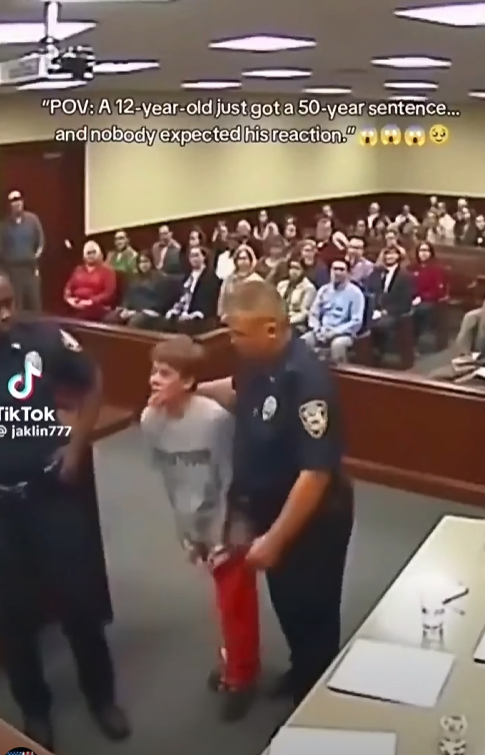
Imagine a courtroom where a judge must consider a proposed sentence that could keep a 12-year-old child in prison for several decades. Such a situation raises important questions that extend beyond the courtroom. How should society respond when a child is accused of a serious crime? Should young offenders receive the same punishment as adults? How much importance should be given to their age, emotional development, personal circumstances, and potential for rehabilitation?
These questions are central to discussions about juvenile justice around the world.
A possible sentence of 50 years for someone who is only 12 years old would represent an extraordinarily serious legal situation. However, without verified information about a particular court case, its jurisdiction, the charges involved, and the applicable law, it would be inappropriate to present such a sentence as an established fact.
What can be explored responsibly is the broader issue behind the headline: how legal systems balance accountability, public safety, children’s rights, and the possibility that young people can change as they grow older.
Juvenile justice is not simply about deciding whether a child should be punished. It is also about understanding the circumstances surrounding an offense, considering the child’s development, protecting victims, and determining what response is most likely to prevent future harm.
This article examines these issues in detail and explains why sentencing children is among the most sensitive responsibilities of any justice system.
1. Understanding the Purpose of Juvenile Justice
Juvenile justice refers to the legal procedures, institutions, and policies used when children and adolescents are accused of breaking the law.
Although the details differ between countries, juvenile justice systems generally recognize that children are not developmentally identical to adults.
A young person may understand that certain actions are wrong without fully appreciating the long-term consequences of those actions. Their judgment, emotional regulation, ability to manage pressure, and understanding of complex situations are still developing.
For this reason, many legal systems establish separate procedures for minors.
These procedures may include specialized juvenile courts, age-specific sentencing rules, educational programs, supervised rehabilitation, counseling, and other measures designed to support behavioral development.
The purpose is not necessarily to excuse harmful conduct. Instead, the goal is to recognize that childhood and adolescence are important stages of human development.
A justice system must consider both the seriousness of an alleged offense and the age and circumstances of the individual involved.
In some situations, young offenders may require substantial supervision and restrictions to protect other people. In others, educational interventions and community-based programs may offer more effective long-term solutions.
The central challenge is finding a response that is proportionate, fair, and consistent with the law.
2. Why the Age of an Offender Matters
Age is one of the most important considerations in cases involving children.
A 12-year-old is generally at a very different stage of development from an adult who has spent decades making independent decisions.
During childhood and adolescence, the brain continues developing. Skills related to planning, decision-making, impulse control, emotional regulation, and evaluating consequences mature over time.
This does not mean that children are incapable of understanding right and wrong. It means that their ability to make complex decisions may be different from that of adults.
For example, a young person may be more likely to:
- Act impulsively without considering future consequences.
- Follow the influence of friends or older individuals.
- Struggle to manage intense emotions.
- Have difficulty understanding complicated social situations.
- Make decisions under pressure.
- Misjudge the seriousness of a particular action.
These developmental characteristics are important when courts assess responsibility.
Age alone does not determine whether a child can be held legally responsible. Different jurisdictions establish different minimum ages of criminal responsibility and different rules for serious offenses.
Nevertheless, a child’s age is an important factor when considering the appropriate legal response.
A sentence that may be considered appropriate for an adult cannot automatically be transferred to a child without examining the relevant legal standards and individual circumstances.
3. The Difference Between Accountability and Rehabilitation
One of the biggest debates in juvenile justice concerns the relationship between punishment and rehabilitation.
Accountability means recognizing the consequences of harmful behavior and accepting appropriate responsibility under the law.
Rehabilitation focuses on helping an individual develop the knowledge, skills, and support systems necessary to avoid future offending.
These two approaches do not necessarily contradict each other.
A child who has caused serious harm may need to face significant legal consequences. At the same time, the justice system can provide educational opportunities, psychological support, structured supervision, and programs that encourage positive behavioral changes.
The important question is not simply whether a young offender should face consequences. It is what kind of consequences are appropriate.
A system that focuses exclusively on punishment may overlook the reasons behind a child’s behavior and miss opportunities to prevent future problems.
On the other hand, a system that ignores the seriousness of an offense may fail to protect victims and maintain public confidence in the justice process.
A balanced approach recognizes the importance of both accountability and rehabilitation.
Courts must consider the harm caused, the circumstances of the offense, the needs of victims, and the possibility that the young person can develop into a responsible adult.
4. Why a Sentence Lasting Several Decades Raises Concerns
A prison sentence lasting several decades has significant consequences for anyone. When the person involved is a child, those consequences become even more complicated.
A 12-year-old has an entire childhood, adolescence, and much of adulthood ahead of them.
A sentence extending for 50 years could mean spending nearly all of one’s adult life in a correctional institution.
This raises questions about whether the punishment allows meaningful opportunities for personal development and rehabilitation.
It also raises concerns about whether a child should have a realistic opportunity to demonstrate that they have changed.
A long sentence may be intended to reflect the seriousness of an offense or protect society. However, courts and policymakers must also consider whether the sentence is consistent with constitutional protections, children’s rights standards, and applicable sentencing laws.
An important distinction must be made between a sentence that is legally available and one that is necessarily appropriate in an individual case.
The law may establish certain penalties, but judges must consider the relevant legal principles before determining what sentence should be imposed.
In juvenile cases, this can involve examining:
- The age of the child when the offense occurred.
- The child’s developmental maturity.
- The seriousness of the offense.
- The level of individual responsibility.
- The circumstances surrounding the incident.
- The possibility of rehabilitation.
- The protection and interests of victims.
- The availability of less restrictive legal alternatives.
These factors help explain why sentencing children requires careful consideration rather than automatic application of adult sentencing practices.
5. The Importance of Due Process in Cases Involving Children
Every person accused of an offense should receive a fair legal process.
This principle becomes particularly important when the accused individual is a child.
Children may not fully understand courtroom procedures, legal terminology, or the consequences of making certain statements.
They may also struggle to communicate effectively with lawyers, investigators, or other legal professionals.
For these reasons, juvenile proceedings often include additional safeguards.
Depending on the jurisdiction, these protections may include:
- Access to legal representation.
- Appropriate assistance from parents or guardians.
- Clear explanations of legal rights.
- Age-appropriate questioning procedures.
- Special protections during police interviews.
- Consideration of the child’s ability to understand proceedings.
- Protection of personal information and identity.
- Access to qualified professionals when necessary.
These safeguards help ensure that legal decisions are made fairly.
A child’s age should never be used as a reason to ignore due process. Equally, the seriousness of an allegation should not eliminate the legal protections available to a minor.
The justice system must distinguish between allegations, evidence, findings of guilt, and sentencing decisions.
These are separate stages, and each requires careful attention.
Public discussion should also avoid assuming that an accused person is guilty before the legal process has established responsibility.
6. The Role of Parents, Guardians, and Family Support
Family circumstances can have a significant influence on a young person’s development.
Parents and guardians are often among the most important sources of emotional support, guidance, and stability during childhood.
When a child becomes involved in the justice system, the family may experience considerable emotional and practical difficulties.
Parents may struggle to understand the legal process, communicate with legal representatives, or determine how best to support their child.
Some families may also face financial difficulties, social pressure, or limited access to professional services.
However, family involvement can play an important role in rehabilitation.
Where appropriate and safe, family members may participate in counseling, supervised visits, educational planning, and reintegration programs.
A supportive family environment can help a young person develop healthier relationships, understand the consequences of harmful behavior, and establish more positive goals.
Not every child has access to a stable or supportive family.
Some minors may have experienced neglect, abuse, family conflict, or other difficult circumstances. These experiences do not automatically explain or excuse criminal behavior, but they may be relevant when professionals assess a child’s needs.
Understanding a young person’s background can help determine which interventions are most appropriate.
The objective should be to identify practical ways to support positive development while maintaining accountability and protecting others.
7. Childhood Development and Decision-Making
Childhood is a period of continuous learning and development.
During this stage, individuals develop communication skills, emotional awareness, social understanding, and the ability to evaluate different choices.
These abilities do not develop at exactly the same rate for everyone.
Two children of the same age may have very different levels of maturity and life experience.
This is one reason why juvenile justice professionals may consider developmental assessments when evaluating a young person’s circumstances.
Such assessments can help identify difficulties involving emotional regulation, learning, communication, or behavioral development.
They may also provide useful information about the child’s ability to understand legal proceedings and participate meaningfully in their defense.
However, developmental assessments should be conducted by qualified professionals and interpreted carefully.
They should not be used to make unsupported assumptions about a child’s character or future behavior.
The purpose is to understand the individual more accurately and identify appropriate interventions.
Recognizing developmental differences is not the same as removing responsibility. It is an effort to ensure that legal decisions reflect the realities of childhood.
8. The Impact of Long-Term Detention on Education
Education is an important part of childhood and adolescence.
Schools provide more than academic instruction. They also help young people develop communication skills, social relationships, personal responsibility, and confidence.
When a child enters a correctional institution, access to ordinary educational opportunities may be interrupted.
This can create challenges that continue long after the legal proceedings have ended.
For this reason, educational programs in juvenile facilities are especially important.
Depending on available resources and local laws, these programs may include:
- Basic literacy and mathematics.
- Secondary education.
- Vocational training.
- Computer and technology skills.
- Language learning.
- Personal development courses.
- Career preparation.
Providing education does not minimize the seriousness of an offense.
Instead, it helps ensure that young people have opportunities to develop useful skills, even when they are required to remain in a supervised environment.
Education can also help prepare individuals for eventual reintegration into society.
A person who leaves detention without appropriate educational or vocational preparation may face greater difficulties finding employment and establishing an independent life.
A well-designed juvenile justice system should therefore consider education an essential part of rehabilitation.
9. Mental and Emotional Well-Being in Juvenile Facilities
Being separated from family, friends, school, and familiar surroundings can be difficult for a child.
Detention may introduce additional stress, uncertainty, and emotional challenges.
Young people in correctional facilities may require professional support to manage their feelings and adjust to their circumstances.
Mental health services, where needed, should be provided by qualified professionals.
Support may include individual counseling, group-based educational programs, emotional development activities, and appropriate referrals for specialized care.
It is also important that juvenile facilities maintain environments that protect children from abuse, intimidation, and inappropriate treatment.
The safety and dignity of minors must remain important considerations throughout their involvement with the justice system.
A correctional institution should not simply focus on confinement.
It should also provide suitable opportunities for education, personal development, and access to necessary services.
These measures are important not only for the individual child but also for the broader goal of reducing future offending.
10. Protecting Victims While Respecting Children’s Rights
Discussions about juvenile justice sometimes become divided between two positions.
One side emphasizes the rights and rehabilitation needs of young offenders. The other focuses on victims, public safety, and accountability.
However, an effective justice system must take both seriously.
Victims of crime may experience physical, emotional, financial, or psychological consequences.
Their experiences should not be ignored simply because the person accused of causing harm is a minor.
Victims may need access to counseling, legal assistance, financial support, and reliable information about the legal process.
They also deserve to be treated with dignity and respect.
At the same time, children’s rights remain important regardless of the seriousness of an allegation.
The justice system must avoid creating a situation in which protecting one person’s rights automatically means ignoring another person’s needs.
In some circumstances, restorative justice approaches may help address harm by encouraging responsibility, communication, and appropriate forms of restitution.
However, participation must be voluntary where required, carefully supervised, and appropriate to the circumstances.
Restorative approaches are not suitable for every case and should never replace necessary legal protections.
A balanced system considers victims, communities, and young offenders without overlooking the rights of any individual.
11. International Principles Concerning Children and Criminal Justice
International human rights standards provide important guidance for countries when developing laws and policies involving children.
One of the most widely recognized international agreements is the United Nations Convention on the Rights of the Child.
This convention establishes principles concerning children’s protection, development, participation, and welfare.
It recognizes that children require special consideration because of their age and developmental circumstances.
Several principles are particularly relevant to juvenile justice.
The best interests of the child
Decisions involving children should give appropriate consideration to their best interests.
This principle does not mean that the interests of victims or public safety are unimportant. Rather, it requires decision-makers to consider the child’s welfare as part of the overall legal assessment.
The right to fair treatment
Children accused of offenses should receive appropriate legal protections and procedures.
The importance of rehabilitation
International standards encourage approaches that support the child’s reintegration into society and the development of a constructive role within the community.
Protection from inappropriate punishment
The convention establishes protections concerning capital punishment and life imprisonment without the possibility of release for offenses committed by persons under 18.
The precise application of international standards depends on the relevant legal framework and the obligations of individual countries.
Nevertheless, these principles demonstrate why juvenile justice is an important human rights issue.
12. Why Juvenile Justice Laws Differ Between Countries
There is no single worldwide system for handling every case involving a child accused of a criminal offense.
Countries establish their own criminal laws, juvenile court procedures, minimum ages of criminal responsibility, and sentencing frameworks.
Some jurisdictions place a strong emphasis on diversion programs and community-based interventions.
Others allow more formal criminal proceedings for certain serious offenses, subject to specific legal protections.
Differences may also exist in the way countries handle detention, education, family involvement, and the transition from juvenile to adult legal systems.
These differences reflect national legal traditions, constitutional requirements, available resources, and public policy decisions.
For this reason, a headline about a child facing a long prison sentence cannot be evaluated properly without knowing where the case occurred.
The same conduct may be treated differently under different national laws.
The age of the child, the nature of the allegations, the applicable sentencing provisions, and the possibility of appeal may all influence the outcome.
Readers should therefore be cautious about comparing legal cases from different countries without understanding their legal backgrounds.
A responsible discussion should explain the relevant jurisdiction rather than suggesting that one legal outcome applies everywhere.
13. The Importance of Rehabilitation Programs
Rehabilitation is one of the central elements of modern juvenile justice policy.
The basic idea is that young people can learn from their experiences and develop more constructive behavior when they receive appropriate support and guidance.
Rehabilitation programs may address several areas of a child’s life.
Educational development
Academic programs help young people continue learning and work toward recognized qualifications.
Vocational preparation
Practical training can help individuals develop employment skills and prepare for future opportunities.
Emotional development
Structured activities and professional support can help young people improve communication, decision-making, and emotional regulation.
Social skills
Programs can encourage cooperation, respect, conflict resolution, and healthy relationships.
Family involvement
When appropriate, family-based support can help strengthen communication and create a more stable environment.
Preparation for reintegration
Before returning to the community, young people may benefit from assistance with education, housing, employment preparation, and access to support services.
Rehabilitation is not a guarantee that every individual will change.
However, providing opportunities for positive development is an important part of a justice system that seeks to reduce future harm.
14. Public Safety and the Responsibilities of the Justice System
Public safety is a legitimate concern in every criminal justice system.
When a serious offense is alleged, authorities must consider how to protect victims, witnesses, and the wider community.
This responsibility does not disappear because the accused person is young.
In certain circumstances, supervised detention may be necessary under applicable law.
However, the decision to restrict a child’s freedom should be based on relevant legal standards and individual circumstances.
Public safety also involves preventing future offenses.
This means considering what happens after a legal sentence has been imposed.
If a young person eventually returns to the community, appropriate preparation and supervision may help reduce the likelihood of further problems.
Effective public safety policies therefore extend beyond punishment.
They include prevention, education, rehabilitation, family support, and access to community services.
A justice system should evaluate whether its policies are achieving meaningful long-term results rather than measuring success only by the severity of sentences.
15. The Importance of Individual Circumstances
No two juvenile cases are exactly alike.
Even when two young people are accused of similar offenses, their personal histories and circumstances may be very different.
One child may have access to a stable family environment and consistent educational support.
Another may have experienced significant instability or difficulties that affected their development.
These differences do not automatically determine responsibility, but they may be relevant when assessing the appropriate response.
Courts and qualified professionals may need to consider several factors.
These can include the child’s age, level of maturity, previous history, family environment, educational background, and understanding of the alleged conduct.
The circumstances surrounding the offense also matter.
Was the child acting independently? Was there pressure from older individuals? Were other people involved? What evidence has been presented? What role did the child allegedly play?
These questions require careful examination.
A fair legal process should not rely on assumptions or public speculation.
It should evaluate evidence and apply the law to the specific circumstances of the case.
16. The Role of Society in Preventing Youth Offending
Juvenile justice does not begin and end in a courtroom.
Communities, schools, families, and public institutions all have important roles in preventing harmful behavior among young people.
Early intervention can sometimes identify difficulties before they become more serious.
Schools may provide access to counseling, mentoring, and educational support.
Community organizations can create opportunities for sports, arts, vocational activities, and positive social relationships.
Parents and guardians can help children understand boundaries, responsibility, and the consequences of their decisions.
Public institutions can support families facing financial difficulties, educational challenges, or other social problems.
These efforts are not substitutes for the legal system.
However, they can form part of a broader strategy to reduce the circumstances that contribute to youth offending.
Prevention is particularly important because responding to problems only after serious harm has occurred may leave limited opportunities to protect everyone involved.
A society that invests in children, education, and supportive communities is also investing in long-term public safety.
17. Media Responsibility When Reporting Juvenile Cases
News coverage can strongly influence how the public understands criminal justice issues.
A dramatic headline may attract attention, but it can also create confusion when important information is missing.
This is especially concerning when a story involves a child.
Responsible reporting should distinguish between verified facts, allegations, court findings, and commentary.
Journalists and publishers should avoid presenting uncertain details as established facts.
They should also take care when publishing information that could reveal the identity of a minor.
In many jurisdictions, special legal protections restrict the publication of identifying information about children involved in criminal proceedings.
Even where specific restrictions do not apply, protecting a child’s privacy can be an important ethical consideration.
Responsible reporting should avoid unnecessary speculation about a child’s personality, family, or future.
It should also avoid language that encourages harassment or public hostility.
A useful article should provide context, explain relevant legal principles, and help readers understand the wider issues.
The goal of journalism should be to inform rather than simply provoke an emotional reaction.
18. Why Accurate Information Matters in High-Profile Legal Stories
When a headline describes an unusual or severe sentence, readers naturally want to know what happened.
However, a short headline is not enough to establish the facts of a legal case.
Before publishing a detailed report, an editor should verify the information through reliable sources.
These may include official court documents, statements from relevant judicial authorities, reputable news organizations, or other trustworthy records.
Important details should be checked carefully.
For example:
- Did the court actually impose the sentence, or was it only proposed?
- Was the individual 12 years old when the alleged offense occurred?
- Which country’s legal system is involved?
- What charges were considered?
- Was the case decided by a juvenile court or another court?
- Is the sentence subject to appeal?
- Does the individual have an opportunity for a later sentence review?
- Are there legal restrictions on publishing the child’s identity?
These distinctions can substantially change the meaning of a story.
A proposed sentence is not necessarily a final sentence.
An allegation is not a conviction.
An initial court decision may not be the final outcome after appeals or other legal proceedings.
Accuracy is therefore essential when discussing serious criminal cases.
19. The Long-Term Consequences of Juvenile Detention
The consequences of juvenile detention may extend beyond the period of confinement.
Young people may experience interruptions to their education, changes in family relationships, and difficulties maintaining social connections.
They may also face challenges when returning to ordinary community life.
Access to education and vocational preparation during detention can help address some of these difficulties.
Similarly, structured reintegration programs may help young people reconnect with their families, continue their education, and develop employment opportunities.
The transition back into society should be planned carefully.
A person leaving detention may need practical assistance with housing, schooling, employment, transportation, and access to professional support.
Without such assistance, the challenges of reintegration may become more difficult.
For this reason, juvenile justice planning should consider both the period of detention and what happens afterward.
The long-term objective should be to protect society while giving young people appropriate opportunities to develop positive and responsible lives.
20. Balancing Justice, Compassion, and Responsibility
The discussion surrounding severe sentences for children often produces strong opinions.
Some people believe that serious offenses require equally serious punishment, regardless of the age of the offender.
Others argue that children should receive greater opportunities for rehabilitation because their development is incomplete.
These positions reflect different concerns, but the legal system must address all relevant interests.
Compassion does not mean ignoring harm.
Accountability does not necessarily require the harshest available punishment.
Public safety does not depend exclusively on lengthy prison sentences.
Likewise, rehabilitation should not be treated as an automatic solution without considering the circumstances of victims and communities.
A thoughtful approach recognizes that justice involves more than one objective.
It must consider the seriousness of an offense, the rights of victims, the development of the child, the requirements of the law, and the potential consequences of different legal responses.
Finding an appropriate balance is difficult, but it is an essential responsibility of courts and policymakers.
21. Questions That Deserve Greater Public Discussion
Cases involving very young offenders raise important questions that deserve careful public attention.
One question concerns the minimum age of criminal responsibility.
At what age should a child be considered capable of understanding the legal consequences of certain actions?
Another concerns the appropriate limits of juvenile sentencing.
How should legal systems balance the seriousness of an offense against the possibility that a child may change significantly over time?
There are also questions about access to education, mental health services, family support, and legal representation.
Should every child in detention have access to structured educational programs?
How can authorities ensure that juvenile facilities provide safe and appropriate environments?
What support should be available when a young person eventually returns to the community?
These questions cannot always be answered through a single legal rule.
They require research, public discussion, professional experience, and consideration of international human rights principles.
Most importantly, they require an understanding that juvenile justice affects more than the individual accused of an offense.
It also affects victims, families, communities, and the wider public.
22. The Need for Evidence-Based Juvenile Justice Policies
Justice policies should be evaluated using reliable evidence rather than assumptions or public pressure alone.
Policymakers need to understand which interventions are effective, which approaches create unnecessary harm, and how different programs affect long-term outcomes.
Research can help evaluate educational programs, rehabilitation services, community supervision, and other juvenile justice measures.
It can also help identify differences between groups of young people and determine which interventions are appropriate for particular circumstances.
No single program will work for every child.
Effective policies should therefore allow qualified professionals to assess individual needs and recommend suitable support.
Governments should also consider whether juvenile facilities have enough trained staff, educational resources, and appropriate services.
A policy may sound effective in theory but fail in practice if institutions lack the resources to implement it properly.
Long-term evaluation is important.
The goal should be to develop a justice system that protects communities, treats victims fairly, respects children’s rights, and reduces future offending.
Conclusion: A Fair Justice System Must Consider the Future of Every Child
A hypothetical case involving a 12-year-old facing a sentence of several decades raises difficult questions about criminal responsibility, childhood development, punishment, and rehabilitation.
Such a situation cannot be evaluated responsibly without reliable information about the actual case and the laws governing it.
Nevertheless, the wider discussion is important.
Children who become involved in the justice system must be treated according to appropriate legal standards. Their age, developmental circumstances, rights, and individual needs deserve careful consideration.
At the same time, the experiences of victims and the responsibility to protect society must remain central to the justice process.
A fair system should recognize that accountability and rehabilitation can work together.
Serious allegations require serious legal attention, but the response should be based on evidence, established law, and an assessment of the individual circumstances.
Education, professional support, appropriate supervision, and opportunities for rehabilitation can all play important roles in juvenile justice.
Ultimately, the purpose of a justice system should not be limited to deciding what punishment someone deserves today. It should also consider how its decisions affect victims, communities, and the possibility of a safer future.
The difficult questions raised by juvenile sentencing deserve informed discussion rather than emotional reactions or unsupported conclusions.
By approaching these issues with accuracy, fairness, and respect for human rights, society can work toward a justice system that takes both public safety and the future of young people seriously.
Editorial Note: This article provides general educational information about juvenile justice. It does not report or verify a specific court case, sentence, or individual. Laws and sentencing procedures differ between jurisdictions. Readers seeking information about an actual case should consult reliable news reports and official court records.
Suggested Categories: Juvenile Justice, Law and Society, Children’s Rights, Education, Social Issues
Suggested SEO Title: Juvenile Justice Explained: How Courts Handle Serious Offenses Involving Children
Suggested Meta Description: Explore juvenile justice, children’s rights, criminal responsibility, long prison sentences, rehabilitation, and the challenges courts face when handling serious cases involving young offenders.
Suggested URL Slug: juvenile-justice-children-long-prison-sentences
Suggested Focus Keyword: Juvenile Justice
Additional SEO Keywords: Children’s Rights, Juvenile Sentencing, Rehabilitation Programs, Criminal Responsibility, Youth Justice System, Child Development, Legal Accountability