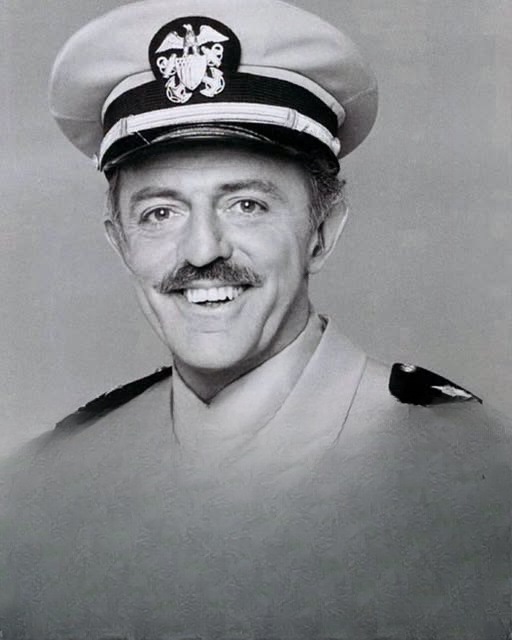
John Astin: The Life, Career, and Legacy of the Actor Behind Gomez Addams
For generations of television viewers, John Astin will always be remembered as the charming, eccentric, and endlessly enthusiastic Gomez Addams. With his expressive face, distinctive laughter, perfectly timed reactions, and unforgettable chemistry with Morticia, he helped create one of television’s most recognizable fictional couples.
His performance in The Addams Family made him a familiar face in households across America and introduced his unique comedic style to audiences around the world.
However, there was much more to John Astin than the character who made him famous.
Behind the iconic television role was a talented actor, director, educator, and devoted family man whose professional journey included theater, film, television, and university teaching. He explored different creative opportunities throughout his career, demonstrating that his abilities extended well beyond the unusual world of the Addams family.
From his early interest in mathematics to his discovery of theater, from the success of a classic television comedy to his work mentoring young performers, Astin built a career that lasted for decades.
His story is also an interesting reminder of how an actor can become closely associated with one beloved character while continuing to develop a much broader artistic identity.
John Astin’s Early Life and Childhood
John Allen Astin was born on March 30, 1930, in Baltimore, Maryland.
He grew up in a family environment that valued education and intellectual curiosity. His father, Allen Varley Astin, was a scientist who worked in the field of standards and measurement and later became director of the National Bureau of Standards, an organization now known as the National Institute of Standards and Technology.
Growing up with a father involved in scientific work exposed Astin to an environment where education, knowledge, and careful thinking were important.
During his younger years, he did not immediately imagine himself becoming a professional actor.
Instead, he developed an interest in mathematics and initially pursued an academic direction that appeared quite different from the entertainment industry.
He attended Washington & Jefferson College in Pennsylvania before continuing his studies at Johns Hopkins University in Baltimore.
At that stage, acting was not necessarily the career he had planned for himself.
However, university life introduced him to an experience that gradually changed his interests.
Theater became an important part of his education, and participating in dramatic performances helped him discover an enthusiasm that would eventually shape the rest of his life.
What began as an unexpected interest developed into a serious professional ambition.
Discovering a Passion for Acting
Astin’s transition from mathematics to theater was not an overnight decision.
His involvement in university performances allowed him to explore acting in a way that traditional academic studies had not.
He discovered that theater offered a different kind of intellectual challenge.
An actor had to understand a character, interpret a script, communicate emotions, and respond naturally to other performers.
It required preparation, concentration, imagination, and a willingness to take creative risks.
These qualities appealed to him.
Astin eventually graduated from Johns Hopkins University in 1952, having shifted his academic direction toward drama.
He later pursued additional graduate-level drama studies at the University of Minnesota.
After completing his education, he moved to New York to pursue opportunities in professional theater.
Like many aspiring actors, he faced the practical challenges of establishing himself in a competitive industry.
He took work outside acting to support himself while looking for opportunities onstage.
His early theater experiences helped him develop the skills that would later become central to his screen performances.
Rather than relying exclusively on a naturally expressive personality, Astin built his craft through performance, rehearsal, and observation.
Those early years were important because they gave him a foundation in acting that extended beyond television comedy.
Building a Career on the Stage
Before becoming a familiar television personality, Astin spent time working in the theater world.
New York provided opportunities to experience professional productions and work alongside established performers.
He appeared in stage productions, including performances connected with The Threepenny Opera and George Bernard Shaw’s Major Barbara.
These experiences exposed him to different styles of storytelling and acting.
Theater also demanded a particular level of discipline.
Unlike television and film, where scenes can be recorded multiple times and edited afterward, stage performances require actors to maintain their characters throughout an entire production.
A successful performance depends on timing, concentration, and the ability to respond to other actors in real time.
These skills later became visible in Astin’s television work.
His ability to deliver a line with precise timing, react naturally to another character, and maintain an expressive performance helped make his comedy memorable.
The stage also allowed him to develop an appreciation for the relationship between performers and audiences.
That appreciation would eventually influence his work as a teacher.
Astin’s early theatrical career may not have brought him the international recognition that came later, but it provided valuable experience that helped establish his professional identity.
His First Opportunities in Television and Film
During the early stages of his screen career, Astin appeared in television productions and films that allowed him to gain experience in front of cameras.
His early work included appearances in television programs such as Studio One, Maverick, Gunsmoke, The Twilight Zone, and 77 Sunset Strip.
These productions represented an important period in American television.
During the 1950s and early 1960s, television was expanding rapidly, and actors were finding opportunities in a growing variety of dramatic and comedic programs.
Many performers moved between theater, film, and television, developing careers through guest appearances and supporting roles.
Astin followed a similar path.
He also appeared in the 1961 film West Side Story, playing a supporting role in the memorable dance sequence that brings together members of the Jets and Sharks.
Although he was not the central character, the film became an important part of his early screen experience.
West Side Story went on to become an acclaimed musical film, and Astin’s participation connected him with one of the best-known productions of its era.
These early appearances helped him become more comfortable with the technical side of screen acting.
They also demonstrated his ability to work in different genres.
He was not limited to comedy, even though comedy would eventually become the style most strongly associated with his name.
The First Major Television Opportunity
A significant step in Astin’s career came in 1962 when he was cast in the television comedy I’m Dickens, He’s Fenster.
The series paired him with comedian Marty Ingels.
Astin played Harry Dickens, while Ingels portrayed Arch Fenster.
The program followed two construction workers whose everyday experiences frequently turned into humorous situations.
The show gave Astin a more prominent television role and allowed audiences to become familiar with his comedic personality.
Working alongside Ingels also provided opportunities to develop the kind of comic timing that would later become one of his greatest strengths.
Although the series did not enjoy a long run, it proved to be an important professional opportunity.
The experience helped establish Astin as a performer who could carry a comedy series.
It also brought him closer to the role that would eventually define his career.
Only a short time later, he received the opportunity to portray a character from one of the most unusual fictional families in television history.
Becoming Gomez Addams
In 1964, John Astin was cast as Gomez Addams in the television series The Addams Family.
The program was based on the eccentric family characters created by cartoonist Charles Addams, whose illustrations had appeared in The New Yorker.
The television adaptation introduced viewers to a family whose interests, habits, and appearance were very different from those of their neighbors.
The family included Gomez, his wife Morticia, their children Wednesday and Pugsley, Uncle Fester, Grandmama, Lurch, and the mysterious Thing.
Rather than presenting the family as frightening villains, the show portrayed them as affectionate people whose unusual lifestyle created humorous misunderstandings with the outside world.
Gomez was the enthusiastic head of the household.
He was wealthy, energetic, playful, and deeply devoted to his wife.
Astin brought an unmistakable personality to the character.
His facial expressions, exaggerated movements, cheerful enthusiasm, and distinctive delivery made Gomez one of the most memorable sitcom characters of the 1960s.
The role required more than simply delivering funny lines.
Gomez needed to appear completely comfortable in a world where unusual activities were considered ordinary.
Astin understood this contrast and used it to create much of the character’s humor.
Rather than playing Gomez as someone who knew he was strange, he portrayed him as a genuinely happy man who saw nothing unusual about his family’s behavior.
That creative decision helped make the character appealing to viewers.
The Special Chemistry Between Gomez and Morticia
One of the defining elements of The Addams Family was the relationship between Gomez and Morticia.
Morticia was played by Carolyn Jones, whose elegant appearance and calm delivery provided an effective contrast to Astin’s energetic performance.
Together, they created a television marriage that stood out from many other sitcom relationships of the period.
Gomez frequently expressed affection for Morticia through enthusiastic gestures, playful conversations, and romantic attention.
Their relationship was built around mutual admiration and a shared appreciation for the unusual.
The chemistry between Astin and Jones helped make their scenes especially memorable.
The couple’s affection was often humorous, but it was also presented as genuine.
They supported one another, enjoyed spending time together, and rarely appeared embarrassed by their eccentric lifestyle.
This relationship became one of the show’s most recognizable features.
It also contributed to the lasting popularity of the characters.
For many viewers, Gomez and Morticia represented a fictional couple whose differences from conventional television families were precisely what made them interesting.
Astin’s performance was central to that success.
His enthusiasm gave Gomez a personality that audiences could recognize immediately, even when the character was involved in an unusual or completely unexpected situation.