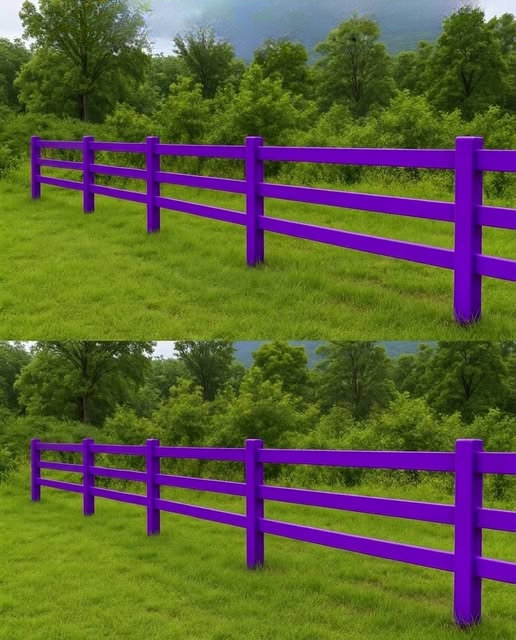
Imagine you’re walking along a quiet country road or exploring a wooded trail when something unusual catches your eye.
A fence post has been painted bright purple.
Then you notice another one farther ahead.
And another.
At first, it may look like a strange decorating choice. Perhaps the property owner simply likes purple, or maybe the color is being used to make the fence easier to see.
But in several parts of the United States, purple paint can carry a much more important message.
It may indicate that the land beyond that point is private property and that unauthorized entry is not permitted.
This practice is commonly associated with what are often called purple paint laws.
Although the exact rules vary significantly from one state or jurisdiction to another, the basic idea is straightforward: instead of posting dozens of traditional “No Trespassing” signs, landowners may be allowed to mark property boundaries with specific purple paint markings.
For hikers, hunters, travelers, and anyone exploring rural areas, understanding what those markings may mean can help prevent an accidental entry onto private land.
Why Purple?
One of the first questions people ask is simple:
Why purple?
The color was selected in part because it is highly visible outdoors.
Purple tends to stand out against common natural backgrounds such as:
- Green vegetation
- Brown tree bark
- Gray rocks
- Tan grass
- Weathered wooden fences
It can remain noticeable even when viewed from a distance.
Another practical advantage is durability.
Traditional signs can become damaged by:
- Rain
- Snow
- Wind
- Sunlight
- Falling branches
They may also be removed or become unreadable over time.
Paint applied correctly to a durable surface may last considerably longer and require less maintenance.
What Does Purple Paint Usually Communicate?
Where local law recognizes it, purple paint is generally intended to communicate a message similar to:
Private property. Do not enter without permission.
In other words, the paint may function as a boundary notice.
That means if you’re hiking, hunting, fishing, riding an ATV, or simply exploring unfamiliar rural land and notice properly placed purple markings, the safest approach is to assume you should not continue onto the property unless you have authorization.
However, there is an important qualification.
Purple paint laws are not identical everywhere.
Different states may specify different:
- Mark dimensions
- Heights from the ground
- Spacing between marks
- Surfaces on which paint can be placed
- Legal consequences
Some states may not recognize purple paint as a legal trespassing notice at all.
So while the color is worth paying attention to, local regulations ultimately determine its legal meaning.
Why Not Just Use a Sign?
Traditional “No Trespassing” signs remain common and effective.
However, landowners with large properties may need many signs to mark an entire boundary.
Consider a farm, ranch, forested property, or hunting area covering hundreds of acres.
Signs placed around that perimeter may:
- Fall down
- Fade
- Be damaged
- Become hidden by vegetation
- Require frequent replacement
Painting trees or fence posts at designated intervals can sometimes provide a simpler way to identify a boundary.
It can also be less expensive over time.
Where Might You See Purple Markings?
Purple property markings are more commonly associated with rural environments.
You might encounter them on:
- Wooden fence posts
- Trees near property lines
- Gate posts
- Other permanent boundary features
The markings may appear as vertical stripes rather than completely painted objects.
If you see several similar purple markings appearing at regular intervals, that’s a stronger indication that they may represent a property boundary rather than decoration.
What Should You Do If You Encounter One?
The safest response is simple.
Stop and assess where you are.
If the markings appear to indicate private property, do not cross the boundary unless you’re certain you have permission.
If you’re following an established public hiking trail, remain on the marked route.
If the trail seems to cross private land unexpectedly, look for official trail signs or maps before continuing.
When in doubt, turning around is usually preferable to accidentally entering property where access is restricted.
Hikers Should Pay Special Attention
Hiking routes sometimes pass close to privately owned land.
A path that looks inviting isn’t automatically public.
Old logging roads, farm tracks, and animal paths can easily be mistaken for recreational trails.
Before exploring unfamiliar areas, it helps to:
- Use reliable trail maps.
- Pay attention to boundary markers.
- Follow official signage.
- Avoid climbing over gates or fences.
- Respect posted restrictions.
Responsible trail use protects both visitors and property owners.
What About Hunters?
Hunters are particularly likely to encounter private-property markings because hunting often takes place in large rural or wooded areas.
Land ownership boundaries aren’t always obvious in forests.
A purple marking may help indicate that permission is required before entering.
Responsible hunters should verify land ownership and obtain any required permission before crossing property boundaries.
Hunting regulations themselves also vary widely by location, so local wildlife and land-access rules should always be consulted.
Never Assume an Unfenced Area Is Public
One common misconception is that land without a fence must be publicly accessible.
That’s not true.
Private property doesn’t necessarily need a physical barrier surrounding it.
Forests, farmland, open fields, and undeveloped land can all be privately owned.
Boundary markings, signs, maps, and local records may be the only obvious indicators.
What If You See Purple Paint in a City?
Not every purple-painted object is related to property laws.
Someone may simply paint a fence purple because they like the color.
Businesses may use purple as part of branding.
Decorative gardens may feature colorful posts.
Context matters.
Repeated, standardized markings along a rural boundary are much more likely to have a property-related meaning than an entire decorative fence outside a suburban home.
Why Property Boundaries Matter
Respecting private property is about more than avoiding legal trouble.
Landowners may restrict access for many practical reasons.
A property may contain:
- Livestock
- Farm machinery
- Construction areas
- Working equipment
- Wildlife management areas
- Sensitive crops
- Natural hazards
Someone entering without permission may unknowingly put themselves or others at risk.
Respecting clearly marked boundaries helps prevent misunderstandings and keeps rural properties safer.
What If You Accidentally Cross a Boundary?
Mistakes can happen, particularly in unfamiliar wilderness areas.
If you realize you’ve entered private property unintentionally, the best response is usually to retrace your route and leave the area calmly.
Avoid continuing farther simply because you’ve already crossed the boundary.
If approached by a property owner, remain polite and explain that the entry was accidental.
Check Local Rules Before Relying on the Color
Because laws can differ substantially, purple paint should never be treated as a universal legal language.
If you frequently hike, hunt, or explore rural land, consider reviewing guidance from:
- State natural-resource agencies
- Local government
- Park authorities
- Wildlife departments
These organizations can explain how private-property boundaries are identified in your area.
A Simple Color With a Practical Purpose
It’s easy to walk past a painted fence post without giving it much thought.
Yet sometimes small visual details carry important information.
Purple paint can be one example.
What appears to be an unusual color choice may actually be a practical method of communicating property boundaries without relying entirely on traditional signs.
Final Thoughts
If you encounter purple paint on fence posts, trees, or other boundary markers in a rural area, don’t automatically assume it’s decoration.
In some jurisdictions, those markings are used to indicate private property and warn against unauthorized entry.
Because requirements vary by location, the smartest approach is to remain cautious, respect visible boundaries, and consult local rules if you’re unsure.
Whether you’re hiking, hunting, camping, or simply taking a walk through the countryside, paying attention to small details can make your outing both safer and more respectful.
Sometimes a single stripe of paint is more than just a color.
It may be a quiet but important message telling visitors exactly where public access ends and private land begins.