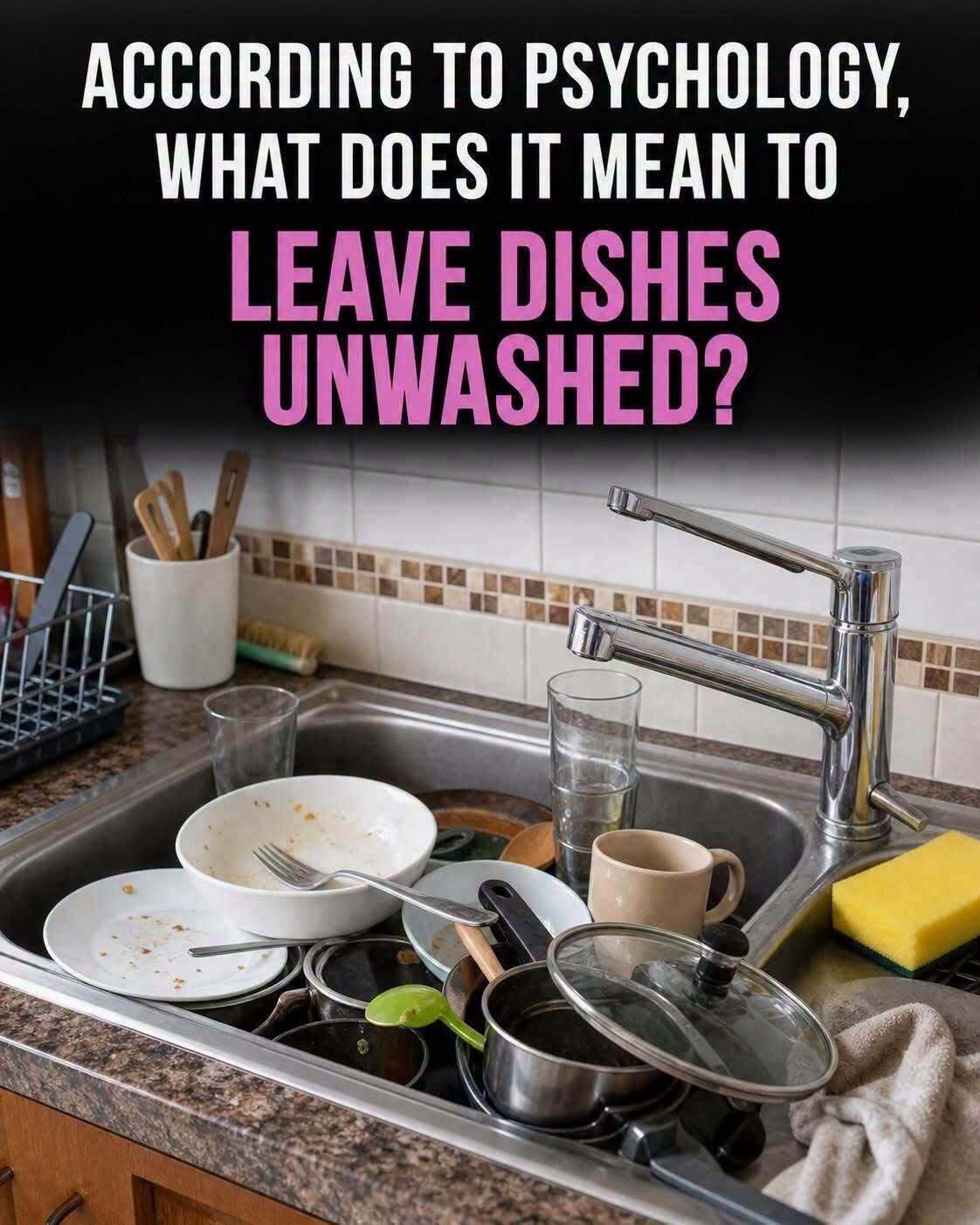
There is a simple household habit that almost everyone has been guilty of at some point: looking at a sink full of dishes and deciding to deal with them later.
Maybe you’ve had a long day.
Maybe you’re tired.
Maybe there are only a few plates, cups, and utensils, so you convince yourself that leaving them overnight won’t make much difference.
Then morning arrives.
The dishes are still there.
You tell yourself you’ll wash them after breakfast.
Breakfast turns into lunch.
Lunch becomes dinner.
Before you know it, yesterday’s dishes have become today’s problem.
While leaving dishes for a few hours isn’t automatically a serious concern, repeatedly allowing dirty dishes to pile up can create several avoidable problems around the home. The effects aren’t necessarily dramatic or immediate. Instead, they tend to build gradually through odors, clutter, extra cleaning, and an increasingly stressful environment.
That’s why the seemingly harmless phrase, “I’ll do them later,” can sometimes turn into a much bigger household chore.
Why Dirty Dishes Can Become More Difficult to Clean
One of the biggest problems with postponing the dishes is that food residue becomes harder to remove.
Sauces, oatmeal, rice, pasta, cheese, and other foods can dry onto plates and cookware. Once the residue has hardened, a quick rinse may no longer be enough.
Instead, you may need to soak the dishes, scrub them more thoroughly, or repeat the process several times.
A plate that would have taken a few seconds to wash shortly after a meal can become a much more frustrating task later.
The same is true for pots and pans.
If food is left sitting in cookware for an extended period, residue can become firmly attached to the surface. That doesn’t necessarily mean the pan is ruined, but it can make cleaning considerably more time-consuming.
In other words, postponing a small chore doesn’t always eliminate work.
Sometimes it simply makes the eventual chore harder.
The Kitchen Can Start to Smell
Another obvious consequence is odor.
Food scraps left on plates can begin to smell unpleasant, particularly when the kitchen is warm. Strong-smelling ingredients such as onions, garlic, sauces, dairy products, fish, and certain meats can become especially noticeable.
Even when the dishes themselves don’t smell terrible, the combination of food residue, standing water, and a full sink can make the kitchen feel less fresh.
Opening the kitchen in the morning and immediately seeing a sink full of yesterday’s dishes isn’t exactly the most pleasant way to start the day.
A quick cleanup before bed can make the entire room feel noticeably more organized.
A Messy Sink Can Make the Whole Kitchen Feel Messier
There’s also a psychological side to household clutter.
The kitchen may actually be relatively clean, but a sink overflowing with dishes can make the entire room appear untidy.
Counters might be spotless.
The floor might be freshly swept.
The refrigerator might be organized.
But if the sink is filled with dirty plates and cups, your attention is naturally drawn toward the mess.
This can create the feeling that there is always something left to do.
For people who already have busy schedules, that visual reminder can become surprisingly irritating.
Instead of relaxing after dinner, you may continue thinking about the dishes sitting nearby.
The chore becomes mentally present even when you’re not physically doing it.
Small Tasks Can Become Bigger Tasks
One reason people struggle with household chores is that individual tasks often connect to one another.
A few dirty dishes can quickly become a crowded sink.
A crowded sink can make it difficult to rinse new dishes.
Then you may start placing dirty plates on the counter.
Soon, the counter becomes cluttered too.
Now you’re not just washing dishes.
You’re reorganizing the kitchen.
You may need to clear the counter, empty the drying rack, clean the sink, wipe down surfaces, and take out the trash.
What started as five minutes of work has turned into a much longer cleaning session.
This is why staying on top of small chores can sometimes feel easier than allowing them to accumulate.
What About Bacteria?
This is an area where online posts often make dramatic claims.
You may see headlines suggesting that leaving dishes overnight automatically creates a dangerous environment or guarantees illness.
That is an oversimplification.
Dirty dishes can certainly provide an environment where microorganisms may be present, particularly when food residue and moisture remain available. However, the actual risk depends on many factors, including the type of food, temperature, moisture, cleanliness of surrounding surfaces, and how the dishes are handled afterward.
So there is no need to panic if you occasionally leave dishes in the sink overnight.
The more practical lesson is simply to maintain good kitchen hygiene.
Wash dishes regularly, remove food scraps, clean surfaces, wash your hands when appropriate, and avoid letting food residue accumulate unnecessarily.
Those basic habits are far more useful than worrying about sensational claims.
Don’t Forget the Sponge
Sometimes the dishes aren’t the only thing that needs attention.
Kitchen sponges and dishcloths can remain damp for long periods, creating conditions where microorganisms can multiply.
If a sponge develops an unpleasant smell or remains constantly wet, it may be time to replace it.
Allowing cleaning tools to dry properly between uses and keeping them clean can help maintain better kitchen hygiene.
Some households prefer reusable dishcloths that can be washed regularly instead of relying on the same sponge indefinitely.
The important thing is to remember that the tools used to clean your dishes also deserve attention.
The Trash Can Be Part of the Problem
Food scraps sitting on dirty plates aren’t the only source of unpleasant odors.
If you scrape leftovers into a kitchen trash can and leave them there for several days, the smell can become noticeable.
This is especially true for food waste that contains moisture.
Taking out the trash regularly can make a surprisingly large difference.
If your household produces a lot of food waste, using a small countertop container and emptying it frequently can also help keep odors under control.
There Is a Simple Way to Make the Chore Easier
You don’t necessarily need to spend an hour cleaning the kitchen every night.
A simple routine can make things much easier.
After dinner, scrape leftover food into the appropriate waste container.
Rinse dishes when necessary.
Load the dishwasher if you have one, or wash the most difficult items first.
Pots and pans can be soaked while you clean other dishes.
Finally, wipe the sink and surrounding counter.
The entire routine may take only a few minutes depending on how much you used.
The goal isn’t perfection.
The goal is preventing a small amount of work from turning into a large pile of work.
What If You’re Too Tired?
Of course, real life doesn’t always cooperate.
There will be nights when you’re exhausted.
There will be evenings when the children need attention, you’re working late, or you simply don’t have the energy to clean.
That’s normal.